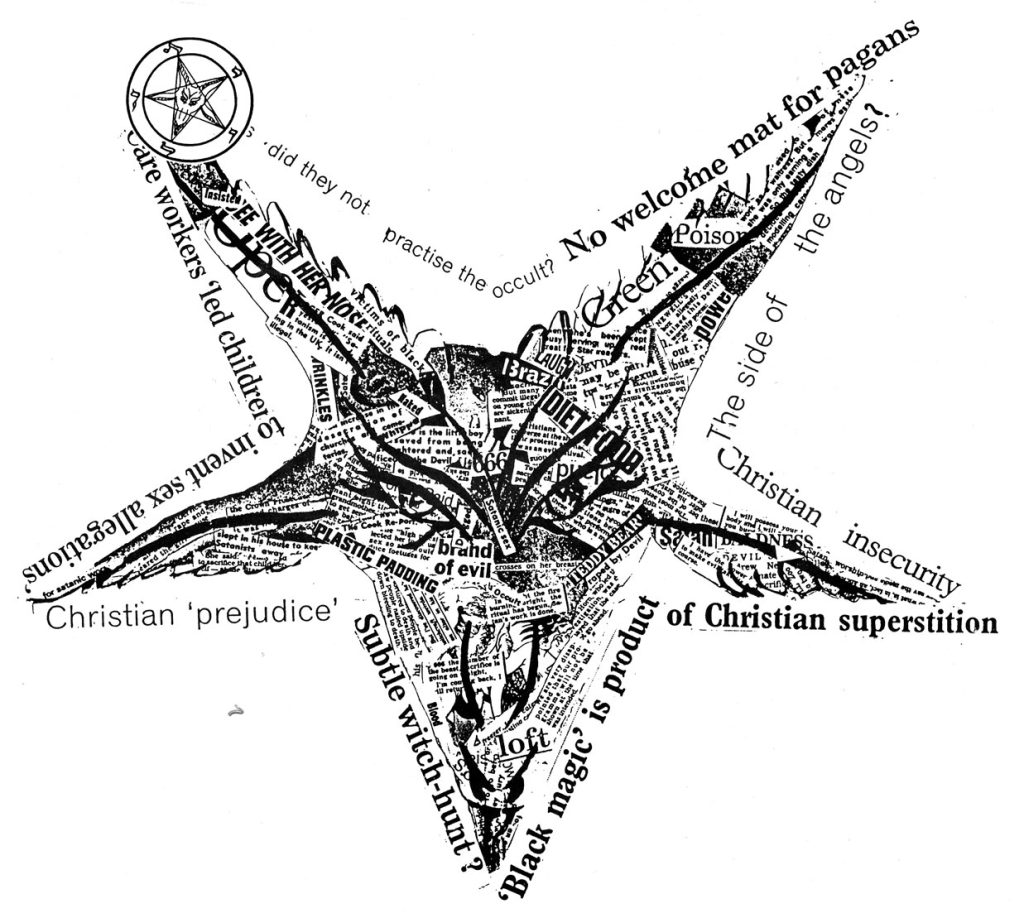
Who made us believe that Satanists threatened our children, and why?
Between 1988-1992 the British media (regional and national newspapers and television) featured allegations that hitherto secret occult presences posed a danger to children. It was alleged that the availability of occult books, the growing popularity of Halloween, and ‘Eastern’ practices such as yoga were potentially harmful to children. Most alarmingly, the case was made that children were routined sexually abused and even murdered by secretive cults of Witches, Black Magicians and Satanists who were beyond the law. The UK’s “Satanic Panic” narrative was promoted by Members of Parliament, Social Workers, Evangelical Christians and Child Support organizations. In this lecture, Phil Hine explores the roots of the Satanic Panic, its presentation in the media, and the key events during the period.
Bio:
Phil Hine has been a practising occultist for over forty-five years, with a career spanning Wicca, Ritual Magic, Chaos Magic and nondual Tantra. Together with Rodney Orpheus he co-created and edited the UK’s first monthly Pagan magazine, Pagan News (1988-92). His books include Condensed Chaos, Prime Chaos, Queerying Occultures, and Wheels within Wheels: Chakras and Western Esotericism. Forthcoming publications are Delinquent Elementals, co-edited with Rodney Orpheus (Strange Attractor, 2024) and Yoginis: Sex, Death and Possession in Early Tantra (Original Falcon Press 2025).Press 2019).
Don’t worry if you miss it – we will send you a recording valid for two weeks the next day.
Why did so many people believe they had been kidnapped by aliens?
In the 1980s, stories from people claiming to have been abducted by aliens sparked animated public debate, only to see the controversy largely over by the end of the nineties. At its heart was the question, should the stories be believed? Advocates for abductees pointed to the consistency, sincerity, and lasting trauma of victims, while detractors argued that media, quacks, and cognitive bias were fooling and manipulating vulnerable people. Now, a quarter century later, it’s time to revisit the controversy. Who were the protagonists? What had it been about? And why did it end the way it did?
Greg Eghigian is Professor of History and Bioethics at Penn State University (USA). He is a historian of science and medicine and has published books and articles about the history of disability, the history of madness, and the history of criminality, among other things. More recently, he has written about the history of the global fascination with unidentified flying objects and aliens, publishing articles in places like Time magazine, The Los Angeles Times, and Boston Review and giving interviews to numerous media outlets in the UK, North America, and Australia. His most recent book, After the Flying Saucers Came: A Global History of the UFO Phenomenon, was released in fall 2024. His next book will examine the history of the alien abduction phenomenon.
Don’t worry if you miss it – we will send you a recording valid for two weeks the next day.
Image: Communion book cover, painting by Ted Seth Jacobs

The Strange, True Tale of the Hampstead Heath Crucifixion
London, 1968, and a strange event took place… a spectacular occurrence which only a handful of people directly witnessed, but, as the next decade arrived, its legend spread. Tales proliferated of strange happenings in the far reaches of the city and the event became a local myth, with references to it appearing in horror and exploitation films.
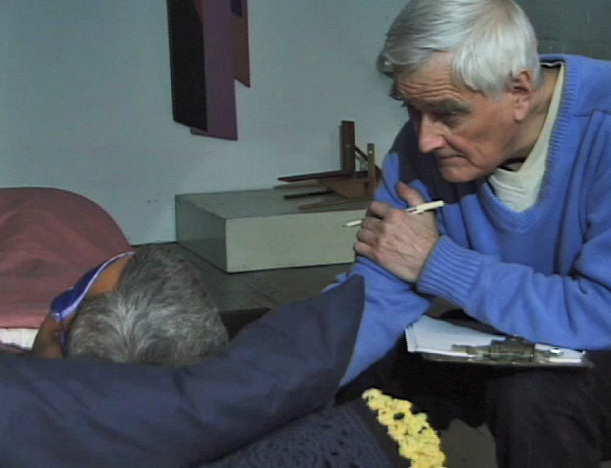
What had happened? A man was crucified on Hampstead Heath. Nails were driven into his hands as he hung from a large wooden cross. Who was this man, and why did he allow himself to be crucified in this way? William Fowler reveals a bizarre tale of psychic powers, revolution and London’s queer underground.
Bio:
William Fowler is curator of artists’ moving image at the BFI, where he has undertaken a number of film restoration projects, seasons and DVD releases, including GAZWRX: the films of Jeff Keen, Queer Pagan Punk: Derek Jarman and This Is Now: Film and Video After Punk. He co-conceived and co-programmed with Vic Pratt the popular monthly programme The Flipside and regularly contributes to BFI Blu Rays and DVDs. He also programmes the monthly BFI Southbank Experimenta strand and the Experimenta Mixtape. He is the author, with Vic Pratt, of The Bodies Beneath, the Flipside of British Cinema (Strange Attractor Press 2019).
The Secret History of Bigfoot
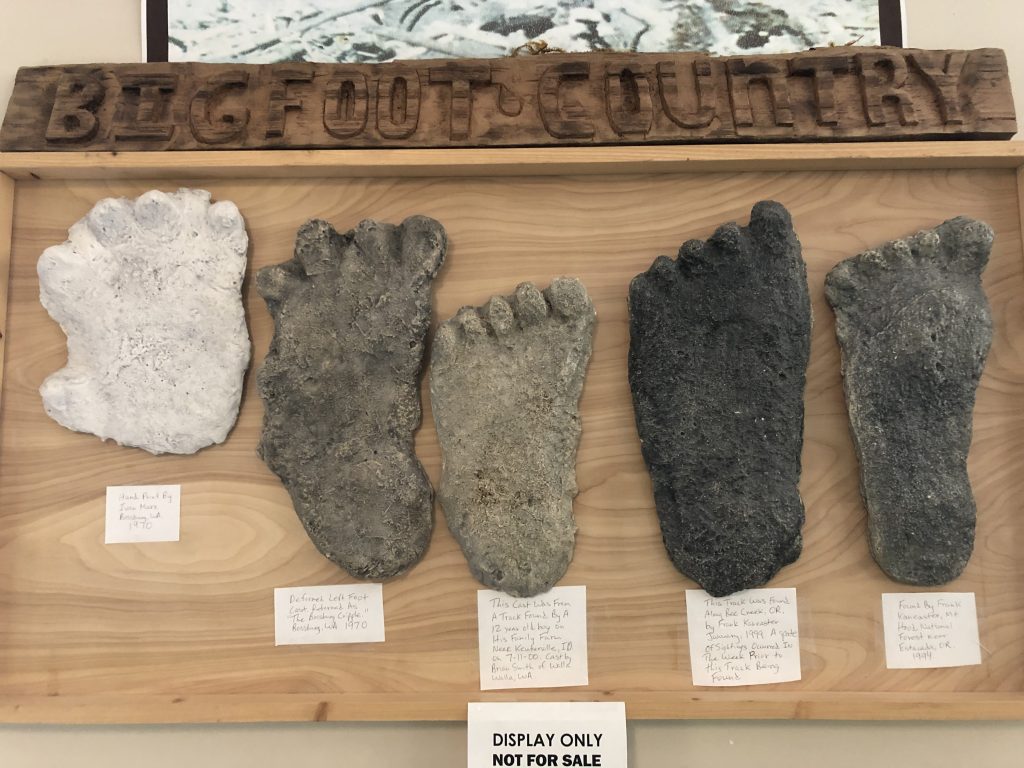
Why do otherwise sane, reasonable people persist in believing some pretty nutty stuff? What do people actually mean when they claim to believe in Bigfoot, or ghosts, or the healing power of crystals, or that the election of Donald Trump is “a prophecy fulfilled.” Many things complicate the question of our beliefs. There are gradations of belief, lots of grey areas – we all harbour some odd beliefs and believe things that aren’t entirely logical or rational. We seem to have an inbuilt, desperate need to believe in the unbelievable, yes sometimes we fail to notice the inconsistencies in our own belief systems. And this is at least half the price of being human.
Bio:
John O’Connor is the author of The Secret History of Bigfoot: Field Notes on a North American Monster, which explores the obsessive world of Bigfoot believers. His articles and essays have appeared in newsstand publications such as The New York Times, GQ, Financial Times Magazine, Men’s Journal, and The Boston Globe, as well as the literary journals Open City, Post Road, Quarterly West, The Believer, Oxford American, and Creative Nonfiction’s True Story series. Born and raised in Kalamazoo, Michigan (the original home of Gibson guitars), he has taught nonfiction writing in the BFA program at Pratt Institute in Brooklyn and now teaches journalism at Boston College. He lives in Cambridge, Massachusetts, with his wife, children, and rabbit.
Don’t worry if you miss it – we will send you a recording valid for two weeks the next day.
Atlas holds up the World: The Anatomy of Myth
The Greek poet Hesiod tells the story of the defeat of the Titans. While many of his brothers were banished to Tartarus, Atlas was condemned to hold up the sky forever. Remembering this story, the uppermost bone of our spine – the one which supports our skull – is known as our atlas verterbra. This talk by anatomist and Human Remains Conservator will consider the way that classical mythology has influenced our medical language, and look at the way pathology may have influenced the formation of mythology – while also asking the important questions such as where does the centaur keep his lungs?
Cat Irving has been the Human Remains Conservator for Surgeons’ Hall since 2015 and has been caring for anatomical and pathological museum collections for over twenty years. After a degree in Anatomical Science she began removing brains and sewing up bodies at the Edinburgh City Mortuary. Following training in the care of wet tissue collections at the Royal College of Surgeons of England she worked with the preparations of William Hunter at the Hunterian Museum at Glasgow University, where she is now Consultant Human Remains Conservator. Cat is a licensed anatomist, and gives regular talks on anatomy and medical history. She recently carried out conservation work on the skeleton of serial killer William Burke
Don’t worry if you miss it – we will send you a recording valid for two weeks the next day

The Great Satanic Swindle
In the 1980s, as the Satanic Panic took hold around the UK, a mysterious stranger arrived in a small Sussex village and told a tale of witchcraft, trapped souls and a life-and-death struggle with Satan himself. A group of church-goers, millionaires and aristocrats stepped in to save him, and things got very weird.
Derry Mainwaring Knight was an occultist and convicted con man; the Reverend John Baker was his mark. The village of Newick – a nexus of belief near which evangelical Christianity, new religious movements and the Sussex legend landscape meet – was their stage. The Great Satanic Swindle is the story of the bizarre friendship between these two and how it played out in what the tabloids called ‘the trial of the century’, involving peers of the realm and prostitutes; an Archbishop and a High Sheriff; the ‘Chief of all Satanists’ and some of the biggest businessmen in the land.
In this trial, and in this story, the question at hand came down to only one thing: What does it mean to believe? Using original archival research, unearthed audio recordings and Derry Mainwaring Knight’s own writings, the Great Satanic Swindle looks at a definitive story of a nation gripped by madness – religious mania, class conflict, fear and loathing in the ’80s countryside so odd it would make a Midsomer writer blush.
Bio:
Justin Hopper is a British-American writer whose work is concerned with the intersection of landscape, memory and myth. This includes books (The Old Weird Albion, Obsolete Spells), spoken-word recordings (Chanctonbury Rings, the Path; Ghost Box Records) and performances from the Brighton Festival to the National Gallery and many more.
Don’t worry if you miss it – we will send you a recording valid for two weeks the next day
Memento Mori
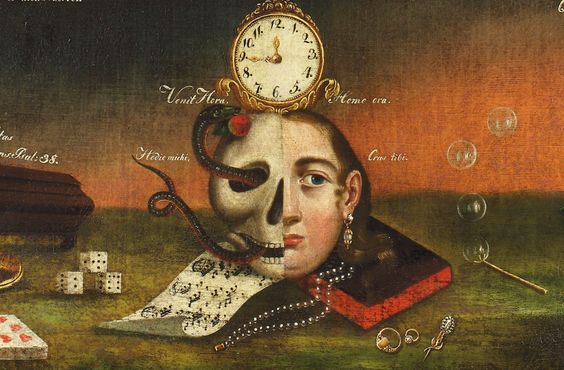
Many of us in the contemporary Western world view death as purely negative—something to be pushed out of our minds, shunned, and avoided. Thinking about death, particularly one’s own, is seen as morbid, if not downright pathological. But, not long ago, contemplating death was widely used as a powerful tool that helped us fear mortality less, put the difficulties of our lives in perspective, and live according to our higher values. (It still is, in some places.) By coming to terms with our own death, we were understood to become wise.
This richly illustrated talk—based on Morbid Anatomy founder’s new book Memento Mori: The Art of Contemplating Death to Live a Better Life, will look at a number of the ways that people in different times and places have befriended, imagined, pictured or related to death. We will look at psychopomps—literally, “soul guides”—understood to help people move through the dying process. We will learn about the “books of the dead,” guides to preparing for a good death and afterlife experience. And we will investigate the memento mori (Latin for “remember you must die”), which are objects, works, or practices meant to remind one of their death in order to help them ascertain their true values, and live them out in the world, so as to die with the fewest deathbed regrets.
Joanna Ebenstein is the founder and creative director of Morbid Anatomy. An internationally recognized death expert, she is the author of several books, including Anatomica: The Exquisite and Unsettling Art of Human Anatomy, Death: A Graveside Companion, and The Anatomical Venus: Wax, God, Death and the Ecstatic. She is also an award-winning curator, photographer, and graphic designer, and the teacher of the many times sold-out class Make Your Own Memento Mori: Befriending Death with Art, History and the Imagination. The descendant of Holocaust survivors, she traces her lineage back to Judah Loew ben Bezalel, credited with creating the Golem in sixteenth-century Prague.
Don’t worry if you miss it – we will send you a recording valid for two weeks the next day
WHO PUT BELLA IN THE WYCH ELM?
These words, graffitied around the Hagley Hall estate near Stourbridge, West Midlands, have haunted the local population since a bunch of schoolboys pulled the skull of a woman out of a tree in its grounds in April 1943. Was she a local good time girl gone bad? A witch? A Nazi spy? No one has ever solved the mystery of her identity nor why the anonymous author of an 80-year graffiti trail won’t let her rest. Author CATHI UNSWORTH presents the strange true case that informed her 2018 book, That Old Black Magic.
Cathi Unsworth is a novelist, writer and editor who lives and works in London. Her most recent book is Season of the Witch: The Book of Goth (2023) She began her career on the legendary music weekly Sounds at the age of 19 and has worked as a writer and editor for many other music, film and arts magazines since, including The Guardian, Financial Times, Fortean Times, Bizarre, Melody Maker, Mojo, Uncut, Volume and Deadline.
Don’t worry if you miss it – we will send you a recording valid for two weeks the next day
Dr Eric Dingwall was a friend, associate, rival and occasional enemy of the more publicity-hungry Harry Price. Appointed Research Officer for the Society for Psychical Research in the 1920s, his ultra-sceptical stance frustrated and occasionally infuriated his SPR colleagues, but private communications tell a different story. More than one physical medium had impressed and mystified him with their displays of apparently fraud-proof and inexplicable phenomena in the séance room.
An intelligence officer during WW2, he was later appointed Honorary Assistant Curator of the British Museum’s Private Case, a sub rosa collection of pornographic and blasphemous literature. Dingwall was an acknowledged expert in this area, especially the former, and became an unofficial police consultant, assisting their investigation of crimes with unusual sexual or occult overtones.
This talk by librarian and author Christopher Josiffe (Gef! The Strange Tale of an Extra-Special Talking Mongoose) will shed light on a most secretive and intriguing character.
Don’t worry if you miss it – we will send you a recording valid for two weeks the next day.
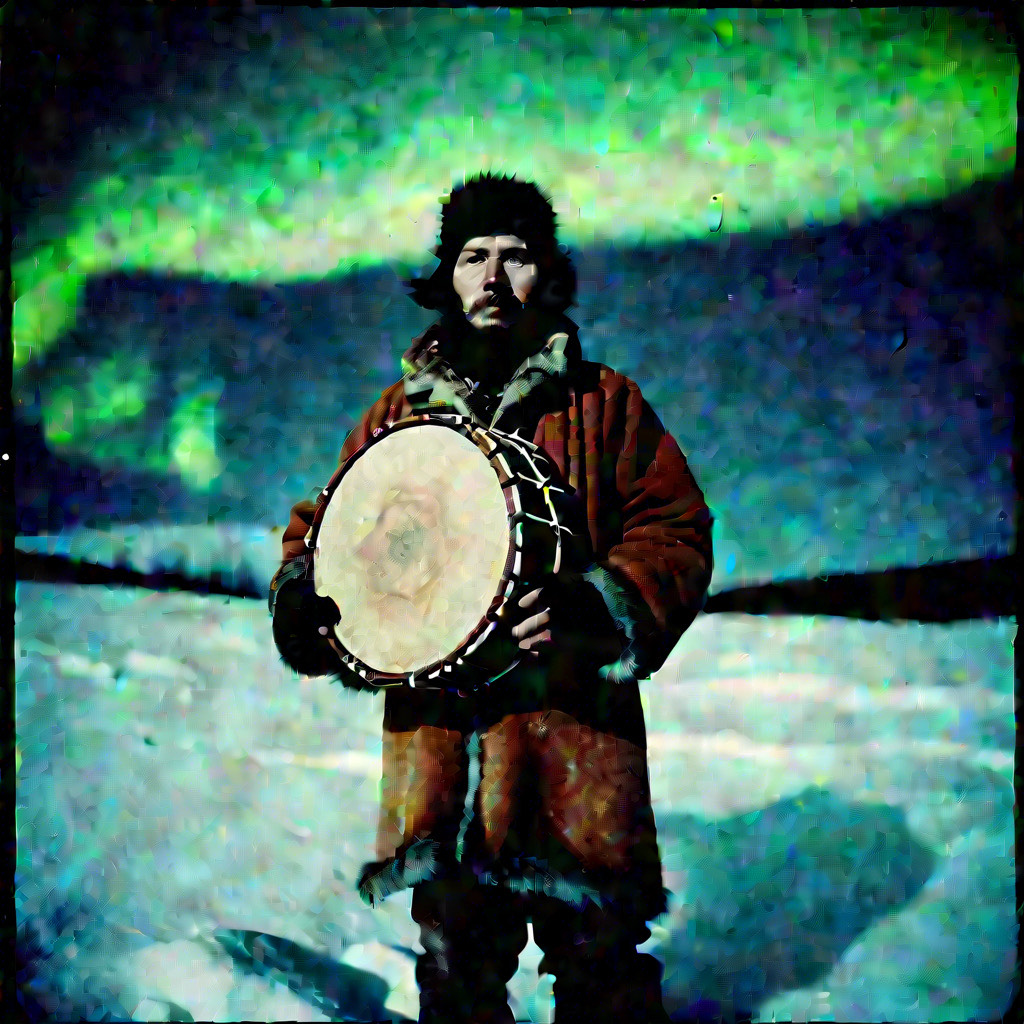
Scandinavian Witchcraft and Sàmi Druidry
Are you ready for a spellbinding exploration into the mystical world of Sàmi shamanic druidry and the ancient spiritual practices of the noaidis, the revered shamans of the far arctic north? Discover the deep-rooted shamanism that shaped the indigenous Sàmi people’s connection to nature, their powerful rituals, and the sacred magic they used to heal, protect, and communicate with the spirit world. This captivating talk will also delve into the dark history of persecution, when these mystics were brutally tortured and executed for their beliefs during Europe’s infamous witch hunts, and how their traditions were nearly erased by colonial and religious oppression.
Prepare to be enchanted by tales of spiritual resilience, ancient rituals, and the mystical legacy that still lingers today in the Arctic.
Bio:
Lena Schattenherz Heide-Brennand is a Norwegian lecturer with a master degree in language, culture and literature from the University of Oslo and Linnaeus University. She has been lecturing and teaching various subjects since 1998. Her field of interest and main focus has always been topics that others have considered strange, eccentric and eerie, and she has specialised in a variety of dark subjects linked to folklore, mythology and Victorian traditions and medicine. Her students often point out her thorough knowledge about the subjects she is teaching, in addition to her charismatic appearance. She refers to herself as a performance lecturer and always gives her audience an outstanding experience
don’t worry if you miss it – we will send you a recording valid for two weeks the next day