Rosaleen Norton – the fabulous, one-and-only ‘Witch of Kings Cross’ – Marguerite Johnson – Zoom

Rosaleen Norton – the fabulous, one-and-only ‘Witch of Kings Cross’

Rosaleen Norton, dubbed ‘The Witch of Kings Cross’ was a witch, artist, writer and philosopher from the 1930s until her death in 1979. Possessed of an acute intellect, Rosaleen studied and affected a personal and complex system of polytheism, trance magic, and sex magick, which was characterised and caricatured as ‘witchcraft’ and, sometimes, as ‘satanism’ by the Australian popular press.

Let Marguerite Johnson take you on a magical, witchy (broomstick) ride as she discusses Rosaleen – or Roie – and her wonderful legacy on popular and esoteric cultures through her occult and trance-induced art and her enduring dedication to an occult life. Marguerite will also discuss some of the scandals surrounding Roie, and the intense police and media scrutiny, which sometimes led to arrests, court cases and prosecutions.

In this lavishly illustrated talk, Marguerite not only shares the story of her own fascination with Roie, which began in childhood, but also some lesser-known archival material from her personal collection.

This special talk coincides with the exhibition – Four Witches & a Warlock: Magickal Art by Rosaleen Norton, Ithell Colquhoun, Madge Gill, Leonora Carrington & Austin Osman Spare – at The Viktor Wynd Museum of Curiosities, Fine Art & Natural History (Oct 01st 2024 – March 9, 2025)

Bio

Marguerite Johnson is a cultural historian of the ancient Mediterranean, specialising in sexuality and gender, particularly in the poetry of Sappho, Catullus, and Ovid, as well as magical traditions in Greece, Rome, and the Near East. She also researches Classical Reception Studies, with a regular focus on Australia. In addition to ancient world studies, Marguerite is interested in sexual histories in modernity as well as magic in the west more broadly, especially the practices and art of Australian witch, Rosaleen Norton. She is Honorary Professor of Classics and Ancient History at The University of Queensland, and a Fellow of the Australian Academy of the Humanities.

don’t worry if you miss it – we will send you a recording valid for two weeks the next day
All Hallow’s Eve and the Scandinavian Witches Tradition – Lena Heide-Brennand – Zoom

All Hallow’s Eve and the Scandinavian Witches Tradition

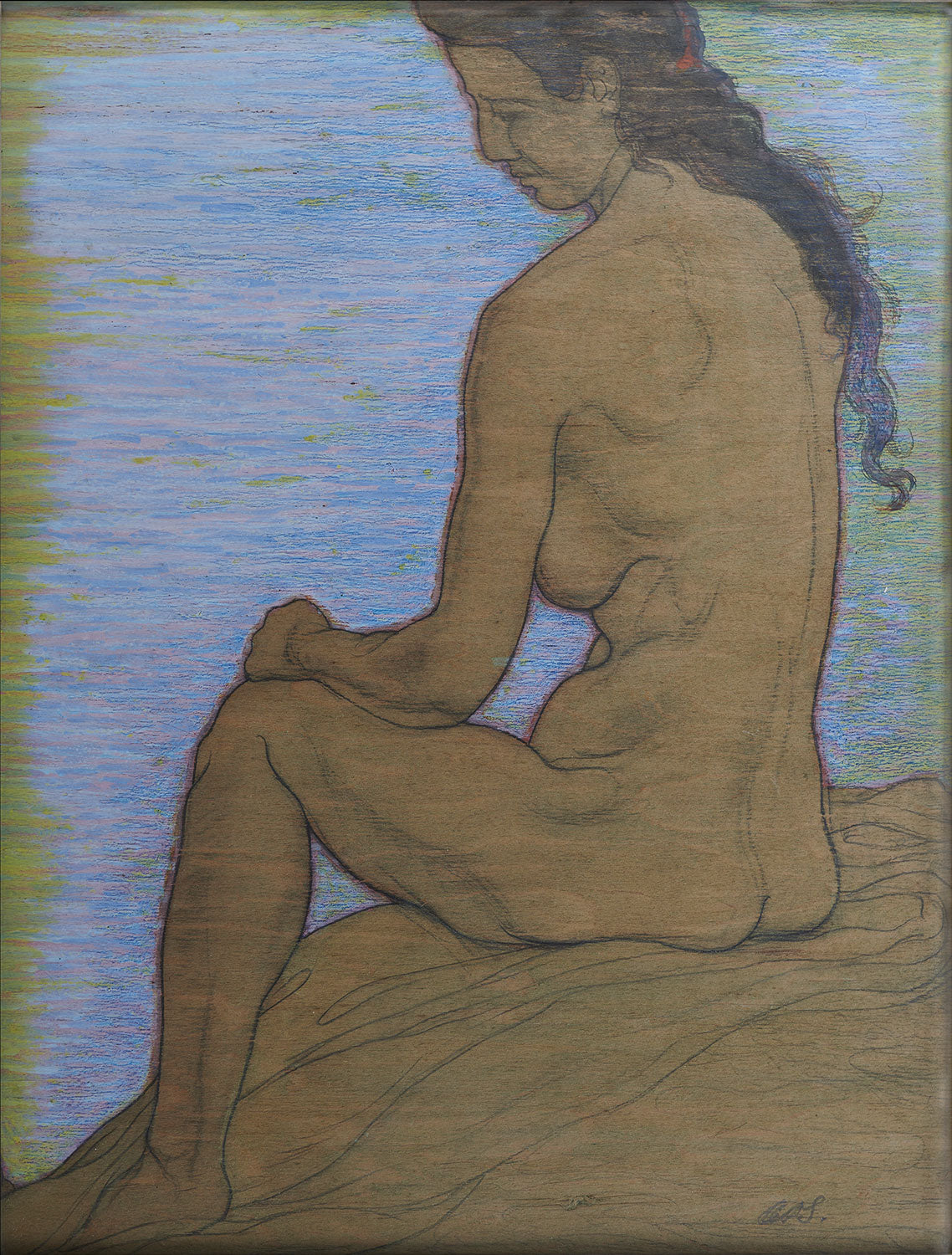
Join us for a chill-spining and fascinating historic journey into the mystical world of Scandinavian folklore and ancient witchcraft with the Norwegian historian and folklorist Lena. In this spellbinding lecture, we’ll delve into the rich magical traditions surrounding All Hallow’s Eve or the old Norse Àlfablòt. We will be exploring its connections to the dark and fascinating Völvas- the witchcraft legends of the North. From eerie tales of powerful shamans and spirit worlds to the ancient rituals that shaped the Viking culture Lena will talk about all the mysteries of how these Scandinavian traditions have influenced modern Halloween. Discover the hidden lore of witches and enchanted spells and prepare to be surprised about the magical practices that still echo through the forests and fjords of Scandinavia today..

Bio:

Lena Schattenherz Heide-Brennand is a Norwegian lecturer with a master degree in language, culture and literature from the University of Oslo and Linnaeus University. She has been lecturing and teaching various subjects since 1998. Her field of interest and main focus has always been topics that others have considered strange, eccentric and eerie, and she has specialised in a variety of dark subjects linked to folklore, mythology and Victorian traditions and medicine. Her students often point out her thorough knowledge about the subjects she is teaching, in addition to her charismatic appearance. She refers to herself as a performance lecturer and always gives her audience an outstanding experience

don’t worry if you miss it – we will send you a recording valid for two weeks the next day

The Other Side: A Journey into Women, Art and the Spirit World – Jennifer Higgie – Zoom

The Other Side: A Journey into Women, Art and the Spirit World

It’s not so long ago that a woman’s expressed interest in other realms would have ruined her reputation, or even killed her. And yet spiritualism, in various incarnations, has influenced numerous men – including lauded modernist artists such as Wassily Kandinsky, Piet Mondrian, Kazimir Malevich and Paul Klee – without repercussion. The fact that so many radical women artists of their generation – and earlier – also drank deeply from the same spiritual well has for too long been sorely neglected.

Jennifer Higgie will talk about her book – THE OTHER SIDE, and explore the lives and work of a group of extraordinary women, from the twelfth-century mystic, composer and artist Hildegard of Bingen to the nineteenth-century English spiritualist Georgiana Houghton, whose paintings swirl like a cosmic Jackson Pollock; the early twentieth-century Swedish artist, Hilma af Klint, who painted with the help of her spirit guides and whose recent exhibition at New York’s Guggenheim broke all attendance records; the ‘Desert Transcendentalist’, Agnes Pelton, who painted her visions beneath the vast skies of California; the Swiss healer, Emma Kunz, who used geometric drawings to treat her patients; and the British surrealist and occultist, Ithell Colquhoun, whose estate of more than 5,000 works recently entered the Tate gallery collection. While the individual work of these artists is unique, the women loosely shared the same goal: to communicate with, and learn from, other dimensions.

Weaving in and out of these myriad lives, sharing her own memories of otherworldly experiences, Jennifer Higgie discusses the solace of ritual, the gender exclusions of art history, the contemporary relevance of myth, the boom in alternative ways of understanding the world and the impact of spiritualism on feminism and contemporary art. A radical reappraisal of a marginalised group of artists, THE OTHER SIDE is an intoxicating blend of memoir, biography and art history.

Bio

Jennifer Higgie is an Australian writer who lives in London. Previously the editor of frieze magazine, and the presenter of Bow Down, a podcast about women in art history, she is the author and illustrator of the children’s book ‘There’s Not One’; the editor of ‘The Artist’s Joke’ and author of the novel ‘Bedlam’, about the 19th century fairy painter Richard Dadd. Her book on women’s self-portraits, ‘The Mirror & The Palette: Rebellion, Revolution & Resistance, 500 Years of Women’s Self Portraits’, was published by Weidenfeld & Nicolson in March 2021. ‘The Other Side: Women, Art and the Spirit World’, is published 2 February 2023.

Jennifer has been a judge of the Paul Hamlyn Award, the Turner Prize and the John Moore’s Painting Prize. She also writes screenplays and her paintings are in collections in Australia. She is also the host of ‘Artist’s Artists’ a new podcast for the National Gallery of Australia.

don’t worry if you miss it – we will send you a recording valid for two weeks the next day

The History of Tarot – Lena Heide Brennand

The History of Tarot – Lena Heide Brennand

Have you ever wondered about the origin and the history behind the Tarot cards? Join us for an enlightening talk on the origin and history of Tarot, where we go on a fascinating journey of these mystical cards from their medieval beginnings to their modern-day significance.

Explore the Tarot’s mysterious roots in 15th-century Europe, uncover the rich symbolism embedded within the cards and learn how Tarot has evolved over centuries, influencing and reflecting cultural, spiritual, and psychological landscapes. Whether you’re a reader or just find it historically interesting this online talk will provide an illustrated and entertaining overview of Tarot’s intriguing past and its neverending allure.

Bio:

Lena Schattenherz Heide-Brennand is a Norwegian lecturer with a master degree in language, culture and literature from the University of Oslo and Linnaeus University. She has been lecturing and teaching various subjects since 1998. Her field of interest and main focus has always been topics that others have considered strange, eccentric and eerie, and she has specialised in a variety of dark subjects linked to folklore, mythology and Victorian traditions and medicine. Her students often point out her thorough knowledge about the subjects she is teaching, in addition to her charismatic appearance. She refers to herself as a performance lecturer and always gives her audience an outstanding experience

don’t worry if you miss it – we will send you a recording valid for two weeks the next day


Cunning Folk, Life in The Age of Practical Magic – Dr Tabitha Stanmore – Zoom

Cunning Folk, Life in The Age of Practical Magic – Dr Tabitha Stanmore

In this talk, based on her book, Tabitha Stanmore transports us to a time when magic was used to navigate life’s challenges and solve problems of both trivial and deadly importance.

It’s 1600 and you’ve lost your precious silver spoons, or maybe they’ve been stolen. Perhaps your child has a fever. Or you’re facing trial. Maybe you’re looking for love or escaping a husband. What do you do?

In medieval and early modern Europe, your first port of call might have been cunning folk: practitioners of ‘service magic’. Neither feared (like witches), nor venerated (like saints), these people were essential: a ubiquitous presence at a time when the supernatural was surprisingly mundane and a cherished everyday resource.

We meet lovelorn widows, selfless healers and renegade monks; we listen in on Queen Elizabeth I’s astrology readings and track treasure hunters who try to keep peace with fairies. Much like us, premodern people lived in bewildering times, buffeted by forces beyond their control – and their faith in magic has much to teach us about how we accommodate ourselves to the irrational in our allegedly enlightened lives today.

Charming in every sense of the word, Cunning Folk is an immersive reconstruction of a bygone world and a thought-provoking commentary on the beauty and bafflement of being human.

Speaker bio

Dr. Tabitha Stanmore is a postdoctoral researcher on the Leverhulme-funded Seven County Witch Hunt Project, investigating the people affected by the 1640s witch trials in eastern England. The aim of this project is to return the identities and stories of the accused (and their accusers) to their communities.

She is a specialist in English magic and witchcraft between the fourteenth to seventeenth centuries, and particularly interested in the role that the supernatural played in everyday life, culture and politics. Her doctoral research explored the use of ‘service’ magic – practical spells sold by professional magicians – in premodern England.

Her first monograph, Love Spells and Lost Treasure: Service magic in England from the later Middle Ages to the early modern period, was published by Cambridge University Press in December 2022 and Cunning Folk: Life in the age of practical magicwas published in spring 2024 with The Bodley Head.

don’t worry if you miss it – we will send you a recording valid for two weeks the next day

The Witches of St. Osyth: Persecution, Betrayal and Murder in Elizabethan England – Prof Marion Gibson

The Witches of St. Osyth: Persecution, Betrayal and Murder in Elizabethan England

Prof Marion Gibson will discuss her recent book – an emotive, haunting story of a community torn apart, the Essex witch accusations and trial of 1581-2 are, taken together, one of the pivotal instances of that malign and destructive wave of misogynistic persecution which periodically broke over early modern England. Yet, for all their importance in the overall study of witchcraft, the so-called witches of St Osyth have largely been overlooked by scholars. Marion Gibson now sets right that neglect. Using fresh archival sources – and investigating not just the village itself, but also its neighbouring Elizabethan hamlets and habitations – the speaker offers revelatory new insights into the sixteen women and one man accused of sorcery while asking wider, provocative questions about the way history is recollected and interpreted. Combining landscape detective work, a reconstruction of lost spaces and authoritative readings of crucial documents, Gibson skilfully unlocks the poignant personal histories of those denied the chance to speak for themselves.

An emotive, haunting story of a community torn apart, the Essex witch accusations and trial of 1581-2 are, taken together, one of the pivotal instances of that malign and destructive wave of misogynistic persecution which periodically broke over early modern England. Yet, for all their importance in the overall study of witchcraft, the so-called witches of St Osyth have largely been overlooked by scholars.

Speaker Bio

Marion Gibson now sets right that neglect. Using fresh archival sources – and investigating not just the village itself, but also its neighbouring Elizabethan hamlets and habitations – the author offers revelatory new insights into the sixteen women and one man accused of sorcery while asking wider, provocative questions about the way history is recollected and interpreted. Combining landscape detective work, a reconstruction of lost spaces and authoritative readings of crucial documents, Gibson skilfully unlocks the poignant personal histories of those denied the chance to speak for themselves

don’t worry if you miss it – we will send you a recording valid for two weeks the next day

Following Lilith – tracking a demoness through time – Dr Sarah Clegg

Following Lilith – tracking a demoness through time

The monstrous Lilith has some popularity in the modern day, both as a demoness appearing in literature, TV and film, and as a feminist symbol. In most modern tellings of her story, she is the first wife of Adam, cast out of paradise when she refused to have sex with her husband, and is often represented as a seductive, child-killing creature. But where does Lilith come from? Tracing her back for over 4000 years, this talk will examine her origins in the child- and mother-killing demoness Lamashtu from ancient Mesopotamia, and Lamashtu’s contemporary, a rather sad species of virgin ghost called Lilitu. It will follow her through Aramaic incantation bowls, kabbalist literature, Christian folklore and Victorian art, looking not just at how she’s changed over the millennia, but what drove those changes – how she combined with cultures, movements and interests to become the monster (and feminist figure) that she is today.

Bio

Sarah Clegg has a PhD in ancient history from Cambridge University; she was part of the 2020/21 London Library Emerging Writers Programme. Her first book — Woman’s Lore: 4,000 Years of Sirens, Serpents and Succubi — was published by Head of Zeus and traces a group of seductive, child-snatching demonesses through folklore from ancient Mesopotamian to the present day. It was shortlisted for the HWA Non-Fiction Crown Award 2023.

Curated & Hosted by

Marguerite Johnson is a cultural historian of the ancient Mediterranean, specialising in sexuality and gender, particularly in the poetry of Sappho, Catullus, and Ovid, as well as magical traditions in Greece, Rome, and the Near East. She also researches Classical Reception Studies, with a regular focus on Australia. In addition to ancient world studies, Marguerite is interested in sexual histories in modernity as well as magic in the west more broadly, especially the practices and art of Australian witch, Rosaleen Norton. She is Honorary Professor of Classics and Ancient History at The University of Queensland, and a Fellow of the Australian Academy of the Humanities.

don’t worry if you miss it – we will send you a recording valid for two weeks the next day

Britain’s Last Witch – Hellish Nell – Prof Malcolm Gaskill – Zoom

Hellish Nell: Spiritualism and Psychical Research in Interwar Britain
One of the last criminal trials using the 1735 Witchcraft Act was, improbably, in London in 1944. The accused was Helen Duncan, a middle-aged Scotswoman. This is her extraordinary story.
Known since childhood as ‘Hellish Nell’, for her uncontainable nature, Mrs Duncan was one of the most popular mediums of the twentieth century, holding seances around the country where she was believed to manifest visibly the spirits of the dead. She also attracted the attention of psychical researchers, eager to prove to disprove her gift, and indeed the existence of ghosts.
What happens when we die? It was the question of the age for a generation which had endured one world war and now was living through another. Mrs Duncan’s seances offered an answer. But when she started foretelling naval disasters, she also attracted the unwelcome attention not only of psychical researchers but of the secret service. And so just weeks before the Normandy landings, absurdly, anachronistically, she was prosecuted for witchcraft and jailed. Was Nell a conjurer, a martyr or a security risk?
Professor Gaskilll’s ‘Hellish Nell’ was first published in 2001 to widespread acclaim and was longlisted for the Whitbread Prize. In a revised edition published in 2023, it remains a fascinating window into the unsettled spiritual and psychological mood of the times: a sensational tale of spectacle, credulity and cruelty, and the life of woman many people remember as Britain’s last witch.
Speaker Bio
Malcolm Gaskill is Emeritus Professor of Early Modern History at the University of East Anglia. Before joining the School of History at UEA, he was Fellow and Director of Studies in History at Churchill College, Cambridge. Prior to that he was a lecturer at Keele University (1993-4), Queen’s University, Belfast (1994-5), and Anglia Ruskin University (1995-9). He left UEA in 2020 and is now a full-time writer. His interests are mainly in British social and cultural history, particularly the history of mentalities. He has written extensively about the history of witch-beliefs and witchcraft prosecutions, and the supernatural in the twentieth century, especially spiritualism and psychical research. His bestselling 2021 book The Ruin of All Witches: Life and Death in the New World, was a Sunday Times History Book of the Year and was shortlisted for the Wolfson History Prize.
don’t worry if you miss it – we will send you a recording valid for two weeks the next day

The Story of Wicca: An illustrated talk – Dr Julia Phillips – Zoom

The Story of Wicca: An illustrated talk

Modern Pagan Witchcraft, better known as Wicca, emerged publicly in England during the 1950s. Partly the timing was a result of Europe moving forward from the trauma of World War II, and partly owing to the repeal of the Witchcraft Act of 1735, which was replaced with the Fraudulent Mediums Act of 1951, but its story began much earlier, during the fin de siècle at the end of the 19th century.

The talk examines the influence of characters such as Charles Godfrey Leland, Sir James Frazer, and Margaret Murray, and reviews the roles played by Cecil Williamson and Gerald Gardner as Wicca made its wat from the shadows to public consciousness.

Speaker Bio

Julia Phillips is Hon Senior Research Associate at the University of Bristol. She received her PhD for her research examining how witches and witchcraft were featured in newspapers in Victorian Britain. Her primary research interests are the study of witchcraft in the nineteenth century and the development of modern pagan witchcraft in the twentieth century.

Recent publications:

Phillips, Julia. 2021. ‘Madeline Montalban: Magus of the Morning Star.’ In Essays on Women in Western Esotericism: Beyond Seeresses and Sea Priestesses, edited by Amy Hale, 229-254. Cham: Springer International Publishing.

Phillips, Julia. ‘The Museum of Witchcraft and Magic: Toward a New History of British Wicca.’ Magic, Ritual, and Witchcraft, vol. 16 no. 2, 2021, p. 173-200. Project MUSE, doi:10.1353/mrw.2021.0028.

Houlbrook, Ceri and Phillips, Julia. ‘For All of Your Protection Needs: Tracing the “witch-bottle” from the Early Modern Period to TikTok.’ Magic, Ritual, and Witchcraft (2023, volume 18.1).

Curated and Hosted by

Marguerite Johnson is a cultural historian of the ancient Mediterranean, specialising in sexuality and gender, particularly in the poetry of Sappho, Catullus, and Ovid, as well as magical traditions in Greece, Rome, and the Near East. She also researches Classical Reception Studies, with a regular focus on Australia. In addition to ancient world studies, Marguerite is interested in sexual histories in modernity as well as magic in the west more broadly, especially the practices and art of Australian witch, Rosaleen Norton. She is Honorary Professor of Classics and Ancient History at The University of Queensland, and a Fellow of the Australian Academy of the Humanities.

don’t worry if you miss it – we will send you a recording valid for two weeks the next day
Italian Witchcraft and Shamanism – Dr Angela Puca – Zoom

Italian Witchcraft and Shamanism
Dr Angela Puca will discuss her new book.
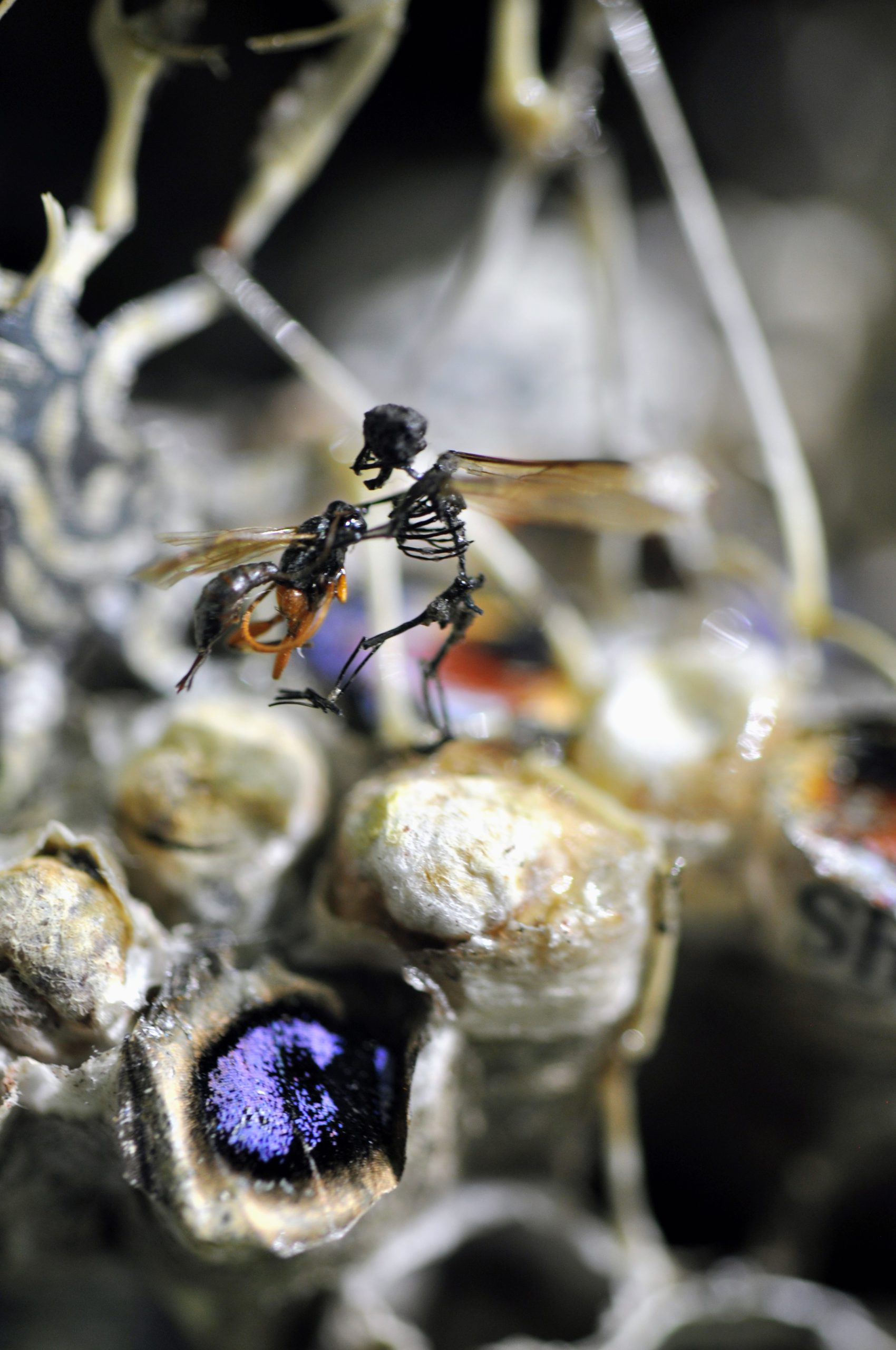
Shamanism is thriving as an exotic import and a hidden native tradition in Italy today. This ethnographical work uncovers two faces of Italian shamanism. The first is trans-cultural shamans who creatively adapt rituals and beliefs from indigenous cultures worldwide. Second, extensive fieldwork shows how regional folk magic practices of segnatoriand segnatrici constitute a little-known but enduring form of native Italian shamanism. By documenting these parallel worlds, contemporary magic workers appear to be the heirs of ancient local healing traditions. Offering rare insights into vernacular religion, this book vividly portrays shamans’ past and present on the Italian peninsula.
Bio
Dr Angela Puca holds a bachelor’s and a master’s degree in philosophy. In 2021, The University of Leeds awarded her a PhD in Anthropology of Religion, which will soon be published with Brill.
Her research focuses on magic, witchcraft, Paganism, esotericism, shamanism, and related currents.
Author of several peer-reviewed publications and co-editor of the forthcoming ‘Pagan Religions in five Minutes’ for Equinox, she hopes to bridge the gap between academia and the communities of magic practitioners by delivering related scholarly content on her YouTube Channel and TikTok ‘Angela’s Symposium.’
don’t worry if you miss it – we will send you a recording valid for two weeks the next day