Divining the Past, Present, and Future: Divination – David Zeitlyn – Zoom

Divination: ‘Looking for answers, not just stars and cards but spiders too!’’  

After many years of studying Mambila spider divination in Cameroon I will discuss different ways of understanding a particular occult practice such as ŋgam dù – versions of which are found throughout southern Cameroon. This allows us to better appreciate the approaches to the academic study of divination exemplified in the recent Oxford exhibition and related book. People are looking for answers to hard questions. There is huge variation in how answers are produced. We should focus on questions not techniques when thinking about divination in general.

Bio:

David Zeitlyn is professor of social anthropology at University of Oxford and conseil technique to the chief of Somié in Cameroun. He is an initiated ŋgam dù Spider diviner. He has been working with Mambila in Cameroon since 1985. Recent publications include An Anthropological Toolkit: Sixty Useful Concepts (2022) and Mambila Divination: Framing Questions, Constructing Answers (2020).  With Michelle Pfeffer he curated the exhibition in Oxford, ‘Oracles Omens Answers’ (Dec 2024-April 2025): https://visit.bodleian.ox.ac.uk/event/oracles-omens-and-answers and edited the related book, Divination Oracles Omens published by Bodleian Library Press:
https://bodleianshop.co.uk/products/divination-oracles-omens (in Europe and UK), or in
USA: https://press.uchicago.edu/ucp/books/book/distributed/D/bo249121065.html

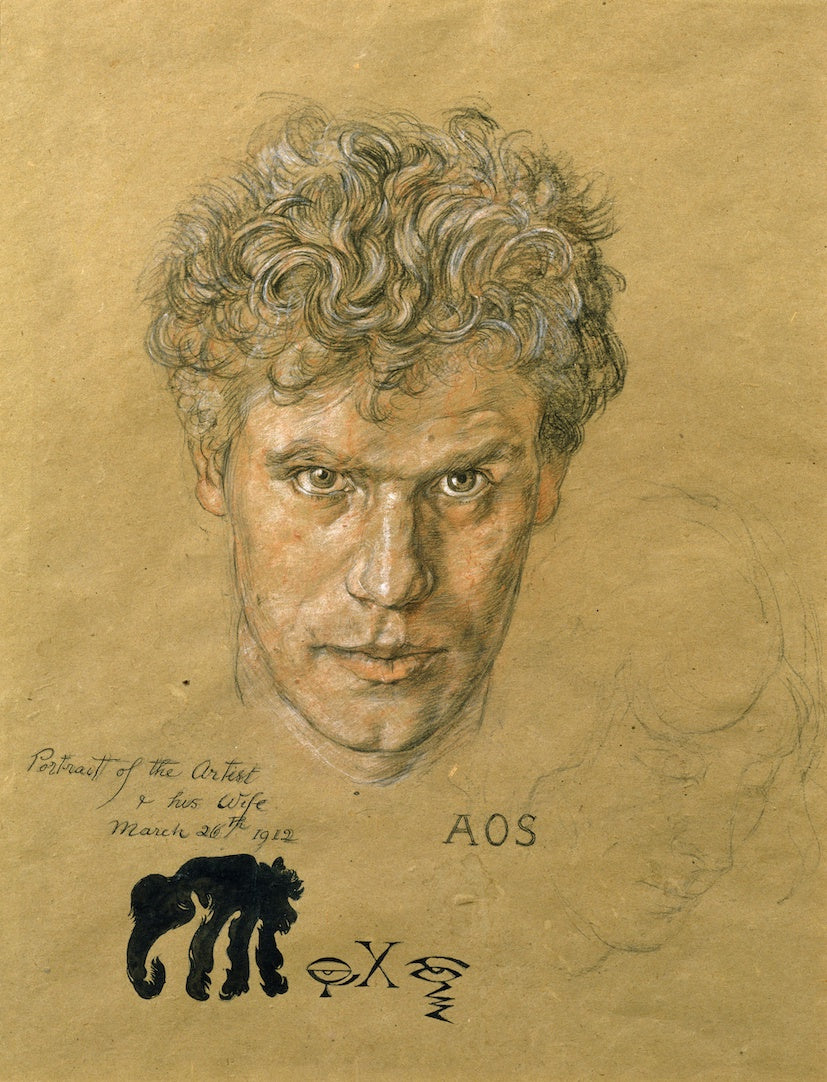
Image: A divinatory result: Asking about Trump and Biden (2019)

don’t worry if you miss it – we will send you a recording valid for two weeks the next day


Divining the Past, Present, and Future: Oracles, Series 1 – Four Lectures

Join us for Series 1 as we journey into the histories and mysteries of divination. Delivered by leading scholars in the field, ‘Divining the Past, Present, and Future’ includes talks on specific types of divination, from Mambila spider divination to Medieval necromancy.

Curated & Hosted by

Marguerite Johnson is a cultural historian of the ancient Mediterranean, specialising in sexuality and gender, particularly in the poetry of Sappho, Catullus, and Ovid, as well as magical traditions in Greece, Rome, and the Near East. She also researches Classical Reception Studies, with a regular focus on Australia. In addition to ancient world studies, Marguerite is interested in sexual histories in modernity as well as magic in the west more broadly, especially the practices and art of Australian witch, Rosaleen Norton. She is Honorary Professor of Classics and Ancient History at The University of Queensland, and a Fellow of the Australian Academy of the Humanities. She lives in Mytilene on the Greek island of Lesvos.

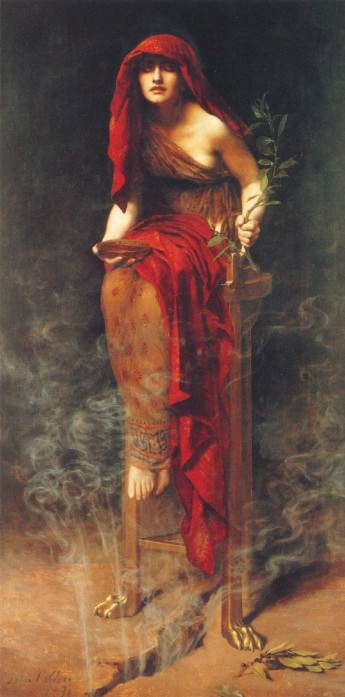
Image: John Collier, ‘Priestess of Delphi’ (1891), Art Gallery of South Australia


Divining the Past, Present, and Future: Oracles Series 1: 4 lectures – Zoom

Divining the Past, Present, and Future: Oracles, Series 1 – Four Lectures

Join us for Series 1 as we journey into the histories and mysteries of divination. Delivered by leading scholars in the field, ‘Divining the Past, Present, and Future’ includes talks on specific types of divination, from Mambila spider divination to Medieval necromancy.

Curated & Hosted by

Marguerite Johnson is a cultural historian of the ancient Mediterranean, specialising in sexuality and gender, particularly in the poetry of Sappho, Catullus, and Ovid, as well as magical traditions in Greece, Rome, and the Near East. She also researches Classical Reception Studies, with a regular focus on Australia. In addition to ancient world studies, Marguerite is interested in sexual histories in modernity as well as magic in the west more broadly, especially the practices and art of Australian witch, Rosaleen Norton. She is Honorary Professor of Classics and Ancient History at The University of Queensland, and a Fellow of the Australian Academy of the Humanities. She lives in Mytilene on the Greek island of Lesvos.

Image: John Collier, ‘Priestess of Delphi’ (1891), Art Gallery of South Australia


Lecture  1 – Divination: ‘Looking for answers, not just stars and cards but spiders too!’’  – David Zeitlyn – 11 January 2026

After many years of studying Mambila spider divination in Cameroon I will discuss different ways of understanding a particular occult practice such as ŋgam dù – versions of which are found throughout southern Cameroon. This allows us to better appreciate the approaches to the academic study of divination exemplified in the recent Oxford exhibition and related book. People are looking for answers to hard questions. There is huge variation in how answers are produced. We should focus on questions not techniques when thinking about divination in general.

Bio:

David Zeitlyn is professor of social anthropology at University of Oxford and conseil technique to the chief of Somié in Cameroun. He is an initiated ŋgam dù Spider diviner. He has been working with Mambila in Cameroon since 1985. Recent publications include An Anthropological Toolkit: Sixty Useful Concepts (2022) and Mambila Divination: Framing Questions, Constructing Answers (2020).  With Michelle Pfeffer he curated the exhibition in Oxford, ‘Oracles Omens Answers’ (Dec 2024-April 2025): https://visit.bodleian.ox.ac.uk/event/oracles-omens-and-answers and edited the related book, Divination Oracles Omens published by Bodleian Library Press:
https://bodleianshop.co.uk/products/divination-oracles-omens (in Europe and UK), or in
USA: https://press.uchicago.edu/ucp/books/book/distributed/D/bo249121065.html

Image: A divinatory result: Asking about Trump and Biden (2019)


Lecture  2 – Creativity in an Eggshell: The Freedom of Uncovering One’s Own World? – Katherine Swancutt – 18 January 2026

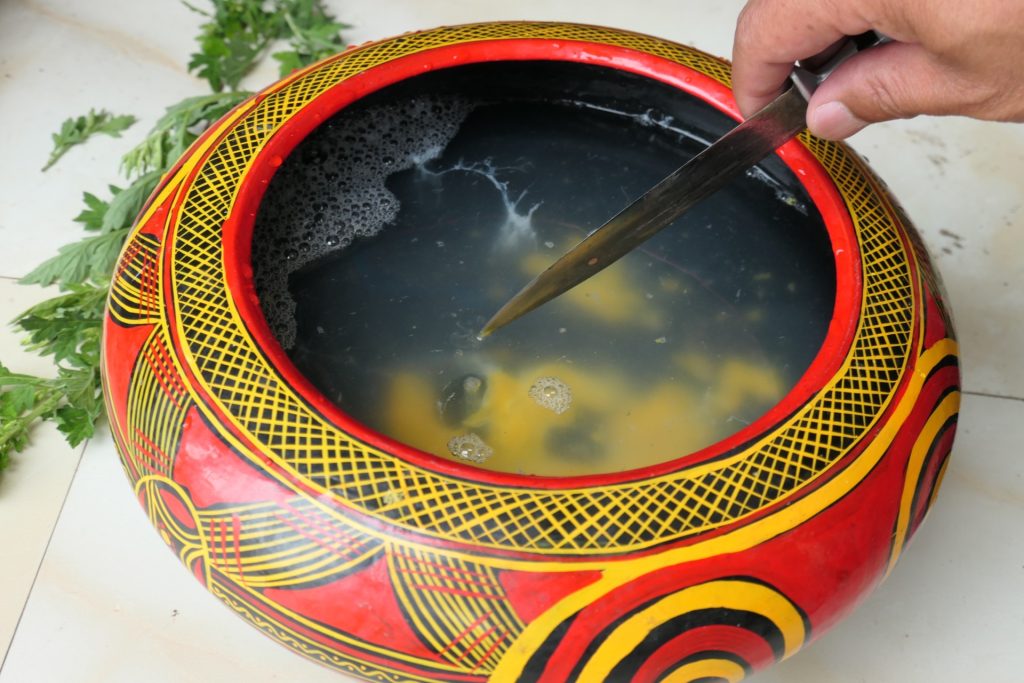
Probably every kind of divination requires creativity, but the Nuosu of Southwest China open up whole microcosms of it when cracking eggs into bowls of water and reading the bubbles that form. Nuosu egg divination is a spontaneous craft––one that both shapes and responds to the world––which means that diviners are free to interpret the same results differently. Many clients value this ‘natural’ approach to divination because it lets them address problems flexibly. Yet Nuosu egg divination also raises large questions about the nature of divination that I address in this talk: Is it possible to have too much creativity in divination? Or too much freedom in envisioning our own place within the cosmos?

Bio:

Katherine Swancutt is reader in social anthropology at King’s College London and Project Lead of the ERC synergy grant ‘Cosmological Visionaries: Shamans, Scientists, and Climate Change at the Ethnic Borderlands of China and Russia’. She has worked with Nuosu in Southwest China since 2007 and carried out fieldwork on shamanism and animism across Inner Asia for more than 25 years. Recent publications include Demons and Gods on Display: The Anthropology of Display and Worldmaking (special issue of Asian Ethnology, 2023) and ‘Dreams, Visions, and Worldmaking: Envisioning Anthropology Through Dreamscapes’ (Annual Review of Anthropology, 2024). Her chapters on ‘Nuosu Egg Divination’ and ‘Buryat Mongolian Card Divination’ appear in David Zeitlyn and Michelle Aroney’s Divination, Oracles & Omens (2024) published by Bodleian Library Press: https://bodleianshop.co.uk/products/divination-oracles-omens (in Europe and UK), or in USA: https://press.uchicago.edu/ucp/books/book/distributed/D/bo249121065.html

Image: Pointing at a bubble trapped just beneath the surface to indicate the client’s lost soul. Photograph © Katherine Swancutt


Lecture  3  – Getting Down to the Bare Bones: Scapulimancy and Second Sight in Scottish Gaelic Tradition – Andrew Wiseman – 15 March 2026

Scapulimancy (Slinneineachd in Scottish Gaelic) is a form of augury or divination involving the examination or interpretation of the scapula usually, though not exclusively, of the shoulder-blade or speal bone of a sheep, and sometimes that of a cow or a pig. Such a practice was believed to be able to foretell important events in the owner’s life, including deaths, battles, commotions, and other significant occurrences. Disasters such as the Massacre of Glencoe (1692) and the Battle of Culloden (1746) were said to have been prognosticated using scapulimancy.

The earliest ethnographic records of scapulimancy, from a Scottish context, dates to the seventeenth-century and the latest to the nineteenth-century. To judge from these accounts, as well as those supplemented from oral sources, such a practice crosses ethnic and cultural boundaries. Indeed, such a divinatory method is found throughout many parts of the world and is well documented, for instance, in East Asian cultures.

The purpose of this presentation is to critically examine the various early modern sources and to assess why and by whom such a practice was resorted to and why at times scapulimancy is sometimes taken to be or sometimes confused with second sight. Also offered in the presentation are some thoughts on the actual origins of such a divinatory practice either to foretell future events (precognition) or those at a distance in space and time (detection).

Bio:

Andrew Wiseman is a cultural historian, specialising in the Scottish Highlands from the late medieval to the modern period, who has developed a keen interest in Scottish Gaelic intangible culture. He is currently editing a number of works and has authored around twenty chapters and articles as well as numerous blogs and mainstream publications. As editor of the forthcoming titles Your Work Will Remain: Diaries of Calum I. Maclean (1951–1954), From Lochaber, Badenoch, Morar, Arisaig, Moidart, Easter Ross and Sutherland and The Highlands and Selected Writings of Calum I. Maclean, a detailed and engaging account of Calum Maclean’s fieldwork diaries as well as his academic and mainstream publications will offer an opportunity to reassess the legacy of one of Scotland’s most important twentieth-century ethnologists and folklorists.

Image: James Hamilton, ‘Massacre of Glencoe,’ 1883–86. Glasgow Museums.


Lecture  4 –  Medieval Necromancy and the Cursed Imagination’ – Sophie Page – 26 April 2026

Necromancers – medieval Christian demon conjurors – thought they could compel demons to reveal the truth about anything they asked, including all the secrets of the past, present, and future. Demons had access to extraordinary knowledge because of their immortality and superior rationality. It was not that they were omniscient: rather that they had lived for a very long time, had seen it all before, and were superlative predicters. Some medieval thinkers thought of demons as the first natural scientists, permitted by God to pass the eons observing and interpreting humans to puzzle out each sin an individual was likely to succumb to. As the demons wandered eternally in the sublunar realm, they noticed things of great interest to the necromancer: where treasure was buried, who stole objects of value, unfaithful lovers, wrongful imprisonment, and princes’ guilty secrets. In this talk I will discuss how necromancers hoped to succeed in their rituals despite the intense malice and cunning of demons. We will also investigate the mystery and ambiguity of the spirit realm and the charge laid at necromancers that they had a ‘cursed imagination.’

Bio:

Sophie Page is Professor of Medieval History at University College London. She has published on monks and magic, cosmology, diagrams, animals and rituals and was joint editor of the Routledge History of Medieval Magic (2019). In 2018 she co-created the exhibition, Spellbound: Magic, Ritual and Witchcraft at the Ashmolean Museum, Oxford.

Image: The Pilgrim meeting the messenger of Necromancy, from ‘The Pilgrimage of the Life of Man’ by John Lydgate. Cotton Tiberius A VII/1, f. 42.r

Attendees will receive a recording of each lecture valid for 4 weeks.


Hexentexte – Professor Patricia Allmer – Zoom

Hexentexte

This talk by internationally renowned scholar of Surrealism Professor Patricia Allmer will discuss the significance of witches and witchcraft in post-war surrealist art by Germanophone women artists. Focussing on how and why women artists adopted, transformed, and re-assigned magical and ritual practices into aesthetic styles, forms, and systems, the talk will explore a range of specific works by artists including the Swiss Meret Oppenheim, the Austrians Renate Bertlmann and Birgit Jürgenssen, and the Germans Valeska Gert, Ursula, and Unica Zürn (whose first publication, a collection of drawings and anagram-poems, was titled Hexentexte or Witches’ Writings). In these works, prominent elements of the traditions of arcane knowledge and performance long associated with witchery combine with, and are transformed by, innovative surrealist techniques and strategies of representation to construct new and subversive kinds of art, repurposing myths and tales from the deep folk histories of central Europe to offer a radical commentary on the experiences of modern women.

Speaker’s Bio

Patricia Allmer is Professor of Modern and Contemporary Art History at the University of Edinburgh. Her many books, exhibitions, and essays have transformed the study of modern and contemporary women artists and surrealism, starting in 2009 with her curation of the award-winning Angels of Anarchy: Women Artists and Surrealism at Manchester Art Gallery, the first major exhibition on this topic. Her contribution to art history and her long-term international scholarly impact on the study of women artists and surrealism have been recognised by awards including a Philip Leverhulme Prize (2010) and an Association for Art History Fellowship (2023). Her books include Lee Miller: Photography, Surrealism, and Beyond (2016) and The Traumatic Surreal (2022), hailed in its Woman’s Art Journal review as “groundbreaking”, offering “new perspectives on female positions and lineages in the history of surrealism”. Her co-curated 2024-25 Henry Moore Institute exhibition The Traumatic Surreal is inspired by and based on this book. Professor Allmer is also a major international scholar of René Magritte, publishing three books on the artist, and delivering the prestigious 2017-18 International Émile Bernheim Programme lectures in Brussels on his work.

Hosted & Curated by

Lena Schattenherz Heide-Brennand is a Norwegian lecturer with a master degree in language, culture and literature from the University of Oslo and Linnaeus University. She has been lecturing and teaching various subjects since 1998. Her field of interest and main focus has always been topics that others have considered strange, eccentric and eerie, and she has specialised in a variety of dark subjects linked to folklore, mythology and Victorian traditions and medicine. Her students often point out her thorough knowledge about the subjects she is teaching, in addition to her charismatic appearance. She refers to herself as a performance lecturer and always gives her audience an outstanding experience, Lena’s New Book – Mythical Creatures in Scandinavian Folklore is now available on Amazon

don’t worry if you miss it – we will send you a recording valid for two weeks the next day

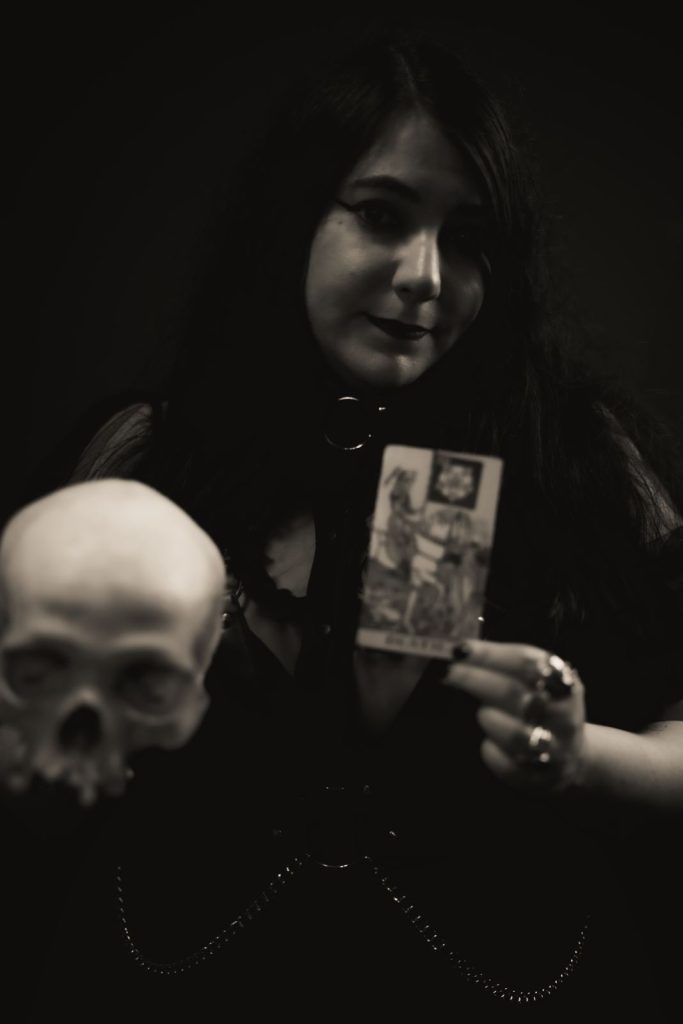
Wicked Wednesdays: Tarot Reading with Melissa Mercury + Devil’s Botany

Glimpse into what your future holds with an individual tarot reading with Melissa Mercury at The Last Tuesday Society. Guests will be invited to order a Devil’s Botany Absinthe cocktail to sip on while embarking on a 15 minute private tarot reading.

To reserve a table for drinks in The Absinthe Parlour, book via: https://www.thelasttuesdaysociety.org/absinthe-parlour/reservations/

Individual tarot readings will last roughly 15 minutes.

Event is for over 18s only.

MELISSA MERCURY

Melissa qualified in Tarot at London School of Astrology in 2016 and has been reading the cards professionally ever since. She has read for over 10,000 people and been a guest on the Love Island and Paranormal Activity podcasts. In 2024 she appeared on stage with Gail Porter at Paranormal Activity Live to discuss the history of tarot and offer guests a live reading.

Melissa uses tarot as a tool to guide and support people looking for clarity in areas such as love, work and mental health. Tarot can provide clarity, confidence and a safe space to discuss difficult subjects. It’s a fantastic way of exploring and growing.

THE ABSINTHE PARLOUR

A drinker’s cabinet of wonder filled with unusual spirits, from the old world and new, together in one curious exhibition of extraordinary elixirs. Allow each round to provide you with a passage to the furthest corners of the world, transported to an experience outside the boundaries of time. Seek and you shall find: hidden here are explorations of alchemy & magick, pleasure & fantasy, celebrating the point at which curiosity unlocks a world unknown.

The Last Tuesday Society’s Absinthe Parlour is truly a hidden treasure of East London.

Shortlisted “Bar of the Year 2024” – The Spirits Business 2024
Absinthe Menu Shortlisted “Specialist List of the Year” – Imbibe 2020
Voted “Best Bar in London” – DesignMyNight Awards 2019


Two Renegade Sexologists – Mikita Brottman

Renegade Sexologists

This lecture will consider the life and work of two renegade sexologists: Richard von Krafft-Ebing, and J. Paul de River. The aristocratic Krafft-Ebing was a German psychiatrist and author of the seminal Psychopathia Sexualis. J. Paul de River was the chief psychiatrist of the Los Angeles Sex Offense Bureau during the 1940s and author of The Sexual Criminal: A Psychoanalytic Study. The work of these two eccentric, obsessive, and sometimes deluded psychiatrists provide compelling time-capsules into the dark underbelly of 19th century Vienna, and the sordid backstreets of mid-century Los Angeles. Lectures will be illustrated and enhanced by vivid clinical case studies of what the authors deem “sexual psychopaths.”

Speaker Bio

Mikita Brottman, PhD, NCPsyA, is an Oxford-educated scholar, true crime author, psychoanalyst, and professor of literature and psychology at the Maryland Institute College of Art in Baltimore. She performs forensic evaluations for the National Institute for the Study, Prevention, and Treatment of Sexual Trauma. She was formerly the Chair of Engaged Humanities at the Pacifica Graduate Institute in California, and has taught at various universities in Europe and the USA. She has also worked in the Maryland prison system and forensic psychiatric facilities. She is the author of 16 books. Her latest, Guilty Creatures: Sex, Death and Murder in Tallahassee, Florida, was published by Simon & Schuster in 2025.

Don’t worry if you can’t make the live event on the night – we will send you a recording valid for two weeks the next day.

The Ghosts of Christmas Past – Sarah Clegg- Zoom

The Ghosts of Christmas Past

Christmas might seem like a time of jollity and cheer, but underneath all the tinsel and fairy lights there’s a far darker mood – one we see expressed in our modern custom of telling ghost stories at Christmas, in monsters like the Krampus, which roam the streets of European towns and cities across the Christmas season, and the horrible horse-skulled monster the Mari Lwyd who appears across Wales in the darkest nights of the year.

This talk will examine both the origins of these dark Christmas customs, and how they’ve changed and shifted down through the centuries – following everything from the hierarchy shredding Roman festival of Saturnalia to the custom of dressing as a monster and going house-to-house demanding drinks, food and money (the origins of modern Halloween trick-or-treating), and even the Christmas witches, who were said to riot through the skies with bands of the dead over the midwinter.

Speaker Bio

Sarah Clegg has a PhD in ancient history from Cambridge University and was part of the 2020/21 London Library Emerging Writers Programme. Her most recent book – The Dead of Winter: the Demons, Witches and Ghosts of Christmas– was published in 2024.

Curated & Hosted by

Marguerite Johnson is a cultural historian of the ancient Mediterranean, specialising in sexuality and gender, particularly in the poetry of Sappho, Catullus, and Ovid, as well as magical traditions in Greece, Rome, and the Near East. She also researches Classical Reception Studies, with a regular focus on Australia. In addition to ancient world studies, Marguerite is interested in sexual histories in modernity as well as magic in the west more broadly, especially the practices and art of Australian witch, Rosaleen Norton. She is Honorary Professor of Classics and Ancient History at The University of Queensland, and a Fellow of the Australian Academy of the Humanities. She lives in Mytilene on the Greek island of Lesvos.

Don’t worry if you miss it – we will send you a recording valid for two weeks the next day.

St Guthlac and Miracles in the Fens – Max Adams – Zoom

St Guthlac and Miracles in the Fens

Saint Guthlac, the Hermit of Crowland, led a fascinating life of miracles and political intrigue in the Fens in the 8th century.

Born into a noble family in the Anglo-Saxon kingdom of Mercia (in what’s now the English Midlands), as a young man Guthlac formed a band of soldiers. Then, aged 24, he experienced a profound conversion and became a monk at a monastery in Derbyshire. Deciding that he wished to live a solitary life as a hermit, he chose a remote and desolate location on the island of Crowland in the Fens, like Christ in the desert or Saint Anthony in the wilderness.

The British author and television presenter Max Adams will guide us through Guthlac’s journey from soldier to saint, drawing on sources including the Guthrac Roll, a beautifully drawn medieval illustrated account of his life.

Speaker Bio

Max Adams is the author of fourteen books, and the writer and presenter of several documentary films. He began his career as an archaeologist, excavating widely and publishing many papers and monographs. He later became a broadcaster and woodsman and began to travel more widely for writing. He has written biography and group biography, several histories of Early Medieval Britain and a number of books on trees and woodlands. His debut novel The Ambulist was published in 2016. The Firebringers (2009) was a Guardian Book of the Week, and Max has been widely reviewed in The Times, TLS, LRB, and elsewhere. The King in the North and The Wisdom of Trees were both bestsellers.

Max continues to manage woodlands and plant trees, to travel and, increasingly, illustrate his work with his own photographs and maps.

Don’t worry if you miss it – we will send you a recording valid for two weeks the next day.

An Unusual History of Fish – Amorina Kingdon – Zoom

An Unusual History of Fish

For centuries humans ignored sound in the ‘silent world’ of the ocean, assuming that what we couldn’t perceive, didn’t exist. But we couldn’t have been more wrong. Marine scientists now have the technology to record and study the complex interplay of the myriad sounds in the sea. Finally, we can trace how sounds travel with the currents, bounce from the seafloor and surface, bend with temperature and even saltiness; how sounds help marine life survive; and how human noise can transform entire marine ecosystems.

Award-winning science journalist Amorina Kingdon, author of Sing Like Fish, will give a clear and compelling portrait of this sonic undersea world. From plainfin midshipman fish, whose swim-bladder drumming is so loud it keeps houseboat-dwellers awake, to the syntax of whalesong, from the deafening crackle of snapping shrimp, to underwater earthquakes and volcanoes, Amorina will explain how sound plays a vital role in feeding, mating, parenting, navigating, and warning.

Meanwhile, our seas also echo with human-made sound, and we are only just learning how these pervasive noises can mask mating calls, chase animals from their food, and even wound creatures. Amorina’s lecture will be a captivating exploration of how underwater animals tap into sound to survive, and a clarion call for humans to address the ways we invade these critical soundscapes.

Speaker Bio

Amorina Kingdon is a writer based in Victoria, British Columbia. Until 2021 she was the staff writer for Hakai Magazine, where her work was anthologized in Best Canadian Essays 2020 (Biblioasis). She has received a Digital Publishing Award and a Jack Webster Award, and been honoured as Best New Magazine Writer by the National Magazine Awards.

don’t worry if you miss it – we will send you a recording valid for two weeks the next day

The Mysteries of Easter Island – James Grant-Peterkin – Zoom

The Mysteries of Easter Island

For centuries, the iconic stone statues of Easter Island have puzzled visitors to this remote outpost in the South Pacific. Who carved them? Why did they carve them? And what cataclysmic event later caused them all to be knocked down?

Ever since its discovery by European explorers on Easter Sunday 1722, the island has intrigued travellers with its colossal statues and unexplained archaeology. Found nowhere else in the world, these stone monoliths have even been attributed to the work of aliens and extraterrestrials.

Join James Grant-Peterkin as he discusses what might have actually happened on Easter Island and what the famous ‘heads’ really mean; and why the island’s history also serves as a cautionary lesson to humankind regarding overpopulation and the management of finite resources on our one island – planet Earth.

Speaker Bio

James Grant-Peterkin first visited Easter Island in 1996 almost by chance and was immediately captivated by life on one of the world’s most isolated inhabited islands. He read Modern Languages at Cambridge University which lead to a year’s fieldwork studying Rapa Nui, the unique language spoken only on Easter Island. He went on to live on the island for over 20 years, running his own travel company there and serving as the British Honorary Consul. He is the author of A Companion to Easter Island (2023) as well as South Pacific (2025) in the Travel Enrichment Series.

don’t worry if you miss it – we will send you a recording valid for two weeks the next day

What a Fish Knows – Jonathan Balcombe – Zoom

What a Fish Knows

Arguably the least understood, and certainly the most exploited vertebrates on Earth, fishes have been mainly viewed by us in two contexts: as a source of food, and a source of recreation. It is as if they didn’t have lives of their own. Modern science shows otherwise. This eye-opening presentation explores the colourful lives of the most diverse group of vertebrates. We explore fish perceptions, cognition, emotion, social behaviour, and cooperation, all within the context of our evolving relationship to fishes and their vital aquatic habitats.

Do fish think? Do they really have three-second memories? And can they recognise the humans who peer back at them from above the surface of the water?

Jonathan Balcombe, animal behaviour expert and author of the bestselling What a Fish Knows, will address these questions and more, taking us under the sea, through streams and estuaries, and to the other side of the aquarium glass to reveal the surprising capabilities of fishes.

Although there are more than thirty thousand species of fish – more than all mammals, birds, reptiles and amphibians combined – we rarely consider how individual fishes think, feel, and behave. Balcombe’s research upends our assumptions about fishes, portraying them not as unfeeling, dead-eyed feeding machines but as sentient, aware, social, and even Machiavellian – in other words, much like us.

Speaker Bio

Jonathan Balcombe was born in England and raised in Canada where he now lives. He has loved animals since age three when he decided he wanted to be a hippopotamus. Instead, he became a biologist with a PhD in the study of animal behaviour. During a career focused on animal protection, he developed and taught courses in animal behaviour and animal sentience for the Viridis Graduate Institute, and Humane Society University, and served as Associate Editor to the open-access journal Animal Sentience. His main focus these days is researching and writing books, which include Pleasurable Kingdom, Second Nature, The Exultant Ark, and What a Fish Knows, a New York Times best-seller available in seventeen languages. His latest book for grown-ups, Super Fly, won the National Outdoor Book Award for natural history literature. His first children’s book, Jake and Ava: A Boy and a Fish, was published in 2021. He is currently writing a book that explores cooperation and joy in the wild. In his spare time Jonathan enjoys biking, hiking, birding, baking, snorkelling, and trying to understand the neighbourhood squirrels.

don’t worry if you miss it – we will send you a recording valid for two weeks the next day