Looking East: From Folk Horror to Horror of the Folk in Thai Cinema – Katarzyna Ancuta

Looking East: From Folk Horror to Horror of the Folk in Thai Cinema

Folk horror is often said to be about the fear of regression, the fear of going back to ‘the old ways’ and the anxiety that ‘the old ways’ may be right. But what if the old ways and the new ways were very much the same? How does folk horror adapt to animist cultures, where old-age rituals and modern beliefs go hand in hand? Where does it find its ‘monstrous tribe’? Thai horror films reflect the animist orientation of Thai culture but do not situate animism in opposition to official religion and modernity, since animistic beliefs and practices are commonplace in today’s Thailand. Prevalent across the country and practised across all social strata, Thai animism and related with it folklore cannot be used as a designator of difference in the Thai context. If Thai folk horror produces its monstrous tribe, their monstrosity is not the result of regression, evidenced in arcane rituals, but rather a commentary on the existing inequality within Thai society. Thai folk horror is thus primarily invested in representing the rural-urban divide and its profound implication in tensions related to ethnicity and class.

Bio:

Katarzyna Ancuta is a lecturer at the Faculty of Arts, Chulalongkorn University in Thailand. Her research interests oscillate around the interdisciplinary contexts of contemporary Gothic/Horror, currently with a strong Asian focus. Her recent publications include contributions to The Edinburgh Companion to Globalgothic (2023), Folk Horror: New Global Pathways (2023) and The Transmedia Vampire (2021). She also co-edited two collections – Thai Cinema: The Complete Guide (2016) and South Asian Gothic: Haunted Cultures, Histories and Media (2022). 

Photo 1: Hoon Payon (dir. Phontharis Chotkijsadarsopon), 2023

Curated by

Ruth Heholt is Professor of Literature and Culture at Falmouth University in lovely Cornwall.

Hosted by

Dr. Amy Hale is an Atlanta based writer, curator and critic, ethnographer and folklorist speaking and writing about esoteric history, art, culture, women and Cornwall. She is the author of Ithell Colquhoun: Genius of the Fern Loved Gully (Strange Attractor 2020) and is currently working on several Colquhoun related manuscripts. She is also the editor of Essays on Women in Western Esotericism: Beyond Seeresses and Sea Priestesses (Palgrave 2022). She has contributed gallery texts and essays for a number of institutions including Tate, Camden Arts Centre, Art UK, Arusha Galleries, Heavenly Records and she is a curator and host for the Last Tuesday Society lecture series.

don’t worry if you miss it – we will send you a recording valid for two weeks the next day

Visual Aesthetics of Folk Horror – Tanya Krzywinska

Visual Aesthetics of Folk Horror

Character, theme and narrative are often centralised in the literature on Folk Horror; but what of its visual aesthetics? Can we trace Folk Horror aesthetics within older painting traditions and styles? The concern of this talk is to explore relationships between the Folk Horror of film, TV and videogames, and landscape painting. I will focus most intently on Gustav Courbet’s late landscapes and Andrew Wyeth’s work; along the way other forms of painting will provide touchpoints within this investigation of the way that folk horror translates its anti-pastoralism and pessimism into its visual sightlines. I will focus therefore on Folk Horror’s concern with the otherness of the landscape, nature, failed/misguided agency, and rural culture, arguing that an inherent pessimism drives Folk Horror’s ‘jamming’ of normative bucolic representations and therein subverting man’s surety of sovereignty over nature. In seeing Courbet’s anti-human animism and Wyeth’s rural othering backwards through the lens of Folk Horror, I seek to widen the scope of what we now regard as Folk Horror.

Bio

Tanya Krzywinska has written extensively on the Gothic and Horror across multiple platforms, focusing on magic and gender. She is an artist who works in traditional mediums as well as designing and researching augmented and virtual reality apps for art, museum, and heritage contexts. Since 2012, she has been Editor-in-Chief of the peer-reviewed journal Games and Culture (Sage) and is a professor at Falmouth University, Cornwall UK in the Games Academy.

Curated by

Ruth Heholt is Professor of Literature and Culture at Falmouth University in lovely Cornwall.

Hosted by

Dr. Amy Hale is an Atlanta based writer, curator and critic, ethnographer and folklorist speaking and writing about esoteric history, art, culture, women and Cornwall. She is the author of Ithell Colquhoun: Genius of the Fern Loved Gully (Strange Attractor 2020) and is currently working on several Colquhoun related manuscripts. She is also the editor of Essays on Women in Western Esotericism: Beyond Seeresses and Sea Priestesses (Palgrave 2022). She has contributed gallery texts and essays for a number of institutions including Tate, Camden Arts Centre, Art UK, Arusha Galleries, Heavenly Records and she is a curator and host for the Last Tuesday Society lecture series.

don’t worry if you miss it – we will send you a recording valid for two weeks the next day
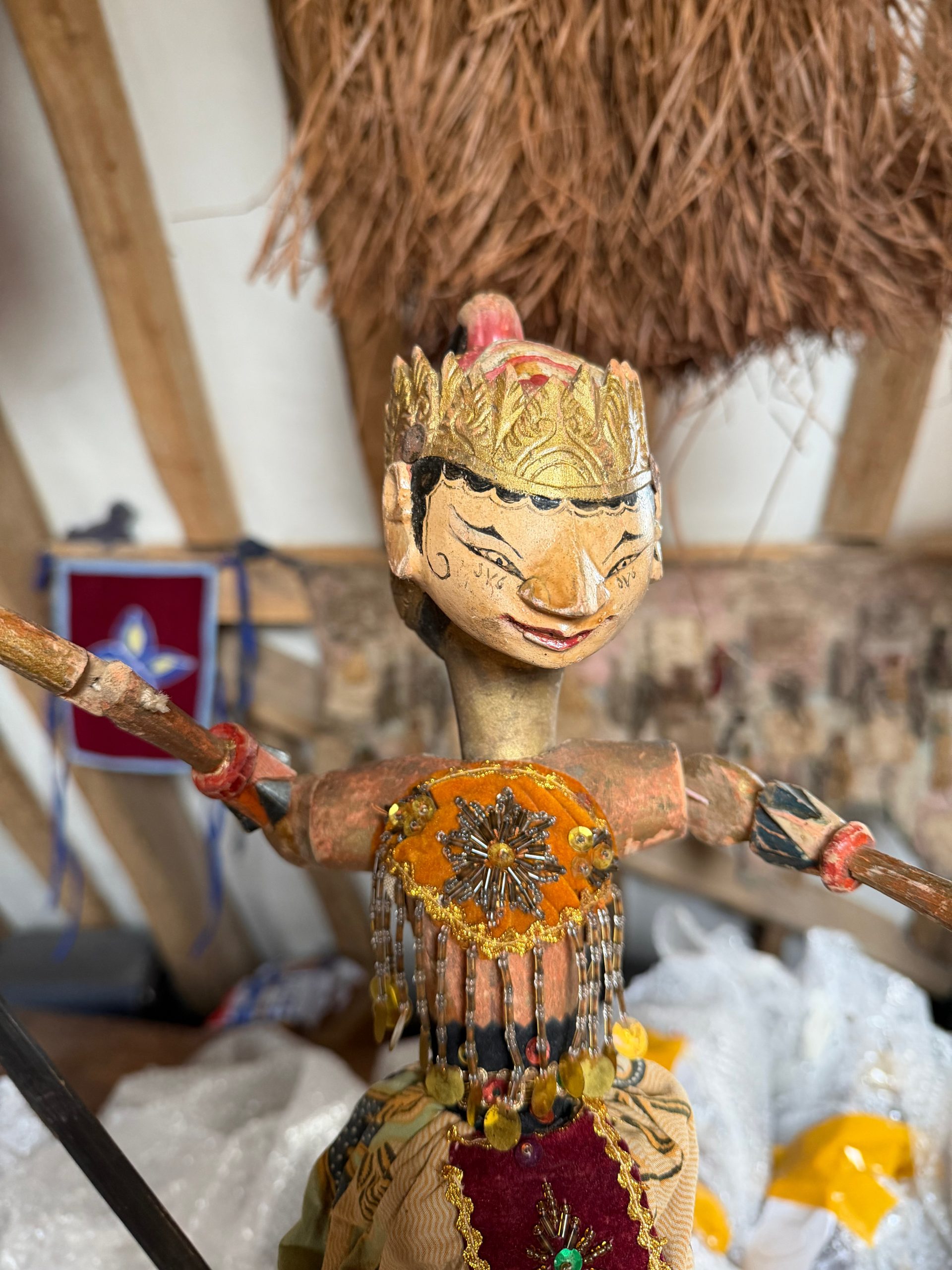
Photo 1: Blood on Satan’s Claw Piers Haggard, 1971.

Photo 2: ‘Stream in the Jura Mountains‘ (The Torrent), 1872–73, Honolulu Museum of Art

Sunny Landscapes, Dark Visions: Folk Horror and the Weird Imagination of E. F. Benson – Ruth Heholt

Sunny Landscapes, Dark Visions: Folk Horror and the Weird Imagination of E. F. Benson

What is ‘Folk Horror’? Who bothered to define it and why and how useful is it to see it as a sub-genre? One of the answers to these latter questions is that it is great fun. Ruthlessly ‘using’ folklore and ramping up the horror, Folk Horror makes both seem almost believable. People get in some terrible pickles, very often by going ‘too far’ – venturing where they really shouldn’t. If horror fans scream ‘don’t go into the cellar!’, Folk Horror folk venture ‘too far’ in the pursuit of knowledge, in unearthing that which really should stay buried, in intruding into communities that might be welcoming but for all the wrong reasons. Don’t pull that long-buried artefact out of the ground! Don’t open that old ‘forbidden’ book! Don’t assume these ‘picturesque’ villagers are benign! And really, I wouldn’t stay in that house that is surrounded by standing stones! My favourite ‘spook’ story writer E. F. Benson knew all the tricks. A lesser-known contemporary of M. R. James, Arthur Machen, and Algernon Blackwood (the main writers associated with historical folk horror), Benson gives us ‘sunny’ horrors. Benson’s ghost stories are often set in hot, still summers and he toys with folk horror where dark, old horrors appear in sunny, beautiful landscapes, making the horrors far, far worse. From Cornwall to Suffolk, Benson’s folk horror tales give pause and can make you look over your shoulder even in the most luscious of landscapes.

Bio

Ruth Heholt is Professor of Literature and Culture at Falmouth University in lovely Cornwall.

Curated and Hosted by

Dr. Amy Hale is an Atlanta based writer, curator and critic, ethnographer and folklorist speaking and writing about esoteric history, art, culture, women and Cornwall. She is the author of Ithell Colquhoun: Genius of the Fern Loved Gully (Strange Attractor 2020) and is currently working on several Colquhoun related manuscripts. She is also the editor of Essays on Women in Western Esotericism: Beyond Seeresses and Sea Priestesses (Palgrave 2022). She has contributed gallery texts and essays for a number of institutions including Tate, Camden Arts Centre, Art UK, Arusha Galleries, Heavenly Records and she is a curator and host for the Last Tuesday Society lecture series.

don’t worry if you miss it – we will send you a recording valid for two weeks the next day

Photo: The Mowing-Devil; or Strange News out of Hertfordshire, August 22, 1678