Licentious Worlds – Sexual Culture In Global Empires – Julie Peakman

Licentious Worlds is a history of sexual attitudes and behaviour through five hundred years of empire-building around the world. In a graphic and sometimes unsettling account, Julie Peakman examines colonization and the imperial experience putting women back in the picture, showing their role in the building of empires, but also how marginalized men and women were almost invariably exploited.

Women acted as negotiators, brothel-keepers, traders and peacekeepers, but they were also oppressed, forced into marriages and raped. The book describes daily life in Turkish harems, Mughal zenanas and Japanese geisha houses, as well as in royal palaces, private households and on board ships. The stories are drawn from many sources – from captains’ logs, missionary reports and cannibals’ memoirs to travellers’ letters, traders’ accounts and reports on prostitution. From debauched clerics and hog-sodomizing Pilgrims to sexually fluid cannibals and homosexual samurai, Licentious Worlds takes history where it has never been before.


Dr. Julie Peakman is a historian in eighteenth-century culture and an expert in the history of sexuality, erotica and pornography. She is Fellow of the Royal Historical Society and Honorary Fellow at Birkbeck College, University of London. She is a frequent contributor to journals, magazines and television documentaries for BBC, Channel 4 and the Biography Channel. Her books include Licentious Worlds. Sex & Exploitation in Global Empires; Amatory Pleasures, Exploration in Eighteenth-Century Sexual Culture (2016); The Pleasure’s All Mine. A History of Perverse Sex (2013); Lascivious Bodies: A Sexual History of the Eighteenth Century (2004) and Mighty Lewd Books: The Development of Pornography in Eighteenth-Century England (2003). She has also edited 6 Volumes of A Cultural History of Sexuality (2011); Sexual Perversions 1670-1890 (2009); and 8 Volumes of Whores Biographies, 1700-1825 (2006-7). She is also biographer of Peg Plunkett, Memoirs of a Whore (2014) and Emma Hamilton (2005)

The Origins & Rituals Of Absinthe: A Virtual Lecture & Tasting

Join Directors Allison Crawbuck & Rhys Everett for a virtual lecture as they explore the origins & rituals of absinthe.

Guests are invited to channel the notorious spirit of the Belle Époque. The event will begin with a virtual absinthe tasting and a look into how the mysterious spirit has been prepared for centuries. After everyone’s senses are well lubricated, the duo will explore tales of the absinthe’s tantalising past, from its origins as a cure-all elixir to a delightful aperitif, before eventually enduring a near century-long ban.

General admission includes a ticket to the virtual lecture. Guests are encouraged to have a glass of absinthe in hand during the event to bring the tales of this exquisite elixir to life.

Tasting sets of Devil’s Botany London Absinthe are available via: www.devilsbotany.com/shop.

Discount codes will be sent with your e-ticket for absinthe tasting sets or full 500ml bottles of Devil’s Botany London Absinthe.

Email [email protected] if you have any questions regarding this event.

Event is suitable for 18+ only.

About the Hosts

Allison Crawbuck and Rhys Everett have always shared a passion for unearthing curious tales and rendering them in liquid form. The duo are co-owners of The Last Tuesday Society’s cocktail bar in East London, transforming Hackney’s best-kept secret into the city’s favourite absinthe and cocktail haunt. In 2019, it was voted the Best Bar in London at the 7th annual Design My Night Awards by a public vote of over 180,000 Londoners, and in 2020, their absinthe menu was shortlisted for Imbibe’s Specialist List of the Year.

In December 2020, Allison Crawbuck and Rhys Everett launched London’s first Absinthe distillery: Devil’s Botany located in the city’s east end. They are also authors of Spirits of the Otherworld: A Grimoire of Occult Cocktails & Drinking Rituals, published by Prestel/RandomHouse (Sep 2021 | ISBN 9783791387147).

Mark Cocker Master Class On Nature Writing On Zoom

This is a four-hour seminar, split over two days in one week, to explore the techniques of nature writing. It builds on a previous, similar nature-writing course (on 2nd & 8th April), but each 2-part session is entirely free-standing and independent. In these current sessions we will pay special attention to another of the essential parts of all good writing.

Nature is full of stories but how do you choose what to focus upon? How do you order the material to make it engaging, understandable and full of impact. The sessions will look very carefully at fixing your subject and setting the scene. It will look at how the writer creates a relationship with their reader and with their subject matter. Finally it will consider how you choose words to create the deepest emotional connection between those two parts.

This may be an exercise on nature writing, but it has relevance across the genres. All writers draw upon the landscape and the wider environment to create an atmosphere, to illuminate character and to move the narrative along. The class may be online but the aim will be being indoors as much of the outdoors as possible.

Instructor: Mark Cocker is a multi-award winning author and naturalist, whose 12 books include Crow Country, Our Place and Claxton. Over the last four decades he has also published more than 1000 essays on nature in national and international newspapers especially the Guardian.

Sigil Workshop With Chaos Magician David Lee – By Zoom

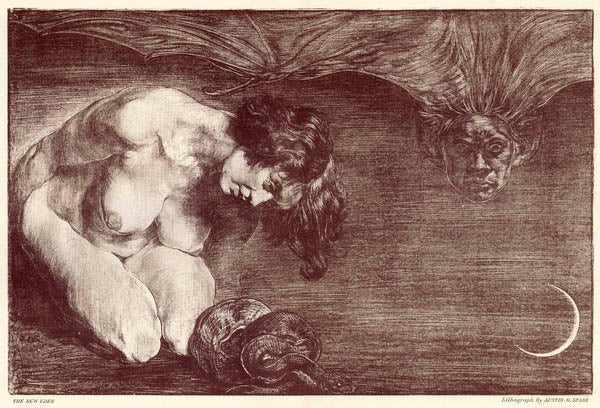
Learn how to make and use powerful sigils, in this two-part workshop with chaos magician Dave Lee. Starting with Austin Spare’s introduction of free-form sigilization, we’ll explore a variety of approaches to making sigils – including bindrunes, collage, graphic mashups, automated sigil generators and the idea of the artwork as hypersigil.

We’ll also cover the audial equivalent – mantras, and talk about how to get the best phrasing of your intentions. We’ll take a peek at the theory behind such magic and you’ll learn a few simple but powerful techniques for entering appropriate extraordinary states of consciousness.

Dave Lee is a magician, breathwork coach and writer. He has spent over four decades exploring consciousness and changing realities, using techniques that include meditation, magick, psychedelics and energy work. He is a leading light in the Chaos Magic organization the Illuminates Of Thanateros and a Master of Rune-Lore in the Rune-Gild.

His books include the ground-breaking Life-Force: Sensed Energy in Breathwork, Psychedelia and Chaos Magic.

A Beginner Zoom Course In Conjuring With Oliver Garwood

This Course Will Run over Four Wednesday evenings – the 14th, 21st, and 28th of April and 5th of May from 7:30-9pm. Ticket price is for the full course

Join professional magician, Oliver Garwood, for a beginner’s course in the conjuring arts. Learn the secrets of prestidigitation and legerdemain. No need to buy expensive magic props, everything you need is probably already in a draw at home! Over four 90-minute sessions Oliver will teach you sleight of hand and presentation along with a bit of magical history and probably a story or two, or three. Effects taught will include card tricks, coin vanishing and penetration, rubber band magic and the famous cups & balls trick! If you have ever wanted to be able to amaze and amuse your friends then this is the course for you, or even if you don’t want to do that want to know how the tricks are done then this is still the course for you.

Week One – Card Magic

Types of cards – poker/bridge

Holding and shuffling

Injog/ False Shuffles (card controls)/ Breaks/ Double Lift/ False cut

Simple routine – card between jokers

Forcing – slip force, cross cut (time delay)

Reveals and making a routine (narrative) – ‘moment of magic’

Ambitious card – injog card add, false shuffle, double lift, card in centre final reveal.

Alternatives to cards – business cards, slices of cheese?

Week Two – Impromptu Magic

Betcha’s – fun games to win drinks! 3 glasses, impossible knot

Hunters knot – false knot then routine.

Coin vanish – French drop, retention vanish

Palming coins – classic, finger, Ramsay Subtlety

Pen vanish

Pen & Coin routine

Jumping Rubber Band

Week Three – Parlour Magic

Cups & Balls – history, performance, discussion on cups and ball choices

Paddle Move – knife and dry wipe marker

Grandma’s Necklace – shoe laces and handkerchief

Week Four – Balls and Mentalism

Tissue Paper ball vanish, multiply, ten step routine.

One Ahead Mind Reading Routine

Coin Stack Prediction – multiple out

Equipment Required

Pack of Cards

3 cups

Tin foil

Coins – I will advise on the preceding week what coins and sizes etc.

Handkerchief

Pen and notebook

Rubber band

Knife (not sharp!) – butter knife if possible

Shoelaces (pair of, long as possible)

Cotton thread

Tissues

Viktor Wynd met Oliver a few years ago when he took some lessons and found them wonderful. Oliver Garwood has been a professional entertainer for over 20 years. From managing entertainment in hotels and holiday centres across the UK and abroad he has performed for thousands of enthralled audiences, Oliver was also resident magician at a dedicated magic museum. Oliver has been a keen magician since the age of 8 when received a Paul Daniel’s Magic Set for Christmas, his work in various areas of entertainment has helped hone this skill which he is sharing with you in this beginner’s course in conjuring.

Mark Cocker Master Class On Nature Writing

This is a four-hour seminar, split over two days in one week, to explore some of the techniques of nature writing. We will pay careful attention to language, and also to the power and importance of your initial observations. It is this preliminary work that often determines whether the words you choose will be original, fresh and suggestive.

The other key goal will be to explore how writers select their central theme, create mood and map out the psychological setting and the physical context quickly and in the fewest words. Economy of language is essential, since it is about distilling the essence of a place or season and using a part to evoke the whole scene.

This may be an exercise on nature writing, but it has deep relevance across the genres. All writers draw upon the landscape and the wider environment to create an atmosphere ad to set the scene. The class may be online but we will get as close to the living world as we possibly can.

Instructor: Mark Cocker is a multi-award winning author and naturalist, whose 12 books include Crow Country, Our Place and Claxton. Over the last four decades he has also published more than 1000 essays on nature in national and international newspapers especially the Guardian.

In The Realm Of The Dark Rabbit: A Comic Lecture By David Bramwell

“A nude horse is a rude horse” ran the US campaign slogan for The Society for Indecency to Naked Animals in 1959. The group even picketed the White House, demanding that the Kennedys cover their horse’s private parts with trousers. For its founder, Alan Abel, the society was one of innumerable high-profile pranks at the expense of the media. A few years later he even convinced the media that his 83 year-old grandmother, Yetta Bronstein, was running for president, with policies that included ‘compulsory national bingo and mink coats for all’.

Abel was a classic trickster, the archetypal peddler of mischief whose cunning, deceit and mischief can be found in every culture across the globe.

Whether it’s Sascha Baron Cohen as Ali G, Bugs Bunny, Pussy Riot, Bart Simpson or even – arguably – Donald Trump, tricksters take the role of rule-breakers, subversives and catalysts for change. From email fraudsters to the antics of Banksy, they can confound and delight in equal measure. They are the gremlins in the works. What drives some people to con, deceive and pull pranks and hoaxes, often at considerable risk?

In this funny and fascinating talk, Dr Bramwell unveils the strange and mercurial world of the trickster, from archetypes of Wile E Coyote to real-life examples such as as Chris Morris, Bonsai Kittens and Boatie McBoatface.

But while tricksters change culture, is culture changing our relationship with the trickster? In our digital age has the trickster risen to become a new driving force in politics, culture and social networking? There are even new religions with trickster gods as their figureheads and using meme magic to spread political chaos. Are we living in a ‘golden age’ of trickery or a time in which unprecedented levels of deceit and cunning leave many of us wishing we could put the rabbit back into the hat?

Speaker: David Bramwell is a British writer, musician, performer and broadcaster. For BBC Radio 3 and Radio 4, he has made programmes on diverse subjects, including Ivor Cutler, clapping, time travel, and the murmurations of starlings. He is the founder and host of Brighton’s legendary spoken word night, the Catalyst Club.

These are extraordinary times and the plague has hit some harder than others, tickets are by donation – if you possibly can £10 is much appreciated, but £2 is also much appreciated. Thank you for your support.

Introduction To Rune Magic/runic Sorcery – David Lee

Introduction to Rune Magic / Runic Sorcery

Two Day Workshop

Day One Saturday 3rd April 6-8pm

Day Two Saturday 10th April 6-8pm

(tickets are for both events)

What are runes?

How do we use them for spellcasting?

How can we tell if a rune in a reading is positive or negative?

Learn the basics of the Elder Futhark so you can makes spells for anything you wish – prosperity, health, security, inspiration, success, justice, concealment, communication and more – and that’s just the start!

You’ll create your own set of rune-cards and learn how to do divination with them. You’ll learn how to sing rune-galdor, how to create bindrunes, and you’ll put these practices together to make your own runic spells.

Dave Lee is a magician, breathwork coach and writer. He has spent over four decades exploring consciousness and changing realities, using techniques that include meditation, magick, psychedelics and energy work. He is a leading light in the Chaos Magic organization the Illuminates Of Thanateros and a Master of Rune-Lore in the Rune-Gild.

His books include the ground-breaking Life-Force: Sensed Energy in Breathwork, Psychedelia and Chaos Magic

Me and My Shadow: Sympathy with the Devil in Folk Tradition – Jeremy Harte

Making friends with the Devil may sound like a high-risk strategy, but the dark one couldend up being good company – at least for a while. Working together, he’d help his partner magician do good deeds, channel rivers and create new highways. It must be true, because you can still see the works of the Devil in the landscape to this day…

Just as often, however, the two unlikely companions would fall into competitive bickering, matching their strength in simple games and their wit in commercial bets – storytellers loved to create new ways in which an ingenious mortal could get one over on his uncanny friend.

How did rural tradition create these rollicking tales of toxic buddies out of the much darker lore of ceremonial magic? Hell threatens anyone who accepts the Devil’s favour, but this terrible threat is always wriggled out of by a trick condition, a clever wife, or a disintegrating strand of sand rope. Even at the very end, when relations are about to turn nasty, the folk magician finds a burial place that will save him from damnation. (Faustus, on the other hand, was not so lucky.)

The folk Devil is an inconsistent character – frightful and wicked, but also silly, combative, vengeful and vain. It seems that Devil lore was transformed by the English peasantry, an eschatologically insubordinate class who listened to everything preached at them by the holy and the learned, but only heard the parts that fitted their world view. This way of seeing things was much less fearsome than that of the occultists, and much more forgiving than that of the Church…

Jeremy Harte is a researcher into folklore and archaeology, with a particular interest in landscape legends and tales of encounters with other worlds. His book Cloven Country: The Devil and the English Landscape will be published by Reaktion at Halloween this year. Previous books include Explore Fairy Traditions, which won the Katharine Briggs award of the Folklore Society, Cuckoo Pounds and Singing Barrows, and The Green Man. In 2006 he was elected to the Committee of the Folklore Society and has subsequently organised the Society’s Legendary Weekends. Since the foundation of the journal Time & Mind, he has been Reviews Editor. He is curator of Bourne Hall Museum in Surrey.

Your host for this event will be the writer Edward Parnell, author of Ghostland: In Search of a Haunted Country. Edward Parnell lives in Norfolk and has an MA in Creative Writing from the University of East Anglia. He is the recipient of an Escalator Award from the National Centre for Writing and a Winston Churchill Travelling Fellowship. Ghostland (William Collins, 2019), a work of narrative non-fiction, is a moving exploration of what has haunted our writers and artists – as well as the author’s own haunted past; it was shortlisted for the PEN Ackerley 2020 prize, an award given to a literary autobiography of excellence. Edward’s first novel The Listeners (2014), won the Rethink New Novels Prize. For further info see: https://edwardparnell.com

[Image: A man in prison praying to the devil to have him released. Etching by D. Stoop. Credit: Wellcome Collection.]

Magic, Medicine, and the Body in Pre-Modern Europe with Dr. Alexander Cummins

The influence of the magical world – the astrological forces of the shifting starry heavens, the impact of both helpful and haunting wandering spirits, and the myriad of stray witchcrafts – upon our physical bodies has been a perennial concern throughout human history.

In this class, professional diviner, magician, and historian Dr Alexander Cummins will take us through the history and magic of melothesia: the practice of understanding occult influences – from the stars to restless spirits and everything in between – upon the human body.

Such a study begins with the infamous “Zodiacal Man” diagrams so popular throughout Western magic, medicine, and astrology: that were used to chart the underlying causes as well as symptoms of various maladies, distempers, and dysfunctions. These maps of an “occulted anatomy” also provided schema for establishing therapeutic treatments and regimen, and even informed works of magical protection and prevention as well as cure.

Such a class aims to not only celebrate enchantment and magical ways of viewing the body, but also the actual anatomisation of occult philosophy and sorcerous activity themselves. That is to say, not only how magic could be located in the body, but how the body could inform and enrich our engagements with the spirits and sorceries of the world.