Of Ravens, Wolves & People – Professor John Marzluff – Zoom Lecture

Ravens are known to scavenge from wolves and people, but the degree to which they exploit these and other sources of food has not been studied in detail. In 2019, Matthias Loretto and I began tagging ravens in Yellowstone National Park with long-lasting GSM transmitters. After tagging >60 ravens and relating their movements to those of people and wolves, we are gaining an appreciation of their reliance on both providers. I will describe the movements of territorial and non-breeding ravens and relate these to wolf- and human-provisioned foods. I will focus on the exploits of individual birds to emphasize variability. We observed ravens using wolf kills, but their discovery appears more incidental than a result of following or purposeful search. As we begin to quantify the relationship between wolves and ravens we may learn more about their synchrony, but at present it appears to be weak, with discovery of kills occurring during the day rather than after communal roosting. Ravens made extensive use of anthropogenic resources, including direct handouts, waste water treatment ponds, dumps, agriculture, roadkills, and hunter offal. Territorial ravens have extensive knowledge of the Greater Yellowstone Ecosystem and exploit areas in excess of 6500 square miles to obtain their yearly needs.

John Marzluff is James W. Ridgeway Professor of Wildlife Science at the University of Washington. His graduate (Northern Arizona University) and initial post-doctoral (University of Vermont) research focused on the social behavior and ecology of jays and ravens. He continues this theme investigating the intriguing behavior of crows, ravens, and jays. His current research focuses on the interactions of ravens and wolves in Yellowstone. He teaches Ornithology, Governance and Conservation of Rare Species, Field Research in Yellowstone, and Natural and Cultural History of Costa Rica.

Professor Marzluff has written five books and edited several others. In The Company of Crows & Raven – with Tony Angell (Yale 2005) examines the often surprising ways that crows and ravens adn humans interact. Welcome to Subirdia (2014 Yale) discovers that moderately settled lands host a splendid array of biological diversity and suggests ways in which people can steward these riches to benefit birds and themselves. His most recent In Search of Meadowlarks (2020 Yale) connects our agriculture and diets to the conservation of birds and other wildlife.

Dr. Marzluff has mentored over 40 graduate students and authored over 140 scientific papers on various aspects of bird behavior and wildlife management. He is a member of the U.S. Fish and Wildlife Service’s Recovery Team for the critically endangered Mariana Crow, a former member of the Washington Biodiversity Council, a Fellow of the American Ornithologist’s Union, and a National Geographic Explorer.

image By Richard Crossley – Richard Crossley, CC BY-SA 3.0, https://commons.wikimedia.org/w/index.php?curid=26000660

Contemporary Satanic Feminism – Per Faxneld – Zoom Lecture

In this lecture, historian of religions Per Faxneld discusses how contemporary feminists use Satan as an empowering figure, but also how gender equality has been a complicated and contested issue in many Satanic groups.

Satanic Feminism, using Satan as a positive symbol in a struggle to tear down the patriarchy, has roots stretching back to at least the early 19th century. But it’s not just a historical phenomenon – in fact, it’s a tradition very much alive and (still) kicking God the Father in the balls. In this lecture, historian of religions Per Faxneld discusses how contemporary feminists use Satan as an empowering figure, but also how gender equality has been a complicated and contested issue in many Satanic groups.

Per Faxneld is Associate Professor in History of Religions at Södertörn University (Stockholm), author of “Satanic Feminism Lucifer as the Liberator of Woman in Nineteenth Century Culture” and a devotee of weird antiques, ominous music, and sinister sartorialism. He is the author of three monographs, two edited volumes, and numerous articles on Satanism, occultism, and esoteric art. In 2020, Faxneld made his literary debut with “Offerträdet” (“The Tree of Sacrifice”), an illustrated collection of folk horror tales set in 19th-century northern Sweden.

The Philosophy of Monsters: An Illustrated Lecture by Dr Stephen Asma

The category “monster” disrupts the borders and boundaries of what we consider natural, normal, and even intelligible. Our rational systems of order are upended by the monstrous. In this lecture Dr. Asma will examine the role of monsters in cognition and knowledge, the ethical and political uses of monstrosity, the relation to personal identity, and the problem of evil. A philosophical “monsterology” is committed to the idea that we can better understand the human condition by examining what scares us–what makes us vulnerable.

Speaker: Stephen Asma is Professor of Philosophy at Columbia College Chicago, where he is a Senior Fellow of the Research Group in Mind, Science and Culture. Asma is the author of ten books, including The Emotional Mind: Affective Roots of Culture and Cognition (Harvard Univ. Press, April 2019), Why We Need Religion (Oxford Univ. Press, 2018), The Evolution of Imagination (Univ. of Chicago, 2017), On Monsters: An Unnatural History of Our Worst Fears (Oxford Univ. Press, 2009) and The Gods Drink Whiskey (HarperOne, 2005). He writes regularly for the New York Times, the Chronicle of Higher Education, and Aeon magazine.

These are extraordinary times and the plague has hit some harder than others, tickets are by donation – if you possibly can £10 is much appreciated, but £2 is also much appreciated. Thank you for your support.

Watch a recording of This Lecture, & 100s of others, for free when you join our Patreon www.patreon.com/theviktorwyndmuseum

Mike Jay on Mescaline & Art – Zoom Lecture

Mike Jay is the author of Mescaline – a Global History  – A definitive history of mescaline that explores its mind-altering effects across cultures, from ancient America to Western modernity.

Mescaline became a popular sensation in the mid-twentieth century through Aldous Huxley’s The Doors of Perception, after which the word ‘psychedelic’ was coined to describe it. Its story, however, extends deep into prehistory: the earliest Andean cultures depicted mescaline-containing cacti in their temples.

Mescaline was isolated in 1897 from the peyote cactus, first encountered by Europeans during the Spanish conquest of Mexico. During the twentieth century it was used by psychologists investigating the secrets of consciousness, spiritual seekers from Aleister Crowley to the president of the Church of Jesus Christ of Latter-day Saints, artists exploring the creative process, and psychiatrists looking to cure schizophrenia. Meanwhile peyote played a vital role in preserving and shaping Native American identity. Drawing on botany, pharmacology, ethnography, and the mind sciences and examining the mescaline experiences of figures from William James to Walter Benjamin to Hunter S. Thompson, this is an enthralling narrative of mescaline’s many lives

Mike Jay has written widely on the history of science and medicine, and particularly on the discovery of psychoactive drugs during the 18th and 19th centuries. His books on the subject include Emperors of Dreams: drugs in the nineteenth century (2000, revised edition 2011) and most recently High Society: mind-altering drugs in history and culture (2010), which accompanied the exhibition he curated at Wellcome Collection in London. The Atmosphere of Heaven is also the third book in his series of biographical narratives of political reformers in 1790s Britain. It follows The Air Loom Gang (2003, revised edition forthcoming 2012) and The Unfortunate Colonel Despard (2004).

Watch a recording of This Lecture, & 100s of others, for free when you join our Patreon www.patreon.com/theviktorwyndmuseum

John Waters In Conversation With Viktor Wynd – Zoom Talk

John Waters in Conversation with Viktor Wynd

Please Note This is a Live Event and There Will be No Recording Available to Watch Later

John Waters has written and directed sixteen movies including Pink Flamingos, Polyester, Hairspray, Cry Baby, Serial Mom and A Dirty Shame. He is a photographer whose work has been shown in galleries all over the world and the author of nine books: Shock Value, Crackpot, Pink Flamingos and Other Trash, Hairspray, Female Trouble and Multiple Maniacs, and Art: A Sex Book (co-written with Bruce Hainley), Role Models, and Carsick. The gift book, Make Trouble, published by Algonquin Books in 2017, features the text, with illustrations, of Waters’ commencement speech delivered at the 2015 Rhode Island School of Design graduation ceremony and was subsequently released as an audio album in 7” single format by Third Man Records. Mr. Know-It –All, The Tarnished Wisdom of a Filth Elder, was published in May 2019.

John Waters is a member of The Academy of Motion Picture Arts and Sciences and the National Academy of Recording Arts and Sciences. Additionally, he is a past member of the boards of The Andy Warhol Foundation and Printed Matter, a former member of the Wexner Center International Arts Advisory Council, and was selected as a juror for the 2011 Venice Biennale. In 2017, Waters’ was honored when his “Study Art” series was selected to be featured at the Biennale in Venice. Mr. Waters also serves on the Board of Directors for the Maryland Film Festival and has been a key participant in the Provincetown International Film Festival since it began in 1999, the same year Waters was honored as the first recipient of PIFF’s “Filmmaker on the Edge” award. In September, 2014, Film Society of Lincoln Center honored John Waters’ fifty years in filmmaking with a 10-day celebration entitled “Fifty Years of John Waters: How Much Can You Take?” featuring a complete retrospective of his film work.

In 2015, Waters was awarded an Honorary Doctorate of Fine Arts from the Rhode Island School of Design (RISD) and the same by the Maryland Institute College of Arts (MICA) in May 2016, as well as by School of Visual Arts (SVA) in 2020. In the Fall of 2015, the British Film Institute also honored John’s fifty-year contribution to cinema with their own program called “The Complete Films of John Waters…Every Goddam One of Them.” 2019 brought two more awards, the Locarno Film Festival Golden Leopard and the Thessaloniki International Film Festival Golden Alexander. The French Minister of Culture bestowed the rank of Officer in the Order of Arts and Letters to Mr. Waters in 2015. In February 2017, John Waters was honored with the Writers Guild of America, East’s Ian McLellan Hunter Award honoring his body of work as a writer in motion pictures. “Indecent Exposure”, a retrospective of Waters’ art was exhibited at the Baltimore Museum of Art from October, 2018, to January, 2019, and the Wexner Center for the Arts in, Columbus OH. John Waters was the face of the Saint Laurent fall 2020 menswear campaign, the year before that he was featured along with Olympic gold medalist Megan Rapinoe in the Nike x Olivia Kim commercial.

Photo – Greg Gorman

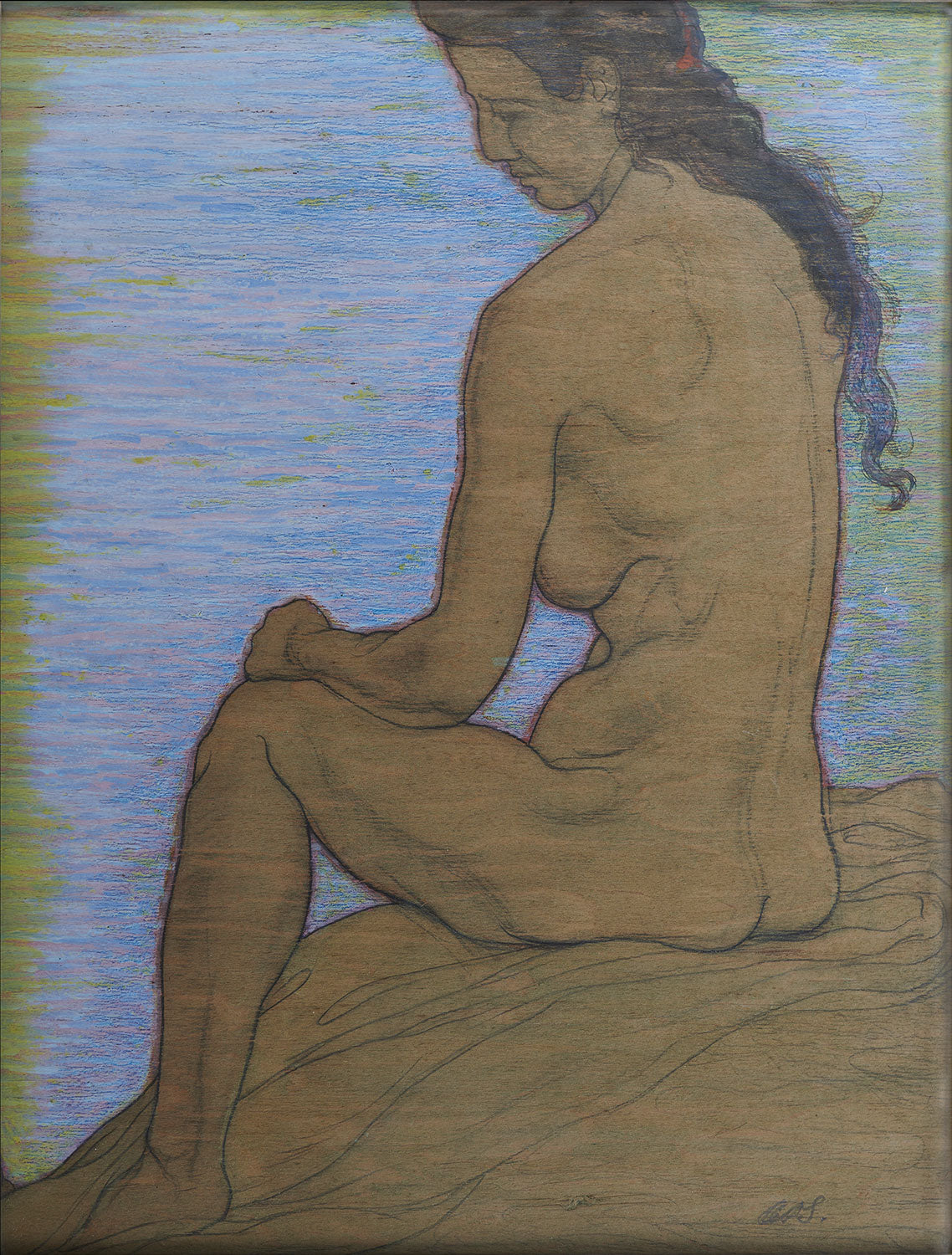
Transformation and Identity in Austin Osman Spare by Michael Staley by zoom

Transmitting the Sacred Fire:

Transformation and Identity in Austin Osman Spare

There is a fervent, compelling mystical and magical vision, first articulated in The Book of Pleasure and subsequently developed throughout his work, which burns at the heart of many of Spare’s drawings and paintings. In this illustrated talk, Michael Staley discusses Spare’s vision with particular reference to a number of pictures which communicate it especially clearly, whilst also drawing upon Spare’s written work and in particular on the mature writings of his from the late 1940s and the 1950s which were published many years later by Kenneth and Steffi Grant in Zos Speaks!

Michael Staley lives in north-west London, and has been immersed in Spare’s work for many years now. In 2011 he published two early bookworks by Spare as Two Grimoires, and is planning the future publication of a number of Spare’s sketchbooks from the 1950s. Michael has a life-long interest in the occult, and is particularly interested in how Spare’s work resonates with other mystical and magical traditions

Britain’s Pagan Heritage With Professor Ronald Hutton

Britain can claim to possess the richest and most diverse collection of physical remains left by pre-Christian religions in any part of Europe, including Celtic, Roman, Germanic and Scandinavian pantheons of goddesses and gods, with others from all over the Roman Empire, and five successive ages of outstanding prehistoric monuments. Ronald Hutton invites you to join him for an evening to be spent looking at these remains and posing the question of how far it is possible to recover the beliefs which inspired their creation. He will propose his own answer to this, and then considers the implications of it in two special case studies, of the most famous prehistoric monument in the world, Stonehenge, and the most carefully studied ancient human body to be found in Britain, the so-called Lindow Man. It will end by asking what the best relationship between professional archaeologists and historians specialising in the subject, and everybody else interested in it, might be in the new century.

Professor Ronald Hutton is a Professor of History at the University of Bristol. He is a leading authority on history of the British Isles in the sixteenth and seventeenth centuries, on ancient and medieval paganism and magic, and on the global context of witchcraft beliefs.

Sigil Magic Workshop With Julian Vayne

Two day course – Tuesday 9th & Tuesday 16th February, 7-830pm

Sigil Magic – discover the power of sigil magic with this two session intimate workshop for a small group by chaos magician Julian Vayne. You’ll learn about the range of sigilization methods including the creation of bind runes, digital sigils, hypersigils and the methods of the sorcerer Austin Osman Spare. Over two sessions of 1.5 hours each we will explore the history, theory and practical application of this accessible method of using imagination to create change in the universe. Expect approachable open source magic and plenty of practical skills that you can develop in your own way. Participants will be invited to launch several sigils of their own during the course.


Note to participants:

Thanks for joining us for some Sigil Magic! Please ensure that you have writing and drawing materials with you for both workshops. Pens, pencils, paper will be fine. Ensure that some of the sheets of paper are loose or can be removed from the sketch book or whatever you’re using. Try to wear comfortable clothes for the sessions as we are likely to do a little bit of gentle stretching to help us prepare for the practices. Please bring a glass of water to both sessions. Looking forward to seeing you in the magic circle!


Julian Vayne is a British independent scholar, occultist and author with over three decades of experience within esoteric culture: from Druidry to Chaos Magic, from indigenous Shamanism through to Freemasonry and Witchcraft. He is the author of numerous works including the celebrated Getting Higher: The Manual of Psychedelic Ceremony. Since 2011 he has been sharing his work through The Blog of Baphomet. Julian is a senior member of the Magical Pact of the Illuminates of Thanateros and widely recognized as one of Britain’s leading occultists.

‘liquid Alchemy’: A Virtual Cocktail Workshop

Welcome all curious cocktailers and inquisitive imbibers…

Directors of The Last Tuesday Society’s cocktail bar invite you to join them behind the bar for a virtual cocktail making workshop. Each week a new base spirit will be highlighted, which will then be used to create two classic cocktail recipes. The cocktail making part of the event will be led by Rhys Everett, director of The Last Tuesday Society’s Cocktail Bar and head distiller at Devil’s Botany London Distillery. A simple ingredients list will be sent with your ticket to prepare before the event.

The event will explore:

– Introduction to the basic principles of bartending

– Learn the formulas to two classic cocktail styles, including recipes and instructions on how to make them at home

– Discover fun facts on the spirit category that is being highlighted each week

‘Stomach-warming, idea-changing, liquid alchemy’ — Ernest Hemingway

Schedule:

12th February — Workshop on Bourbon Cocktails

26th February — Workshop on Rum Cocktails

12th March — Workshop on Absinthe Cocktails

9th April — Workshop on Gin Cocktails


Event is suitable for 18+ only.

M.r. James Fireside Ghost Stories With Robert Lloyd Parry, Live On Zoom

“If any of my stories succeed in causing their readers to feel pleasantly uncomfortable when walking along a solitary road at nightfall, or sitting over a dying fire in the small hours, my purpose in writing them will have been attained…”

Montague Rhodes James (1862 – 1936) more than succeeded in this modest ambition. Over a century after their first publication, his Ghost Stories of an Antiquary remain the most admired supernatural tales in the English language. James first performed them to friends at Christmas in King’s College, Cambridge in the year up to WW1. Since 2005 Robert Lloyd Parry has sought to bring this tradition back to life.

In Canon Alberic’s Scrap-book, a young antiquary discovers the devil in the details of an old book in a medieval town in the French Pyrenees. The story lasts about 40 mins. Afterwards, if you are good, this will be followed up by a reading of a bonus shorter work by M R James.

Storyteller: Robert Lloyd Parry has travelled widely in the UK and USA with his candlelit M R James performances, which have been covered by The New Yorker, The Fortean Times, The Spectator, The Times, The Sunday Times, The Washington Post, The Daily Mail, The Guardian and The Morning Star. In 2014 he appeared as the author in Mark Gatiss’s BBC2 Documentary ‘M R James: Ghost Writer.’ For more details see www.nunkie.co.uk