Unexplained Company: The Science of Haunting Experiences with Dr Ciaran O’Keeffe – Zoom

2. Unexplained Company: The Science of Haunting Experiences

Step inside a rare meeting point between science and the supernatural with Dr. Ciarán O’Keeffe, the leading investigator of paranormal experiences.

In this exclusive Last Tuesday Zoom series, Ciarán opens the door to the methods, mysteries, and controversies of parapsychology as only a true expert (and sceptical ghostbuster at heart) can.

If you’ve ever wondered where scepticism ends and the unexplained begins, this is just what you’ve been waiting for. Dr. Ciarán O’Keeffe has investigated the paranormal for over 35 years: in the lab and in the field. He takes a scientific, sceptical, perspective on such phenomena but has worked extensively in examining natural explanations for supernatural experiences. Within a haunting domain, he divides such explanations into the “role of the mind” and the “role of the environment” and the, sometimes, complex interplay between the two roles. His series of talks will take you on a scientific journey of discovery through various aspects of Parapsychology, Psychology and Investigative Psychology. Despite all the sceptical scientific research, Ciarán is a “ghostbuster” at heart and whilst his talks will take you on a scientific expedition about why people have haunting, and supernatural, experiences, he will also regale you with wonderful ghostly accounts from his own investigations, with fantastical case studies, and entertain with his own accounts of investigations into some of history’s most fascinating cases and his long nights in some of the world’s spookiest locations.

Speaker Bio

Associate Professor, Dr. Ciarán O’Keeffe is a Chartered Psychologist and Associate Dean of Education for the College of Health & Society at Buckinghamshire New University (see https://cutt.ly/nmzl3Yi for his Uni bio).

He is an applied psychologist with expertise in Parapsychology and Investigative Psychology (a sub-discipline of Forensic Psychology). His paranormal research has focussed on fieldwork examining haunting experiences. Additional research has included psychic criminology, mediumship and ‘Religious’ parapsychology (i.e. exorcism, possession, miracles & stigmata). His research has been reported widely in the media and he has regularly published his research in scientific journals and popular magazines.
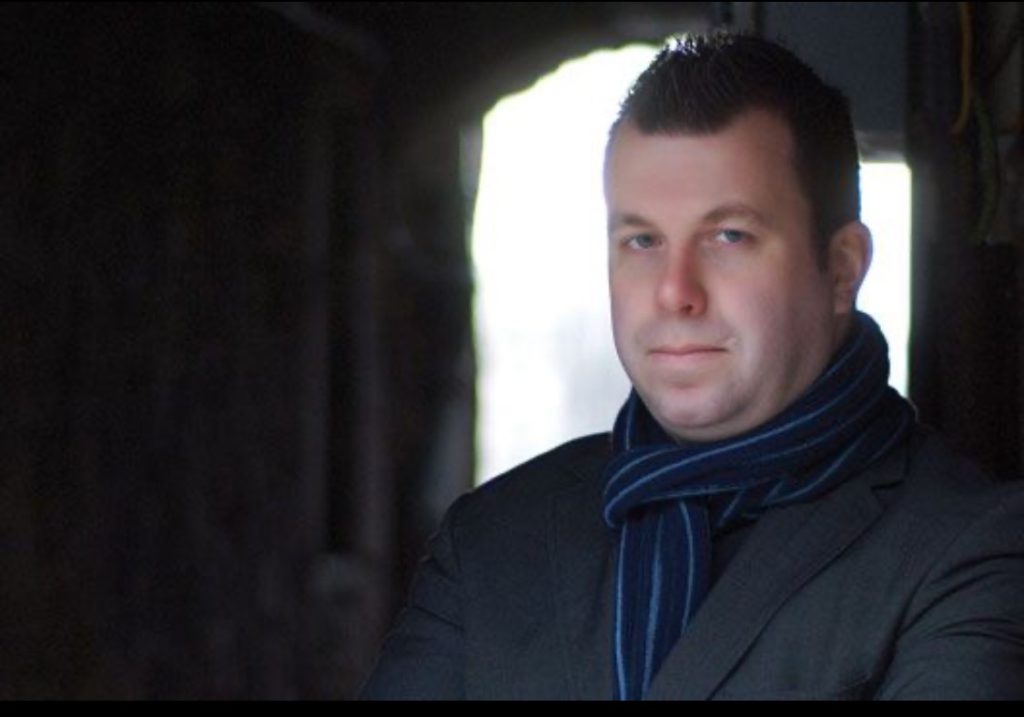
Curated & Hosted by

Lena Schattenherz Heide-Brennand is a Norwegian lecturer with a master degree in language, culture and literature from the University of Oslo and Linnaeus University. She has been lecturing and teaching various subjects since 1998. Her field of interest and main focus has always been topics that others have considered strange, eccentric and eerie, and she has specialised in a variety of dark subjects linked to folklore, mythology and Victorian traditions and medicine. Her students often point out her thorough knowledge about the subjects she is teaching, in addition to her charismatic appearance. She refers to herself as a performance lecturer and always gives her audience an outstanding experience, Lena’s New Book – Mythical Creatures in Scandinavian Folklore is now available on Amazon

don’t worry if you miss it – we will send you a recording valid for two weeks the next day

In this exclusive Last Tuesday Zoom series, Ciarán opens the door to the methods, mysteries, and controversies of parapsychology as only a true expert (and sceptical ghostbuster at heart) can.

  1. Unexplained Company: Researching the Weird & Wonderful! – 16 April 2026
  2. The Science of Haunting Experiences – 19 May 2026
  3. “I see what the Killer sees…”: Investigating Psychic Criminology – 30 Jun 2026
  4. “Deliver us from Evil?!” An Examination of Demonic Possession – 1 Sep 2026
  5. Applying Investigative Psychology – 20 Oct 2026
Unexplained Company: Researching the Weird & Wonderful! with Dr Ciaran O’Keeffe – Zoom

1. Unexplained Company: Researching the Weird & Wonderful! 

Step inside a rare meeting point between science and the supernatural with Dr. Ciarán O’Keeffe, the leading investigator of paranormal experiences.

In this exclusive Last Tuesday Zoom series, Ciarán opens the door to the methods, mysteries, and controversies of parapsychology as only a true expert (and sceptical ghostbuster at heart) can.

If you’ve ever wondered where scepticism ends and the unexplained begins, this is just what you’ve been waiting for. Dr. Ciarán O’Keeffe has investigated the paranormal for over 35 years: in the lab and in the field. He takes a scientific, sceptical, perspective on such phenomena but has worked extensively in examining natural explanations for supernatural experiences. Within a haunting domain, he divides such explanations into the “role of the mind” and the “role of the environment” and the, sometimes, complex interplay between the two roles. His series of talks will take you on a scientific journey of discovery through various aspects of Parapsychology, Psychology and Investigative Psychology. Despite all the sceptical scientific research, Ciarán is a “ghostbuster” at heart and whilst his talks will take you on a scientific expedition about why people have haunting, and supernatural, experiences, he will also regale you with wonderful ghostly accounts from his own investigations, with fantastical case studies, and entertain with his own accounts of investigations into some of history’s most fascinating cases and his long nights in some of the world’s spookiest locations.

Speaker Bio

Associate Professor, Dr. Ciarán O’Keeffe is a Chartered Psychologist and Associate Dean of Education for the College of Health & Society at Buckinghamshire New University (see https://cutt.ly/nmzl3Yi for his Uni bio).

He is an applied psychologist with expertise in Parapsychology and Investigative Psychology (a sub-discipline of Forensic Psychology). His paranormal research has focussed on fieldwork examining haunting experiences. Additional research has included psychic criminology, mediumship and ‘Religious’ parapsychology (i.e. exorcism, possession, miracles & stigmata). His research has been reported widely in the media and he has regularly published his research in scientific journals and popular magazines.

Curated & Hosted by

Lena Schattenherz Heide-Brennand is a Norwegian lecturer with a master degree in language, culture and literature from the University of Oslo and Linnaeus University. She has been lecturing and teaching various subjects since 1998. Her field of interest and main focus has always been topics that others have considered strange, eccentric and eerie, and she has specialised in a variety of dark subjects linked to folklore, mythology and Victorian traditions and medicine. Her students often point out her thorough knowledge about the subjects she is teaching, in addition to her charismatic appearance. She refers to herself as a performance lecturer and always gives her audience an outstanding experience, Lena’s New Book – Mythical Creatures in Scandinavian Folklore is now available on Amazon

don’t worry if you miss it – we will send you a recording valid for two weeks the next day

In this exclusive Last Tuesday Zoom series, Ciarán opens the door to the methods, mysteries, and controversies of parapsychology as only a true expert (and sceptical ghostbuster at heart) can.

  1. Unexplained Company: Researching the Weird & Wonderful! – 16 April 2026
  2. The Science of Haunting Experiences – 19 May 2026
  3. “I see what the Killer sees…”: Investigating Psychic Criminology – 30 Jun 2026
  4. “Deliver us from Evil?!” An Examination of Demonic Possession – 1 Sep 2026
  5. Applying Investigative Psychology – 20 Oct 2026

Wanderer of the Wastes: Aleister Crowley, The Great Beast, as Mountaineer – Andrew Wiseman – Zoom

Wanderer of the Wastes: Aleister Crowley, The Great Beast, as Mountaineer

The ordinary man looking at a mountain is like an illiterate person confronted with a Greek manuscript.–Aleister Crowley

Boasting in his Confessions, Aleister Crowley (1875–1947), with all the braggadocio of youth, claimed he was “white-hot on three points; climbing, poetry and Magick.” All these pursuits were to define his early career as a mountaineer, poet and magician. Given his immersion in the latter two, Crowley’s hitherto neglected mountaineering career has only recently excited a renewed interest by his various biographers. This presentation intends to put into context Aleister Crowley’s controversial mountaineering career particularly regarding his involvement in the first ever attempt to scale K2 (1902) and then Kangchenjunga (1905), the world’s second and third highest peaks. Through his revelatory discovery of the relatively new Victorian sport of rock-climbing during his teenage years, Crowley developed a keen awareness of technique and methodology and eventually set his sights on attempting to conquer two of the most challenging and treacherous Himalayan peaks.

Having climbed throughout the British Isles and then the Alps, Crowley came under the wing of Oscar Eckenstein (1859–1921), his mountaineering superior. As a preparatory exercise, they both climbed Mexico’s highest peaks in 1900, creating a number of fast high-altitude ascents. There, it was decided to make an attempt to conquer K2, led by Eckenstein, which ended in failure. Joined by Dr Jules Jacot Guillarmod (1868–1925), Crowley then made an attempt upon Kangchenjunga, on which he led, but which also ended not only in failure but also controversy. It was an abject disaster from which Crowley’s reputation would never fully recover.

Despite a yearning to try his luck again on Himalayan peaks, it was an ambition that for Crowley would remain unfulfilled. Nonetheless, his interest remained which would never be completely subdued despite his ostracisation from the mountaineering establishment.

Drawing upon recent research, this presentation aims to reassess Crowley’s mountaineering career by offering a more nuanced and better-balanced view of his achievements in the nascent art of Himalayan mountaineering at the outset of the twentieth-century.

Image: Aleister Crowley. Public Domain

Biography

Andrew Wiseman is a cultural historian, specialising in the Scottish Highlands from the late medieval to the modern period, who has developed a keen interest, perhaps even an unhealthy one, in Boleskine House and its long-held association with the iconoclastic occultist Aleister Crowley. He is currently editing a number of works and has authored around twenty chapters and articles as well as numerous blogs and mainstream publications. As author of the forthcoming title Lord Boleskine: Aleister Crowley and the House of the Beast 666, a detailed and engaging account of Crowley’s residence at his Highland home will be offered as well as the controversial legacy which he left in his wake.

Curated & Hosted by

Marguerite Johnson is a cultural historian of the ancient Mediterranean, specialising in sexuality and gender, particularly in the poetry of Sappho, Catullus, and Ovid, as well as magical traditions in Greece, Rome, and the Near East. She also researches Classical Reception Studies, with a regular focus on Australia. In addition to ancient world studies, Marguerite is interested in sexual histories in modernity as well as magic in the west more broadly, especially the practices and art of Australian witch, Rosaleen Norton. She is Honorary Professor of Classics and Ancient History at The University of Queensland, and a Fellow of the Australian Academy of the Humanities. She lives in Mytilene on the Greek island of Lesvos.Image: Aleister Crowley, Aimé Dupont Studio, 5th Ave, New York, May 1906

don’t worry if you miss it – we will send you a recording valid for two weeks the next day

The Brompton Time Machine – Stephen Coates – Zoom

The Brompton Time Machine

In an old cemetery in the West of London, half-hidden by trees, there stands an imposing twenty-foot-tall mausoleum, built of dark, polished granite with a pyramidal roof and a large copper door. Intended as the final resting place of the 19th-century heiress Hannah Courtoy and her two daughters, the mausoleum was designed by the Egyptologist and sculptor Joseph Bonomi, possibly with the help of eccentric inventor Samuel Warner

Since its construction in 1854, a legend has arisen that it is, or houses, a Time Machine

After a number of odd dreams, Stephen Coates began to research and write about the Courtoy mausoleum, and, as people all around the world became interested, his research began to be reported widely, including by the international press

In this talk, he will expand on his investigations into Hannah Courtoy, Joseph Bonomi and Samuel Warner, and why they might have tried to build a time machine. He will also reveal an extraordinary alternative theory about the mausoleum

Whether or not you are a believer, for now, leave your scepticism behind, bring along your imagination and enjoy as we climb aboard The Brompton Time Machine.

Speaker Bio:

Stephen Coates is a musician, broadcaster and cultural curator
https://linktr.ee/StephenCoates

Hosted & Curated by:

Lena Schattenherz Heide-Brennand is a Norwegian lecturer with a master degree in language, culture and literature from the University of Oslo and Linnaeus University. She has been lecturing and teaching various subjects since 1998. Her field of interest and main focus has always been topics that others have considered strange, eccentric and eerie, and she has specialised in a variety of dark subjects linked to folklore, mythology and Victorian traditions and medicine. Her students often point out her thorough knowledge about the subjects she is teaching, in addition to her charismatic appearance. She refers to herself as a performance lecturer and always gives her audience an outstanding experience

don’t worry if you miss it – we will send you a recording valid for two weeks the next day

The hidden lives of the dissected – Jackie Dent – Zoom

The hidden lives of the dissected

In this illustrated talk, author and journalist Jackie Dent uncovers the extraordinary history of the dissected. Her own grandparents donated their bodies to an Australian university—and a chance encounter led Jackie to investigate what really happened to their bodies.In this talk, she reveals the stories of those who have been studied in the name of science: from the 17th-century British attorney John Knill to the high-profile dissection of Indian Marxist politician Jyoti Basu in 2010. Beyond voluntary donations, Jackie will explore the lives of the poor and vulnerable who were dissected without consent—a practice still prevalent in many parts of the world today.

Tracing the ever-shifting attitudes toward cutting up the dead, Jackie takes us from the “holy anatomy” of the 14th-century Italian nun Chiara de Montefalco to today’s humane anatomy movement, where donors are honoured with ceremonies, sculptures and tombstones.

Speaker Bio:

Jackie Dent is a journalist and author of “The Great Dead Body Teachers”, a book exploring the history of whole body donation and anatomy. She has worked for many media outlets including The Sydney Morning Herald, The Guardian, Monocle, The New York Times, Reuters, Strewth! and The Australian Broadcasting Corporation. Her career has also included stints with the United Nations in Afghanistan, Pakistan, North Ossetia and South Sudan. She currently works as a medical writer and is completing a PhD at the University of Sydney on “The Pleasures of War”.

IMAGE:“The Relations of the Principal Blood Vessels to the Viscera of the Thoracico-Abdominal Cavity” by Joseph Maclise in Surgical Anatomy, 1851. Coloured lithograph courtesy of Wellcome Collection.

Hosted by:

Cat Irving has been the Human Remains Conservator for Surgeons’ Hall since 2015 and has been caring for anatomical and pathological museum collections for over twenty years. After a degree in Anatomical Science she began removing brains and sewing up bodies at the Edinburgh City Mortuary. Following training in the care of wet tissue collections at the Royal College of Surgeons of England she worked with the preparations of William Hunter at the Hunterian Museum at Glasgow University, where she is now Consultant Human Remains Conservator. Cat is a licensed anatomist, and gives regular talks on anatomy and medical history. She recently carried out conservation work on the skeleton of serial killer William Burke

don’t worry if you miss it – we will send you a recording valid for two weeks the next day

Occult Revivals: Cults and New Religious Movements in Horror Cinema – Miranda Corcoran – Zoom

Occult Revivals: Cults and New Religious Movements in Horror Cinema
 
Sinister cults and secretive sects have long been a source of fascination, particularly within the genres of horror and the gothic. In the 1960s and 1970s, a wave of social upheaval and dissatisfaction with traditional religious institutions resulted in the proliferation of new religious movements (NRMS) that simultaneously ignited the burgeoning youth culture and sparked a moral panic in more conservative quarters. On screen, new religions and cults were frequently a source of voyeuristic fascination, with 1970s horror films like The Wicker ManBlood on Satan’s Claw, Race with the Devil, and Devil’s Rain portraying cults, rather sensationally, as loci of moral and sexual transgression. Later representations of new religions, particularly as rendered in 2000s and 2010s films like Midsommar and The Other Lamb, are often more ambivalent, treating cults as sites of violence and horror but also, potentially, of liberation and pleasurable transgression. This talk will track the development of cinematic cults from the 1960s through to the present day, exploring how onscreen cults reflect contemporary anxieties about religion, youth rebellion and sexuality.
 
BIO: Miranda Corcoran is a lecturer in twenty-first-century literature at University College Cork. She is the author of Witchcraft and Adolescence in American Popular Culture: Teen Witches, published in 2022 by the University of Wales Press. She currently the Chair of the Irish Association for American Studies and a co-editor of the journal Shirley Jackson Studies. Her new edited collection Satanism and Feminism in Popular Culture: Not Today Satan was released in November 2025.
Curated & Hosted by
Marguerite Johnson is a cultural historian of the ancient Mediterranean, specialising in sexuality and gender, particularly in the poetry of Sappho, Catullus, and Ovid, as well as magical traditions in Greece, Rome, and the Near East. She also researches Classical Reception Studies, with a regular focus on Australia. In addition to ancient world studies, Marguerite is interested in sexual histories in modernity as well as magic in the west more broadly, especially the practices and art of Australian witch, Rosaleen Norton. She is Honorary Professor of Classics and Ancient History at The University of Queensland, and a Fellow of the Australian Academy of the Humanities. She lives in Mytilene on the Greek island of Lesvos.
Image: Getty Images, Creative Commons
don’t worry if you miss it – we will send you a recording valid for two weeks the next day

Necromancy: Death, Ritual and the Imagination – Lena Heide Brennand – Zoom

Necromancy: Death, Ritual and the Imagination

From ancient tombs to Victorian séance parlours, humankind has long sought to speak with the dead — and to listen when they whisper back. In this illuminating and unsettling lecture, cultural historian Lena Heide-Brennand delves into the shadowed history of necromancy: the rituals, taboos, and imaginative worlds that blur the boundary between the living and the departed.

Tracing the practice from the Greek Magical Papyri to Norse seiðr, from Renaissance conjurers to Romantic poets, this talk explores how societies have used death not only as a mystery to be feared but as a language to be read. What does it mean to summon a voice from the grave? How do art, faith, and folklore preserve the presence of the dead — and what ethical questions linger in that act of calling?

A journey through centuries of memento mori and midnight invocation, this lecture invites you to stand at the threshold where scholarship meets the supernatural, and imagination keeps the dead forever speaking.

Bio:

Lena Schattenherz Heide-Brennand is a Norwegian lecturer with a master degree in language, culture and literature from the University of Oslo and Linnaeus University. She has been lecturing and teaching various subjects since 1998. Her field of interest and main focus has always been topics that others have considered strange, eccentric and eerie, and she has specialised in a variety of dark subjects linked to folklore, mythology and Victorian traditions and medicine. Her students often point out her thorough knowledge about the subjects she is teaching, in addition to her charismatic appearance. She refers to herself as a performance lecturer and always gives her audience an outstanding experience

don’t worry if you miss it – we will send you a recording valid for two weeks the next day


Medieval Necromancy and the Cursed Imagination – Sophie Page – Zoom

Medieval Necromancy and the Cursed Imagination

Necromancers – medieval Christian demon conjurors – thought they could compel demons to reveal the truth about anything they asked, including all the secrets of the past, present, and future. Demons had access to extraordinary knowledge because of their immortality and superior rationality. It was not that they were omniscient: rather that they had lived for a very long time, had seen it all before, and were superlative predicters. Some medieval thinkers thought of demons as the first natural scientists, permitted by God to pass the eons observing and interpreting humans to puzzle out each sin an individual was likely to succumb to. As the demons wandered eternally in the sublunar realm, they noticed things of great interest to the necromancer: where treasure was buried, who stole objects of value, unfaithful lovers, wrongful imprisonment, and princes’ guilty secrets. In this talk I will discuss how necromancers hoped to succeed in their rituals despite the intense malice and cunning of demons. We will also investigate the mystery and ambiguity of the spirit realm and the charge laid at necromancers that they had a ‘cursed imagination.’

Bio:

Sophie Page is Professor of Medieval History at University College London. She has published on monks and magic, cosmology, diagrams, animals and rituals and was joint editor of the Routledge History of Medieval Magic (2019). In 2018 she co-created the exhibition, Spellbound: Magic, Ritual and Witchcraft at the Ashmolean Museum, Oxford.

Image: The Pilgrim meeting the messenger of Necromancy, from ‘The Pilgrimage of the Life of Man’ by John Lydgate. Cotton Tiberius A VII/1, f. 42.r

don’t worry if you miss it – we will send you a recording valid for two weeks the next day


Divining the Past, Present, and Future: Oracles, Series 1 – Four Lectures

Join us for Series 1 as we journey into the histories and mysteries of divination. Delivered by leading scholars in the field, ‘Divining the Past, Present, and Future’ includes talks on specific types of divination, from Mambila spider divination to Medieval necromancy.

Curated & Hosted by

Marguerite Johnson is a cultural historian of the ancient Mediterranean, specialising in sexuality and gender, particularly in the poetry of Sappho, Catullus, and Ovid, as well as magical traditions in Greece, Rome, and the Near East. She also researches Classical Reception Studies, with a regular focus on Australia. In addition to ancient world studies, Marguerite is interested in sexual histories in modernity as well as magic in the west more broadly, especially the practices and art of Australian witch, Rosaleen Norton. She is Honorary Professor of Classics and Ancient History at The University of Queensland, and a Fellow of the Australian Academy of the Humanities. She lives in Mytilene on the Greek island of Lesvos.

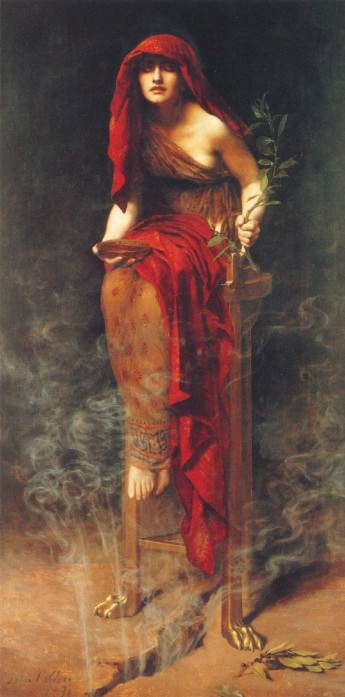
Image: John Collier, ‘Priestess of Delphi’ (1891), Art Gallery of South Australia

Getting Down to the Bare Bones: Scapulimancy and Second Sight in Scottish Gaelic Tradition – Andrew Wiseman- Zoom

Getting Down to the Bare Bones: Scapulimancy and Second Sight in Scottish Gaelic Tradition 

Scapulimancy (Slinneineachd in Scottish Gaelic) is a form of augury or divination involving the examination or interpretation of the scapula usually, though not exclusively, of the shoulder-blade or speal bone of a sheep, and sometimes that of a cow or a pig. Such a practice was believed to be able to foretell important events in the owner’s life, including deaths, battles, commotions, and other significant occurrences. Disasters such as the Massacre of Glencoe (1692) and the Battle of Culloden (1746) were said to have been prognosticated using scapulimancy.

The earliest ethnographic records of scapulimancy, from a Scottish context, dates to the seventeenth-century and the latest to the nineteenth-century. To judge from these accounts, as well as those supplemented from oral sources, such a practice crosses ethnic and cultural boundaries. Indeed, such a divinatory method is found throughout many parts of the world and is well documented, for instance, in East Asian cultures.

The purpose of this presentation is to critically examine the various early modern sources and to assess why and by whom such a practice was resorted to and why at times scapulimancy is sometimes taken to be or sometimes confused with second sight. Also offered in the presentation are some thoughts on the actual origins of such a divinatory practice either to foretell future events (precognition) or those at a distance in space and time (detection).

Bio:

Andrew Wiseman is a cultural historian, specialising in the Scottish Highlands from the late medieval to the modern period, who has developed a keen interest in Scottish Gaelic intangible culture. He is currently editing a number of works and has authored around twenty chapters and articles as well as numerous blogs and mainstream publications. As editor of the forthcoming titles Your Work Will Remain: Diaries of Calum I. Maclean (1951–1954), From Lochaber, Badenoch, Morar, Arisaig, Moidart, Easter Ross and Sutherland and The Highlands and Selected Writings of Calum I. Maclean, a detailed and engaging account of Calum Maclean’s fieldwork diaries as well as his academic and mainstream publications will offer an opportunity to reassess the legacy of one of Scotland’s most important twentieth-century ethnologists and folklorists.

Image: James Hamilton, ‘Massacre of Glencoe,’ 1883–86. Glasgow Museums.

don’t worry if you miss it – we will send you a recording valid for two weeks the next day


Divining the Past, Present, and Future: Oracles, Series 1 – Four Lectures

Join us for Series 1 as we journey into the histories and mysteries of divination. Delivered by leading scholars in the field, ‘Divining the Past, Present, and Future’ includes talks on specific types of divination, from Mambila spider divination to Medieval necromancy.

Curated & Hosted by

Marguerite Johnson is a cultural historian of the ancient Mediterranean, specialising in sexuality and gender, particularly in the poetry of Sappho, Catullus, and Ovid, as well as magical traditions in Greece, Rome, and the Near East. She also researches Classical Reception Studies, with a regular focus on Australia. In addition to ancient world studies, Marguerite is interested in sexual histories in modernity as well as magic in the west more broadly, especially the practices and art of Australian witch, Rosaleen Norton. She is Honorary Professor of Classics and Ancient History at The University of Queensland, and a Fellow of the Australian Academy of the Humanities. She lives in Mytilene on the Greek island of Lesvos.

Image: John Collier, ‘Priestess of Delphi’ (1891), Art Gallery of South Australia

Creativity in an Eggshell: The Freedom of Uncovering One’s Own World? – Katherine Swancutt

Creativity in an Eggshell: The Freedom of Uncovering One’s Own World? 

Probably every kind of divination requires creativity, but the Nuosu of Southwest China open up whole microcosms of it when cracking eggs into bowls of water and reading the bubbles that form. Nuosu egg divination is a spontaneous craft––one that both shapes and responds to the world––which means that diviners are free to interpret the same results differently. Many clients value this ‘natural’ approach to divination because it lets them address problems flexibly. Yet Nuosu egg divination also raises large questions about the nature of divination that I address in this talk: Is it possible to have too much creativity in divination? Or too much freedom in envisioning our own place within the cosmos?

Bio:

Katherine Swancutt is Project Lead of the ERC synergy grant ‘Cosmological Visionaries: Shamans, Scientists, and Climate Change at the Ethnic Borderlands of China and Russia’ at the Department of Ecological Anthropology, Czech Academy of Sciences. She has worked with Nuosu in Southwest China since 2007 and carried out fieldwork on shamanism and animism across Inner Asia for more than 25 years.

Recent publications include Demons and Gods on Display: The Anthropology of Display and Worldmaking (special issue of Asian Ethnology, 2023) and ‘Dreams, Visions, and Worldmaking: Envisioning Anthropology Through Dreamscapes’ (Annual Review of Anthropology, 2024). Her chapters on ‘Nuosu Egg Divination’ and ‘Buryat Mongolian Card Divination’ appear in David Zeitlyn and Michelle Aroney’s Divination, Oracles & Omens (2024) published by Bodleian Library Press: https://bodleianshop.co.uk/products/divination-oracles-omens (in Europe and UK), or in USA: https://press.uchicago.edu/ucp/books/book/distributed/D/bo249121065.html

Image: Pointing at a bubble trapped just beneath the surface to indicate the client’s lost soul. Photograph © Katherine Swancutt

don’t worry if you miss it – we will send you a recording valid for two weeks the next day


Divining the Past, Present, and Future: Oracles, Series 1 – Four Lectures

Join us for Series 1 as we journey into the histories and mysteries of divination. Delivered by leading scholars in the field, ‘Divining the Past, Present, and Future’ includes talks on specific types of divination, from Mambila spider divination to Medieval necromancy.

Curated & Hosted by

Marguerite Johnson is a cultural historian of the ancient Mediterranean, specialising in sexuality and gender, particularly in the poetry of Sappho, Catullus, and Ovid, as well as magical traditions in Greece, Rome, and the Near East. She also researches Classical Reception Studies, with a regular focus on Australia. In addition to ancient world studies, Marguerite is interested in sexual histories in modernity as well as magic in the west more broadly, especially the practices and art of Australian witch, Rosaleen Norton. She is Honorary Professor of Classics and Ancient History at The University of Queensland, and a Fellow of the Australian Academy of the Humanities. She lives in Mytilene on the Greek island of Lesvos.

Image: John Collier, ‘Priestess of Delphi’ (1891), Art Gallery of South Australia