Nature, Shamanism and Psychoactive Drugs in Greek Bronze Age Religion by Dr Caroline Tully

Nature, Shamanism and Psychoactive Drugs in Greek Bronze Age Religion

What kind of religious activities were practised in the Greek Bronze Age? Through examination of ancient visual art, objects and texts, this lecture will explain how aspects of Aegean religion can be considered shamanic. The lecture will primarily focus on ā€œglyptic artā€ (miniature images engraved on gold signet rings and stone seals) which is the most extensive body of Aegean Bronze Age representational art. It will look at ritual scenes depicted in glyptic art for evidence of shamanism including consumption of psychoactive drugs, adoption of special body postures, trance, spirit possession, communication with supernatural beings, metamorphosis and the journey to other worlds. The lecture will also look at the presence of nature in ritual scenes, particularly sacred trees. In the majority of these scenes human figures approach the trees in a calm and reverential manner, but in seven examples the ritual participant clasps and vigorously shakes the tree. The reasons for interpreting this activity as indicating a shamanic-style altered state of consciousness and prophetic consultation of the tree through the sound of its rustling leaves will then be explained. Comparative examples of prophetic trees from Near Eastern and Greek literature such as the Hebrew Bible, the Ugaritic Epic of Baal and Hesiod’s Theogony will be discussed, and later Greek tree oracles such as that of Zeus at Dodona will be compared with the glyptic images.

Bio:

Dr. Caroline Tully is a lecturer and tutor at the University of Melbourne, Australia. Caroline’s research interests include religion and ritual in the Bronze Age Aegean and East Mediterranean, Reception of the Ancient World, and Contemporary Paganisms. She is the author of The Cultic Life of Trees in the Prehistoric Aegean, Levant, Egypt and Cyprus (Peeters: Leuven, 2018), many other articles and book chapters, and is associate editor of The Pomegranate: The International Journal of Pagan Studies. Caroline is also a professional tapestry weaver at the Australian Tapestry Workshop and a tarot reader and workshop facilitator at Muses of Mystery.

See her Academia page here: https://unimelb.academia.edu/CarolineTully

See her blog, Necropolis Now, here: http://necropolisnow.blogspot.com/

Watch a recording of This Lecture, & 100s of others, for free when you join our PatreonĀ 

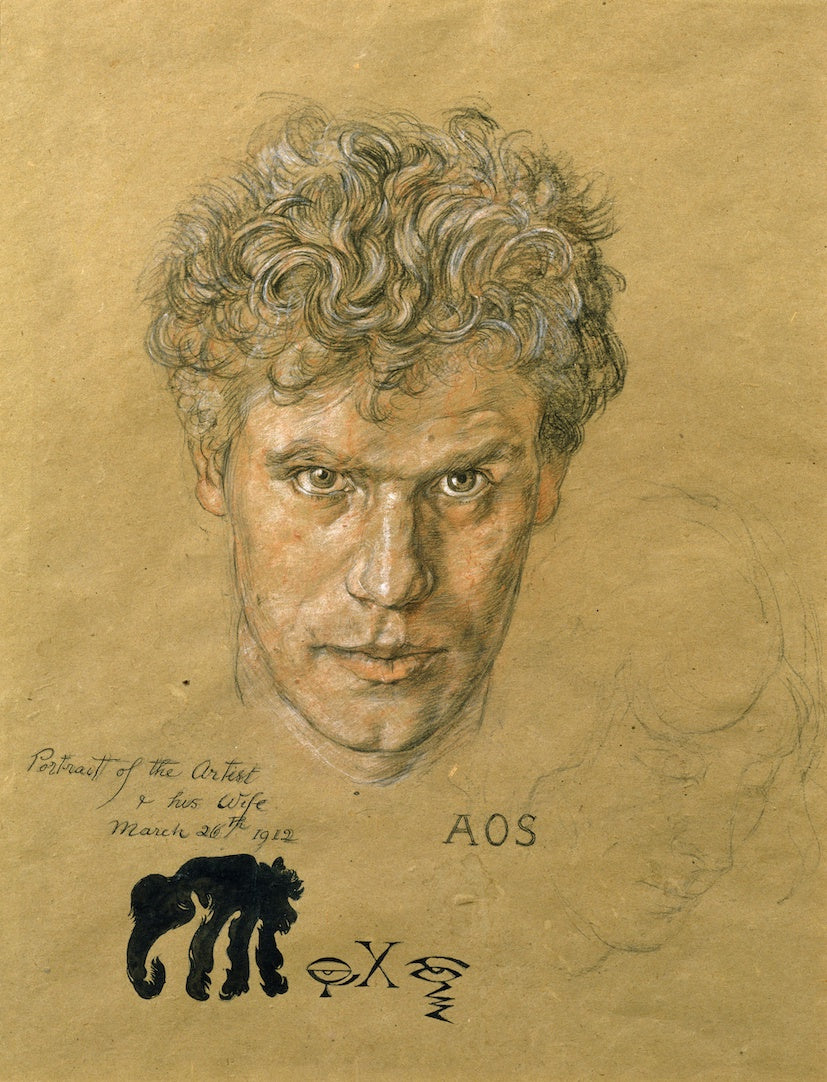
City of the Beast: The London of Aleister Crowley by Phil Baker

“I dreamed I was paying a visit to London,” Aleister Crowley wrote in Italy, continuing, “It was a vivid, long, coherent, detailed affair of several days, with so much incident that it would make a good-sized volume.” Crowley had a love-hate relationship with London, but the city was where he spent much of his adult life, and it was the capital of the culture that created him: Crowley was a post-decadent with deviant Victorian roots in the cultural ferment of the 1890s and the magical revival of the Golden Dawn.

Not a walking guide, although many routes could be pieced together from its pages, this is a biography by sites. A fusion of life-writing with psychogeography, steeped in London’s social history from Victoria to the Blitz, it draws extensively on unpublished material and offers an exceptionally intimate picture of the Great Beast. We follow Crowley as he searches for prostitutes in Hyde Park and Pimlico, drinks absinthe and eats Chinese food in Soho, and finds himself down on his luck in Paddington Green–and yet never quite losing sight of the illumination that drove him: the abiding rapture, he wrote in his diary, which makes a ‘bus in the street sound like an angel choir!

Bio

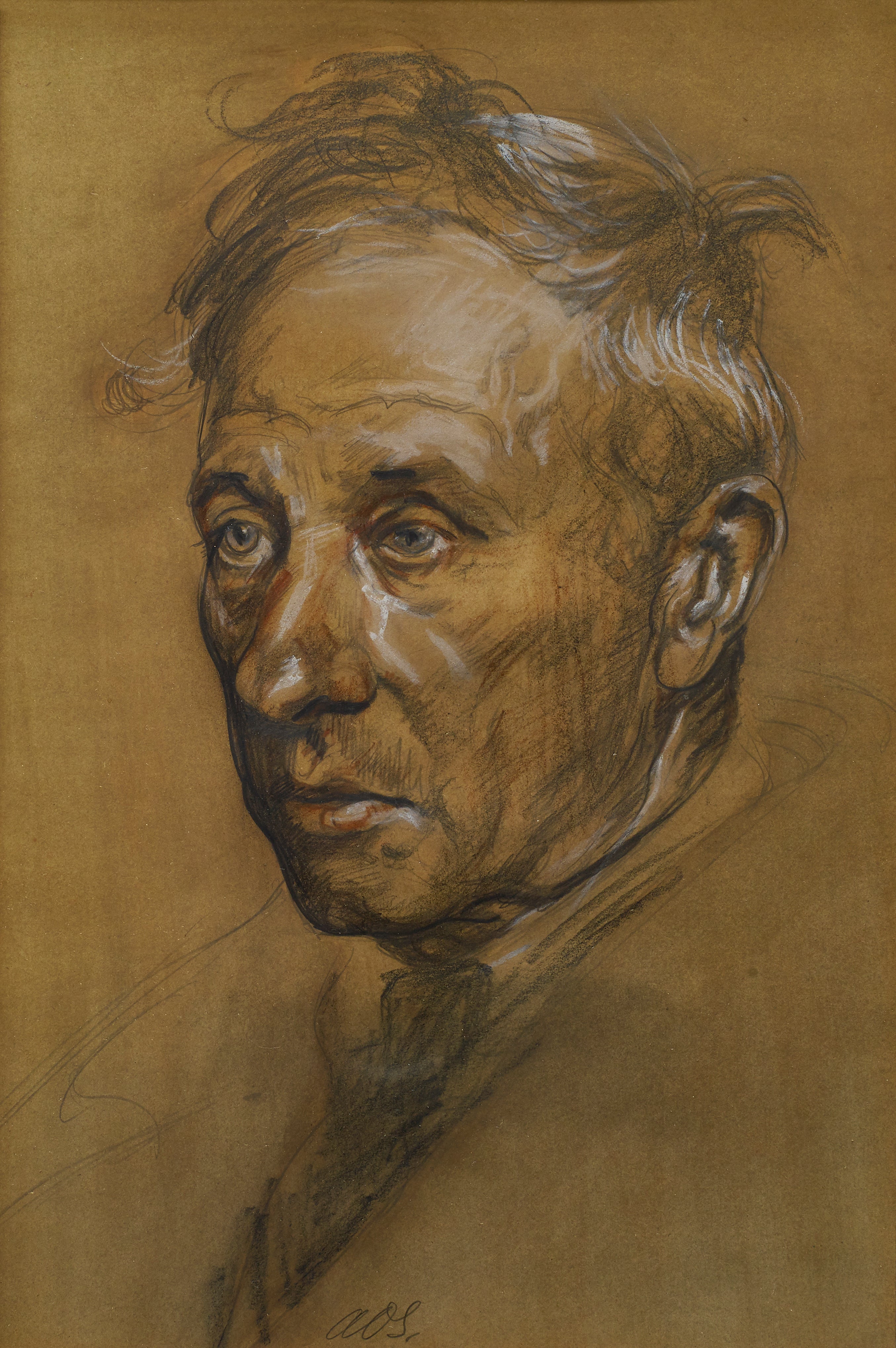
Phil Baker’s previous books include the definitive biography of Austin Osman Spare, London: City of Cities, a critical study of Samuel Beckett and a cultural history of absinthe. He lives in London and walks everywhere.

Watch a recording of This Lecture, & 100s of others, for free when you join our PatreonĀ 

The Story of a Cornish Witch: Joan Wytte (Fighting Fairy Woman of Bodmin), the Archives and the Imagination by Helen Cornish

The remains of Joan Wytte, alleged witch of Bodmin, were displayed for over 30 years in the Museum of Witchcraft and Magic in Cornwall. Buried in the woods behind the town in 1998 her memorial stone has become a pilgrimage destination for those keen to ensure she is not forgotten. While there is no archive evidence to support the claims made about her life and death, she remains an important figure. This talk looks at how the life and death of Joan Wytte has become a foundational stone for modern witches in search of practical ancestors and considers how this story reveals how we think about historical witchcraft accusations and their relevance to us today.

Notice: this talk will include images of human remains.

Bio:

Dr Helen Cornish (Anthropologist, Goldsmiths): I have carried out anthropological fieldwork with British witches and Pagans on histories of modern witchcraft since 2000. Much of my research has been in Sussex and at the Museum of Witchcraft and Magic.

Watch a recording of This Lecture, & 100s of others, for free when you join our PatreonĀ 

The Witch’s Feast : A History of Kitchen Witchcraft by Melissa Madara

Join Melissa Madara, author of the magical cookbook ā€œThe Witch’s Feast,ā€ in taking a look at the meandering and curious history of kitchen magic in European witchcraft. This lecture will trace a lineage of culinary craft from the ancient world to the present, seeking out the tools and techniques of kitchen witchcraft as we go. Come learn about the earliest of recorded recipes, the bread feasts of ancient Rome, blessed pastries of the Renaissance, planetary magic with ingredients, and much, much, more!

Bio

Melissa Madara is a witch, chef, and co-owner at Catland Books. Their work deals with the healing power of myth, divination, and immersion in the natural world. They are a teacher at Catland Books and numerous other metaphysical spaces in NYC, and are available for herbal consultations, tarot, and magical coaching by appointment. Find their interviews in the New York Times, Vice, Broadly, Teen Vogue, or Refinery 29, or see Melissa’s published works in Fiddler’s Green, Venefica Magazine, or their premiere book, The Witch’s Feast. Follow Melissa’s work and adventures on IG : @saint.jayne

Tarot Noir: William Lindsay Gresham’s Nightmare Alley by K A Laity

It’s no surprise that Guillermo del Toro sought for years to make his own neo-noir version of Gresham’s novel. The heady combination of the occult, tarot, the carnival and grifters in the ‘spook racket’ made the original novel a bestseller and led matinee idol Tyrone Power to risk his own career and fame to film it in 1947. At the heart of the novel is the tarot, something Gresham took very seriously. His preface to Charles Williams’ tarot novel The Greater Trumps serves as a primer to the ‘wicked pack of cards’ and demonstrates his skill in reading the deck. Gresham uses the Major Arcana to structure his own novel — with some interesting changes.

Gresham understood the appeal of reading the tarot to find answers to our deepest questions. He realised, too, how that desire to know could be exploited by those who master the tools of the trade only to swindle the vulnerable. Stan Carlisle learns to use the power the cards show him, but fails to see that cards also reveal the downward spiral that awaits him as he gets deeper and deeper into the world of fake spiritualism, looking for the big payoff that has eluded him.

Bio

K. A. Laity is an award-winning author, scholar, filmmaker, critic, editor, and arcane artist. Her film A Fire Ritual for the Heart was featured in the Silent Fire exhibition co-curated by the Yale Institute of Sacred Music and Nasty Women Connecticut. Her fiction includes Chastity Flame, The Mangrove Legacy, Lush Situation, Love is a Grift, Satan’s Sorority, How to Be Dull, White Rabbit, Dream Book, A Cut-Throat Business, Owl Stretching, and Pelzmantel. She has edited My Wandering Uterus, Respectable Horror, Weird Noir, Noir Carnival and Drag Noir, plus written many short stories, scholarly essays, songs, and more. Laity has served as History Witch for Witches & Pagans. Her 2011-2 Fulbright Fellowship at the National University of Ireland, Galway, focused on Digital Humanities. Her work has been translated into Italian, Polish, Slovene, German, and Portuguese. Follow her on Twitter, Instagram or Facebook. Her podcast Is It Funny? can be found here. Her radio programme Surreal Noir can be found here.

Watch a recording of This Lecture, & 100s of others, for free when you join our PatreonĀ 

The Edible Dormouse with Dr Pat Morris

The Edible Dormouse, also known by its scientific name Glis glis, was introduced to England in 1902 by Lord Walter Rothschild. He released an unknown number of them near his home at Tring in the Chilterns, obtained from an unknown source in Central Europe. They cause damage to plantation forestry and nesting birds. They are also a significant nuisance in people’s houses, with dozens sometimes living in the same house. They gnaw stored fruit, defecate in the laundry cupboard (after feeding on blackberries!) and even nibble at lead pipes or trigger burglar alarms. Over the past 120 years they have multiplied and spread, partly aided by householders catching the animals and releasing them far away. This is illegal, but so is killing them, so what can they do? Edible Dormice are a protected pest! They have now been found in places ranging from Hampshire to Essex The talk will review these issues and report on Europe’s longest population study of these animals which has revealed some important and unique features of this animal’s ecology. It’s a species that few have heard of, but those who have wish they would go away. There is now every prospect of them becoming widespread- maybe even where you live!

Bio

Dr Pat Morris was Senior Lecturer in Zoology at Royal Holloway, University of London, and retired (early) in 2002 to spend more time with his taxidermy. He taught many students who now work in wildlife conservation, and also taught evening classes for adults for 20 years. He is well known for his studies on mammals, especially hedgehogs, dormice, water voles and red squirrels. He is a past Chairman of the Mammal Society and holder of its Silver Medal. He was a Council Member of the National Trust for 15 years and Chairman of its Nature Conservation Advisory Panel. He is President of the British Hedgehog Preservation Society, a former Vice President of the London Wildlife Trust. He served on a Government Enquiry into aspects of the badgers and TB problem and for 3 years was co-Director of the International Summer School on the Breeding and Conservation of Endangered species, based at Durrell Zoo in Jersey.

He has published over 70 scientific papers, mostly on mammals and written about 20 books on bats, dormice, ecology of lakes and general natural history, with total sales of around 250,000. His popular book on hedgehogs has remained in print since 1983, his New Naturalist monograph on the hedgehog was published in 2018. He was a consultant to major publishers and the BBC Natural History Unit, for whom he also contributed radio and TV programmes for 20 years. He has travelled to more than 30 countries, including five expeditions to Ethiopia and 19 visits to the USA covering 47 of the States.

In his spare time he has pursued a longstanding interest in the history of taxidermy and was appointed the first Honorary Life Member of the Guild of Taxidermists. He published papers and 8 books on this topic and serves as one of the Government’s taxidermy inspectors for assessing age and authenticity of antique taxidermy in connection with CITES controls. The Society for the History of Natural History awarded him its Founder’s Medal and he was made MBE by the Queen in the 2015 New Year’s Honours List and has a devoted (biologist) wife, married in 1978.

He speaks in a purely personal capacity and not on behalf of any of the organisations with which he is involved, past or present.

Watch a recording of This Lecture, & 100s of others, for free when you join our Patreon

A history of Bird Taxidermy with Dr Pat Morris

This talk begins with discounting Egyptian mummies as ā€˜taxidermy’ and reviews the slow development of bird stuffing over the last 200 years. Beginning with the impulse to collect curios from faraway lands, bird taxidermy became an important aspect of ornithological studies. Gentleman collectors vied with each other to assemble large numbers of stuffed birds, sometimes for little reason other than a personal mania, but also to make serious studies of seasonal and geographical variation in plumage, leading to enormous personal museums. But where has it all gone now? At the same time, in the Victorian era, bird taxidermy also took off as a form of domestic decoration, perhaps more widely adopted here than in any other country. The talk will explore how methods and motivations in taxidermy evolved to become a significant art form. Individual taxidermists developed particular and distinctive styles of taxidermy and presentation, just as artists have done in the past. It will end with a brief note of where bird taxidermy stands today.

Bio

Dr Pat Morris was Senior Lecturer in Zoology at Royal Holloway, University of London, and retired (early) in 2002 to spend more time with his taxidermy. He taught many students who now work in wildlife conservation, and also taught evening classes for adults for 20 years. He is well known for his studies on mammals, especially hedgehogs, dormice, water voles and red squirrels. He is a past Chairman of the Mammal Society and holder of its Silver Medal. He was a Council Member of the National Trust for 15 years and Chairman of its Nature Conservation Advisory Panel. He is President of the British Hedgehog Preservation Society, a former Vice President of the London Wildlife Trust. He served on a Government Enquiry into aspects of the badgers and TB problem and for 3 years was co-Director of the International Summer School on the Breeding and Conservation of Endangered species, based at Durrell Zoo in Jersey.

He has published over 70 scientific papers, mostly on mammals and written about 20 books on bats, dormice, ecology of lakes and general natural history, with total sales of around 250,000. His popular book on hedgehogs has remained in print since 1983, his New Naturalist monograph on the hedgehog was published in 2018. He was a consultant to major publishers and the BBC Natural History Unit, for whom he also contributed radio and TV programmes for 20 years. He has travelled to more than 30 countries, including five expeditions to Ethiopia and 19 visits to the USA covering 47 of the States.

In his spare time he has pursued a longstanding interest in the history of taxidermy and was appointed the first Honorary Life Member of the Guild of Taxidermists. He published papers and 8 books on this topic and serves as one of the Government’s taxidermy inspectors for assessing age and authenticity of antique taxidermy in connection with CITES controls. The Society for the History of Natural History awarded him its Founder’s Medal and he was made MBE by the Queen in the 2015 New Year’s Honours List and has a devoted (biologist) wife, married in 1978.

He speaks in a purely personal capacity and not on behalf of any of the organisations with which he is involved, past or present.

Watch a recording of This Lecture, & 100s of others, for free when you join our Patreon www.patreon.com/theviktorwyndmuseum

Wild Kindness; Artistic Practice as Psychedelic Integration – Bett Williams

Wild Kindness; Artistic Practice as Psychedelic Integration

When Bett’s writer’s block began to negatively affect every area of her life, she turned to psilocybin mushrooms for help. The Psychedelic provided an ethos, a way of seeing, a scaffolding that catalyzed her non-fiction book The Wild Kindness; A Psilocybin Odyssey. Bett advocates for rogue psychedelic use outside of medical and therapeutic establishments, arguing that artistic practice is a legitimate ceremonial form in which to explore the nature of consciousness.

After her talk she will perform a piece from recent work she has done in collaboration with dancer, poet and archivist Rosemary Carroll.

Speaker Bio:

Bett Williams is the author of The Wild Kindness; A Psilocybin Odyssey. She has been a featured speaker at Horizons Perspectives of Psychedelics Conference, a regular writer for Lucid News and DoubleBlind Magazine and featured on Comedy Centrals Tales From the Trip YouTube Series. Currently she is collaborating and touring with dancer, writer and archivist Rosemary Carroll. @love.rosemary.carroll

“In general, this is a balm. It is the polar opposite of rhe Michael Pollan book.” – Molly Young, Vulture, New York Times

The Wild Kindness is absolutely electric. It’s not only the subject matter, which is mystical and fascinating. Bett William’s voice is untamed and inspired, full of gonzo humor, ambitious daring and high-vibrating heart. The personal, the political, the spiritual and the unknown come together into a mesmerizing read that is full-on literary fireworks. —MICHELLE TEA

This Psychedelic series is Curated by Maya Bracknell Watson and Dr David Luke

Maya Bracknell Watson is an interdisciplinary artist, poet, performer, retired cult leader and psychedelic and parapsychology researcher. Having just graduated from Chelsea College of Arts, her work over the last six years has been informed by her concurrent shamanic training, work with the WixĆ”rika (Huichol) tribe from Mexico, and role as a research assistant under Dr David Luke of Greenwich university in the study of the psychedelic compound N,N-Dimethyltryptamine (DMT) and other worlds. Walking between the worlds of the arts, science and the occult, she combines media and investigative techniques from each to inform and articulate one another in the exploration of ontology, consciousness and altered states, mytholopeia and mythology, ecology, the human condition and its relation to the environment, otherness and mortality. She describes her practise and research as contemporary Memento Mori (ā€˜remember you will die’), and explores what that means in a time of mass ecocide and species extinction.

Follow her on the crooked path on Instagram @maya_themessiah

Dr David Luke is Associate Professor of Psychology at the University of Greenwich, UK, where he has been teaching an undergraduate course on the Psychology of Exceptional Human Experience since 2009, and he is also Honorary Senior Lecturer at the Centre for Psychedelic Research, Imperial College London, and Lecturer on the MSc Consciousness, Spirituality and Transpersonal Psychology for Alef Trust and Liverpool John Moores University. His research focuses on transpersonal experiences, anomalous phenomena and altered states of consciousness, especially via psychedelics, having published more than 100 academic papers in this area, including ten books, most recently Otherworlds: Psychedelics and Exceptional Human Experience (2nd ed., 2019). When he is not running clinical drug trials with LSD, conducting DMT field experiments or observing apparent weather control with Mexican shamans he directs the Ecology, Cosmos and Consciousness salon at the Institute of Ecotechnics, London, and is a cofounder and director of Breaking Convention: International Conference on Psychedelic Consciousness. He has given over 300 invited public lectures and conference presentations; won teaching, research and writing awards; organised numerous festivals, conferences, symposia, seminars, retreats, expeditions, pagan cabarets and pilgrimages; and has studied techniques of consciousness alteration from South America to India, from the perspective of scientists, shamans and Shivaites. He lives life on the edge, of Sussex

This Psychedelic series is Curated by Maya Bracknell Watson and Dr David Luke

Bewitched by K-pop: What Modern Witches Can Learn About Ritual Magic from South Korean Pop Music Idol Groups

Bewitched by K-pop: What Modern Witches Can Learn About Ritual Magic from South Korean Pop Music Idol Groups

BTS. Twice. BlackPink. These are some of the biggest names in K-pop, or Korean pop, a genre that has dominated music charts both in Asia and in the West. But, according to Chaweon Koo’s new book ā€œSpell Bound,ā€ they aren’t just photogenic youngsters doing slickly choreographed routines. Literally called ā€œidols,ā€ these groups are also representatives of the most effective, state-sponsored magic rituals of the last 30 years. ā€œSoft powerā€ has now become South Korea’s most powerful export, through the leveraging of cutting-edge technology and the power of social media.

Whether inspiring North Korean teens to risk imprisonment by buying South Korean cosmetics worn by their favorite K-pop idol, millions of international Twitter fans to spam police websites during #BLM, or bringing Augmented Reality into the mainstream via hybrid digital-human idols like AESPA, K-pop is more than just music. How did South Korea, a small country technically at war since the 1950s, and considered a developing nation even in the 1990s, become a cultural zeitgeist for the world? And what can witches learn about powerful rituals from 3-minutes of a K-pop routine onstage? This talk will analyze several popular K-pop performances through the lens of Western occult traditions, Chaos Magick, and Korean shamanism, in order to reverse-engineer what makes K-pop such a formidable force of modern bewitchment.

Bio

Chaweon Koo is a writer of the intersection of pop culture, the occult, and futurism. Her Tik Tok @chaweonkoo is one of the most popular occult accounts on the platform, and she also interviews some of the most distinguished occultists and witches in the English-speaking world on her YouTube, ā€œWitches & Wine.ā€ In the past year, she has helped co-facilitate ā€œcrypto-rituals,ā€ which are public magic rituals done directly on the Ethereum blockchain. Her new book ā€œSpell Boundā€ available as a hardcover on May 3, 2022, has over 60 beautiful illustrations specifically commissioned for the book, and details her journey from an atheist witch into one of the most visible East Asian practitioners of both Eastern and Western occult traditions.

don’t worry if you miss it – we will sendĀ you a recording valid for two weeks the next day

Poppets and Magical Dolls by Lucya Starza

Poppets are dolls used for sympathetic magic, and are designed in the likeness of individuals in order to represent them in spells to help, heal or harm. The word poppet comes from the Middle Ages in England, originally meaning a small doll or child, and it is still in use today as a name of endearment. The term is older than the phrase ā€˜Voodoodoll’ and the use of dolls to influence the fate of a person dates back much further. In Egyptian times enemies of the Pharaoh Ramses III used wax images of him to bring about his death. In the third century BC the Greek poet Theocritus wrote of how a peasant girl Simaetha used erotic magic on her absent lover Delphis to get him to return to her by melting and burning wax dolls. Poppets have also been found concealed in old houses as a form of protection. This lecture explores the history of poppets and their uses in modern witchcraft

Speaker Bio

Lucya StarzaĀ is an eclectic witch living in London, England, and grew up in a family where fortune telling and divination, as well as folk magic practices, were part of everyday life. She writes A Bad Witch’s Blog atĀ www.badwitch.co.ukĀ and is the author of Pagan Portals – Scrying as well as other books published by Moon Books on candle magic, poppets, and guided visualisations.

Watch a recording of This Lecture, & 100s of others, for free when you join our PatreonĀ