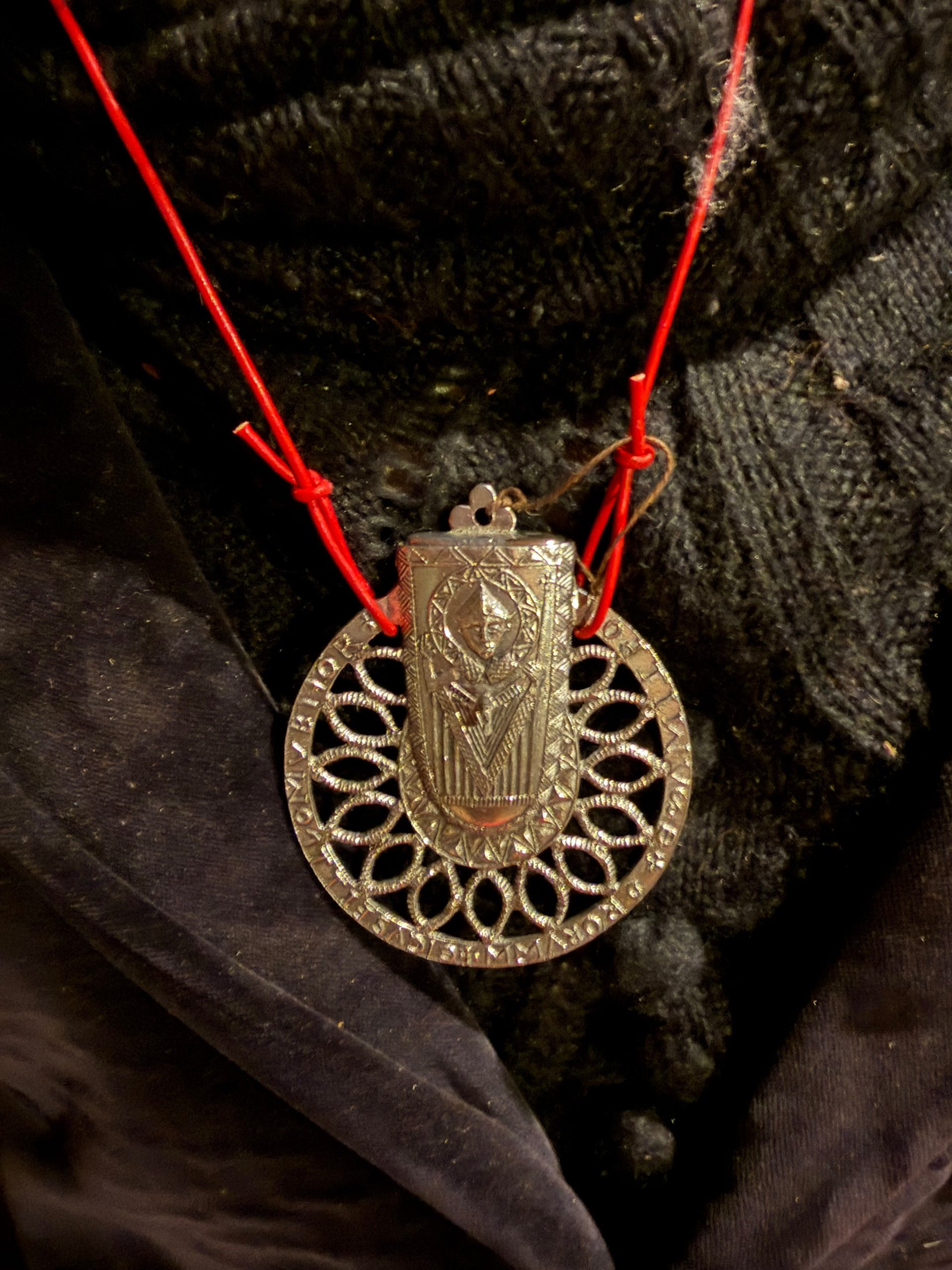
From the 1120s until the final conquest of the city of Acre by the Mamluks in 1291, the Templars and their sister order the Hospitallers played a significant role in the crusades and in the affairs of the so-called crusader states. They held many of the most famous crusader castles, and they took care of pilgrims to the Holy Places. They were also active in the crusades in the Iberian Peninsula, and had a presence in eastern Europe during the Baltic Crusades and in the south-west of France during the Albigensian Crusade. This talk will focus on the Templars: their beginnings, their role in the crusades and the crusader states, and their final heroic defence of Acre; and consider how far the fall of Acre in 1291 contributed to the destruction of the Templars two decades later.
Bio
Helen J. Nicholson has recently retired as Professor of Medieval History at Cardiff University. She has published widely on the military orders, crusades, and various related subjects, including an edition of the Templars’ trial proceedings in Britain and Ireland (2011), and a history of Queen Sybil of Jerusalem (2022).
Curated and Hosted by
Dr. Amy Hale is an Atlanta-based anthropologist and folklorist writing about esoteric history, art, culture, women and Cornwall in various combinations. Her biography of Ithell Colquhoun, Genius of the Fern Loved Gully, is available from Strange Attractor Press, and she is also the editor of the forthcoming collection Essays on Women in Western Esotericism: Beyond Seeresses and Sea Priestesses from Palgrave Macmillan. Other writings can be found at her Medium site https://medium.com/@amyhale93 and her website http://www.amyhale.me.
don’t worry if you miss it – we will send you a recording valid for two weeks the next day
Did Albert Hofmann discover LSD by accident or was it the creation of an arcane order to bring a world at war to its senses? This lecture will explore the interesting history of theories and conspiracies surrounding the origins of LSD and early stories about its ability to power to mobilize or at least inspire the masses.
In 1933, ten years before Albert Hofmann supposedly accidentally discovered the hallucinogenic properties of LSD, a little-known book called ‘St Peter’s Snow’ by the Austrian author Leo Perutz was published as ‘St-Petri-Schnee’. In Perutz’s novel a landowning Baron has learned that ergot was the secret psychoactive sacrament of the ancient mystery cults, handed down through the ages as an esoteric secret. He employs the skills of a biochemist to extract the active principle from ergot. When he experimentally doses the local peasant population whom he has invited to a fete with his drug, he induces not a religious revival but a popular revolt!
This tale was forty-five years before ergot was proposed as the secret sacrament of the mysteries in The Journey to Eleusis, by Albert Hofmann, Carl Ruck and R. Gordon Wasson in 1978. In recent years, various theories proposing that ergot was a secret mystical sacrament handed down by illuminist secret societies have since circulated on the internet. This belief may have roots in the statements of the West Coast psychedelic elite of the fifties and sixties, that LSD was the creation of followers of the occultist Rudolf Steiner working at Sandoz in the forties to save a world plunged into a devastating world war. This lecture will untangle some of these mythic threads to look at their origins in legend and history.
Bio
Alan Piper took part in the psychedelic scene of the early nineteen seventies then like many others moved on into an exploration of religious and esoteric ideas. As an extension of his interests in cultural history, he graduated in the History of Ideas in nineteen eighties as a mature student. The growing profile of psychedelic guru Terence McKenna in the nineties renewed his interest in psychedelics, and he began to investigate the history of psychedelic culture. Since then, he has published several articles on the subject and a monograph on the interest of the radical right and conservative culture in psychedelics, as well as speaking at psychedelic conferences. His latest work, a collection of his essays on psychedelic culture, ‘Bicycle Day and Other Psychedelic Essays’, will be published in March 2023 by Psychedelic Press.
Curated and Hosted by
Dr. Amy Hale is an Atlanta-based anthropologist and folklorist writing about esoteric history, art, culture, women and Cornwall in various combinations. Her biography of Ithell Colquhoun, Genius of the Fern Loved Gully, is available from Strange Attractor Press, and she is also the editor of the forthcoming collection Essays on Women in Western Esotericism: Beyond Seeresses and Sea Priestesses from Palgrave Macmillan. Other writings can be found at her Medium site https://medium.com/@amyhale93 and her website http://www.amyhale.me.
don’t worry if you miss it – we will send you a recording valid for two weeks the next day
Let Viktor Wynd share a nightcap with you, tuck you into bed and tell you Fairy Tales to send you into a deep sleep of strange dreams. Be warned these are not the Ladybird or Disney versions and may not be suitable for the tenderist ears.
This evening Mr. Wynd will tells some his favourite tales heard around the world, from nasty Germans chopping up people and eating them to disgusting, macabre and delightful tales from Borneo, learn of the birth of the leeches, the reason mosquitos are always buzzing human ears, why it is best not to suckle caterpillars – or indeed strange babies and something about bedbugs that might give you nightmares. Giant Octopuses, man eating pigs and a buried moon from Papua New Guinea, or possibly shapeshifting magickal creatures from Wales – the world will be your oyster.
Viktor Wynd, proprietor of London’s eponymous (nay infamous) Museum of Curiosities, Fine Art & UnNatural History has spent the last twenty five years telling stories to audiences across the globe. Fascinated by traditional fairy tales his repetoire includes tales from The Brothers Grimm, The Arabian Nights, Scandinavia, Russia, Italy, France, Irieland, Africa, Papua New Guinea & North America – so far.
The History of the Cornish Language: From the Romans to the death of Dolly Pentreath in 1777
How and why did Cornwall change from being a place with its own distinctive language, to having an English-speaking population? This talk examines the political, social, and economic reasons why the Cornish language retreated; how events in wider Europe affected life in Cornwall; key moments in Cornish history which affected the Cornish language such as the 1549 Prayer Book Rebellion; and the roles individuals – including Dolly Pentreath, Edward Lhuyd and Daines Barrington – played in the history of the Cornish Language.
Bio
Kensa Broadhurst is a final year PhD student at the Institute of Cornish Studies, part of Exeter University. Her studies are funded by the Cornwall Heritage Trust and the Q Fund. Kensa is researching the status of the Cornish language between 1777-1904, that is, the period in which it is widely believed to have been extinct. A former modern languages teacher, Kensa is a fluent speaker of Cornish, a bard of the Cornish Gorsedh, and both teaches and examines the language.
Curated and Hosted by
Dr. Amy Hale is an Atlanta-based anthropologist and folklorist writing about esoteric history, art, culture, women and Cornwall in various combinations. Her biography of Ithell Colquhoun, Genius of the Fern Loved Gully, is available from Strange Attractor Press, and she is also the editor of the forthcoming collection Essays on Women in Western Esotericism: Beyond Seeresses and Sea Priestesses from Palgrave Macmillan. Other writings can be found at her Medium site https://medium.com/@amyhale93 and her website http://www.amyhale.me.
don’t worry if you miss it – we will send you a recording valid for two weeks the next day
Let Viktor Wynd share a nightcap with you, tuck you into bed and tell you Fairy Tales to send you into a deep sleep of strange dreams. Be warned these are not the Ladybird or Disney versions and may not be suitable for the tenderist ears.
This evening Mr. Wynd will tell some of his favourite Welsh tales, the ancient tales from The Mabinogion featuring a maiden made of flowers, a horse that can not be caught, Arawn, Lord of The Otherworld, the beautiful Rhiannon and why she was smeared in dog’s blood, Branwen, the magical cauldron and why Bran’s decapitated head carries on talking, Pryderi, a blanket of mist and the hanging of a mouse….
Viktor Wynd, proprietor of London’s eponymous (nay infamous) Museum of Curiosities, Fine Art & UnNatural History has spent the last twenty five years telling stories to audiences across the globe. Fascinated by traditional fairy tales his repetoire includes tales from The Brothers Grimm, The Arabian Nights, Scandinavia, Russia, Italy, France, Irieland, Africa, Papua New Guinea & North America – so far.
Let Viktor Wynd share a nightcap with you, tuck you into bed and tell you Fairy Tales to send you into a deep sleep of strange dreams. Be warned these are not the Ladybird or Disney versions and may not be suitable for the tenderist ears.
This evening Mr. Wynd will tell some of his favourite Welsh tales, the ancient tales from The Mabinogion featuring a maiden made of flowers, a horse that can not be caught, Arawn, Lord of The Otherworld, the beautiful Rhiannon and why she was smeared in dog’s blood, Branwen, the magical cauldron and why Bran’s decapitated head carries on talking, Pryderi, a blanket of mist and the hanging of a mouse….
Viktor Wynd, proprietor of London’s eponymous (nay infamous) Museum of Curiosities, Fine Art & UnNatural History has spent the last twenty five years telling stories to audiences across the globe. Fascinated by traditional fairy tales his repetoire includes tales from The Brothers Grimm, The Arabian Nights, Scandinavia, Russia, Italy, France, Irieland, Africa, Papua New Guinea & North America – so far.
Let Viktor Wynd share a nightcap with you, tuck you into bed and tell you Fairy Tales to send you into a deep sleep of strange dreams. Be warned these are not the Ladybird or Disney versions and may not be suitable for the tenderist ears.
This evening Mr. Wynd will tells some his favourite tales he first heard in Borneo some years ago, disgusting, macabre and delightful tales, learn of the birth of the leeches, the reason mosquitos are always buzzing human ears, why it is best not to suckle caterpillars – or indeed strange babies and something about bedbugs that might give you nightmares.
Viktor Wynd, proprietor of London’s eponymous (nay infamous) Museum of Curiosities, Fine Art & UnNatural History has spent the last twenty five years telling stories to audiences across the globe. Fascinated by traditional fairy tales his repertoire includes tales from The Brothers Grimm, The Arabian Nights, Scandinavia, Russia, Italy, France, Ireland, Africa, Papua New Guinea & North America – so far.
Let Viktor Wynd share a nightcap with you, tuck you into bed and tell you Fairy Tales to send you into a deep sleep of strange dreams. Be warned these are not the Ladybird or Disney versions and may not be suitable for the tenderist ears.
This evening Mr. Wynd will choose some of his favourite Norwegian tales, strange tales filled with Trolls, that, as a rule are not very nice, either to people or each other
Viktor Wynd, proprietor of London’s eponymous (nay infamous) Museum of Curiosities, Fine Art & UnNatural History has spent the last twenty five years telling stories to audiences across the globe. Fascinated by traditional fairy tales his repertoire includes tales from The Brothers Grimm, The Arabian Nights, Scandinavia, Russia, Italy, France, Ireland, Africa, Papua New Guinea & North America – so far.
Let Viktor Wynd share a nightcap with you, tuck you into bed and tell you Fairy Tales to send you into a deep sleep of strange dreams. Be warned these are not the Ladybird or Disney verisons and may not be suitable for the tenderist ears.
From the fabled lands of ancient Arabia come these extraordinary tales of 1001 Nights, full of Djinn, Magic, Enchantment, Great Treasure, Shape Shifting, Voyages & Even Eroticism
Viktor Wynd, proprietor of London’s eponymous (nay infamous) Museum of Curiosities, Fine Art & UnNatural History has spent the last twenty five years telling stories to audiences across the globe. Fascinated by traditional fairy tales his repetoire includes tales from The Brothers Grimm, The Arabian Nights, Scandinavia, Russia, Italy, France, Irieland, Africa, Papua New Guinea & North America – so far.
Gargoyles and Grotesques: Why are there Monsters on Medieval Churches?
Gargoyles and grotesques are an immediate and appealing feature of many historic churches and cathedrals. Typically carved into all manner of monsters, wild figures and faces, these sizeable pieces of architectural sculpture have often been dismissed as meaningless or whimsical folk art incongruous with their religious setting. In this talk Alex Woodcock will explore the content and contexts of these carvings, exploring the role of the monster in architectural sculpture and the complexities of the grotesque, and through doing so what these images might reveal to us about medieval buildings and beliefs.
Dr Alex Woodcock is a writer, stonemason and artist immersed in the worlds of medieval architecture and sculpture. Following a PhD on medieval sculpture he trained as a stonemason and worked at Exeter Cathedral for six years. His books include Gargoyles and Grotesques (Bloomsbury, 2011), Of Sirens and Centaurs (Impress, 2013) and King of Dust (Little Toller, 2019). He teaches on the Cathedrals’ Workshop Fellowship degree and is a Fellow of the Society of Antiquaries. For more information see: www.alexwoodcock.co.uk or Twitter: @beakheads
Your curator and host for this event will be the writer Edward Parnell, author of Ghostland: In Search of a Haunted Country. Edward Parnell lives in Norfolk and has an MA in Creative Writing from the University of East Anglia. He is the recipient of an Escalator Award from the National Centre for Writing and a Winston Churchill Travelling Fellowship. Ghostland (William Collins, 2019), a work of narrative non-fiction, is a moving exploration of what has haunted our writers and artists – as well as the author’s own haunted past; it was shortlisted for the PEN Ackerley 2020 prize, an award given to a literary autobiography of excellence. Edward’s first novel The Listeners (2014), won the Rethink New Novels Prize. For further info see: https://edwardparnell.com
[Image: a carving of a mouth-puller on the church tower at Iffley, Oxfordshire. Photo by Alex Woodcock.]
Watch a recording of This Lecture, & 100s of others, for free when you join our Patreon