Deathbed Visions: What do we see at the edge of life? – Stuart Gray – Zoom

Deathbed Visions: What do we see at the edge of life?

As the body begins to fail and consciousness loosens its grip, many people report experiences that are anything but ordinary. In the final hours or moments before death, the dying often describe vivid visions: encounters with long-dead loved ones, journeys, presences, lights, messages—scenes that feel emotionally charged, coherent, and deeply real. These are known as deathbed visions.

Drawing on over sixty years of scientific research, we will explore the recurring patterns behind these extraordinary experiences. We will introduce four common categories of deathbed visions and examine the leading naturalistic explanations offered by neuroscience, psychology, and medicine—asking where they succeed, and where they fall short.

From there, we turn to a more provocative question: why has deathbed vision research itself so often been treated as scientifically suspect? When examined closely, attempts to exclude DBVs from legitimate science begin to unravel—revealing uncomfortable fault lines that would also undermine accepted areas of contemporary research.

Rather than a fringe curiosity, deathbed visions emerge as a rich, methodologically serious, and urgently under-examined body of data. The material is already here. The question is whether we are prepared to look at it—and what it might ask us to rethink about consciousness, dying, and the limits of scientific inquiry.

Speaker Bio:

Stuart H. Gray works as a freelance writer and trainer in the technology sector. He has a Bachelor of Science (Honours)degree in Computer Science from the University of Strathclyde, and a Diploma of Higher Education in Theology from the University of Gloucestershire. More recently, he received Highest Honors in both the Master’s Degree in Christian Apologetics and the Master’s in Science and Religion at BIOLA University. His thesis isentitled“Deathbed Visions: The Development of a Christian Apologetic Argument and An Assessment of Naturalistic Counterarguments.” He co-edits the Evangelical Philosophical Society’s Web Project called “Philosophical Issues in ‘Afterlife Apologetics’” with Dr J Steve Miller. He is embarking on a PhD to study deathbed visions amongst Hindu people. He is also currently writing a book assessing common deathbed experiences in the light of secular and non-secular worldview expectations.

Linked-In: https://www.linkedin.com/in/stuarthgray/

EPS Web Project: Philosophical Issues in ‘Afterlife Apologetics’

https://www.epsociety.org/articles/web-project-philosophical-issues-in-afterlife-apologetics/

Curated & Hosted by:

Lena Schattenherz Heide-Brennand is a Norwegian lecturer with a master degree in language, culture and literature from the University of Oslo and Linnaeus University. She has been lecturing and teaching various subjects since 1998. Her field of interest and main focus has always been topics that others have considered strange, eccentric and eerie, and she has specialised in a variety of dark subjects linked to folklore, mythology and Victorian traditions and medicine. Her students often point out her thorough knowledge about the subjects she is teaching, in addition to her charismatic appearance. She refers to herself as a performance lecturer and always gives her audience an outstanding experience

don’t worry if you miss it – we will send you a recording valid for two weeks the next day
Witch Fulfilment: The Witch as Theatrical Type – Jane Barnette – Zoom

Witch Fulfilment: The Witch as Theatrical Type

What wishes do performances fulfill when they include witchy characters onstage? My research centers the Witch as a theatrical type on twenty-first century North American stages and screens, with attention to casting and adaptation dramaturgy.

Witch representation matters because witches are not figments of imagination or inhuman monsters. Understanding the humanity of witches suggests that if the Witch can be analyzed as a theatrical type reiterated through performance, then those of us who make theatre and other kinds of popular performance culture have a responsibility to represent witches humanely.

In this discussion, we will review iconic examples of Witches onstage, considering both the character and the actor playing the role. From depictions of the Wicked Witch to Medea to the Weird Sisters and beyond, the representation of Witches in the contemporary adaptations I examine all reveal crucial insights about the fears and desires we have about the hidden powers of minoritarian subjects.

Bio:

Jane is the Head of Dramaturgy and a Professor in the Department of Theatre and Dance at the University of Kansas (KU). Her recent book Witch Fulfillment: Adaptation Dramaturgy and Casting the Witch for Stage and Screen (Routledge 2024) explores the Witch as a theatrical type, using feminist, queer, and adaptation dramaturgy methodologies. She is also the author of Adapturgy: The Dramaturg’s Art and Theatrical Adaptation (SIU Press 2018). A freelance dramaturg and director, Barnette directed a double-cast version of John Proctor is the Villain in March 2025 at KU’s Inge Theater. Barnette’s next book, co-authored with Henry Bial, The Dramaturgy of Musical Revisal, is forthcoming from Routledge later this year.

Image:

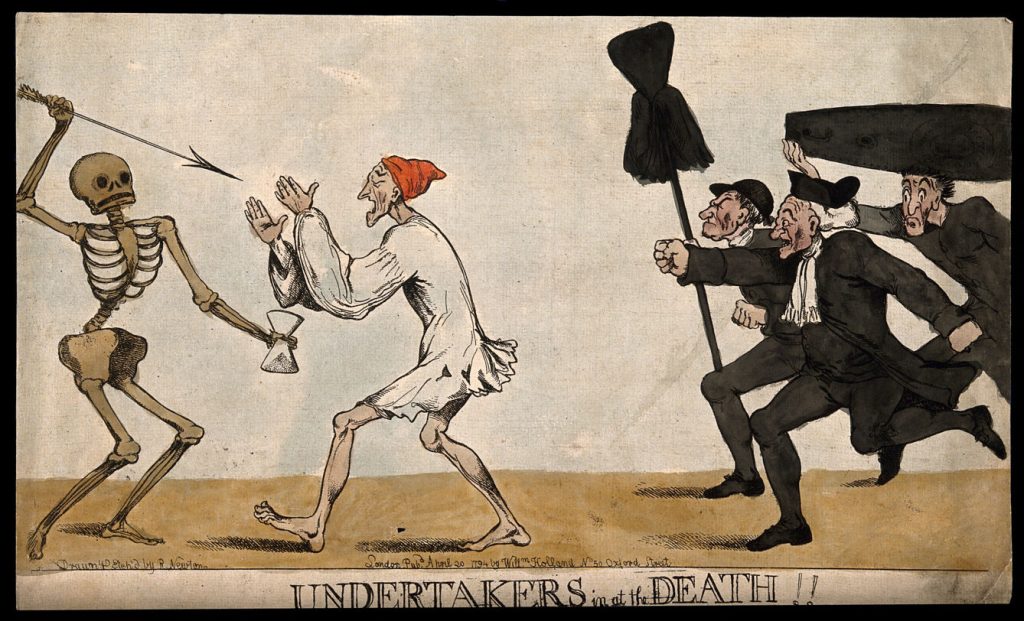
Image: Cavendish, Morton (1909). The Art of Theatrical Make-up, London: Adam and Charles Black. Public Domain.

Curated & Hosted by:

Marguerite Johnson is a cultural historian of the ancient Mediterranean, specialising in sexuality and gender, particularly in the poetry of Sappho, Catullus, and Ovid, as well as magical traditions in Greece, Rome, and the Near East. She also researches Classical Reception Studies, with a regular focus on Australia. In addition to ancient world studies, Marguerite is interested in sexual histories in modernity as well as magic in the west more broadly, especially the practices and art of Australian witch, Rosaleen Norton. She is Honorary Professor of Classics and Ancient History at The University of Queensland, and a Fellow of the Australian Academy of the Humanities. She lives in Mytilene on the Greek island of Lesvos.

don’t worry if you miss it – we will send you a recording valid for two weeks the next day

The I Ching Oracle – Professor John Lai – Zoom

4. The I Ching Oracle

You don’t need to be a medium to receive an otherworldly transmission. A handful of sticks or coins may be enough to receive life-changing guidance – that is, if you’re an adept of a certain ancient Chinese oracle. Join us for the fourth instalment of Fey’s Shadow Salon to learn from an I Ching expert on the intricacies of this divinatory art.

Venerated as the “foremost among the classics” of ancient China, the I Ching (Yijing; Book of Changes) has reached out to other regions of Asia and beyond over the centuries. Thanks to the influential English translation I Ching (1950) by Richard Wilhelm and Cary Baynes, the Chinese classic has transcended cultural borders, and transformed as a “world classic”, having made a lasting impact on Western society. The I Ching has been widely used as a book of oracle or divinatory manual. In this talk, Professor John Lai will illustrate the underlying principle and centuries-old practice of I Ching oracle in the face of our uncertain life and fast-changing world.

Bio

Professor John Lai received his DPhil. (Oriental Studies) from Oxford (2005), and is currently Professor in the Department of Cultural and Religious Studies, Chinese University of Hong Kong. His research interests focus on Chinese religion and literature, and Global Yijing (Book of Changes) studies. He has published more than ten books, including Literary Representations of Christianity in Late Qing and Republican China (2019); An Annotated Anthology of the Yijing Commentaries by the Early Qing Jesuit Joachim Bouvet (2020); Global Yijing: Intercultural Encounters with World Religions and Thoughts (2025).

Website: http://www2.crs.cuhk.edu.hk/faculty-staff/teaching-faculty/lai-tsz-pang-john

Hosted and Curated by:

Fey, a mediator between the otherworldly and the mundane. Outside of the salon (Ada Kałużna), a researcher with interest in philosophy of mind, psychedelic experience and the extraordinary Past scientific officer at the Beckley Foundation. Community-builder and traveler.

LINK: https://www.researchgate.net/profile/Ada_Kaluzna2

don’t worry if you miss it – we will send you a recording valid for two weeks the next day


Fey’s Shadow Salon – a lecture series where we explore the elusive, chart the intangible, and investigate the invisible. Come around as we initiate the first season of the Salon, the Study of the Unseen, on the eclipse of 3rd March and stay for the ride through labyrinths of the human psyche, from the seven circles of the Jungian unconscious, to the psychedelic fountains of creativity, to the tall peaks of imagination where the ancient Spirits dwell.

1. “Books of Visions”: Jung, Dante, and the Making of the Red Book – 3 Mar 2026

2. Psychedelics as Catalysts of Creativity – 30 April 2026

3. Dreams of Death: Navigating States of Dazzling Darkness – 14 May 2026

4. The I Ching Oracle – 28 May 2026

5. Spirit of Creativity – 28 July 2026

Black Magic on Trial: Aleister Crowley, Libel, Litigation and the Law Courts – Andrew Wiseman – Zoom

Black Magic on Trial: Aleister Crowley, Libel, Litigation and the Law Courts

This presentation aims to survey the various legal battles faced or initiated by one of the twentieth-century’s most notorious and influential practitioners of the occult. By anyone’s standards Aleister Crowley (1875–1947) was a litigious individual who sought recourse to the law on more than a few occasions. Of the three main legal disputes (1911, 1922 and 1934) in which he was either a defendant or plaintiff, the most notorious case was the trial dubbed the ‘Black Magic’ Libel Action of 1934 in which Crowley sought legal redress to an incident dating back to his Cefalù days, where he had established the Abbey of Thelema. A memoir entitled Laughing Torso (1932) by Nina Hamnett (1890–1956), in which a lurid passage appears, raised Crowley’s hackles as he claimed that he was being libelled by referring to his occult practices as black magic. Having lost the case and having to pay damages, Crowley’s precarious financial problems ended in declaring bankruptcy the next year. Coverage of the trial was syndicated throughout the press and helped to seal Crowley’s notorious reputation.

No stranger to the law courts, Crowley’s first brush with the legal system dates back to the incident known as the ‘Battle for Blythe Road’ in 1900 but which did not go any further due to a solicitor’s wise piece of advice. His divorce case, initiated by his estranged wife, Rose Kelly, became a cause célèbre. His involvement, however, with the law did not all end in losses as in the case of the ‘Looking Glass’ Trial (1911) and also the one involving his novel The Diary of a Drug Fiend (1922), both involving libel, and both of which concluded in Crowley’s favour.

Given his self-inflicted and self-promoted notoriety, particularly from the yellow press of the 1920s onwards, Crowley’s reputation, one in which he sometimes relished, became a challenge for him as it preceded him and the trials he went on to lose, it may be argued, tended to eschew evidence. Trial by character rather than by evidence seems to have been the order of the day.

Speaker Bio:

Andrew Wiseman is a cultural historian, specialising in the Scottish Highlands from the late medieval to the modern period, who has developed a keen interest, perhaps even an unhealthy one, in Boleskine House and its long-held association with the iconoclastic occultist Aleister Crowley. He is currently editing a number of works and has authored around twenty chapters and articles as well as numerous blogs and mainstream publications. As author of the forthcoming title Lord Boleskine: Aleister Crowley and the House of the Beast 666, a detailed and engaging account of Crowley’s residence at his Highland home will be offered as well as the controversial legacy which he left in his wake.

Curated & Hosted by:

Marguerite Johnson is a cultural historian of the ancient Mediterranean, specialising in sexuality and gender, particularly in the poetry of Sappho, Catullus, and Ovid, as well as magical traditions in Greece, Rome, and the Near East. She also researches Classical Reception Studies, with a regular focus on Australia. In addition to ancient world studies, Marguerite is interested in sexual histories in modernity as well as magic in the west more broadly, especially the practices and art of Australian witch, Rosaleen Norton. She is Honorary Professor of Classics and Ancient History at The University of Queensland, and a Fellow of the Australian Academy of the Humanities. She lives in Mytilene on the Greek island of Lesvos.

don’t worry if you miss it – we will send you a recording valid for two weeks the next day

Hellfire, Hanging, and Humiliation: Book Curses through Book History Dr Eleanor Baker – Zoom

Hellfire, Hanging, and Humiliation: Book Curses through Book History

For as long as the written word has existed, so has the desire to protect it. One means by which people have tried to defend their precious texts is through the inscription of book curses: short, maledictory writings that warn the would-be thief, the forgetful borrower, or the malicious eraser with bodily, spiritual, or social damage. This talk will introduce some of the most ferocious and humorous book curses ever inscribed, from fearsome threats discovered emblazoned on stone monuments from the ancient Near East, to elaborate manuscript maledictions, and chilling warnings scribbled in printed books. Baker will discuss her experience hunting these book curses and reflect on how these entertaining writings offer a tantalising insight into literacy, book-ownership, and people’s attitude towards their material texts. This talk is based on Baker’s book, Book Curses (Bodleian Publishing, 2024).

Speaker Bio:

Eleanor Baker is the English Subject Lead for the University of Oxford’s Astrophoria Foundation Year and teaches medieval literature at various colleges across the university. Her doctoral thesis examined the perception of material texts in Middle English literature, and how these material objects were understood as at once practical and fantastical. Chapters of this thesis have been published in Studies in Philology and Recipes and Book Culture in England, 1350-1600 (ed. Hannah Ryley and Carrie Griffin). Eleanor’s research interests include the book culture of late medieval England, twentieth-century medievalism, and folk horror in medieval literature. Her first trade-press anthology, Book Curses, was published in 2024 by Bodleian Publishing.

Curated & Hosted by:

Marguerite Johnson is a cultural historian of the ancient Mediterranean, specialising in sexuality and gender, particularly in the poetry of Sappho, Catullus, and Ovid, as well as magical traditions in Greece, Rome, and the Near East. She also researches Classical Reception Studies, with a regular focus on Australia. In addition to ancient world studies, Marguerite is interested in sexual histories in modernity as well as magic in the west more broadly, especially the practices and art of Australian witch, Rosaleen Norton. She is Honorary Professor of Classics and Ancient History at The University of Queensland, and a Fellow of the Australian Academy of the Humanities. She lives in Mytilene on the Greek island of Lesvos.

Image: Master of the Échevinage of Rouen, Monk (Hermit) Praying for the Dead Man and Struggle for his Soul between Saint Michael and the Devil, about 1470, Rouen, miniature taken from a manuscript breviary, McGill University Library. c.1470. Public Domain.

don’t worry if you miss it – we will send you a recording valid for two weeks the next day

Lilith, Maman Brigitte & Pomba Gira : The Dark Goddesses of Your Dreams – Lilith Dorsey – Zoom

Lilith, Maman Brigitte & Pomba Gira: The Dark Goddesses of Your Dreams

These are not gentle goddesses.

They do not whisper comfort or ask for permission.

This talk is an exploration of three powerful feminine figures who have been feared, worshipped, invoked, and misunderstood for centuries — sometimes millennia.

We begin with Lilith, the first rebel, the night-walker, the woman who refused obedience. Cast out, demonised, sexualised, and vilified by patriarchal traditions, Lilith survives as a symbol of raw autonomy, erotic power, and refusal to submit.

We then move into the graveyard fire of Maman Brigitte, Queen of the Dead, guardian of the crossroads between life and death. Fierce, sharp-tongued, protective, and just, she is called upon when boundaries are crossed, wrongs must be addressed, and protection is needed — especially for those with little power of their own.

And finally, we meet Pomba Gira — laughing, seductive, clever, bare-breasted, and unapologetic. A spirit of desire, agency, and clever survival, she turns shame into power and pleasure into strategy. Pomba Gira does not ask to be liked. She asks to be respected.

We will talk about who these figures are and where they come from and how they have been distorted, feared, or sensationalised. If you are drawn to dark goddesses, this is your chance to slow down, listen carefully, and approach them with clarity rather than projection.

They are older than fear.

And they do not belong to anyone — but they may still answer.

Speaker Bio:

Lilith Dorsey M.A., hails from many magickal traditions, including Afro-Caribbean, Celtic, and Indigenous American spirituality. Their education focused on Plant Science, Anthropology, and Film at the U.R.I. , N.Y.U. , and the University of London, and their magickal training includes numerous initiations in Santeria aka Lucumi, Haitian Vodoun, and New Orleans Voodoo. Lilith Dorsey is a Voodoo Priestess and has been doing successful magick since 1991 for patrons, was publisher of Oshun-African Magickal Quarterly, filmmaker of the experimental documentary Bodies of Water :Voodoo Identity and Tranceformation,’ and choreographer/performer for legend Dr. John’s “Night Tripper” Voodoo Show. They are the proud Black author of 6 traditionally published books including the most recent Tarot Every Witch Way.

Hosted & Curated By:

Lena Schattenherz Heide-Brennand is a Norwegian lecturer with a master degree in language, culture and literature from the University of Oslo and Linnaeus University. She has been lecturing and teaching various subjects since 1998. Her field of interest and main focus has always been topics that others have considered strange, eccentric and eerie, and she has specialised in a variety of dark subjects linked to folklore, mythology and Victorian traditions and medicine. Her students often point out her thorough knowledge about the subjects she is teaching, in addition to her charismatic appearance. She refers to herself as a performance lecturer and always gives her audience an outstanding experience

don’t worry if you miss it – we will send you a recording valid for two weeks the next day
Voodoo and Afro-Caribbean Paganism – Lilith Dorsey – Zoom

Voodoo and Afro-Caribbean Paganism

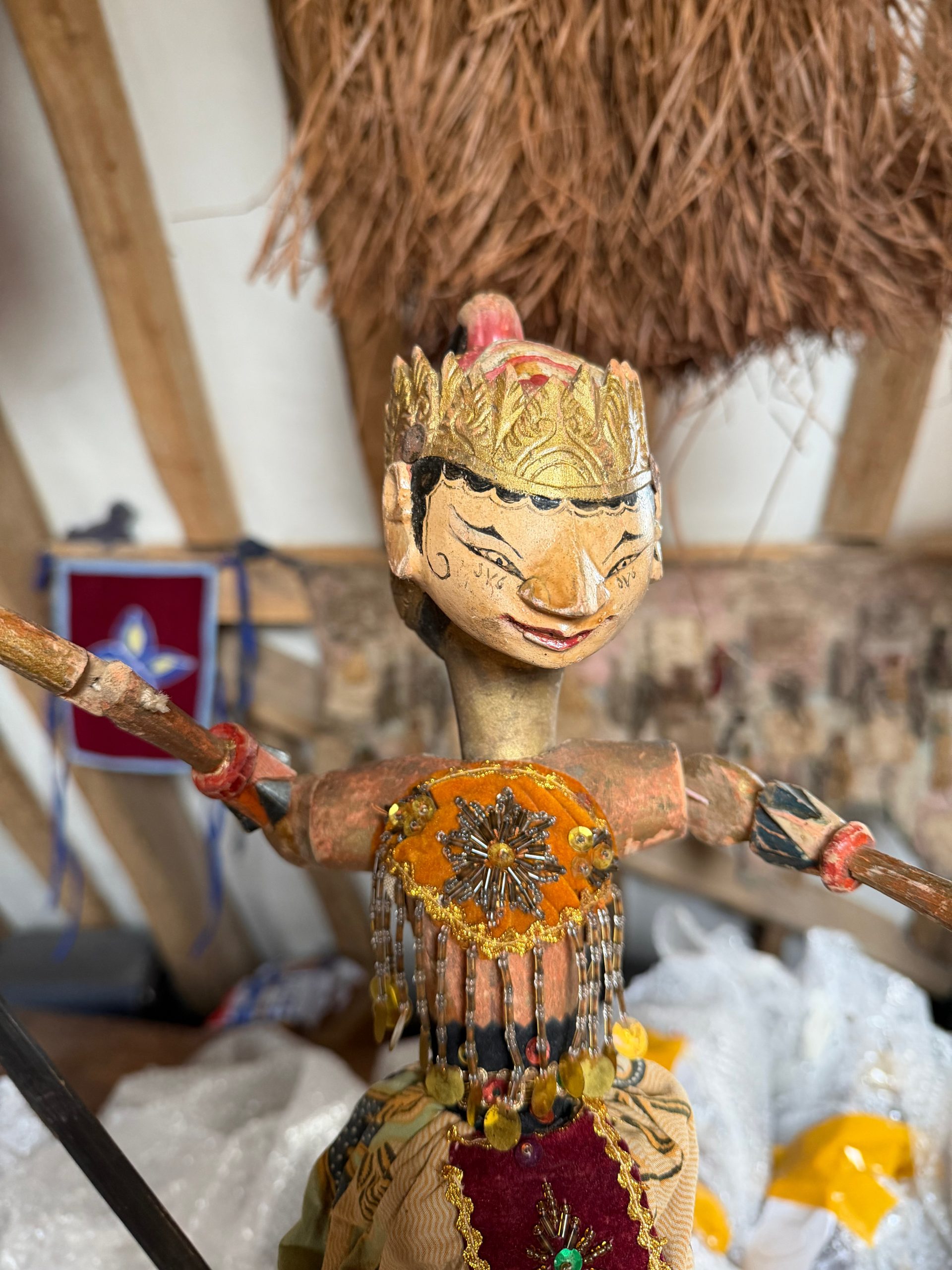
The world of voodoo is a universe populated with sacred gods, spirit possessions, and natural grace. Despite media portrayals of zombies and wild abandon, the religion is actually a complex system of nature-inspired belief. This class will answer your questions, and introduce you to the voodoo gods of fire, love, lightning, and more.

Speaker Bio:

Lilith Dorsey M.A., hails from many magickal traditions, including Afro-Caribbean, Celtic, and Indigenous American spirituality. Their education focused on Plant Science, Anthropology, and Film at the U.R.I. , N.Y.U. , and the University of London, and their magickal training includes numerous initiations in Santeria aka Lucumi, Haitian Vodoun, and New Orleans Voodoo. Lilith Dorsey is a Voodoo Priestess and has been doing successful magick since 1991 for patrons, was publisher of Oshun-African Magickal Quarterly, filmmaker of the experimental documentary Bodies of Water :Voodoo Identity and Tranceformation,’ and choreographer/performer for legend Dr. John’s “Night Tripper” Voodoo Show. They are the proud Black author of 6 traditionally published books including the most recent Tarot Every Witch Way.

Hosted & Curated By:

Lena Schattenherz Heide-Brennand is a Norwegian lecturer with a master degree in language, culture and literature from the University of Oslo and Linnaeus University. She has been lecturing and teaching various subjects since 1998. Her field of interest and main focus has always been topics that others have considered strange, eccentric and eerie, and she has specialised in a variety of dark subjects linked to folklore, mythology and Victorian traditions and medicine. Her students often point out her thorough knowledge about the subjects she is teaching, in addition to her charismatic appearance. She refers to herself as a performance lecturer and always gives her audience an outstanding experience

don’t worry if you miss it – we will send you a recording valid for two weeks the next day

The 13 Most Haunted Objects in The World – Lena Heide-Brennand – Zoom

The 13 Most Haunted Objects in The World

Some objects are not owned. They cling to you.

Throughout history, certain objects have been feared not for what they are, but for what they carry. They are the things passed down in whispers: the skull that murmurs in the dark, the doll that shifts between glances, the mirror that refuses to give back an honest reflection. A ring that ruins every hand that dares wear it. A necklace that tightens of its own accord. A comb that must never touch living hair. A charm woven to imprison a spirit—only to break open decades later.

Across continents and centuries, humans have believed that objects can absorb tragedy, hunger, desire, curses, or even entire personalities. Some artefacts were sealed in iron cages and dropped into rivers. Some were locked in churches for generations. Some were burned—yet refused to stop coming back. Others were simply hidden away by families who could not bear to destroy them, but were terrified to let them go.

This lecture opens the doors to a cabinet of the world’s most unnerving relics:

• African power-objects that must be fed or they wake

• Japanese dolls that develop human hair

• Slavic household spirits bound inside handcrafted figures

• Chinese ancestor items that punish disrespect

• Irish witch-knots designed to steal a life

• Scandinavian grave goods that cannot rest

• American cursed antiques that destroy every owner

Each object reveals a deeper truth about fear, memory, and the uneasy relationship between the living and the dead. Why do some items become vessels? How does a curse attach itself? Can an object be “alive” in a ritual or spiritual sense? And what happens when such things move from their original cultures into modern hands?

Enter with curiosity—but tread carefully.

Some stories have a habit of following you home.

Bio:

Lena Schattenherz Heide-Brennand is a Norwegian lecturer with a master degree in language, culture and literature from the University of Oslo and Linnaeus University. She has been lecturing and teaching various subjects since 1998. Her field of interest and main focus has always been topics that others have considered strange, eccentric and eerie, and she has specialised in a variety of dark subjects linked to folklore, mythology and Victorian traditions and medicine. Her students often point out her thorough knowledge about the subjects she is teaching, in addition to her charismatic appearance. She refers to herself as a performance lecturer and always gives her audience an outstanding experience

don’t worry if you miss it – we will send you a recording valid for two weeks the next day

World Absinthe Day with Devil’s Botany Absinthe x Dean of the Dead: Absinthe Hot Sauce Launch Party

DEAN OF THE DEAD x DEVIL’S BOTANY

World Absinthe Day with Devil’s Botany Absinthe x Dean of the Dead:
Absinthe Hot Sauce Launch Party

World Absinthe Day is about to get dangerously spicy.

BOOK RESERVATION HERE

Join us at The Absinthe Parlour for the fiery launch of a brand-new collaboration between Devil’s Botany Distillery and Dean of the Dead: a devilish range of absinthe-infused hot sauces made for heat-seekers, flavour fiends, and the absinthe-obsessed.

Expect an evening celebrating absinthe’s rebellious spirit, ignited by the unmistakable fire of Dean of the Dead.

Guests who reserve in advance will enjoy a free hot-sauce-laced absinthe cocktail on arrival, discounted museum admission, access to a Devil’s Botany menu honouring absinthe’s infamous spirit, and devilish grilled cheeses to pair.

Whether you’re a longtime absinthe devotee, absinthe-curious, or ready to experience its bold new hot sauce form, join us for an unforgettable evening of devilish flavour and good times.

Reservations required for complimentary welcome drink and discounted museum admission. 

BOOK RESERVATION HERE


Wicked Wednesdays: Devil’s Botany Absinthe Tasting

Wicked Wednesdays: Absinthe Masterclass with Devil’s Botany

Celebrate World Absinthe Day with Devil’s Botany

Explore the wicked world of absinthe at The Last Tuesday Society with a Wednesday night tasting & masterclass delving into the curious world of wormwood.

Tickets include a welcome drink on arrival plus a tasting of our Wormwood Vodka, award-winning Devil’s Botany London Absinthe & Absinthe Regalis, finishing with our decadent Chocolate Absinthe Liqueur. To finish, guests will be invited to explore the collection in the Viktor Wynd Museum of Curiosities.

Doors open at 18:30 for welcome drink.
Tasting & masterclass starts at 19:00.

Event is suitable for 18+ over only. Please contact [email protected] with any questions, allergies or dietary requirements. Refunds for in-person events are only possible up to 7 days prior to the event date.

Devil’s Botany is the UK’s first absinthe distillery, founded by Directors of The Last Tuesday Society’s Absinthe Parlour & Cocktail Bar. Celebrating spirit’s connection to art, literature, magic & mixology, Devil’s Botany is unleashing the future of absinthe with bold expressions for the adventurous drinkers of today.