Bestiary of Christian Saints: When Holiness Takes Strange Shapes – Sergei Zotov – Zoom

Bestiary of Christian Saints: When Holiness Takes Strange Shapes

This lecture explores how medieval Christian art repeatedly crossed the boundarybetween the sacred and the monstrous, the bestial, and the unsettlingly grotesque. Long before modern debates about blasphemy and provocation, artists freely depicted holy figures as monstrous, hybrid, or disturbingly bodily: Christ as a Lamb with seven eyes, Moses with giant horns, saints with the heads of lions, horses, bulls, or eagles, angels as multi-faced chimeras, sacred scenes now precepted as being with shocking details. Far from being marginal curiosities, these images belonged to the core visual language of medieval Christianity and were deeply embedded in theology and devotion.

By tracing examples from manuscripts, sculpture, and church frescoes, the lecture asks why monstrosity was not a threat to holiness but one of its most powerful tools. We will see how medieval viewers understood these “deviant” images not as mockery, but as ways to think the unthinkable: divine transcendence, incarnation, suffering, and salvation. In doing so, the talk challenges modern assumptions about religious imagery, censorship, and offence – and shows that the Middle Ages were far stranger, freer, and more visually radical than we tend to imagine.

Speaker Bio:

Sergei Zotov is a historian of science and visual culture specialising in alchemy, magic, and iconography in medieval and early modern Europe (c. 1400–1800). He received his doctorate from the University of Warwick and is currently an Associate Fellow at the Warburg Institute (University of London). His research has been supported by major international fellowships held in Baltimore, Glasgow, Berlin, Gotha, Wolfenbüttel, and Überlingen, and has involved extensive archival work across more than 100 collections worldwide. Sergei has published in leading journals, including Nuncius and the British Journal for the History of Science, and is the author of five books on early modern iconography, two of which have received prestigious prizes and others shortlisted for major awards.

Curated & Hosted by:

Lena Schattenherz Heide-Brennand is a Norwegian lecturer with a master degree in language, culture and literature from the University of Oslo and Linnaeus University. She has been lecturing and teaching various subjects since 1998. Her field of interest and main focus has always been topics that others have considered strange, eccentric and eerie, and she has specialised in a variety of dark subjects linked to folklore, mythology and Victorian traditions and medicine. Her students often point out her thorough knowledge about the subjects she is teaching, in addition to her charismatic appearance. She refers to herself as a performance lecturer and always gives her audience an outstanding experience

don’t worry if you miss it – we will send you a recording valid for two weeks the next day
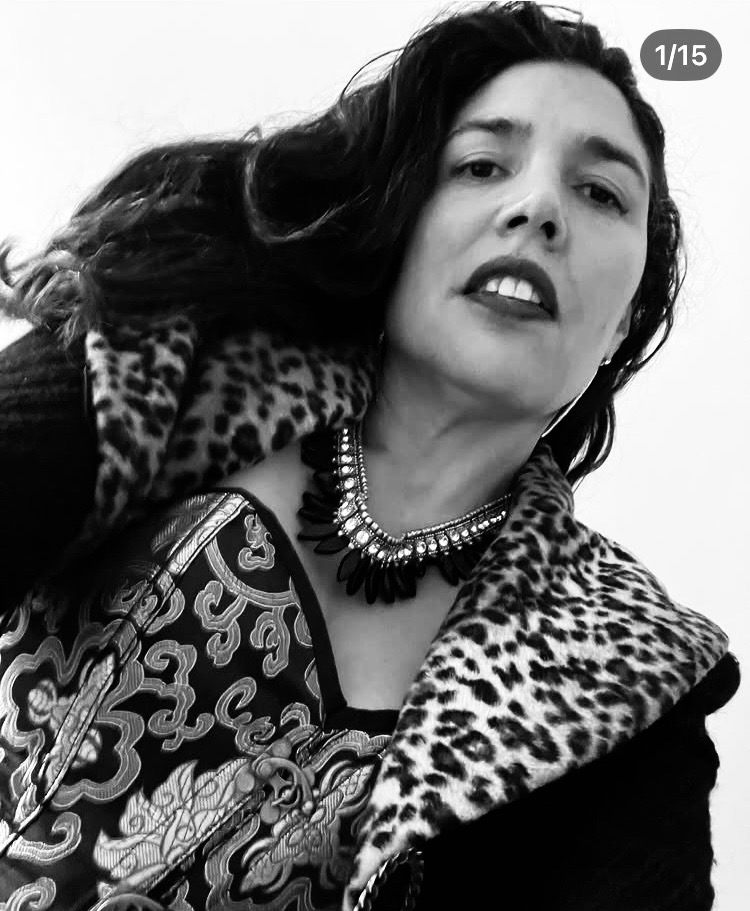
Votive World: Wax Testicles, Clay Wombs, and Kidney Stones in European Churches – Sergei Zotov – Zoom

Votive World: Wax Testicles, Clay Wombs, and Kidney Stones in European Churches

Early modern churches were not only places of worship — they were also sites of exchange with the divine. People promised a gift in return for healing, survival, or luck, and then paid their debt in objects: money, wax, metal, cloth, chains, crutches, bullets, teeth, bladder stones — and, strikingly often, anatomical models. You still could walk into a major pilgrimage shrine and find it lined with wax eyes and legs, silver hearts, tiny bodies, infants, breasts, hands, or explicitly intimate offerings made for urinary problems, hernias, infertility, and childbirth.

This lecture reconstructs the ex-voto tradition as a material history of fear, pain, and recovery. We will follow how a vow could become an action — pilgrimage, penance, public testimony — and how miracles were recorded not only in written “miracle books”, but also in things themselves: bandages, extracted objects, swallowed items returned by the body, or a stone displayed beside the votive image as physical proof. Why was wax so powerful — and in rural economies, sometimes as good as cash? Why did some shrines begin to resemble anatomical theatres or proto-museums, accumulating not only devotional gifts but also “wonders of nature”: crocodiles under vaults, whale bones, meteorites, “unicorn horns”, and other mirabilia that made the church feel like a cabinet of curiosities. And finally — why did reformers, inspectors, and state authorities repeatedly try to clean these spaces up, even when the objects were clearly doing the work of belief? We will go together on an illustrated tour through Europe’s most visceral archive of devotion.

Speaker Bio:

Sergei Zotov is a historian of science and visual culture specialising in alchemy, magic, and iconography in medieval and early modern Europe (c. 1400–1800). He received his doctorate from the University of Warwick and is currently an Associate Fellow at the Warburg Institute (University of London). His research has been supported by major international fellowships held in Baltimore, Glasgow, Berlin, Gotha, Wolfenbüttel, and Überlingen, and has involved extensive archival work across more than 100 collections worldwide. Sergei has published in leading journals, including Nuncius and the British Journal for the History of Science, and is the author of five books on early modern iconography, two of which have received prestigious prizes and others shortlisted for major awards.

Curated & Hosted by:

Lena Schattenherz Heide-Brennand is a Norwegian lecturer with a master degree in language, culture and literature from the University of Oslo and Linnaeus University. She has been lecturing and teaching various subjects since 1998. Her field of interest and main focus has always been topics that others have considered strange, eccentric and eerie, and she has specialised in a variety of dark subjects linked to folklore, mythology and Victorian traditions and medicine. Her students often point out her thorough knowledge about the subjects she is teaching, in addition to her charismatic appearance. She refers to herself as a performance lecturer and always gives her audience an outstanding experience

don’t worry if you miss it – we will send you a recording valid for two weeks the next day

The Weirdest Orthodox Icons: Monstrosity, Folk Magic, and Mysticism Against The Canon – Sergei Zotov – Zoom

The Weirdest Orthodox Icons: Monstrosity, Folk Magic, and Mysticism Against The Canon

Orthodox icons are usually associated with strict canons, solemn beauty, and timeless repetition. This lecture reveals a very different side of Orthodox visual culture by exploring some of its most striking, disturbing, and unexpected images: dog-headed saints, three-handed Virgins, six-armed Trinities, mystical labyrinths, folk icons used for healing or protection, and even modern icons featuring tanks, nuclear reactors, smartphones, and footballers. Drawing on examples from Greece, Eastern Europe, and the Balkans, the lecture shows how Orthodox imagery absorbed folklore, mysticism, popular belief, and contemporary life in ways that are still largely unknown outside specialist circles.

Rather than treating these images as mere curiosities or deviations from “canon”, the lecture argues that they expose how Orthodoxy functioned as a lived visual culture. Icons operated not only as objects of worship, but also as tools for meditation, divination, moral testing, and negotiating fear, illness, and death. By tracing how church authorities periodically attempted — and largely failed — to regulate this visual imagination, the lecture reconsiders Orthodox iconography as a dynamic field where theology, folk belief, politics, and everyday experience constantly collided.

Speaker Bio:

Sergei Zotov is a historian of science and visual culture specialising in alchemy, magic, and iconography in medieval and early modern Europe (c. 1400–1800). He received his doctorate from the University of Warwick and is currently an Associate Fellow at the Warburg Institute (University of London). His research has been supported by major international fellowships held in Baltimore, Glasgow, Berlin, Gotha, Wolfenbüttel, and Überlingen, and has involved extensive archival work across more than 100 collections worldwide. Sergei has published in leading journals, including Nuncius and the British Journal for the History of Science, and is the author of five books on early modern iconography, two of which have received prestigious prizes and others shortlisted for major awards.

Curated & Hosted by:

Lena Schattenherz Heide-Brennand is a Norwegian lecturer with a master degree in language, culture and literature from the University of Oslo and Linnaeus University. She has been lecturing and teaching various subjects since 1998. Her field of interest and main focus has always been topics that others have considered strange, eccentric and eerie, and she has specialised in a variety of dark subjects linked to folklore, mythology and Victorian traditions and medicine. Her students often point out her thorough knowledge about the subjects she is teaching, in addition to her charismatic appearance. She refers to herself as a performance lecturer and always gives her audience an outstanding experience

don’t worry if you miss it – we will send you a recording valid for two weeks the next day

The Chimeric Imagination: From Japanese Shrines to P.T. Barnum – May Ho – Zoom

The Chimeric Imagination: From Japanese Shrines to P.T. Barnum

The Lens: Archaeology & The Biography of Objects

Drawing on May’s background in Applied Landscape Archaeology, this session treats the Fiji Mermaid not as a hoax, but as an artefact with a complex stratigraphy of meaning. We begin in Edo-period Japan, analysing the ‘Gaff’ through the lens of yōkai folklore and spiritual protection, before following its migration to the West. May will deconstruct how P.T. Barnum commodified ‘wonder’, transforming a sacred talisman into a work of the ‘experience economy’. We will ask: How does the museum display’s context change an object’s ontological status

Speaker Bio:

May Ho is an interdisciplinary researcher whose research integrates landscape archaeology, business management, and sustainability. She holds an MSc in Applied Landscape Archaeology (Distinction) from the University of Oxford and an MA in Managing Archaeological Sites (Distinction) from University College London. This academic background underpins her critical analysis of artefact biography, cultural stratigraphy, and spatial contexts.

Curated & Hosted By:

Lena Schattenherz Heide-Brennand is a Norwegian lecturer with a master degree in language, culture and literature from the University of Oslo and Linnaeus University. She has been lecturing and teaching various subjects since 1998. Her field of interest and main focus has always been topics that others have considered strange, eccentric and eerie, and she has specialised in a variety of dark subjects linked to folklore, mythology and Victorian traditions and medicine. Her students often point out her thorough knowledge about the subjects she is teaching, in addition to her charismatic appearance. She refers to herself as a performance lecturer and always gives her audience an outstanding experience

don’t worry if you miss it – we will send you a recording valid for two weeks the next day
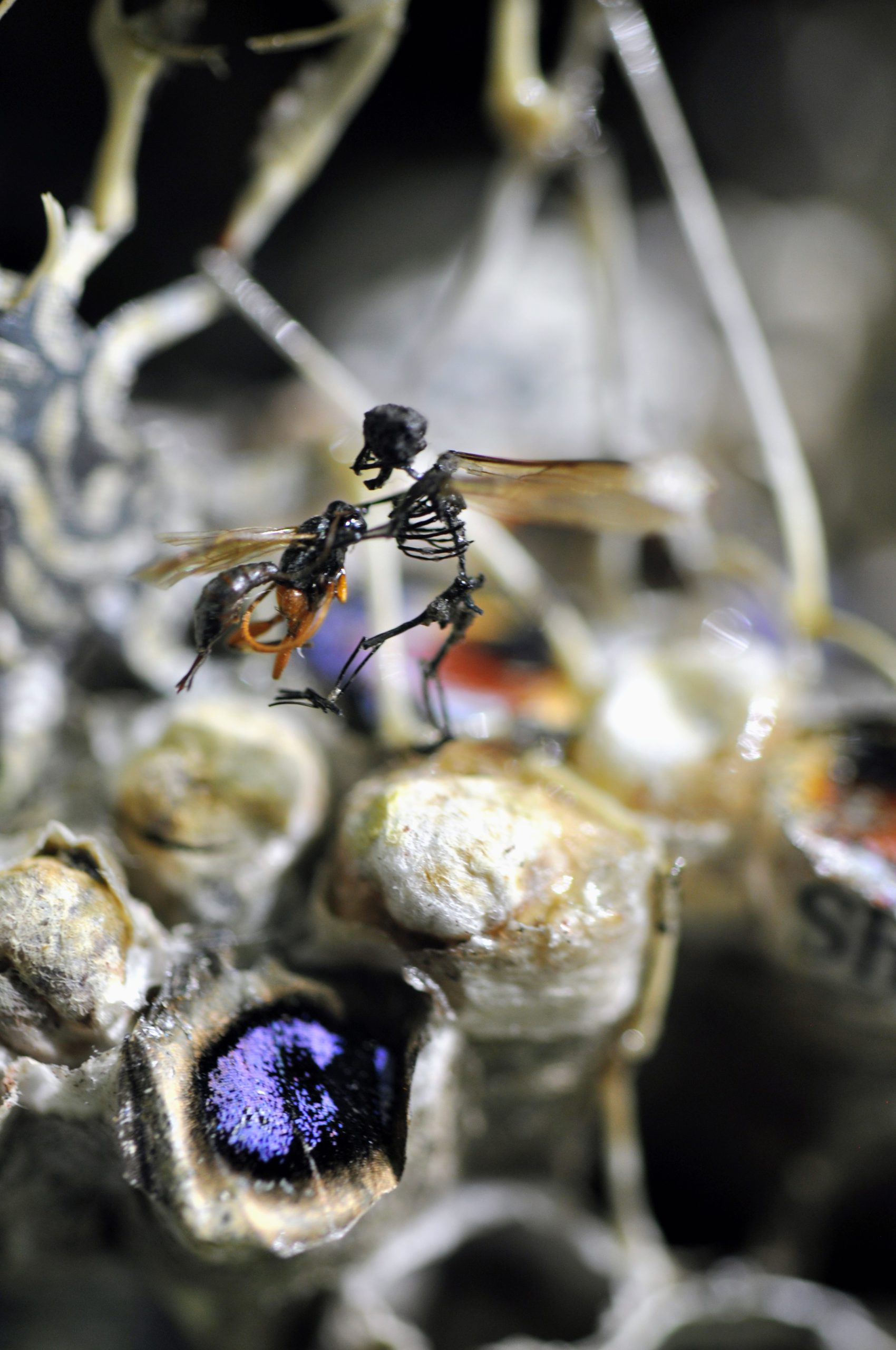
On Collecting as a Psychological Condition – Viktor Wynd – Zoom

On Collecting as a Psychological Condition

A Live Online Conversation with Viktor Wynd and Lena Heide-Brennand

In this newly reimagined online event, Viktor Wynd turns his formidable curiosity back upon the question that has shaped his life: what does it mean to collect — and when does collecting become a condition rather than a choice?

Presented as a lively conversation rather than a solitary lecture, the evening opens Wynd’s extraordinary world of objects to dialogue and audience Q&A. His collections range from natural history to relics of the dead, from surrealist masterpieces to children’s toys, from ethnographica to occult art, orchids, ferns, spirit drawings, extinct birds, tropical fish, magic stones, mammoth bones — and the improbable, the beautiful, and the faintly disturbing in between.

A dodo’s bone beside an ostrich skeleton.

An Asmat death mask beside a painting by Leonora Carrington.

A giant crab sharing psychic space with thousands — perhaps hundreds of thousands — of other curiosities.

But spectacle is only the surface.

Beneath the accumulation lies a more disquieting inquiry:

Why do some individuals experience possession not as pleasure but as necessity?

What inner architecture compels the acquisition of one more relic, one more fragment, one more charged object?

Is collecting preservation, devotion, taxonomy — or something closer to obsession?

Together, Wynd and Heide-Brennand will explore collecting as ritual practice, cabinet theatre, existential strategy, and psychological terrain. They will question whether the cabinet of curiosity is a proto-museum, an anti-museum, or a deeply personal cosmology constructed against chaos.

Expect intellectual mischief, rigorous thought, eccentric digressions, and an engaged audience Q&A.

Some people collect things.

Some people create worlds.

Speaker Bio:

Viktor Wynd, proprietor of London’s eponymous (nay infamous) Museum of Curiosities, Fine Art & UnNatural History has spent the last twenty five years telling stories to audiences across the globe. Fascinated by traditional fairy tales his repetoire includes tales from The Brothers Grimm, The Arabian Nights, Scandinavia, Russia, Italy, France, Irieland, Africa, Papua New Guinea & North America – so far.

Curated & Hosted By:

Lena Schattenherz Heide-Brennand is a Norwegian lecturer with a master degree in language, culture and literature from the University of Oslo and Linnaeus University. She has been lecturing and teaching various subjects since 1998. Her field of interest and main focus has always been topics that others have considered strange, eccentric and eerie, and she has specialised in a variety of dark subjects linked to folklore, mythology and Victorian traditions and medicine. Her students often point out her thorough knowledge about the subjects she is teaching, in addition to her charismatic appearance. She refers to herself as a performance lecturer and always gives her audience an outstanding experience

don’t worry if you miss it – we will send you a recording valid for two weeks the next day
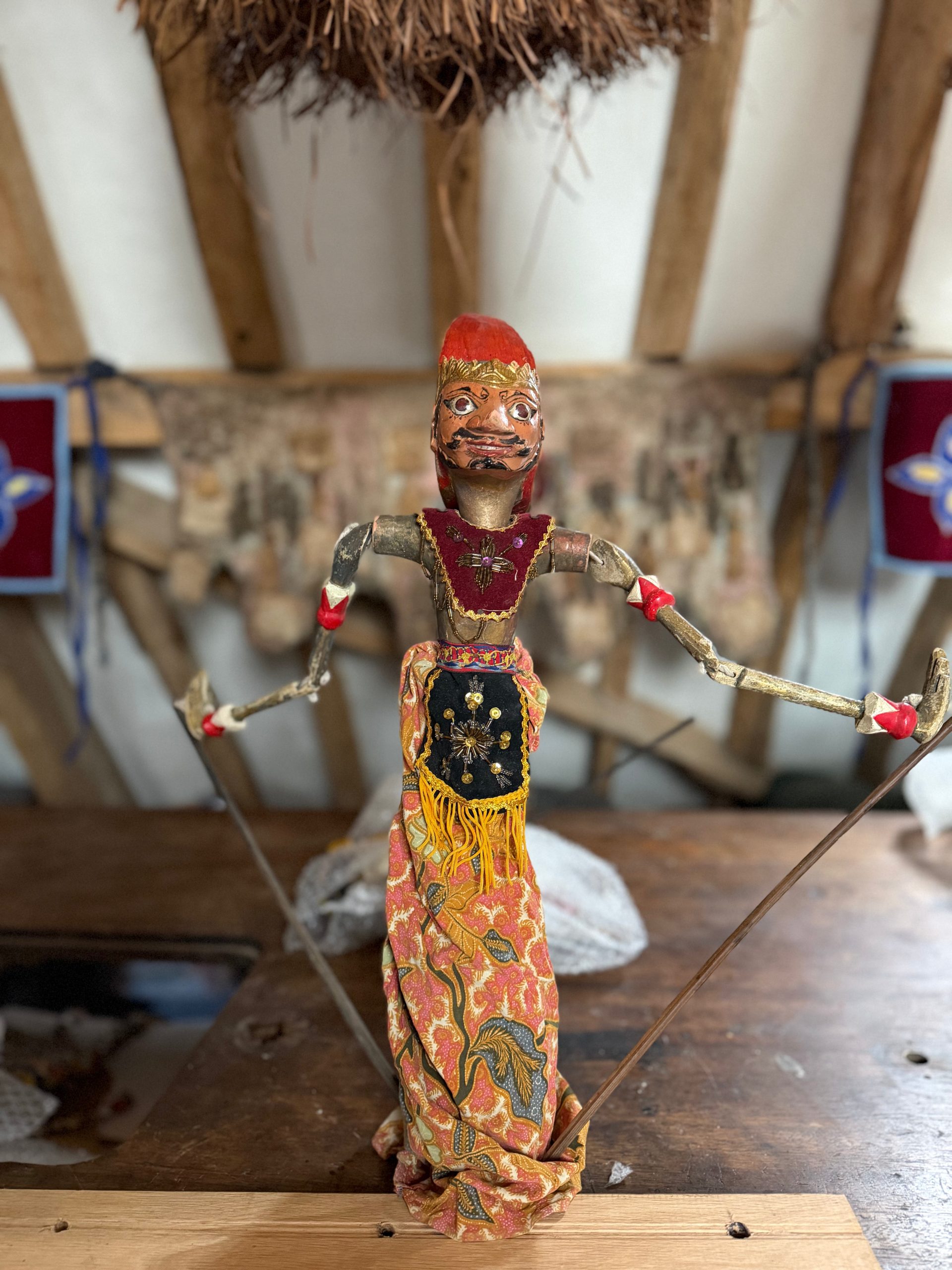
Omens and Superstitions from the Ancient World to the 21st Century – Dr Julia Phillips – Zoom

Omens and Superstitions from the Ancient World to the 21st Century

In the Ancient World, omens often related to important matters relating to the king and the land, such as “[If] a white sheep mounts a she-goat—disagreement in the land.” Today we are more likely to interpret omens such as repeating digital numbers (11:11, 222), finding feathers, tech glitches (like a phone freezing), and unexpected synchronicities, in a personal sense.

Omens are often found in dreams, and superstitions are surprisingly consistent across cultures. “First-footing” at New Year’s Eve can be found in widely different societies, while the famous “red sky at night or morning” changes from shepherds to sailors, depending on whether it is found on the coast or the countryside. Other superstitions are more localised and often depend upon a specific location or community. The one thing they all have in common is a belief that the unseen world can shape and inform our lives, predicting events and warning of future misfortunes.

Join Dr Julia Phillips on this fascinating glimpse into a supernatural world, filled with omens, dreams, and superstitions.

Speaker Bio

Julia Phillips is Hon Senior Research Associate at the University of Bristol. She received her PhD for her research examining how witches and witchcraft were featured in newspapers in Victorian Britain. Her primary research interests are the study of witchcraft in the nineteenth century and the development of modern Pagan Witchcraft in the twentieth century. Julia is author of the forthcoming book, The Persistence of Witchcraft in Victorian England (April 21, 2026 by Routledge).

Curated & Hosted by

Marguerite Johnson is a cultural historian of the ancient Mediterranean, specialising in sexuality and gender, particularly in the poetry of Sappho, Catullus, and Ovid, as well as magical traditions in Greece, Rome, and the Near East. She also researches Classical Reception Studies, with a regular focus on Australia. In addition to ancient world studies, Marguerite is interested in sexual histories in modernity as well as magic in the west more broadly, especially the practices and art of Australian witch, Rosaleen Norton. She is Honorary Professor of Classics and Ancient History at The University of Queensland, and a Fellow of the Australian Academy of the Humanities. She lives in Mytilene on the Greek island of Lesvos.

Caption: CC0 Public Domain

don’t worry if you miss it – we will send you a recording valid for two weeks the next day

Annouchka Bayley’s Elizabeth Bathory – Zoom

Elizabeth Bathory

“They called me the hand of the Devil. Scourge. Straight out of the thin fold that keeps Hell and Earth apart. Part woman, part monster. They told stories of my depravity. How I lured young women to me. In my time they stripped me of my lands, my influence, my power. In your time they brought out books and moving images about me describing the horrors I inflicted on these innocents, these unprotected girls. Elizabeth Bathory: torturer. Killer. Psychopath. The Blood Countess. But this isn’t their story. It’s mine.” (from: The Blood Countess. p. xii)

This talk looks the infamous figure of the Countess Elizabeth Bathory – said to be Europe’s first female serial killer. Said to have tortured and murdered 650 young women for her own dark pleasure. Said to have inspired myths and stories like Snow White and countless other monstrous women.

But did she do it? How do you exorcise the ghost of a whole forgotten history and get it to speak in the present day? Part true-crime investigation, part esoteric exorcism of a violence that haunts the history books, the author of The Blood Countess will discuss how she wrote the novel using a freaky combination of quantum ontologies and the scholarly practice of fictioning to perform a literary exorcism.

Based on 100s of hours of original research and tapping into scholarly practices of new materialism this novel takes an uncompromising look at what history is and what it does to women.

Praise for the book:

Imagine one of Virginia Woolf’s speculative biographies told through quantum physics. Truly a novel for our time whose beautiful narration continues to. Haunt my thoughts like the Countess herself. Prof Thomas Nail (Philosophy, University of Denver)

Quantum physics made very sexy. Prof Johnny Golding (Fine Art & Philosophy, Royal College of Art)

There’s plenty to think about here, especially where the compelling historical events get reflected in the modern day, through a mysterious quantum entanglement. This novel is like a cross between Hilary Mantel’s retelling of court history in Wolf Hall, the bibliographic thrills in Umberto Eco’s Name of the Rose, and David Mitchell’s Cloud Atlas. Prof Alan Blackwell (Computer Science, University of Cambridge)

Congratulations doesn’t seem plaudit enough for this book. Such an original idea. Prof Sir Harry Bhadeshia (Metallurgy, Tata Steel/ Cambridge University)

Speaker Bio:

Dr Annouchka Bayley is an Associate Professor of Arts at the University of Cambridge and a Fellow of Darwin College. She is Chair of the Cambridge Posthuman Network, Co-Chair of the Cambridge CRASSH lab LEAPLab, and former designer and director of the Cambridge Arts, Creativity & Education MPhil programme (2021-2024).

She is one-quarter of the live-coding, doom-metal band Chainsaw Trousers. She has previously worked with the Royal Shakespeare Company and held lectureships at the Royal College of Art and Kings College London. She has published extensively on new materialisms and posthumanisms for art practice. Her 2026 articles include Mycelial Madness with the Royal Society, the Reverse Engineering of an Exorcism with Performance Research, and a new book Fieldnotes from the Edges of Arts with Routledge.


UK Press for the novel:

BBC https://www.bbc.co.uk/news/uk-england-cambridgeshire-69057709?fbclid=IwZXh0bgNhZW0CMTEAAR03UlomdZ-e_0UN0Y0X0GGbkc3W5-RsY95IoVqCxGbKsAT6ZRCU2BzneQ0_aem_ARXx18zgjS4j5CPcMC6HUfNgSJUj-bSvdelcPleaB8c-1ErReTpWO7gdekD8IhxhT1bApHDXdLEg_73u2mkhvnJJ

Independent https://www.independent.co.uk/travel/news-and-advice/elizabeth-bathory-slovakia-castle-cachtice-b2638092.html

Intl Press: https://www.washingtontimes.com/news/2024/oct/30/accounts-hungarian-blood-countess-remain-shrouded-/

(other include Seattle Times, CBS news) Radio: abc Australia

Curated & Hosted By:

Lena Schattenherz Heide-Brennand is a Norwegian lecturer with a master degree in language, culture and literature from the University of Oslo and Linnaeus University. She has been lecturing and teaching various subjects since 1998. Her field of interest and main focus has always been topics that others have considered strange, eccentric and eerie, and she has specialised in a variety of dark subjects linked to folklore, mythology and Victorian traditions and medicine. Her students often point out her thorough knowledge about the subjects she is teaching, in addition to her charismatic appearance. She refers to herself as a performance lecturer and always gives her audience an outstanding experience

don’t worry if you miss it – we will send you a recording valid for two weeks the next day

The Power in the Panel: An Exploration of Tarot and Comic Books – B.Earl – Zoom

The Power in the Panel: An Exploration of Tarot and Comic Books

There is a unique relationship between comic books and Tarot, as they both embody sequential storytelling using symbolic art and natural language.

Referencing several comic book series, including sequences from instructor B. Earl’s Deadly Neighborhood Spider-Man, Daredevil and Echo, and Werewolf by Night, we will explore how the two seemingly disconnected art forms actually flow from the same fountain.

Superhero comics in particular entered the mainstream in the mid-1900s and really found their stride in the 1960s with series such as The Fantastic Four, The X-Men, and of course Spider-Man. This was also around the same time that Tarot began to enter into the popular mainstream with counter-culture communities engaging “new age” ideas. Humans have always needed stories,but as science began to more deeply explore the psyche with luminaries such as Carl Jung, science and stories began to emerge with archetypes that helped people better understand themselves. Comic books, especially superhero comics, have always explored these archetypes that are ever-present in Tarot’s Major Arcana.

The obvious difference between the two is that a comic book is a curated series of panels telling a specific story through the lens of the author and artist, while a Tarot spread is a seemingly random series of panels that becomes a mirror for the querent. This modular storytelling system allows for the Self to more deeply intuit meaning through the cards’ random articulation. Unlike comic books, it is up to the reader to interpret the story through the spread of the panels. In this workshop we will take sequences from specific comic books and peel back the layers to better understand the intention of the creative team. By understanding this form of sequential storytelling, we will then apply this same technique to different configurations of Tarot spreads. This unique method of storytelling will allow us to use the symbols and keys provided by Tarot to unlock stories not only in comic books, but also in our everyday lives.

Speaker Bio:

Ben Earl is a comic book writer and editor known for his contributions to Marvel Comics. He has worked on stories that expand the publisher’s superhero mythos, blending action-driven narratives with grounded character development. His work is recognised within the industry for its attention to continuity and its collaboration with major artists across several series.

Key facts

  • Profession: Comic book writer and editor
  • Publisher affiliation: Marvel Comics
  • Primary medium: Superhero comics
  • Notable roles: Writer, editor, and story consultant

Career and contributions

Earl began contributing to Marvel Comics during a period of renewed focus on both legacy characters and diverse storytelling voices. He has been involved in the writing and editorial process for various titles that bridge classic and contemporary Marvel eras. His storytelling often emphasises moral conflict, legacy, and the human cost of heroism, themes that resonate with modern audiences while remaining faithful to the company’s traditional tone.

Curated & Hosted By:

Lena Schattenherz Heide-Brennand is a Norwegian lecturer with a master degree in language, culture and literature from the University of Oslo and Linnaeus University. She has been lecturing and teaching various subjects since 1998. Her field of interest and main focus has always been topics that others have considered strange, eccentric and eerie, and she has specialised in a variety of dark subjects linked to folklore, mythology and Victorian traditions and medicine. Her students often point out her thorough knowledge about the subjects she is teaching, in addition to her charismatic appearance. She refers to herself as a performance lecturer and always gives her audience an outstanding experience

don’t worry if you miss it – we will send you a recording valid for two weeks the next day

The Visual History of Magic: How Grimoires Depicted Angels and Demons – Sergei Zotov – Zoom

The Visual History of Magic: How Grimoires Depicted Angels and Demons

How did magical manuscripts make the invisible visible? This lecture explores how ancient grimoires depicted angels, demons, and spirits through images, diagrams, seals, and schematic figures. Far from being simple illustrations, these visual forms functioned as tools for knowledge, protection, invocation, and control, shaping how practitioners imagined and interacted with supernatural beings. By examining manuscripts from the late Middle Ages to the early modern period, the lecture shows how images structured magical practice and mediated between Christian theology, ritual magic, and scientific experiment.

The talk places grimoires within the broader visual culture of premodern science and religion, tracing how angelic hierarchies, demonic figures, and planetary spirits were standardised, abstracted, or deliberately obscured. It also asks why visual strategies mattered so deeply in magical texts, and how they relate to secrecy, authority, and the transmission of secret knowledge. By focusing on images rather than texts alone, the lecture offers a new perspective on how magic was learned, practised, and imagined in European history.

Speaker Bio:

Sergei Zotov is a historian of science and visual culture specialising in alchemy, magic, and iconography in medieval and early modern Europe (c. 1400–1800). He received his doctorate from the University of Warwick and is currently an Associate Fellow at the Warburg Institute (University of London). His research has been supported by major international fellowships held in Baltimore, Glasgow, Berlin, Gotha, Wolfenbüttel, and Überlingen, and has involved extensive archival work across more than 100 collections worldwide. Sergei has published in leading journals, including Nuncius and the British Journal for the History of Science, and is the author of five books on early modern iconography, two of which have received prestigious prizes and others shortlisted for major awards.

Curated & Hosted by:

Lena Schattenherz Heide-Brennand is a Norwegian lecturer with a master degree in language, culture and literature from the University of Oslo and Linnaeus University. She has been lecturing and teaching various subjects since 1998. Her field of interest and main focus has always been topics that others have considered strange, eccentric and eerie, and she has specialised in a variety of dark subjects linked to folklore, mythology and Victorian traditions and medicine. Her students often point out her thorough knowledge about the subjects she is teaching, in addition to her charismatic appearance. She refers to herself as a performance lecturer and always gives her audience an outstanding experience

don’t worry if you miss it – we will send you a recording valid for two weeks the next day

Relationship with the Unseen — On the Nature of Rituals and Repetition – Inna Didenko – Zoom

Relationship with the Unseen — On the Nature of Rituals and Repetition

Every relationship has its quiet rituals. The same message sent before sleep. A cup placed on the same side of the table. A gesture repeated so often it starts to feel dangerous to stop. We don’t call these rituals — we call them love. So why does it become suspicious the moment we talk about a relationship with the unseen?

This talk approaches ritual not only in a spiritual context, but as human behaviour — an anthropological and psychological inquiry into why we repeat, discipline, and devote ourselves at all. Moving through rituals as something intimate and strangely practical, we’ll explore how repetition creates attachment, how discipline trains desire, and how practice often shapes relationships long before belief or meaning. Rooted in Hindu bhakti traditions yet drifting across psychology, philosophy, and spiritual practices from other cultures, the talk asks why ritual is not ornament but infrastructure: it organises time, marks thresholds, and quietly holds meaning in place. We’ll also touch on the risk inherent in ritual — how the same mechanisms that deepen intimacy can harden into rigidity or fanaticism.

We’ll listen to sound as a path to devotion — mantra and chanting — and look at seeing as an act that shapes reality and focuses attention in an age of distraction. This is not a lecture about faith, nor a defence of tradition. It is an exploration of how humans are wired to ritualise — to use repetition to regulate attention and build relationships with the unseen. At its heart, this is a talk about transcendental love not as belief, but as practice, sustained through repetition, even when we don’t fully understand what we’re loving, or why.

Speaker Bio:

Inna has a background in arts and cultural studies and over a decade of experience in cultural and educational programming. Her work focuses on exploring the shared threads that connect diverse traditions, cultural practices, and creative expressions. Through lectures and discussions, she has used art and culture as a common language to bridge differing perspectives, foster dialogue, and cultivate appreciation for diversity alongside a sense of unity. Inna is also an intercultural mediator, committed to navigating cultural differences and resolving disagreement through thoughtful, dialogue-based approaches.

Curated & Hosted By:

Lena Schattenherz Heide-Brennand is a Norwegian lecturer with a master degree in language, culture and literature from the University of Oslo and Linnaeus University. She has been lecturing and teaching various subjects since 1998. Her field of interest and main focus has always been topics that others have considered strange, eccentric and eerie, and she has specialised in a variety of dark subjects linked to folklore, mythology and Victorian traditions and medicine. Her students often point out her thorough knowledge about the subjects she is teaching, in addition to her charismatic appearance. She refers to herself as a performance lecturer and always gives her audience an outstanding experience

don’t worry if you miss it – we will send you a recording valid for two weeks the next day