Feature Option: Listing Page Carousel
Skeletons in the Closet: The Ossuaries of Europe – Cat Irving – Zoom
Skeletons in the Closet: The Ossuaries of Europe
Practical storage solution, morbid curiosity, or an important way to interact with the dead and contemplate our own mortality? Bones are the most enduring parts of our mortal remains, but the sheer quantity of people who have died in a culture where burial has dominated means that there have been too many bones to stay in the ground. Ideas about what to do with them have ranged from the simple to the astoundingly elaborate. This talk is extensively illustrated with the author’s own photos, and will take you on a journey across Europe that will encompass painted skulls and bejewelled skeletons, bone chandeliers and the six million people who lie beneath the streets of Paris.
Cat Irving has been the Human Remains Conservator for Surgeons’ Hall since 2015 and has been caring for anatomical and pathological museum collections for over twenty years. After a degree in Anatomical Science she began removing brains and sewing up bodies at the Edinburgh City Mortuary. Following training in the care of wet tissue collections at the Royal College of Surgeons of England she worked with the preparations of William Hunter at the Hunterian Museum at Glasgow University, where she is now Consultant Human Remains Conservator. Cat is a licensed anatomist, and gives regular talks on anatomy and medical history. She recently carried out conservation work on the skeleton of serial killer William Burke.
Don’t worry if you miss it – we will send you a recording valid for two weeks the next day
Weird John Buchan – James Machin – Zoom
John Buchan (1875–1940) is now remembered chiefly as the author of spy thrillers such as The Thirty-Nine Steps (1915) and is often misunderstood as the author of populist boys-own adventure. As his readers know, however, he is a far more nuanced, able, and varied writer than that reputation suggests, and in this talk I will argue that he deserves to take his place with the likes of M. R. James, Arthur Machen, and Algernon Blackwood, as the author of superb ‘golden age’ weird fiction. He was certainly recognised by H. P. Lovecraft as such and his output in this mode also included novels such as The Dancing Floor (1926) and Witch Wood (1927), both anticipating folk horror, as well as subtle, finely-crafted tales of psychological terror rooted in landscape, such as ‘The Watcher by the Threshold’ (1900) and ‘The Grove of Ashtaroth’ (1912). As The Bookman wrote of a collection of his stories in 1902: “However unlike in plot, vague terror of an unrecognised reality, the survival of an unkindly time, is in them all, to shake our smug content with the triumphs of civilization, and to stir forgotten depths, from which rise wars against our comfort. The book is one to shudder over; but through it run veins of genuine beauty.”
James Machin is an editor, researcher, and writer who lives in Tring. Recent books include British Weird: Selected Short Fiction, 1893–1937 for Handheld Press and his short fiction has been published in Supernatural Tales, The Shadow Booth, and Weirdbook. He is co-editor of Faunus, the journal of the Friends of Arthur Machen and a member of the John Buchan Society.
Don’t worry if you miss it – we will send you a recording valid for two weeks the next day
Clay-eaters: A Brief History of Geophagy – Jennifer Lucy Allan – Zoom
Clay-eaters: A brief history of geophagy
This talk collates recorded instances of geophagy across human history and in the animal kingdom, detailing cases involving Taoist magic, syncretic religious sites in Central America, parrots who may or may not have indigestion, and the ancient physician Galen, who stockpiled terra sigillata from Lemnos in AD167. In early Western anthropological reports, geophagy was often discredited as ‘primitive’ or ‘debased’ behaviour, but this talk calls for another look at clay eaters across cultures, detailing the ways in which earth has been used as folk medicine, famine prevention, and as a natural dietary supplement for centuries.
Jennifer Lucy Allan is a writer and broadcaster. Her first book, The Foghorn’s Lament was published in 2021, on sound, memory and the coast. She is a presenter on BBC Radio 3’s long running music show Late Junction, and has written for various outlets on music and culture over the last 15 years. Her most recent book Clay: A Human History was published in 2024.
Don’t worry if you miss it – we will send you a recording valid for two weeks the next day
The Sun Machine Is Coming Down – Nicholas Royle – Zoom
Nicholas Royle’s David Bowie, Enid Blyton and the Sun Machine has been described as ‘bizarre, brilliant and unlike any book you’ve ever read’ (The Telegraph). What does David Bowie have to do with Enid Blyton? And what even is a sun machine?
David Bowie, Enid Blyton and the Sun Machine is not only a paean to Bowie’s music and to Blyton’s storytelling (especially the Famous Five books), but also a moving and at moments hilarious account of everyday family life during the pandemic, and a passionate defence of the love of literature and art at a time when they seem more than ever imperilled. In his talk Royle will discuss how the book came to be written, introduce some of the puppets who feature (especially Mole), and give a couple of short readings. There will also be time for questions and discussion.
Nicholas Royle has taught and lectured at universities across Europe and North America for over four decades. He is the author of many books, including two highly acclaimed novels, Quilt (2010) and An English Guide to Birdwatching (2017); the memoir, Mother (2020); and groundbreaking studies of literature such as Telepathy and Literature: Essays on the Reading Mind (1990), The Uncanny (2003), and Veering: A Theory of Literature (2011). With Andrew Bennett he is also author of the bestselling academic textbook, Introduction to Literature, Criticism and Theory (sixth edition, 2023). Royle is joint managing editor of the Oxford Literary Review and is currently completing a book on The New Fantastic.
Don’t worry if you miss it – we will send you a recording valid for two weeks the next day
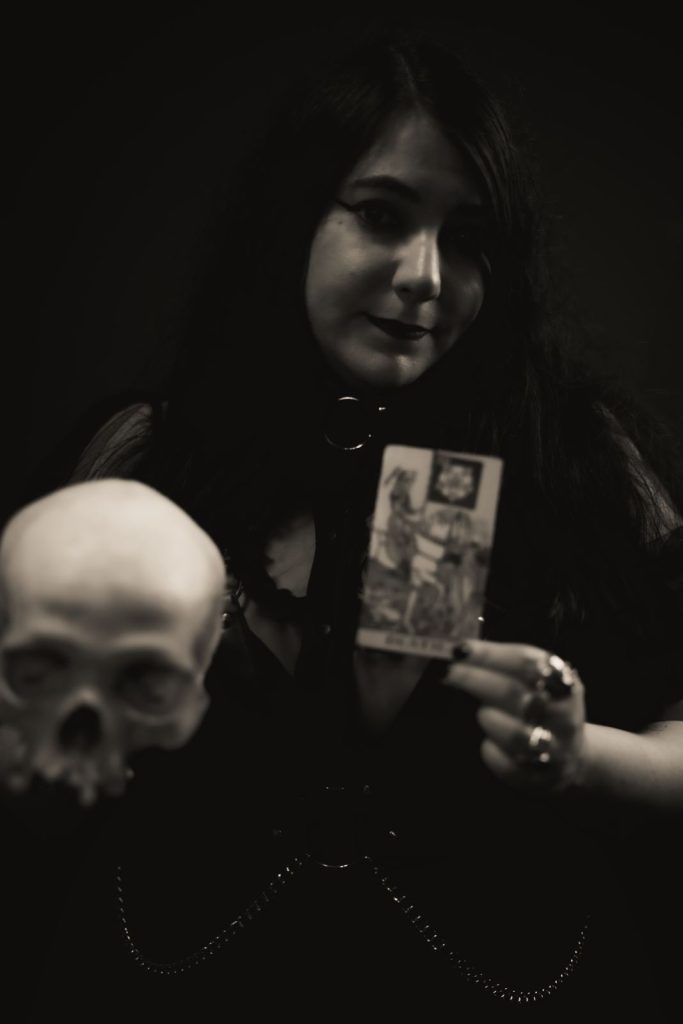
Witchy Wednesdays: Tarot Reading
Glimpse into what your future holds with an individual tarot reading with Melissa Mercury at The Last Tuesday Society. Guests will be invited to order a Devil’s Botany Absinthe cocktail to sip on while embarking on a 15 minute private tarot reading.
To reserve a table for drinks in The Absinthe Parlour, book via: https://www.thelasttuesdaysociety.org/absinthe-parlour/reservations/
Individual tarot readings will last roughly 15 minutes.
Event is for over 18s only.
MELISSA MERCURY
Melissa qualified in Tarot at London School of Astrology in 2016 and has been reading the cards professionally ever since. She has read for over 10,000 people and been a guest on the Love Island and Paranormal Activity podcasts. In 2024 she appeared on stage with Gail Porter at Paranormal Activity Live to discuss the history of tarot and offer guests a live reading.
Melissa uses tarot as a tool to guide and support people looking for clarity in areas such as love, work and mental health. Tarot can provide clarity, confidence and a safe space to discuss difficult subjects. It’s a fantastic way of exploring and growing.
THE ABSINTHE PARLOUR
A drinker’s cabinet of wonder filled with unusual spirits, from the old world and new, together in one curious exhibition of extraordinary elixirs. Allow each round to provide you with a passage to the furthest corners of the world, transported to an experience outside the boundaries of time. Seek and you shall find: hidden here are explorations of alchemy & magick, pleasure & fantasy, celebrating the point at which curiosity unlocks a world unknown.
The Last Tuesday Society’s Absinthe Parlour is truly a hidden treasure of East London.
Shortlisted “Bar of the Year 2024” – The Spirits Business 2024
Absinthe Menu Shortlisted “Specialist List of the Year” – Imbibe 2020
Voted “Best Bar in London” – DesignMyNight Awards 2019
Mr Black Presents: Black Christmas at The Last Tuesday Society
Welcome to Black Christmas, an exclusive collaboration between Mr Black and The Last Tuesday Society, offering a darkly festive holiday experience. Set against the eclectic, mysterious backdrop of The Last Tuesday Society’s renowned cocktail bar and gallery, this event is designed to be a glamorous, goth-inspired, wickedly fun, and indulgently chic celebration. This is not your average holiday party—it’s an evening of creativity, curated cocktails, and playful luxury for those who crave the unexpected.
Guests will craft black-and-gold gingerbread houses, sip on exclusive Mr Black cocktails with dark holiday twists, and immerse themselves in an atmosphere that combines Victorian curiosities with a modern, luxurious edge. This collaboration introduces Mr Black’s rich coffee character in an environment perfect for the darkly festive: curious, sophisticated, and mystical.
Ticket includes a welcome cocktails, all material to create your own Mr Black x Black Christmas gingerbread house and admission to the Viktor Wynd Museum of Curiosities. A special Mr Black cocktail menu will be available for guests to order from on the night.
We kindly ask that all guests arrive before 19:00. Refunds are not possible for in person events with less than seven days notice in any circumstances. Event suitable for 18+ over only.
WICKED WEDNESDAYS
Explore the wicked world of spirits at The Last Tuesday Society with a Wednesday night tasting & masterclass series delving into a different spirit category each month.
‘For All of Your Protection Needs’: The witch-bottle through history – Dr Ceri Houlbrook and Dr Julia Phillip
‘For All of Your Protection Needs’: The witch-bottle through history
Witch-bottles were used in the seventeenth century to counteract suspected bewitchment. Filled with nails, pins, and urine, and then buried, they were believed to harm the witch and lift the curse. Witch-bottles are still being made and used today – but for very different purposes. Clearly no tradition survives unbroken or unaltered, and customs surrounding the making of witch-bottles are no exception. Over the centuries, perceptions of witchcraft have changed greatly – and witch-bottles have adapted to these changes. This talk examines what happens to the witch-bottle between its first known appearance in the seventeenth century and its reimagining in contemporary Paganism.
Speakers’ Bios
Dr Ceri Houlbrook is a Senior Lecturer in Folklore and History at the University of Hertfordshire, and Programme Leader of the Folklore Studies MA. She is also a Council member of the Folklore Society and editor of its newsletter. Ceri is primarily interested in contemporary adaptations of historic customs and creations of folklore, having published books on coin-trees, love-locks, concealed objects, and witch-bottles. In 2023, Ceri published her debut novel, based on her archival research into letters to Father Christmas: Winter’s Wishfall, published by Bonnier Books.
Dr Julia Phillips is Hon Senior Research Associate at the University of Bristol. She received her PhD for her research examining how witches and witchcraft were featured in newspapers in Victorian Britain. Her primary research interests are the study of witchcraft in the nineteenth century and the development of modern pagan witchcraft in the twentieth century.
Recent publications:
Phillips, Julia. 2021. ‘Madeline Montalban: Magus of the Morning Star.’ In Essays on Women in Western Esotericism: Beyond Seeresses and Sea Priestesses, edited by Amy Hale, 229-254. Cham: Springer International Publishing.
Phillips, Julia. ‘The Museum of Witchcraft and Magic: Toward a New History of British Wicca.’ Magic, Ritual, and Witchcraft, vol. 16 no. 2, 2021, p. 173-200. Project MUSE, doi:10.1353/mrw.2021.0028.
Houlbrook, Ceri and Phillips, Julia. ‘For All of Your Protection Needs: Tracing the “witch-bottle” from the Early Modern Period to TikTok.’ Magic, Ritual, and Witchcraft (2023, volume 18.1).
Curated and Hosted by
Marguerite Johnson is a cultural historian of the ancient Mediterranean, specialising in sexuality and gender, particularly in the poetry of Sappho, Catullus, and Ovid, as well as magical traditions in Greece, Rome, and the Near East. She also researches Classical Reception Studies, with a regular focus on Australia. In addition to ancient world studies, Marguerite is interested in sexual histories in modernity as well as magic in the west more broadly, especially the practices and art of Australian witch, Rosaleen Norton. She is Honorary Professor of Classics and Ancient History at The University of Queensland, and a Fellow of the Australian Academy of the Humanities.
don’t worry if you miss it – we will send you a recording valid for two weeks the next day
Do You Believe in Fairies? Dr Simon Young’s Fairy Census – Zoom
Do You Believe in Fairies? Dr Simon Young’s Fairy Census‘
And it came to pass in those days, that there went out a decree from Oberon, that all the fairies should be counted…‘
In 2014 Simon Young began the Fairy Census, a project to collect two thousand fairy experiences. Now a decade later Young has published a thousand of these accounts and aims to reach two thousand by 2035. He has used the resulting database to study the people who see fairies. For instance, what age are fairy seers? Why are the fairies seen shrinking in size? Why are women more likely to see fairies than men? Why do driving and watching television seem to increase the likelihood of a fairy encounter? And what about the growing number of fairy wings? For this and many more fairy world problems and for thoughts on how we interact with the supernatural more generally tune in to see Simon speak about on the Fairy Census, 12 Jan 2025.
Bio
Dr Simon Young is a British folklore historian based in Italy. He has written extensively on the nineteenth-century supernatural. His book The Boggart (from Exeter University Press) and The Nail in the Skull and Other Victorian Urban Legends (from Mississippi University Press) came out in 2022. He is the editor of Exeter New Approaches to Legends, Folklore and Popular Legends and teaches history at UCEAP (Florence). Over the years he has run courses on the History of Christianity, Italian Food History, Italian Media History, Contemporary Italian History, the Second World War in Italy and Italian Renaissance History.
Articles listing: https://independent.academia.edu/SimonYoung43
Latest books: https://www.amazon.co.uk/Boggart-Folklore-History-Placenames-Approaches/dp/1905816901/ref
[Free downloadable source book, click ‘open access]: https://www.exeterpress.co.uk/en/Book/2114/The-Boggart-Sourcebook.html
Curated & Hosted by
Marguerite Johnson is a cultural historian of the ancient Mediterranean, specialising in sexuality and gender, particularly in the poetry of Sappho, Catullus, and Ovid, as well as magical traditions in Greece, Rome, and the Near East. She also researches Classical Reception Studies, with a regular focus on Australia. In addition to ancient world studies, Marguerite is interested in sexual histories in modernity as well as magic in the west more broadly, especially the practices and art of Australian witch, Rosaleen Norton. She is Honorary Professor of Classics and Ancient History at The University of Queensland, and a Fellow of the Australian Academy of the Humanities.
don’t worry if you miss it – we will send you a recording valid for two weeks the next day
Pet Cemeteries: How We Came to Bury Our Non-human Friends – Paul Koudounaris – Zoom
Pet Cemeteries: How We Came to Bury Our Best Nonhuman Friends
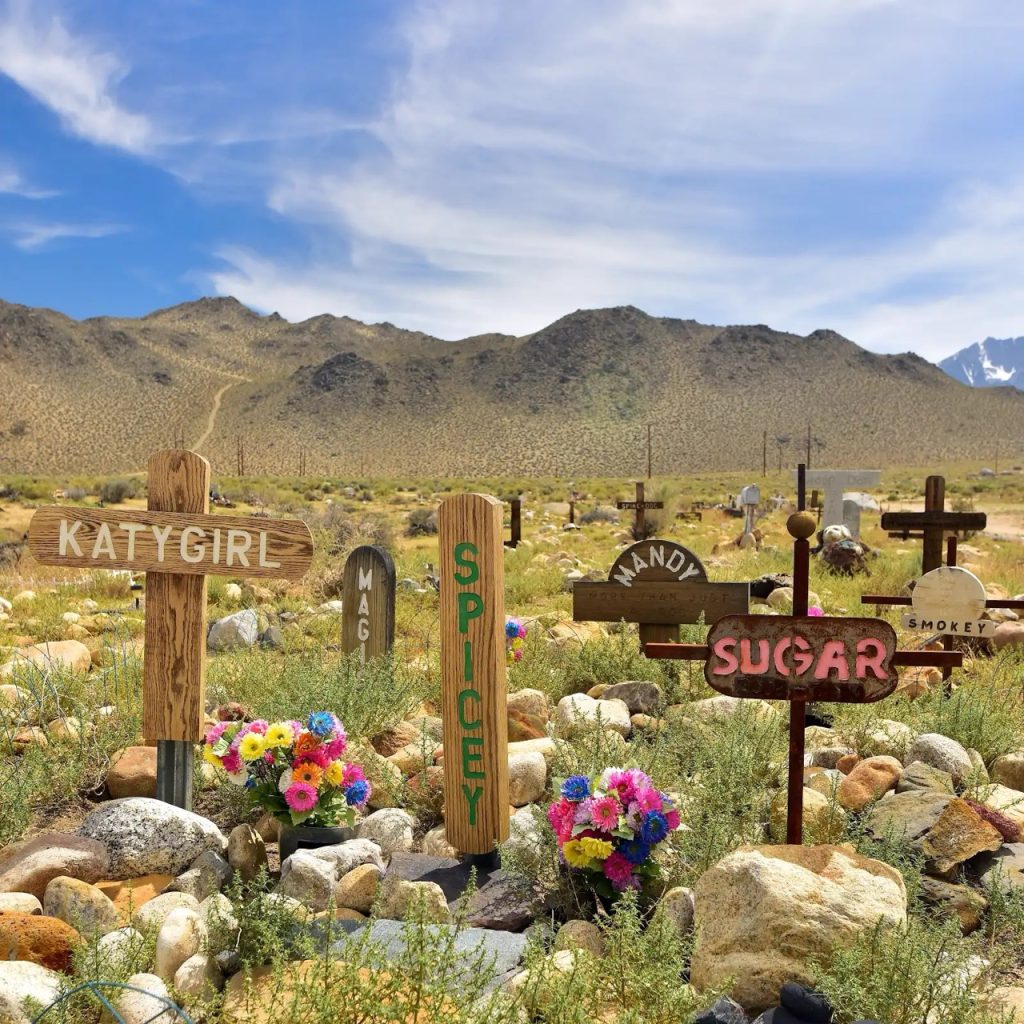
When a little dog named Cherry died in 1881, his owners arranged for a grave in a nearby gatekeeper’s garden in London. At this time, the idea that a pet, even one that had lived as a family member, might be given a dignified burial was considered comical. But when other pet owners followed suit, the world’s first urban pet cemetery was born. More soon followed, and the idea eventually spread throughout the world. The talk will detail the history—always touching, oft times comical, and sometimes weird—of the people who fought to give birth to the ideal that an animal that has been loved as a family deserves the same care and dignity in death.
Paul Koudounaris has a PhD in Art History from UCLA. He is the author of three books on the visual culture of death, Empire of Death, Heavenly Bodies, and Memento Mori, as well as a history of domestic felines, A Cat’s Tale, co-written by his cat Baba, and named a Barnes and Noble Book of the Year in 2020. Faithful Unto Death, his book on pet cemeteries and animal burials, the world’s first definitive history of the subject, was published in October, 2024.
don’t worry if you miss it – we will send you a recording valid for two weeks the next day