The Great Satanic Swindle – Justin Hopper – Zoom

The Great Satanic Swindle

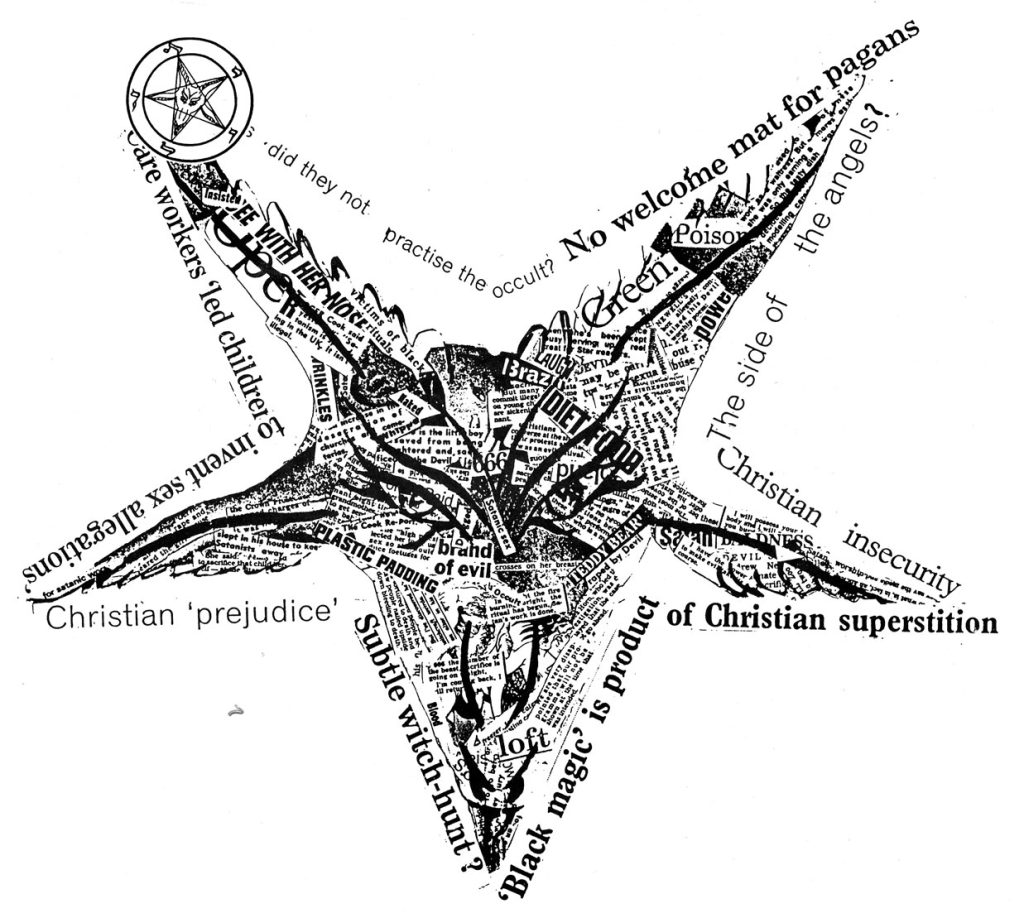
In the 1980s, as the Satanic Panic took hold around the UK, a mysterious stranger arrived in a small Sussex village and told a tale of witchcraft, trapped souls and a life-and-death struggle with Satan himself. A group of church-goers, millionaires and aristocrats stepped in to save him, and things got very weird.

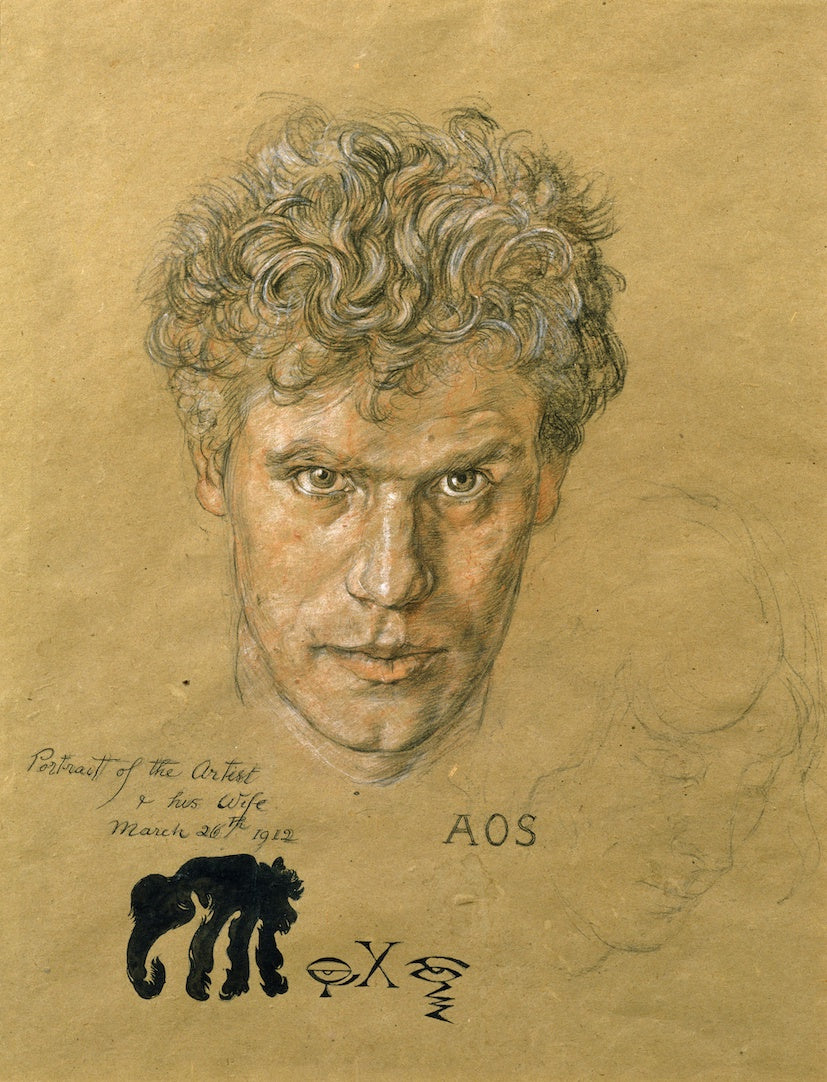
Derry Mainwaring Knight was an occultist and convicted con man; the Reverend John Baker was his mark. The village of Newick – a nexus of belief near which evangelical Christianity, new religious movements and the Sussex legend landscape meet – was their stage. The Great Satanic Swindle is the story of the bizarre friendship between these two and how it played out in what the tabloids called ‘the trial of the century’, involving peers of the realm and prostitutes; an Archbishop and a High Sheriff; the ‘Chief of all Satanists’ and some of the biggest businessmen in the land.

In this trial, and in this story, the question at hand came down to only one thing: What does it mean to believe? Using original archival research, unearthed audio recordings and Derry Mainwaring Knight’s own writings, the Great Satanic Swindle looks at a definitive story of a nation gripped by madness – religious mania, class conflict, fear and loathing in the ’80s countryside so odd it would make a Midsomer writer blush.

Bio:
Justin Hopper
is a British-American writer whose work is concerned with the intersection of landscape, memory and myth. This includes books (The Old Weird Albion, Obsolete Spells), spoken-word recordings (Chanctonbury Rings, the Path; Ghost Box Records) and performances from the Brighton Festival to the National Gallery and many more.

Don’t worry if you miss it – we will send you a recording valid for two weeks the next day

Memento Mori -Joanna Ebenstein – Zoom


Memento Mori

Many of us in the contemporary Western world view death as purely negative—something to be pushed out of our minds, shunned, and avoided. Thinking about death, particularly one’s own, is seen as morbid, if not downright pathological. But, not long ago, contemplating death was widely used as a powerful tool that helped us fear mortality less, put the difficulties of our lives in perspective, and live according to our higher values. (It still is, in some places.) By coming to terms with our own death, we were understood to become wise.

This richly illustrated talk—based on Morbid Anatomy founder’s new book Memento Mori: The Art of Contemplating Death to Live a Better Life, will look at a number of the ways that people in different times and places have befriended, imagined, pictured or related to death. We will look at psychopomps—literally, “soul guides”—understood to help people move through the dying process. We will learn about the “books of the dead,” guides to preparing for a good death and afterlife experience. And we will investigate the memento mori (Latin for “remember you must die”), which are objects, works, or practices meant to remind one of their death in order to help them ascertain their true valuesand live them out in the world, so as to die with the fewest deathbed regrets. 

Joanna Ebenstein is the founder and creative director of Morbid Anatomy. An internationally recognized death expert, she is the author of several books, including Anatomica: The Exquisite and Unsettling Art of Human Anatomy, Death: A Graveside Companion, and The Anatomical Venus: Wax, God, Death and the Ecstatic. She is also an award-winning curator, photographer, and graphic designer, and the teacher of the many times sold-out class Make Your Own Memento Mori: Befriending Death with Art, History and the Imagination. The descendant of Holocaust survivors, she traces her lineage back to Judah Loew ben Bezalel, credited with creating the Golem in sixteenth-century Prague.

Don’t worry if you miss it – we will send you a recording valid for two weeks the next day

Who Put Bella in the Wych Elm? – Cathi Unsworth – Zoom

WHO PUT BELLA IN THE WYCH ELM?
These words, graffitied around the Hagley Hall estate near Stourbridge, West Midlands, have haunted the local population since a bunch of schoolboys pulled the skull of a woman out of a tree in its grounds in April 1943. Was she a local good time girl gone bad? A witch? A Nazi spy? No one has ever solved the mystery of her identity nor why the anonymous author of an 80-year graffiti trail won’t let her rest. Author CATHI UNSWORTH presents the strange true case that informed her 2018 book, That Old Black Magic.

Cathi Unsworth is a novelist, writer and editor who lives and works in London. Her most recent book is Season of the Witch: The Book of Goth (2023) She began her career on the legendary music weekly Sounds at the age of 19 and has worked as a writer and editor for many other music, film and arts magazines since, including The Guardian, Financial Times, Fortean Times, Bizarre, Melody Maker, Mojo, Uncut, Volume and Deadline.

Don’t worry if you miss it – we will send you a recording valid for two weeks the next day

Monster World – Peter Bebergal – Zoom

Monster Worlds
In the 1970s, the sometimes-garish world of monster-movie pop culture was a comfort, an external expression of grotesquery and strangeness that the culture was feeling inside but had no name for. Rather than making us more afraid, monsters mythologized our own abstract worries about sexuality, nuclear war, race and the other, as well as personifying our collective sense of being untethered from mystery and enchantment. The talk will track the changing face of monsters as mythic and literary creatures as our culture’s own lingering unease began to morph, moving from the shadowed myths of the past into the daytime horrors of serial killers and gore and argue that we need monsters again to learn how to reimagine what frightens us in a way that remythologizes our anxieties and will offer a path for a re-enchanting our imaginations using monsters as a guide, looking at current examples in film, television, and comics.

Bio:
Peter Bebergal writes widely on the speculative and slightly fringe. His essays and reviews have appeared in The Virginia Quarterly Review, The New Yorker, The Times Literary Supplement, Boing Boing, The Believer, and The Quietus. He is the author of Strange Frequencies: The Extraordinary Story of the Technological Quest for the Supernatural and Season of the Witch: How the Occult Saved Rock and Roll, among others. Bebergal studied religion and culture at Harvard Divinity School. He lives in Cambridge, Massachusetts.

Don’t worry if you miss it – we will send you a recording valid for two weeks the next day

Dirty Ding: Keeper of The Forbidden Library – Christopher Josiffe – Zoom

Dr Eric Dingwall was a friend, associate, rival and occasional enemy of the more publicity-hungry Harry Price. Appointed Research Officer for the Society for Psychical Research in the 1920s, his ultra-sceptical stance frustrated and occasionally infuriated his SPR colleagues, but private communications tell a different story. More than one physical medium had impressed and mystified him with their displays of apparently fraud-proof and inexplicable phenomena in the séance room.

An intelligence officer during WW2, he was later appointed Honorary Assistant Curator of the British Museum’s Private Case, a sub rosa collection of pornographic and blasphemous literature. Dingwall was an acknowledged expert in this area, especially the former, and became an unofficial police consultant, assisting their investigation of crimes with unusual sexual or occult overtones.

This talk by librarian and author Christopher Josiffe (Gef! The Strange Tale of an Extra-Special Talking Mongoose) will shed light on a most secretive and intriguing character.

Don’t worry if you miss it – we will send you a recording valid for two weeks the next day.

The Cosmic Operas of Hindemith and Vivier – Meredith Michael – Zoom

The Cosmic Operas of Hindemith and Vivier 
In the aftermath of two world wars and countless other crises, musicians in the later 20th century who wished to re-awaken audiences to the music of the spheres sometimes turned to grand, large-scale works of music, like opera. This was true of composers Paul Hindemith and Claude Vivier, who both wrote “cosmic” operas featuring revolutionary astronomers as characters.

Hindemith’s “Die Harmonie der Welt” focuses on Johannes Kepler’s turbulent life, but includes hidden structures  that only become apparent at the end of the piece, when Kepler dies. Vivier’s “Kopernikus” casts Nicolaus Copernicus along with a myriad of other historical and fictional characters who perform an “opéra-rituel” meant to help the protagonist, Agni, transcend to a higher plane of existence. This presentation will explore these composers’ philosophies about the relationship between music and the cosmos, as well as how these operas attempt to align the listener with the order of the universe.

Meredith Michael is a musicologist who studies relationships between music and outer space. She has presented her work internationally on astronomers and musicians from Caroline Herschel to Gustav Holst, and she is currently finishing a dissertation on musical constructions of mythology in the 20th century. Meredith is also active in podcasting, working as a production assistant and occasional guest on the Weird Studies podcast , and producing her own podcast with Gabriel Lubell, Cosmophonia.

Don’t worry if you miss it – we will send you a recording valid for two weeks the next day.

The Devil’s Bargain – Ed Simon – Zoom

The figure of the mage is among the most alluring Renaissance characters. In plays from Marlowe’s Dr. Faustus to Shakespeare’s The Tempest, necromancers plumbed the depths of hermetic and occult knowledge to gain tremendous (and dangerous) power. Yet this figure wasn’t mere literary invention, for Renaissance humanism was attracted to subjects magical, and often these characters were based on real personages. In particular, Dr. Faust, the wizard who sold his soul to the Devil in exchange for knowledge and power, was drawn directly from the historical record, a mysterious and shadowy scholar who nonetheless endures in the countless permutations of his legend. In this lecture, join Dr. Ed Simon in a consideration of the “real” Dr. Faust.
Ed Simon is Public Humanities Special Faculty in the English Department of Carnegie Mellon University, the editor of The Pittsburgh Review of Books, and a staff writer for Literary Hub. A widely published writer, he is the author of over a dozen books, including Pandemonium: A Visual History of Demonology and Devil’s Contract: The History of the Faustian Bargain. 
don’t worry if you miss it – we will send you a recording valid for two weeks the next day

Skeletons in the Closet: The Ossuaries of Europe – Cat Irving – Zoom

Skeletons in the Closet: The Ossuaries of Europe

Practical storage solution, morbid curiosity, or an important way to interact with the dead and contemplate our own mortality? Bones are the most enduring parts of our mortal remains, but the sheer quantity of people who have died in a culture where burial has dominated means that there have been too many bones to stay in the ground. Ideas about what to do with them have ranged from the simple to the astoundingly elaborate. This talk is extensively illustrated with the author’s own photos, and will take you on a journey across Europe that will encompass painted skulls and bejewelled skeletons, bone chandeliers and the six million people who lie beneath the streets of Paris.

Cat Irving has been the Human Remains Conservator for Surgeons’ Hall since 2015 and has been caring for anatomical and pathological museum collections for over twenty years. After a degree in Anatomical Science she began removing brains and sewing up bodies at the Edinburgh City Mortuary. Following training in the care of wet tissue collections at the Royal College of Surgeons of England she worked with the preparations of William Hunter at the Hunterian Museum at Glasgow University, where she is now Consultant Human Remains Conservator. Cat is a licensed anatomist, and gives regular talks on anatomy and medical history. She recently carried out conservation work on the skeleton of serial killer William Burke.

Don’t worry if you miss it – we will send you a recording valid for two weeks the next day

Weird John Buchan – James Machin – Zoom


John Buchan (1875–1940) is now remembered chiefly as the author of spy thrillers such as The Thirty-Nine Steps (1915) and is often misunderstood as the author of populist boys-own adventure. As his readers know, however, he is a far more nuanced, able, and varied writer than that reputation suggests, and in this talk I will argue that he deserves to take his place with the likes of M. R. James, Arthur Machen, and Algernon Blackwood, as the author of superb ‘golden age’ weird fiction. He was certainly recognised by H. P. Lovecraft as such and his output in this mode also included novels such as The Dancing Floor (1926) and Witch Wood (1927), both anticipating folk horror, as well as subtle, finely-crafted tales of psychological terror rooted in landscape, such as ‘The Watcher by the Threshold’ (1900) and ‘The Grove of Ashtaroth’ (1912). As The Bookman wrote of a collection of his stories in 1902: “However unlike in plot, vague terror of an unrecognised reality, the survival of an unkindly time, is in them all, to shake our smug content with the triumphs of civilization, and to stir forgotten depths, from which rise wars against our comfort. The book is one to shudder over; but through it run veins of genuine beauty.”

James Machin is an editor, researcher, and writer who lives in Tring. Recent books include British Weird: Selected Short Fiction, 1893–1937 for Handheld Press and his short fiction has been published in Supernatural Tales, The Shadow Booth, and Weirdbook. He is co-editor of Faunus, the journal of the Friends of Arthur Machen and a member of the John Buchan Society.

Don’t worry if you miss it – we will send you a recording valid for two weeks the next day

Clay-eaters: A Brief History of Geophagy – Jennifer Lucy Allan – Zoom

Clay-eaters: A brief history of geophagy

This talk collates recorded instances of geophagy across human history and in the animal kingdom, detailing cases involving Taoist magic, syncretic religious sites in Central America, parrots who may or may not have indigestion, and the ancient physician Galen, who stockpiled terra sigillata from Lemnos in AD167. In early Western anthropological reports, geophagy was often discredited as ‘primitive’ or ‘debased’ behaviour, but this talk calls for another look at clay eaters across cultures, detailing the ways in which earth has been used as folk medicine, famine prevention, and as a natural dietary supplement for centuries.
Jennifer Lucy Allan is a writer and broadcaster. Her first book, The Foghorn’s Lament was published in 2021, on sound, memory and the coast. She is a presenter on BBC Radio 3’s long running music show Late Junction, and has written for various outlets on music and culture over the last 15 years. Her most recent book Clay: A Human History was published in 2024.

Don’t worry if you miss it – we will send you a recording valid for two weeks the next day