£2950 4th – 19th May 2027 – 16 days (excluding flights) email [email protected] for more info
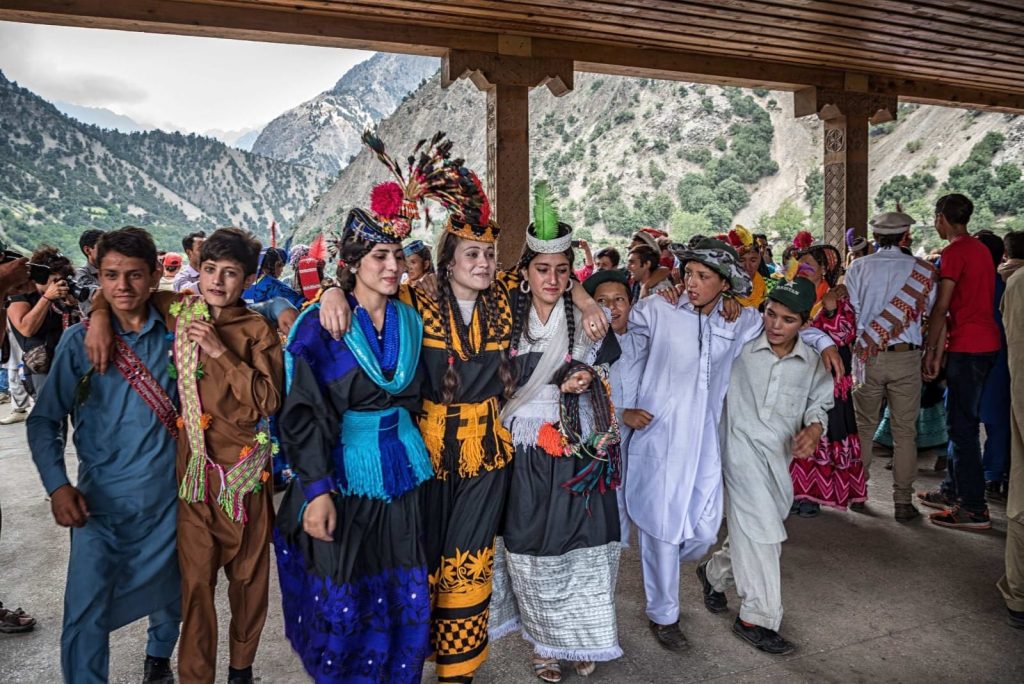
Celebrate the Spring Festiva of Chilam Joshi, where Ancient Rituals and Dances hope to secure a good harvest and bring balance, amidst feasting and weddings in The Kalash Valleys. The Kalash are an ancient indigenous people, possibly descended from a lost army of Alexander the Great, some of whom still practise their ancient animist religion. sacrifices are offered and festivals held to give thanks for the abundant resources of their three valleys

Petroglyths at Chilas, the meeting point of the greatest mountain ranges on Earth, the Karakoram, the Himalaya and the Hindu Kush and the confluence of the Indus and Gilgit rivers. Hunza Shaman’s communicating with fairies & evoking spirits, the 800 year old Altit Fort, hiking the fairy meadows, carpet weaving, Indiana Jones Bridge, 7th Century Kargah Bhudda Rock Carving, The Shandur Lake, Chitral For, the Battle of Malakand, Qissa Khwani Bazaar – The Street of Storytellers, the 17th Century Mahabat Khan Mosque, magnificent local cuisine, Islamabad, magnificent opportunities for shopping

Day 01 04 May 2027 Islamabad: Arrive Islamabad airport by British Airways flight BA 2161 at 22:20 (suggested flight – direct from London) and transfer to the hotel for overnight
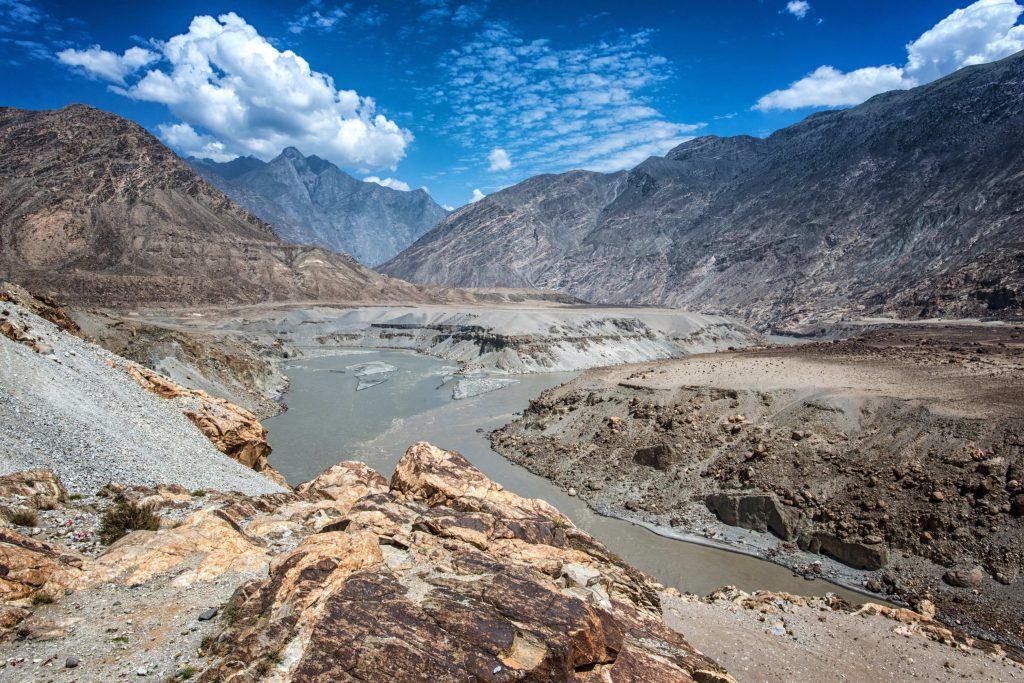
Day 02 05 May 2027 Islamabad-Chilas: We will leave early today for our long drive on the Karakoram Highway (KKH) to Chilas. The KKH is a marvel of modern engineering and it is being reconstructed jointly by the Frontier Works Organization (FWO) and Chinese technicians. From Thakot to Khunjerab, the KKH winds over 700 Kms through breath-taking mountain terrain. Shortly after Thakot stop to view the FWO monument, erected to honor those that lost their lives while building this mountain roadway. Continue on the fabled KKH also otherwise known as the Shahrah-e-Resham (Silk Road) towards Chilas (driving time of approx. 9-11 hours) passing the town of Pattan—the administrative center of Kohistan—and stopping for picnic lunch on the way. Spectacular scenery is one’s companion and enroute cross the sites of two important under construction dams at Dassu and Diamar-Basha. At Chilas there are world famous petroglyphs (rock carvings) left by Buddhist Monks on their way to China. Arrive Chilas and check in to the hotel for overnight
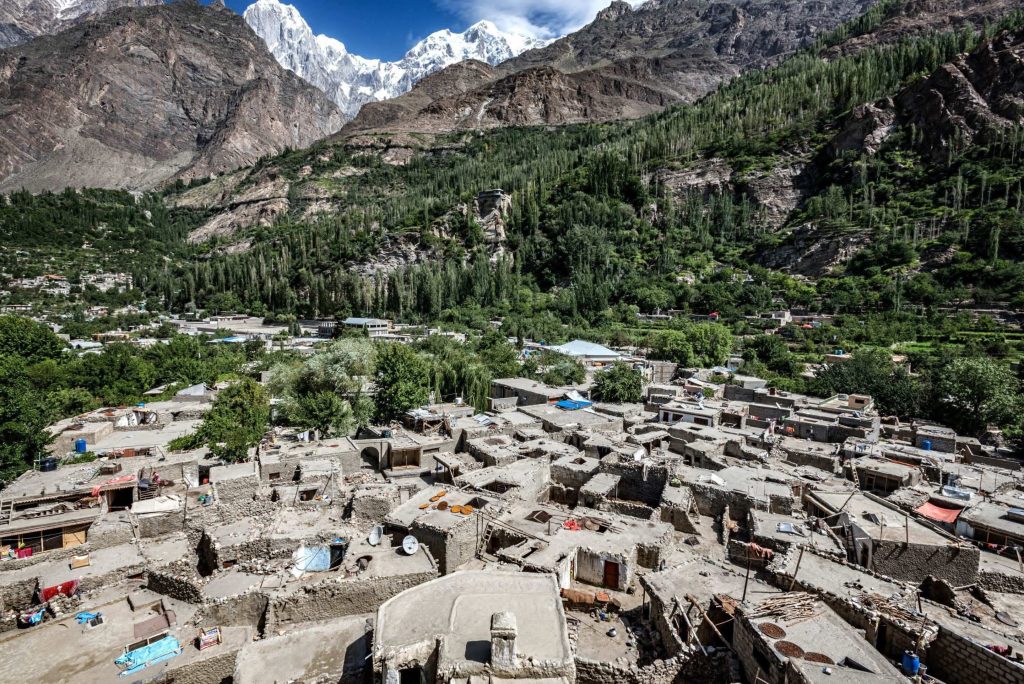
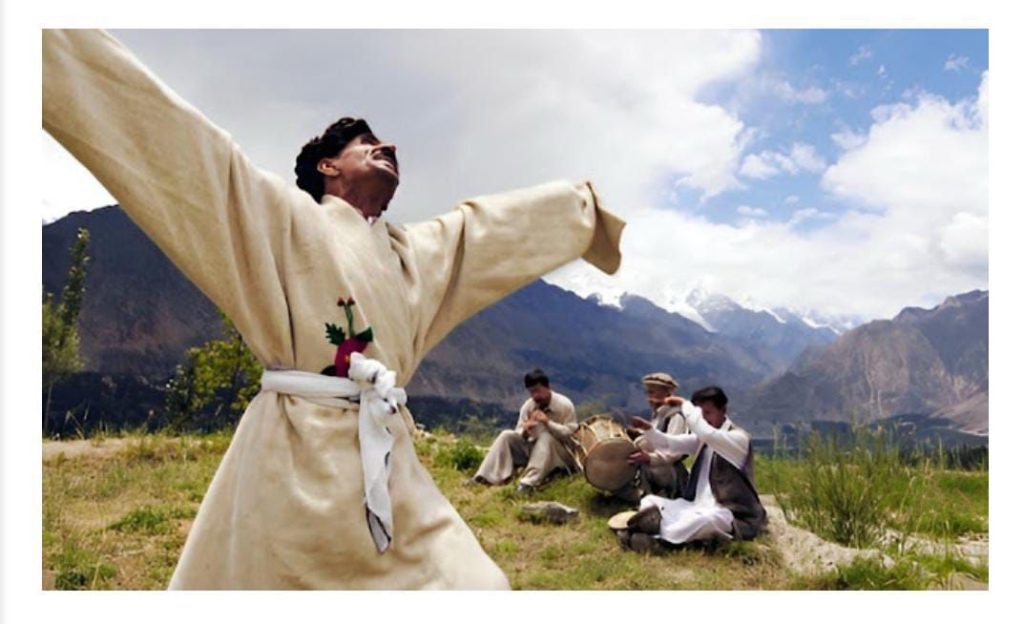
Day 03 06 May 2027 Chilas-Altit,Hunza: This morning, we will leave for Karimabad, Hunza bypassing the bustling cross-roads town of Gilgit, a 5-6 hour journey. Shortly after leaving Chilas, we will catch a glimpse of Nanga Parbat (8,126m) also known as the “killer mountain” and the 9th highest in the world. We will also stop at the meeting point of the greatest mountain ranges on Earth, the Karakoram, the Himalaya and the Hindu Kush and the confluence of the Indus and Gilgit rivers. Continuing on the Karakorum Highway to Hunza we will pause at Rakaposhi view point at Ghulmet having stunning views up the Ghulmet icefall to the peak of Mount Rakaposhi 7788 meters. From the viewpoint, we can stretch our legs by hiking towards the Japanese base camp (approximately 3 hours round trip). The view of this North face of Rakaposhi allows one to see the longest uninterrupted mountain flank on earth (6000m) starting from the river bank. Later on, drive to Altit Hunza. The Valley of Hunza gained prominence in the late 1960’s through a famous article in the National Geographic magazine, which dwelt at length on the longevity of the Hunza people. Additionally, and of particular interest, is the tradition of healers, known as Shamans or “Bitans”, who purportedly communicate with the spirit and fairies residing in these high mountains. The “bitan” engage in various rituals, including inhaling the smoke of burning juniper branches, dancing to specific music, and even consuming the blood of a freshly severed goat. These practices are thought to induce ecstatic trances, allowing the shaman to communicate with the spirit world. Shamans like the “bitan” are seen as healers and soothsayers, playing a crucial role in the community’s traditional ritual and politico-ideological structure. They are believed to be able to heal the sick, predict the future, and mediate between humans and supernatural beings. Over the next days we will be able to watch a Shaman “evoke the spirits” through his trances. (Shaman dance cost not included) Overnight at Hotel in Altit.

Day 04 07 May 2027 Altit-Baltit-Dhuiker-Altit: Today after a relaxing breakfast, we will visit the restored Altit Fort and the women’s work shop where they make wooden furniture and handicrafts. Then a few minutes’ drive takes us to the neighboring ‘twin village of Baltit where we can take a water channel around Karimabad and then visit the 800 year old Baltit Fort, once the stronghold of the Ayasho Dynasty, and a wonderfully restored museum that has won many awards, including ones from UNESCO and British Airways. Return to Altit to enjoy the garden and heavenly orchard annexed to the restored Altit Fort and try the local Hunza cuisine at the Altit Café, cooked by a women’s community village organization. In the late afternoon, drive to Duiker Village located at 3000 meters. This drive takes us to one of the most beautiful sceneries of the world. We then climb to the view point (Hoshat) 500 metres above to enjoy a fabulous sunset on these gigantic peaks specially the view of the Ultar mountain range which is stunning. In the evening drive back to the hotel. Overnight at Hotel in Altit.

Day 05 08 May 2027 Altit-Nagar Valley-Altit This day is reserved for a nice walk in the mountains. After breakfast, drive downwards to Minapin, a quaint village in the opposite valley of Nagar. Here we will hike to the beautiful Hapakun meadow (2,800m), which takes a maximum 3 hours. The hike starts from the village along with a canal under shaded trees 15 minutes towards the Minapin River. The trail turns south into the canyon and crosses a footbridge over the river’s true left bank after 10 minutes. The trail continues through the juniper trees to the grassy-tiered meadow of Hapakun. From the meadow of Hapakun you can have a view of Hachindar and Maiun peaks above the Hunza River. After returning to Minapin, drive back to Altit for overnight at the hotel.
Day 06 09 May 2027 Altit – Haldeikish/Hunza Petro glyphs –Gulmit – Passu – Altit: After breakfast rejoin the Karakorum Highway and drive to Haldeikish to see the Petro Glyphs. Afterwards drive to Gulmit in Upper Hunza, along the banks of the newly, but tragically formed Attabad Lake, a significant addition to the natural beauty of Hunza. The road link has been recently restored by a 7.9 km long tunnel system and on the way we will stop at the lake for some boating (boating cost not included). On arrival at Gulmit, explore the peaceful and serene village that formerly served as winter capital of the Hunza Kingdom. Here one will walk through the village and see local women weaving carpets and making several other traditional handicrafts. Drive on to Passu Village where we have breath-taking views of Tupupdan SAR, Passu Peaks, Shispare and Boyuhagur, all exceeding 7000 meters. Later visit Passu Glacier view point and after a thrilling experience of walking on the “Indiana Jones Bridge” at Hussaini, return to Altit. Overnight at Hotel in Altit.
Day 07: 10 May 2027 Karimabad-Gupis: This morning, after breakfast drive to Gupis (250 km, 6-7 hours drive). You will drive on Karakorum Highway (KKH) to Gilgit where we will stop at the Gilgit Bazaar with its kaleidoscopically arrayed shops as well as see one of the longest suspension bridges of the area. After a light lunch, we will change over to our 4-wheel drive

Day 07: 10 May 2027 Karimabad-Gupis (cont): vehicles to continue on to the Gilgit-Shandur road driving along the Ghizer River all the way to Gupis. Enroute stop at Kargah to see Kargah Buddha rock carving, etched in the 7th century. There was a monastery and three stupas here as this served as a rest stop for Buddhist pilgrims traveling from China. We continue through the main town of Ghakuch which is the capital of Ghizer District. Arrive Gupis and check in to Hotel. In the late afternoon (time permitting) we will go for a walk down to the beautiful Khalti Lake. After enjoying sometime at the lake we return to Hotel. Overnight at Hotel in Gupis.
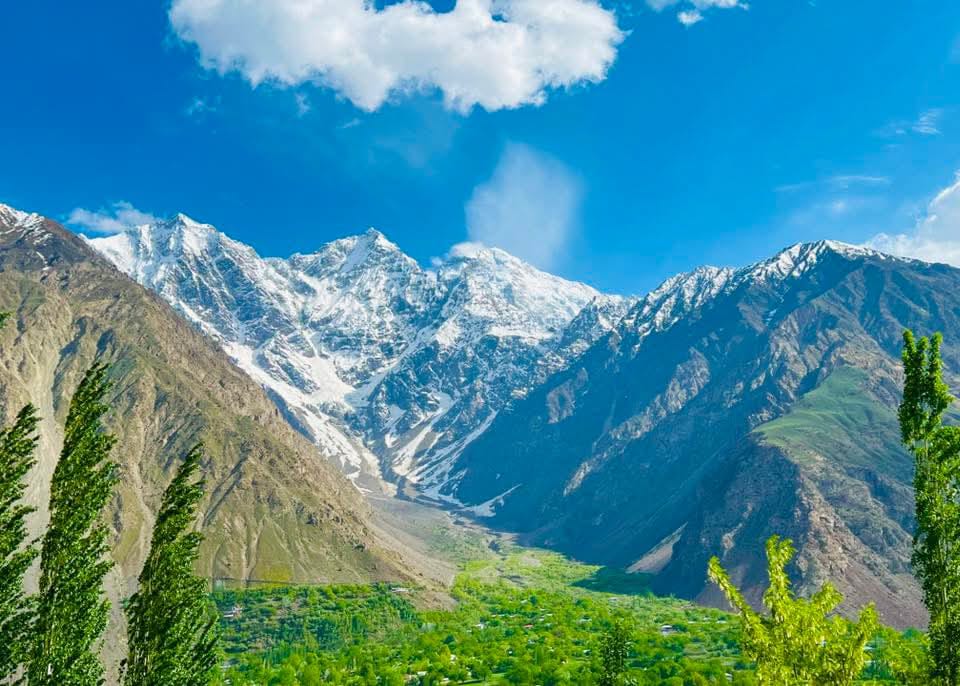
Day 08: 11 May 2027 Gupis-Parwak: After breakfast we will start our drive towards Parwak (150 km, 7-8 hours drive). Probably today is the most spectacular driver on our tour as we make our way across the Phander and Laspur Valleys, not forgetting the drive over Shandur Pass (3800 metres). Shandur boasts the highest polo field in the world, where the best teams from Gilgit and Chitral play very fast and aggressive matches during the polo festival. Nearby is the Shandur Lake famous for the vivid reflection of Hindukush Mountains that surrounds it. Afterwards continue drive to Parwak, our resting place for this evening. Overnight at Guest House in Parwak.

Day 09: 12 May 2027 Parwak – Chitral: After breakfast drive to Chitral (100 km, 4-5 hours drive). Another beautiful drive today, we will be passing the peaks of Booni, Tirich Mir and Buni Zoom as we start driving south to Chitral town. Chitral is the largest district in the Khyber Pakhtunkhwa province of Pakistan, covering an area of 14,850 km² and is the northernmost district of Pakistan. Chitral shares much of its history and culture with the neighboring Hindu Kush territories of Gilgit-Baltistan, a region sometimes called “Peristan” because of the common belief in fairies believed to inhabit the high mountains. Later in the evening visit the Gol National Park (Tushi) to get a glimpse of the national animal of Pakistan, the Markhor. Overnight at Hotel in Chitral.

Day 10: 13 May 2027 Chitral-Rumbur, Kalash Valley: After breakfast explore Chitral town. Spend your day in the Chitral city. Today you will visit the Chitral Fort (if open), Shahi Mosque and a trip of the Bazar. In the late afternoon we will drive about 2 hours to the Kalash Valley of Rumbur, the second largest valley in Kalash. Here we will camp in the lawns of a simple guest house. The Kalashas or Kalash, are a Dardic indigenous people residing in the Chitral District of Pakistan. They speak the Kalasha language, from the Dardic family of the Indo-Aryan branch. They are considered unique among the peoples of Pakistan. They are also considered to be Pakistan’s smallest ethno religious community, practicing a religion which some scholars characterize as a form of animism, and other academics as a form of ancient Hinduism. Their peculiar culture and colorful way of life attracts many tourists both local and foreign. They live in three remote valleys which can only be accessed by a four wheel drive Jeep following a winding mountain road through serene valleys of high Hindu Kush Mountains. Over the next days, we will partake in the local Spring Festival, known as Chilam Joshi. The festival serves both spiritual and social purposes. The Kalasha people pray for their livestock‘s wellbeing,

Day 10: 13 May 2027 Chitral-Rumbur, Kalash Valley (cont): invoking their deity, Goshidai. The festival also facilitates the search for potential marital partners, with announcements made at its conclusion by those successful in this quest. Essential activities of the festival are song and dance, with women traditionally wearing new clothes, and community-wide dances welcoming the spring season. Overnight in tents
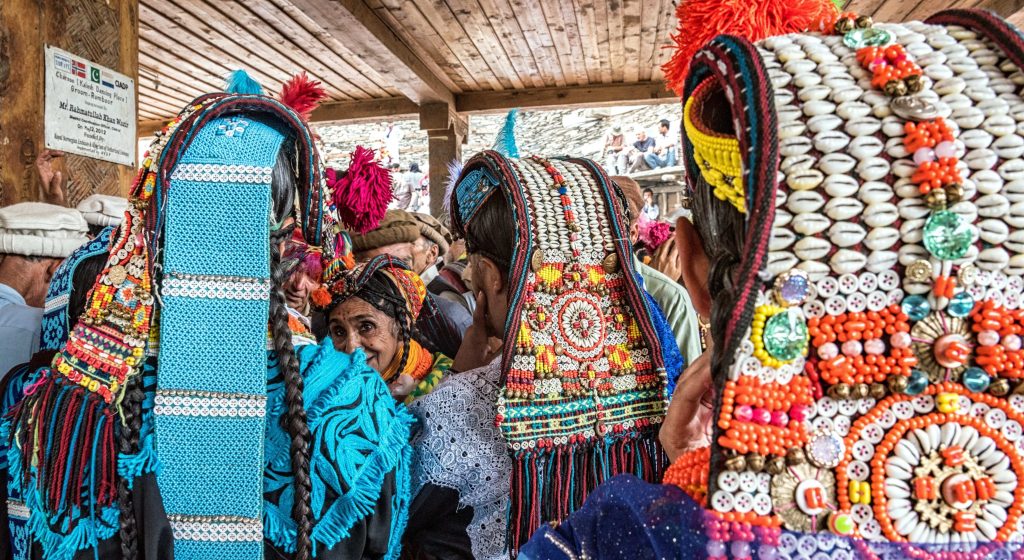
Day 11 and 12 : 14 and 15 May 2027 Bamburet-Rumbur, Kalash Valley: The next two days will be spent exploring the three settlements of the Kalasha people. Visit the local houses, temple, graveyard and partake in the festival. Overnight in tents

Day 13: 16 May 2027 Rumbur -Peshawar: Today leave early for Peshawar (350km and 8-9 hours drive). We will use our 4×4 vehicles to the Ayun Bridge where we will change to our coach. Proceed through the Lowari tunnel and on to Malakand and Chakdara. Malakand was the site of fierce battles between the local Pashtuns and the British Army in 1897, eloquently but bombastically described by Sir Winston Churchill (as he was paid by the word) for newspapers in England. A neighbouring signal tower was renamed as Churchill’s picket although he was never stationed there. From Chakdara we will merge on to the newly built Swat Motorway and then again on Islamabad-Peshawar Motorway near Mardan. Arrive Peshawar and check in to the hotel. Overnight at Hotel in Peshawar:
Day 14: 17 May 2027 Peshawar: Today visit Peshawar, the vibrant frontier town that gained prominence as the principal stop for soothsayers, bounty hunters and traders going on the way to and from Afghanistan and Central Asia to the sub-continent. We will stop first at Peshawar Museum—originally conceived in 1901 as a Durbar Hall to celebrate & commemorate the late Queen Victoria—and opened as a museum in November 1907.Its displays feature aspects of Buddhist Art. The museum also has an ethnological section, coins collection and a recently added Islamic gallery. The ethnological collection includes, besides other display objects, wooden effigies from the ancient Kalash Culture of Chitral. The fabulous collection of coins in gold, silver and copper from the Archaemenian period up to the British era completes the chronological profile of the region indicating its vast history. Then continue to the old part of the city for a visit to Peshawar’s fabled “street of story tellers”—Qissa Khwani Bazaar—which is known as the Piccadilly of central Asia. Continue the visit of Peshawar city including Peshawar’s last remaining Mughal Mosque, the seventeenth century Mahabat Khan Mosque, and the Cunningham Clock tower which was built in 1900, “in commemoration of the Diamond Jubilee of Her Majesty the Queen Empress”. The tower was named after Sir George Cunningham, former British governor and political agent in the province. If permitted, enjoy a meal at “Namak Mandi” or Salt Market located on the junction of Khyber bazaar and the Qissa Khwani Bazaar. The area is known for the best Pashtoon traditional food mostly made of mutton cooked in salt in a unique way as well as other local Peshawari cuisine, including the famous “chapli kebab” a Pashtun-style minced kebab, usually made from ground beef, mutton or chicken with various spices in the shape of a patty and deep fried while sipping the traditional beverage “kahwa”, a sugary Jasmine tea with green cardamom Overnight at Hotel in Peshawar.
Day 15: 18 May Peshawar-Taxila-Islamabad: Today we drive to Islamabad (200 km, 2.5 hours drive). On the way, stop at Nicholson’s Obelisk erected in 1868 in honour of Brigadier-General John Nicholson, a famous military figure of the British Empire. Nearby is a segment of the old Grand Trunk Road, which predated even Buddha’s birth and was called Uttara Path, meaning, road to the North, whose construction is attributed to Chandragupta Maurya. During the time of the Maurya Empire in the 3rd century BCE, overland trade between India and several parts of Western Asia and the Hellenistic world went through the cities of the north-west, primarily Taxila. Constructed in eight stages, this road is said to have connected various prominent cities of the time and covered a distance of around 2600 kilometers. Sher Shah Suri (1486–22 May 1545), remains the true builder of what is now the complete stretch of GT Road, which was referred to as Shah Rah e Azam (The Great Road). The Mughals later extended the road further east to Chittagong and west to Kabul and was the main thoroughfare extensively used during the Mughal period. After this visit continue to Taxila excavated between 1913 & 1939 by Sir John Marshal. This Buddhist era location is known as an archeological paradise and includes the remains of three cities, Buddhist monasteries and Stupas. The history of Taxila spans nearly 1,000 years (6th Century BC to 5th century AD). Visit Taxila Museum, Bhir Mound (600 BC city remains), Dharmarajika Stupa from the Ashoka period (3rd Cent. BC) and Sirkap (2nd century BC remains of Bactrian Greek city). The museum at Taxila was constructed in classic Victorian style over a 10-year period from 1918 to 1928, and is home to over 4000 stunning artifacts excavated at the various sites scattered around Taxila. After visiting Taxila continue to Islamabad for sightseeing. This purpose built capital city of Islamabad was designed by the famous Greek architect Doxiades in the early 1960’s at the edge of the Potohar plateau. The city is divided into eight zones, including an administrative sector, diplomatic enclave, residential areas, educational sectors, industrial sectors, commercial areas, and rural and green areas. The city is known for the presence of several parks and forests, including the Margalla Hills National Park and Shakerparian Park. We begin our tour at the modern Faisal Mosque which can seat over 100,000 and is shaped like a Bedouin tent. We will then drive to the Pakistan Monument, which is inspired by Moghul architecture, and has four petal-like structures symbolizing the four main cultures of the country at Shakerparian (or Sweet Hills) Park from where we will get a bird’s eye view of Islamabad. After these visits, we will have a chance to freshen up at a local hotel and then proceed to the Margalla Hills for a farewell dinner at one of the restaurants whose outdoor seating allows one to get a bird’s eye view of Islamabad by night. Because of the location on top of the hills, no matter what the weather is on the plains below, there is a cool breeze that makes this outdoor dining a heavenly experience. The barbequed Pakistani delicacies are a must have on the menu, which also features a variety of continental cuisines. After dinner transfer to the airport for our return flight
Day 16: 19 May 2027 Islamabad Departure: Depart by BA 2160 at 00:20 for home.
Cost £2950 excluding flights, inclusive of all costs except dinners (where needed) & tips
Reading List – please note you may need to find a good library
Kalash Solstice: Winter Feasts of the Kalash of North Pakistan Paperback – Illustrated, 18 Jun. 2017
by Jean-Yves Loude (Author), Viviane Liever
Pagan Christmas: Winter Feasts of the Kalasha of the Hindu Kush: 1 Hardcover – 15 Nov. 2016
Kalash: The Paradise Lost Paperback – 30 July 2006
The Kalasha People of North-Western Pakistan Unknown Binding – 1 Jan. 1996
Narrative of various journeys in Balochistan, Afghanistan, the Panjab and Kalat 1826-1838″ by Charles Masson
Kafirs of the Hindu-Kush – George Scott Robinson