Nordic Midsummer Stories – Lena Heide Brennand – Zoom

Nordic Midsummer Stories

Join us for an enchanting lecture that transports you to the heart of Scandinavia, where the magic of midsummer comes alive through captivating stories and folklore! As the sun shines brightest and the nights are filled with enchanting possibilities, discover the rich tapestry of midsummer traditions that have been passed down through generations. From tales of mythical creatures dancing in the twilight to the spirited celebrations that honor the earth’s bounty, these stories reflect the deep connection between the people and their natural surroundings. We’ll explore the vibrant customs, rituals, and legends that define this magical season, shedding light on how midsummer shapes cultural identities and community bonds across the Nordic countries. Perfect for lovers of folklore and those curious about Scandinavian heritage, this lecture promises to inspire a sense of wonder and appreciation for the age-old stories that continue to illuminate our world. Don’t miss this opportunity to immerse yourself in the joyous spirit of midsummer.

Bio:

Lena Schattenherz Heide-Brennand is a Norwegian lecturer with a master degree in language, culture and literature from the University of Oslo and Linnaeus University. She has been lecturing and teaching various subjects since 1998. Her field of interest and main focus has always been topics that others have considered strange, eccentric and eerie, and she has specialised in a variety of dark subjects linked to folklore, mythology and Victorian traditions and medicine. Her students often point out her thorough knowledge about the subjects she is teaching, in addition to her charismatic appearance. She refers to herself as a performance lecturer and always gives her audience an outstanding experience

don’t worry if you miss it – we will send you a recording valid for two weeks the next day
Mummified cats & other concealed ritual objects– Wayne Perkins – Zoom


Deliberately Concealed Objects & Ritual Deposits in Ancient Buildings

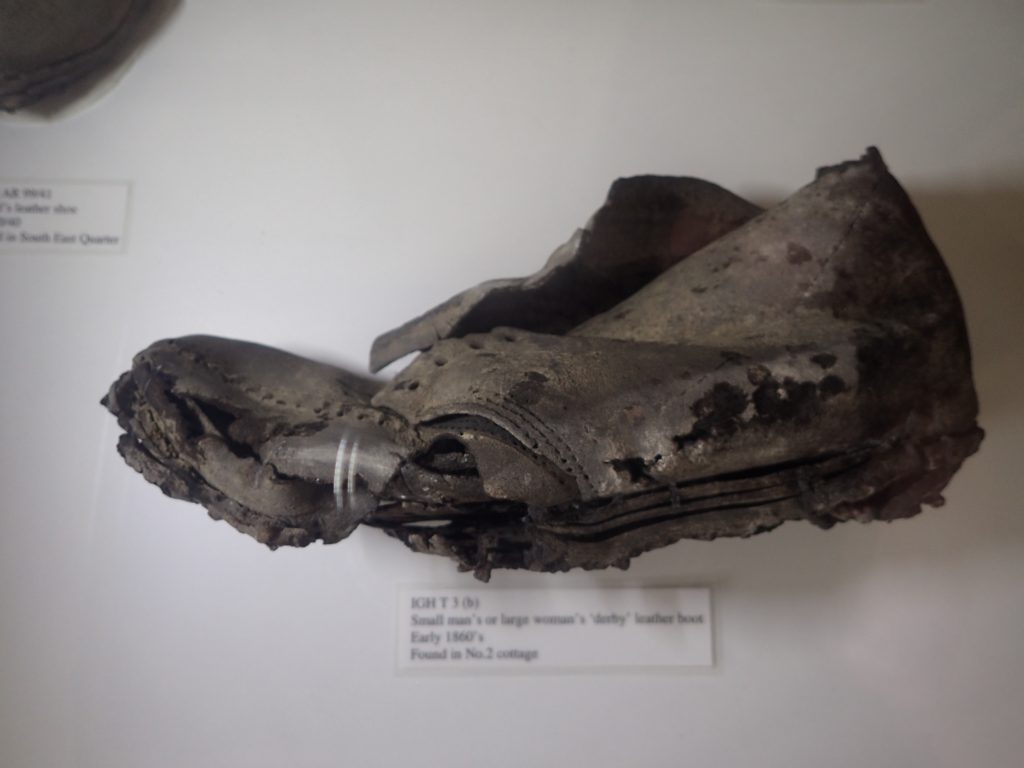
The phenomenon of old leather shoes and boots being deliberately concealed up the chimney, large caches of worn-out clothes and objects discovered within the voids of old buildings, along with mummified cats found between the walls are a range of attested practices acknowledged by archaeologists.

It is now understood that the objects had been inserted by the inhabitants who believed that they were going to act as a prophylactic (a measure taken to fend off disease and general pestilence), bring good luck to the inhabitants, ward off the evil eye or, in some cases, avert the attentions of the witch’s familiar.

It would seem that secrecy and non-disclosure of the concealment had been crucial to their potency.


Speaker Bio

Wayne Perkins is an archaeologist of 23 years with a special interest in apotropaic graffiti, folklore and concealed objects recovered from ancient buildings.

Don’t worry if you miss it – we will send you a recording valid for two weeks the next day
 

The Werewolf of Hull – Deborah Hyde – Zoom


Was a werewolf really loping around Hull’s Barmston Drain in 2016? Folklorist Deborah Hyde investigates this modern manbeast mystery

In 2016, a peculiar story hit local headlines – a werewolf was loping around Barmston drain, an eighteenth century canal in Hull. Such tabloid gold couldn’t stay local for long and national newspapers amplified the reports to the point that international publications like the Huffington Post repeated them. Rock start Alice Cooper even commented on social media. But what lay behind the sensational spin? How many eye-witnesses were there and what did they really say? The Hull Werewolf’s context – both folkloric and contemporary – is rewarding to examine, to illuminate the content and transmission of this popular twenty-first century cryptid tale.

Bio

Deborah Hyde writes and broadcasts about religion and dark folklore. She regularly appears as a contributing expert on the top BBC podcast Uncanny and she edited The Skeptic magazine for ten years.

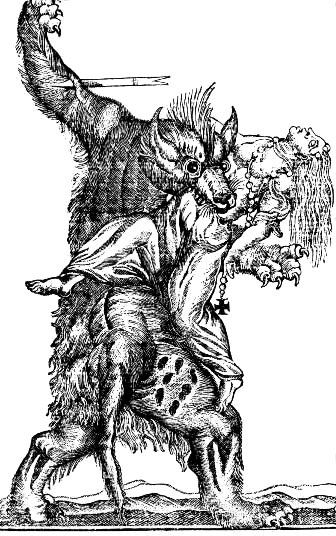
The illustration is of the Beast of Gevaudan, a comparatively late (1764-1767) werewolf case from France.

Don’t worry if you miss it – we will send you a recording valid for two weeks the next day
 

Six Centuries of Madness- the History of Bedlam Asylum – Lena Heide-Brennand – Zoom

Six Centuries of Madness – the History of Bedlam Asylum

Step into the haunting history of Bedlam Asylum, a name synonymous with madness and human suffering. Founded in the 13th century, this notorious institution became a chilling symbol of how society treated the mentally ill. Journey through the eerie corridors where the cries of the tormented once echoed, and explore the harrowing tales of its residents, many of whom were subjected to barbaric treatments and inhumane conditions. From its early days as a charitable institution to its transformation into a spectacle for public viewing, Bedlam’s legacy is steeped in tragedy and intrigue. Discover the dark secrets behind its walls, the infamous patients who resided there, and the evolution of mental health care that emerged from its shadows. This lecture promises to immerse you in the unsettling yet fascinating narrative of Bedlam, revealing how this once-feared asylum continues to captivate our imagination and challenge our understanding of mental health today. Dare to uncover the eerie truths behind one of history’s most infamous institutions.

Bio:

Lena Schattenherz Heide-Brennand is a Norwegian lecturer with a master degree in language, culture and literature from the University of Oslo and Linnaeus University. She has been lecturing and teaching various subjects since 1998. Her field of interest and main focus has always been topics that others have considered strange, eccentric and eerie, and she has specialised in a variety of dark subjects linked to folklore, mythology and Victorian traditions and medicine. Her students often point out her thorough knowledge about the subjects she is teaching, in addition to her charismatic appearance. She refers to herself as a performance lecturer and always gives her audience an outstanding experience, Lena’s New Book – Mythical Creatures in Scandinavian Folklore is now available on Amazon

don’t worry if you miss it – we will send you a recording valid for two weeks the next day

Seances and the Female Medium in British Cinema – a Zoom talk with Icy Sedgwick – Zoom

Victorian Spiritualism offered women a tantalising glimpse of freedom through the financial earning power and social status provided to popular mediums. Indeed, while male mediums did exist and regularly toured Britain, it is the figure of the female medium that has characterised how we view these seance leaders in contemporary popular culture. Michelle Yeoh plays one such figure in the latest Poirot film, A Haunting in Venice. This talk will explore how the female medium has been represented in a selection of British films, including The Stone Tape, Quatermass and the Pit, and The Others.


Icy Sedgwick has recently completed a PhD exploring the representation of the haunted house in contemporary Hollywood horror films. She runs the Fabulous Folklore podcast, investigating European folklore and its appearances in popular culture. In case she tires of the research, Icy also writes dark fantasy and Gothic horror fiction.

Your host for this event will be the writer Edward Parnell, author of Ghostland: In Search of a Haunted Country. Ghostland, a work of narrative non-fiction, is a moving exploration of what has haunted our writers and artists – as well as the author’s own haunted past; it was shortlisted for the PEN Ackerley 2020 prize, an award given to a literary autobiography of excellence. Edward’s first novel The Listeners (2014), won the Rethink New Novels Prize. He recently edited Eerie East Anglia: Fearful Tales of Field and Fen (2024) for the British Library’s Tales of the Weird series. For further info see:
https://edwardparnell.com

Don’t worry if you can’t make the talk live on the night – we will send you a recording valid for two weeks the next day

[Photo: a publicity still from the 1964 British crime thriller Seance on a Wet Afternoon]

Arthur Conan Doyle’s Tales of the Supernatural – by James Machin – Zoom

Best known as the creator of the arch-rationalist Sherlock Holmes, Sir Arthur Conan Doyle (1859–1930) also had a deep fascination with the supernatural, which found expression in his eerie, Gothic fiction. This talk delves into the spectral terror, weird horror, and occult intrigue of Doyle’s lesser-known stories in the genre. His fascination with the supernatural shaped his fiction throughout his career, from early tales of Arctic fright and ancient curses to later works exploring spiritualism, psychic phenomena, and the limits of human perception. Beyond the page, Doyle’s unwavering belief in the unseen – particularly spiritualism – became a defining aspect of his public life during his later years, drawing admiration from spiritualist circles but controversy from elsewhere.

Join us for an evening of spectral visitations, haunted minds, and the blurred line between science and faith.


James Machin is an editor, researcher, and writer who lives in Tring. Recent books include British Weird: Selected Short Fiction, 1893–1937 for Handheld Press – and his short fiction has been published in Supernatural Tales, The Shadow Booth, and Weirdbook. His edition of Conan Doyle’s 1895 novel The Stark Munro Letters for Edinburgh University Press was published in 2024 and he has since commenced work in his next volume in the same series, Conan Doyle’s 1908 collection of ‘grotesque’ tales, Round the Fire Stories. More information about the Edinburgh Conan Doyle Project can be found here:
https://edinburgh-conan-doyle.org/

Your host for this event will be the writer Edward Parnell, author of Ghostland: In Search of a Haunted Country. Ghostland, a work of narrative non-fiction, is a moving exploration of what has haunted our writers and artists – as well as the author’s own haunted past; it was shortlisted for the PEN Ackerley 2020 prize, an award given to a literary autobiography of excellence. Edward’s first novel The Listeners (2014), won the Rethink New Novels Prize. He recently edited Eerie East Anglia: Fearful Tales of Field and Fen (2024) for the British Library’s Tales of the Weird series. For further info see:
https://edwardparnell.com


Don’t worry if you can’t make the talk live on the night – we will send you a recording valid for two weeks the next day
Scott Cunningham – The Path Taken –  Christine Ashworth – Zoom

The life and legacy of author, herbalist and pagan trailblazer Scott Cunningham

In his all too brief lifetime, Scott Cunningham (1956-1993) wrote over 16 books which beteeen them changed the way that pagans, wiccans and occultists practiced and thought about their craft. Over thirty years after his death, his books remain hugely influential .

Tonight, join his sister, author Christine Cunningham Ashworth for an intimate talk and Q&A about Scott, inspired by her acclaimed book Scott Cunningham – The Path Taken. Discover the personal stories behind his beloved works and gain insight into the man who shaped modern Pagan literature.

” Here you will learn how Scott, writing in the 1970s and 80s, felt he had to live in two closets, both as a gay man and as a witch. Still, he legitimized solitary witchcraft by helping individuals ‘remember’ the natural, everyday practice of magic; he made Wicca, its knowledge, and essential practices, available to everyone.”
–Mary K. Greer, author of Women of the Golden Dawn and Archetypal Tarot

About the Speaker

Christine Ashworth’s biography of her brother, Scott Cunningham – The Path Taken – Honoring the Life and Legacy of a Wiccan Trailblazer, was published in September 2023 by Red Wheel/Weiser Books. You can find her at ChristineAshworth.com.

Don’t worry if you can’t make the live event on the night – we will send you a recording valid for two weeks the next day.


International Women Day Special – Witches and Bitches – Lena Heide-Brennand

International Women Day Special – Witches and Bitches

“Huldre, witches, and bitches – Views on women through the ages.” It’s quite peculiar , but women have always posed a bit of a challenge for society throughout all eras. Just think of the philosophical discussions the ancient Greeks had many centuries before our era, where respected men in society gathered to speculate on whether women could actually be categorized as human beings or merely as bothersome creatures. They concluded that women should not be taken seriously. The perception of women has changed countless times through the ages. Women have been seductresses, nightmares, huldre, witches, and bitches. They have been labelled hysterical beings destined to stay within the walls of the home, dedicating their lives to their husbands, children, and the household. Women have changed politics, academia, finance, and the workforce. They have been the muses of art, the goddesses of the catwalk, and the eternal headache of the conservative patriarchy. Welcome to an informative and entertaining lecture where we dive into the history of the societal role of the woman and the development of the feminist movement.

Bio:

Lena Schattenherz Heide-Brennand is a Norwegian lecturer with a master degree in language, culture and literature from the University of Oslo and Linnaeus University. She has been lecturing and teaching various subjects since 1998. Her field of interest and main focus has always been topics that others have considered strange, eccentric and eerie, and she has specialised in a variety of dark subjects linked to folklore, mythology and Victorian traditions and medicine. Her students often point out her thorough knowledge about the subjects she is teaching, in addition to her charismatic appearance. She refers to herself as a performance lecturer and always gives her audience an outstanding experience, Lena’s New Book – Mythical Creatures in Scandinavian Folklore is now available on Amazon

don’t worry if you miss it – we will send you a recording valid for two weeks the next day
Medieval Graffiti – with Wayne Perkins

Medieval Graffiti: Apotropaic Symbols & Ritual Protection Marks

Surveys undertaken by the author have recorded a fascinating corpus of medieval and historic graffiti which includes compass-drawn circles, ‘Marian’ marks, pentangles & saltires, all of which will be discussed in this illustrated talk.

Many of the marks are so-called ‘ritual protection marks’ – also known as ‘apotropaics’ (from the Greek, ‘to turn away evil’) – whose purpose was to defend the buildings against evil spirits and to confer good luck. This graffiti spans the entire medieval period but appears to peak between AD 1650 –1850, the time of the so-called ‘witch craze’ in Europe. Recent re-evaluation of these marks has revealed many more subtleties and diverse meanings than hitherto imagined, and we’ll explore them tonight.

The talk will begin with examples culled from the medieval buildings of England, then expand the discussion to compare the corpus of graffiti with international examples.

About the Speaker

Wayne Perkins is an archaeologist of 23 years with a special interest in apotropaic graffiti, folklore and concealed objects recovered from ancient buildings.

Don’t worry if you can’t make the live event on the night – we will send you a recording valid for two weeks the next day.


“Where Did the Witch’s Hat Come From? The Checkered Past of a Pointy Icon” – Dr Yvonne Owens – Zoom

“Where Did the Witch’s Hat Come From? The Checkered Past of a Pointy Icon”

In this presentation, I deal with the Welsh national costume for women as a possible source and inspiration for what is now the familiar image of the Witch’s hat and delve into the ale-wives’ tall hat, a millinery device to advertise their wares in crowded markets and street fairs. The 17th and 18-centuries’ positive fashion influences on elite Witch figures, the negative anti-Puritan and anti-Quaker influences, and some other related discussions are explored. But there are also the medieval ladies’ pointy headdresses, called henins, and the magical Scythian women’s tall, pointed headdresses to think of. The famed ‘Siberian Ice Maiden’ is the mummy of a woman from the 5th century BC, found in 1993 in a kurgan (mound burial chamber) of the Pazyryk culture in Republic of Altai, Russia. She was buried in her full regalia, including a tall conical hat, as a magical personage, which is to say a shaman, warrior and/or priestess- queen. A very ancient Hittite Goddess of Hurrian descent, Sauska (also known as Shaushka, Sausga, and Anzili) was a deity of fertility, war, and healing. She is thought by some scholars to be the original source for Inanna, and Ishtar stylings. She wore a very tall conical hat as part of her sacred regalia. The pointy black hat was just one of many symbols connected to witchcraft in the past. Some early images of witches did include the wide-brimmed pointy hat, but basically the conical Witch’s hat is an early modern convention. The depiction of witches with conical hats was especially popular in England and Scotland.

Bio

Yvonne Owens is a past Research Fellow at the University College of London, and holds an M.Phil. (European Studies) and Ph.D. (History of Art) from UCL. She was awarded a Marie Curie Ph.D. Fellowship in 2005 for her interdisciplinary dissertation on Renaissance portrayals of women in art and sixteenth-century Witch Hunt discourses. Her publications to date have mainly focused on representations of women and the gendering of evil “defect” in classical humanist discourses, cross-referencing these figures to historical art, natural philosophy, medicine, theology, science and literature. Her book, Abject Eroticism in Northern Renaissance Art: the Witches and Femme Fatales of Hans Baldung Grien (Bloomsbury London) was published in 2020 and her edited anthology of collected essays, titled Trans-Disciplinary Migrations: Science, the Sacred, and the Arts, was published by Cambridge Scholars Publishers in 2024. Previous books include The Witch’s Book of Days (1993, Beach Holme Publishing, with Jessica North and Jeanne Kozocari), The Cup of Mari Anu (1994, Horned Owl), and The Journey of the Bard (1995, Horned Owl).

Curated & Hosted by:

Marguerite Johnson is a cultural historian of the ancient Mediterranean, specialising in sexuality and gender, particularly in the poetry of Sappho, Catullus, and Ovid, as well as magical traditions in Greece, Rome, and the Near East. She also researches Classical Reception Studies, with a regular focus on Australia. In addition to ancient world studies, Marguerite is interested in sexual histories in modernity as well as magic in the west more broadly, especially the practices and art of Australian witch, Rosaleen Norton. She is Honorary Professor of Classics and Ancient History at The University of Queensland, and a Fellow of the Australian Academy of the Humanities.

don’t worry if you miss it – we will send you a recording valid for two weeks the next day
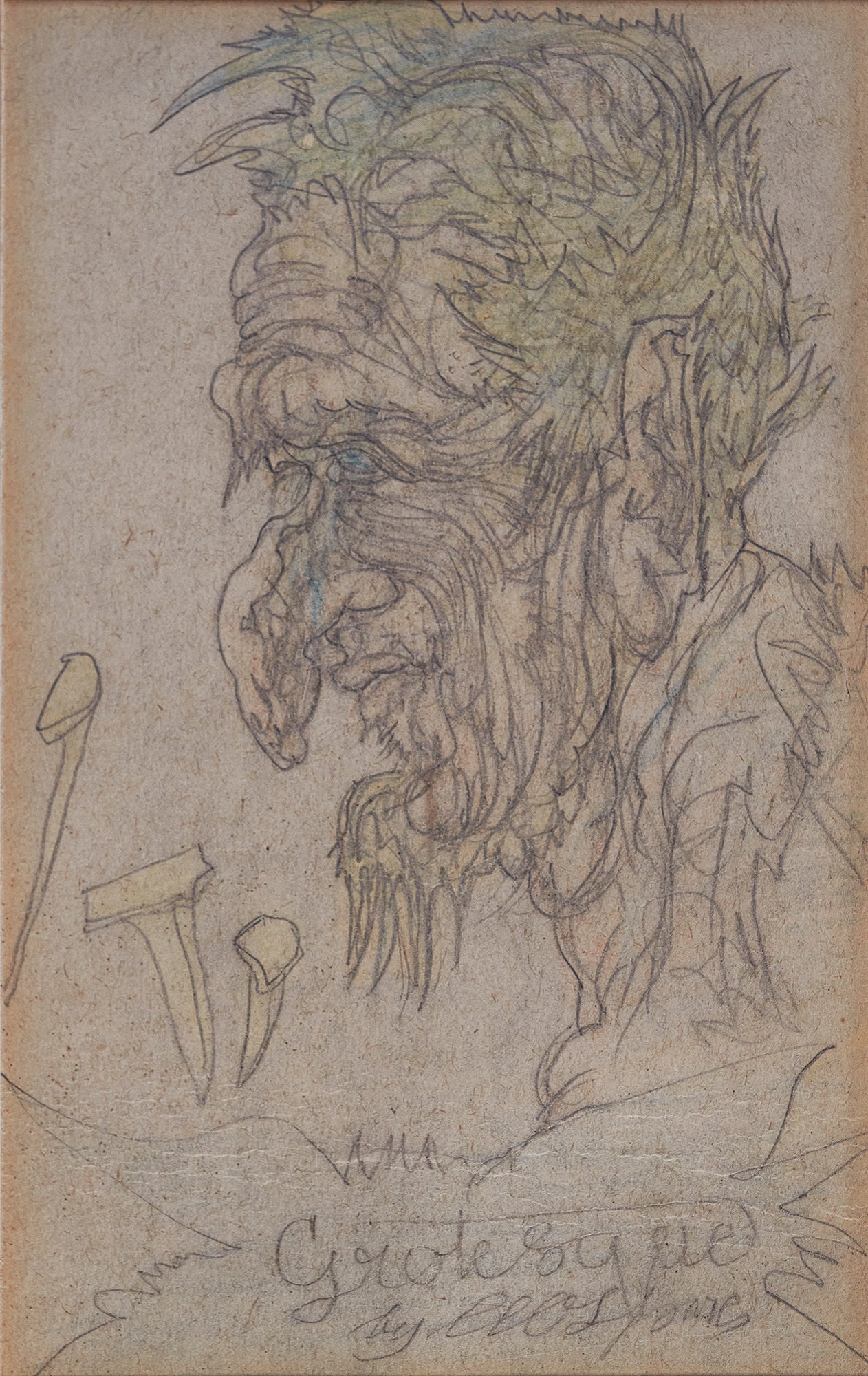
The picture credit is: Portrait of an innkeeper known as ‘Mother Louse’, after David Loggan, c. 1650-1700, The British Museum.