Trolls in Nordic Myth & Folkore – Dr. Tommy Kuusela

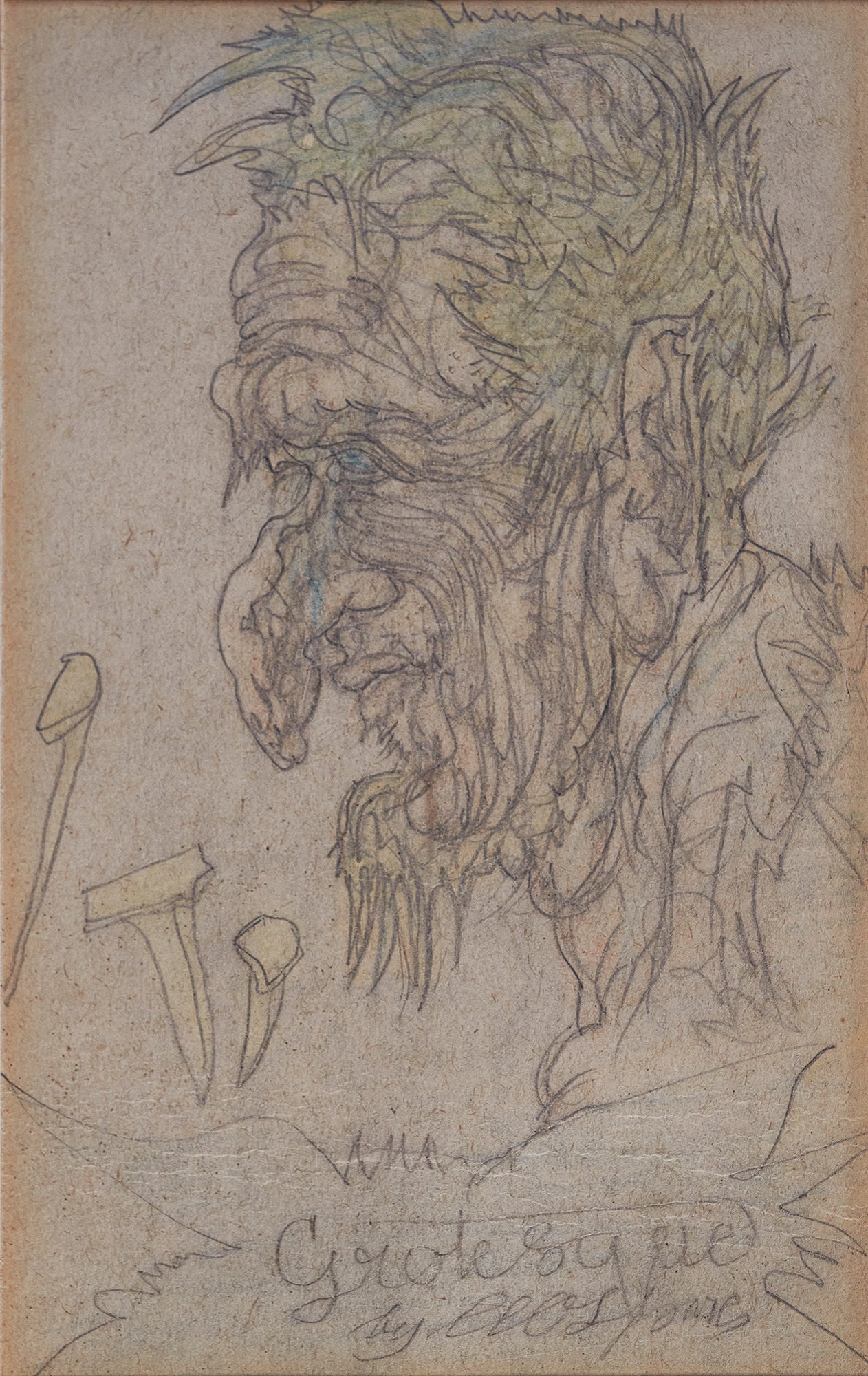
We have all seen supernatural trolls in movies, art, advertisement, video games, or maybe as statues, dolls and miniatures for different board games; from the trolls of famous artists such as the Norwegian Theodor Kittelsen and the Swede John Bauer, to the charming (initially Danish) trolls seen in the animated movies by Dreamwork studios, the delightful Finnish Moomin trolls by Tove Jansson, and the big clumsy trolls of Peter Jackson’s adaptions of J.R.R. Tolkien’s works. Trolls have become well-known and are everywhere in popular culture. But are they the same kind of trolls that we find in older texts – in Old Norse mythology or the folk legends and folktales of the North? The trolls were supernatural beings in nature, and their natural environment was the pre-industrial fishing and farming communities of Scandinavia. Although common in folklore, descriptions of them differs from the trolls we encounter in contemporary culture. The trolls of folklore and myths could be violent and threatening, they sometimes appear as big, nasty and ugly, but most were described as ambivalent, some even as beautiful and helpful. This lecture will look closer at the history of trolls; from the meaning of the word troll, the earliest trolls in Viking Age mythological poetry, the many different types of trolls that appear in manuscripts from the Middle ages, the trolls of folk belief, folk legends and folktales that have been recorded until the early 20th century in Scandinavia, to the trolls of contemporary popular culture and the trolls that lurks on the internet.

Bio

Dr. Tommy Kuusela (PhD in History of Religions); Researcher and archivist at The Institute for Language and Folklore in Uppsala, Sweden

Recent publications (in English):

* Kuusela, Tommy. 2022. “Initiation by White Snake and the Acquisition of Supernatural Knowledge”, in The Wild Hunt for Numinous Knowledge: Perspectives on and from the Study of Pre-Christian Nordic Religions in Honour of Jens Peter Schjødt / [ed] Karen Bek-Pedersen, Sophie Bønding, Luke John Murphy, Simon Nygaard, and Morten Warmind (Religionsvidenskabeligt Tidsskrift, 74), Aarhus: Afdeling for Religionsvidenskab/Institut For Kultur og Samfund, pp. 153-169.

* Kuusela, Tommy. 2021. “The Giants and the Critics: A Brief History of Old Norse Giantology”, in Folklore and Old Norse Mythology / [ed] Frog and Joonas Ahola (Folklore Fellows’ Communications, 323). Helsinki: The Kalevala Society, pp. 471-498.

* Kuusela, Tommy. 2021. “Swedish Fairy Belief: Traffic Accidents, Folklore, and the Cold Light of Reason”, in De Natura Fidei: Rethinking Religion Across Disciplinary Boundaries. Volume II / [ed] Mathew Jibu George, New Delhi: Authorspress , 2021, pp. 256-276.

* Kuusela, Tommy. 2020. “Spirited Away by the Female Forest Spirit in Swedish Folk Belief”, in Folklore: the journal of the Folklore Society 131 (2), pp. 159-179.

* Kuusela, Tommy. 2019. “Halls, Gods, and Giants: The Enigma of Gullveig in Óðinn’s Hall”, in Myth, Materiality, and Lived Religion: In Merovingian and Viking Scandinavia / [ed] Klas Wikström af Edholm, Peter Jackson Rova, Andreas Nordberg, Olof Sundqvit, Torun Zachrisson, Stockholm: Stockholm University Press, pp. 25-53.

Watch a recording of This Lecture, & 100s of others, for free when you join our Patreon 

An Evening in Asgard – The Home of the Norse Gods – Lena Heide-Brennand

Asgard was the spectacular home world of the Aesir gods. Odin, Thor and Loki are characters that “everyone” these days have some knowledge about due to their appearance in a lot of different types of popular culture. The gods and demigods of Asgard have definitely become fan favourites, but it turns out that there is generally little knowledge of who these heroes are really based on. In this lecture I will introduce you to the most famous gods of Asgard and tell you all about the impact they had on the Vikings back in the days when Thor and Odin played a major role in Scandinavian everyday life. Historians refer to three principal sources that depict Asgard; the Poetic Edda, the Prose Edda, and Heimskringla, which consists of several sagas. They will be the sources for this lecture as well. This will be an evening of captivating tales about the main characters of Asgard and the creatures that existed alongside them; we will meet Odin’s mighty horse Sleipnir, Midgardsormen -the world-circling serpent and the monstrous wolf Fenrisúlfr. Norse mythology has a cacophony of crazy creatures, charismatic gods and beautiful goddesses that will fascinate, spark curiosity and entertain you all at the same time.

Bio

Lena Schattenherz Heide-Brennand is a Norwegian lecturer with a master degree in language, culture and literature from the University of Oslo and Linnaeus University. She has been lecturing and teaching various subjects since 1998. Her field of interest and main focus has always been topics that others have considered strange, eccentric and eerie, and she has specialised in a variety of dark subjects linked to folklore, mythology and Victorian traditions and medicine. Her students often point out her thorough knowledge about the subjects she is teaching, in addition to her charismatic appearance. She refers to herself as a performance lecturer and always gives her audience an outstanding experience

Watch a recording of This Lecture, & 100s of others, for free when you join our Patreon 

“Odin battles Fenrir” drawing by Arthur Rackham 1910

“Loki tricks Alberich” The Rhinegold and the Valkyrie sketch by Arthur Rackham,1910

The Erotic Folktales of Norway – Lena Heide-Brennand

Once upon a time, in the nineteenth century, the famous Norwegian duo P.C. Asbjørnsen and Jørgen Moe began traveling all around rural Norway, collecting the tales, legends, and fables that the locals had to tell them. Most of these stories were published at the time they were collected and written down. However, there was a significant number of other tales that were suppressed and hidden away due to their explicit depiction of the sexual side of human experience. The manuscripts stayed hidden from public in the archives of the University of Oslo for nearly a century before being brought to light and published in Norway for the first time in 1977 under the title “Erotic Folktales from Norway”. It was a huge success and sold a lot of copies and it was obvious that people took a great interest in the adult stories as well. In this lecture we will be focusing on those steamy, hilarious and astonishingly graphic stories that have been passed down through generations in all corners of the cold North.

Like the traditional stories told to children, erotic folktales also include stories about the Hulder, Trolls, the famous Ash Lad, and princesses, as well as sinners and Adam and Eve. The only difference is that these characters are showing a very sexual side of themselves that is meant for adult listeners only. In this lecture, maybe we will find out just how far men would go to experience the intimate company of the alluring Hulder? And what would happen to the women once they were spellbound by the handsome Nøkken before he decided to drown them? Have you ever wondered if the Ash Lad was sexually involved with any of the princesses he visited? Welcome to an evening that might make you blush, laugh and cringe all at the same time. NB! Explicit language and adult content.

Bio

Lena Schattenherz Heide-Brennand is a Norwegian lecturer with a master degree in language, culture and literature from the University of Oslo and Linnaeus University. She has been lecturing and teaching various subjects since 1998. Her field of interest and main focus has always been topics that others have considered strange, eccentric and eerie, and she has specialised in a variety of dark subjects linked to folklore, mythology and Victorian traditions and medicine. Her students often point out her thorough knowledge about the subjects she is teaching, in addition to her charismatic appearance. She refers to herself as a performance lecturer and always gives her audience an outstanding experience

Watch a recording of This Lecture, & 100s of others, for free when you join our Patreon 

More Mythical Creatures in Scandinavian Folklore – Lena Heide-Brennand

A follow-up lecture on more of the magical, mysterious and scary creatures we meet in Scandinavian folklore that we did not have time to introduce you to in the first lecture. This time we will get to know the legendary Kraken, the good and evil little Vette, the dangerous Draugen and the eerie Mare, in addition to a the more famous Icelandic elves (Álfafólk). We will take a close look at the origin of these characters that have haunted and scared the Scandinavian people through centuries, and there will be spine chills guarantees when myths meet tales claiming to be based on true stories re-told by those very few individuals who were lucky enough to survive an encountering. Welcome to another evening in the company of the most fascinating legends Scandinavian folklore has to offer.

Bio

Lena Schattenherz Heide-Brennand is a Norwegian lecturer with a master degree in language, culture and literature from the University of Oslo and Linnaeus University. She has been lecturing and teaching various subjects since 1998. Her field of interest and main focus has always been topics that others have considered strange, eccentric and eerie, and she has specialised in a variety of dark subjects linked to folklore, mythology and Victorian traditions and medicine. Her students often point out her thorough knowledge about the subjects she is teaching, in addition to her charismatic appearance. She refers to herself as a performance lecturer and always gives her audience an outstanding experience

Watch a recording of This Lecture, & 100s of others, for free when you join our Patreon 

Draugen

Illustration by Joakim Skovgaard (1889 el. 1890). ‘The Werewolf”.

Icelandic elves

Shirley Jackson: A Rather Haunted Life – a Zoom lecture by Ruth Franklin

Known to millions primarily as the author of the archly disturbing short story ‘The Lottery’, Shirley Jackson (1916–1965) has until recently been curiously absent from the mainstream American literary canon. A genius of literary suspense and psychological horror, Jackson plumbed the cultural anxiety of postwar America more deeply than anyone in her classic, gothic novels The Haunting of Hill House (1959, later successfully filmed by Robert Wise in 1963 as The Haunting) and We Have Always Lived in the Castle. In keeping with the dark nature of her work, Jackson’s seemingly bucolic life in the New England town of North Bennington was, below its surface, far more tumultuous and haunted than it seemed.

In this online talk, Ruth Franklin will demonstrate how Shirley Jackson’s unique contribution to twentieth century literature came from her focus on ‘domestic horror’. Almost two decades before Betty Friedan’s The Feminine Mystique ignited the women’s movement, Jackson’s stories and non-fiction chronicles were already exploring the exploitation and the desperate isolation of women, particularly married women, in American society.

Ruth Franklin is a book critic and former editor at The New Republic. Her first biography, Shirley Jackson: A Rather Haunted Life (Liveright/W.W. Norton, 2016) won the National Book Critics Circle Award for Biography and was named a New York Times Notable Book of 2016, a Time magazine top nonfiction book of 2016, and a “best book of 2016” by The Boston Globe, the San Francisco Chronicle, NPR, and others. In The Washington Post, Elaine Showalter called it “a sympathetic and masterful biography that both uncovers Jackson’s secret and haunting life and repositions her as a major artist.”

Ruth’s work appears in many publications, including The New Yorker, The New York Times Book Review, The New York Review of Books, and Harper’s. She is the recipient of a Guggenheim Fellowship in biography, a Cullman Fellowship at the New York Public Library, a Leon Levy Fellowship in biography, and the Roger Shattuck Prize for Criticism. Her first book, A Thousand Darknesses: Lies and Truth in Holocaust Fiction (Oxford University Press, 2011), was a finalist for the Sami Rohr Prize for Jewish Literature. She lives in Brooklyn, New York.

Your host for this event will be the writer (and the Last Tuesday Society’s Literary Director) Edward Parnell, author of Ghostland: In Search of a Haunted Country. Edward lives in Norfolk, UK, and has an MA in Creative Writing from the University of East Anglia. He is the recipient of an Escalator Award from the National Centre for Writing and a Winston Churchill Travelling Fellowship. Ghostland (William Collins, 2019), a work of narrative non-fiction, is a moving exploration of what has haunted our writers and artists – as well as the author’s own haunted past; it was shortlisted for the PEN Ackerley 2020 prize, an award given to a literary autobiography of excellence. Edward’s first novel The Listeners (2014), won the Rethink New Novels Prize. For further info see: https://edwardparnell.com

Watch a recording of This Lecture, & 100s of others, for free when you join our Patreon 

The History and Future of the Wildcat in Britain – A Zoom talk with Derek Gow

Derek Gow, who has previously given a talk to the Museum about the history of wolves in Britain, makes a welcome return to give an illustrated lecture about one of our rarest and most enigmatic native mammals, the Wildcat (Felix sylvestris). The species became extinct in England and Wales during the nineteenth century, clinging on thereafter only in the Scottish Highlands. Derek currently has a wildcat breeding complex on his Devon farm and plans to reintroduce these remarkable felines back into the English countryside at a future point.

Derek Gow is a farmer and nature conservationist. Born in Dundee in 1965, he left school when he was 17 and worked in agriculture for five years. Inspired by the writing of Gerald Durrell, all of whose books he has read – thoroughly – he jumped at the chance to manage a European wildlife park in central Scotland in the late 1990s before moving on to develop two nature centres in England. He now lives with his children at Coombeshead, a 300-acre farm on the Devon/Cornwall border which he is in the process of rewilding. Derek has played a significant role in the reintroduction of the Eurasian beaver, the water vole and the white stork in England. He is currently working on a reintroduction project for the wildcat. Derek’s book, Bringing Back the Beaver: The Story of One Man’s Quest to Rewild Britain’s Waterways, was published in 2020.

Your host for this event will be the writer Edward Parnell, author of Ghostland: In Search of a Haunted Country. Edward Parnell lives in Norfolk and has an MA in Creative Writing from the University of East Anglia. He is the recipient of an Escalator Award from the National Centre for Writing and a Winston Churchill Travelling Fellowship. Ghostland (William Collins, 2019), a work of narrative non-fiction, is a moving exploration of what has haunted our writers and artists – as well as the author’s own haunted past; it was shortlisted for the PEN Ackerley 2020 prize, an award given to a literary autobiography of excellence. Edward’s first novel The Listeners (2014), won the Rethink New Novels Prize. For further info see: https://edwardparnell.com

Watch a recording of This Lecture, & 100s of others, for free when you join our Patreon 

J. Sheridan Le Fanu: Irish Master of Mystery – a Zoom talk by Jim Rockhill

Who was Joseph Sheridan Le Fanu (1814–1873)?

In the “Prologue” to Madam Crowl’s Ghost and Other Tales of Mystery (1925), his invaluable gathering of Le Fanu’s hitherto uncollected stories, no less a practitioner of the form than M. R. James pronounced: “Le Fanu stands absolutely in the first rank as a writer of ghost stories. That is my deliberate verdict, after reading all the supernatural tales I have been able to get hold of. Nobody sets the scene better than he, nobody touches in the effective detail more deftly.”

Even though Le Fanu’s work makes a characteristically fugitive appearance in James Joyce’s Finnegans Wake (1939), and has attracted praise from writers as varied as Algernon Swinburne, Charles Dickens, Henry James, E. F. Benson, Montague Summers, Dorothy Sayers, Elizabeth Bowen, V. S. Pritchett, Robert Aickman, and Roald Dahl, he was long known, if at all, through two works: the locked-room mystery Uncle Silas: A Tale of Bartram-Haugh (1864) and the collection of strange tales, In a Glass Darkly, collected the year before his death. Fortunately, this Irish jurist, poet, novelist, journalist, and editor has continued to grow in popularity and critical stature with every ensuing decade since James first published his accolade. We invite you to an exploration of his life and work, on what is the 208th anniversary of his birth.

Jim Rockhill received his Bachelor of Arts in English Literature with a minor in German from the University of Michigan in 1979, and subsequent degrees and certifications in healthcare. He has read widely in supernatural fiction with a particular emphasis on the works of Joseph Sheridan Le Fanu, whose 2014 bicentenary conference and celebration he attended in Dublin. JIm is one of the consulting editors for Centipede Press and Craftsman Audio’s series The Complete Ghost Stories of J. Sheridan Le Fanu.

Jim has edited the collected supernatural fiction of Sheridan Le Fanu (Ash-Tree Press, 2002–05), Bob Leman (Midnight House, 2002; Centipede Press, 2021), and Jane Rice (with Stefan Dziemianowicz: Midnight Press, 2003), a selection of Night Pieces by E. T. A. Hoffmann (Tartarus Press, 2008), the essay collection Reflections in a Glass Darkly: Essays on J. Sheridan Le Fanu (with Gary William Crawford and Brian J. Showers: Hippocampus Press, 2011), the anthology Dreams of Shadow and Smoke: Stories for J. S. Le Fanu (with Brian J. Showers: Swan River Press, 2014), and a series of special editions devoted to the work of Le Fanu, co-edited with Brian J. Showers for Swan River Press, which includes My Aunt Margaret’s Adventure (2009), Reminiscences of a Bachelor (2014), a 150th anniversary edition of Green Tea (2019), and a planned edition of both Schalken texts. Additional introductions, essays and reviews have appeared in books on Clark Ashton Smith, M. R. James, vampires, the Gothic, and many more.

Your host for this event will be the writer Edward Parnell, author of Ghostland: In Search of a Haunted Country.Edward Parnell lives in Norfolk and has an MA in Creative Writing from the University of East Anglia. He is the recipient of an Escalator Award from the National Centre for Writing and a Winston Churchill Travelling Fellowship. Ghostland (William Collins, 2019), a work of narrative non-fiction, is a moving exploration of what has haunted our writers and artists – as well as the author’s own haunted past; it was shortlisted for the PEN Ackerley 2020 prize, an award given to a literary autobiography of excellence. Edward’s first novel The Listeners (2014), won the Rethink New Novels Prize. For further info see: https://edwardparnell.com

Watch a recording of This Lecture, & 100s of others, for free when you join our Patreon 

Folklore, the Gothic and Urban Myth in Scooby-Doo – a Zoom talk by Mark Norman

Born out of the assassination of Robert F. Kennedy and a country of unrest, Scooby-Doo is something of a strange champion. Yet, more than fifty years later, the franchise is still going strong despite some ups and downs – and the appearance of Scrappy-Doo – over the years.

What is often overlooked in the ghost-hunting and dodgy fairground owner unmasking mayhem is the fact that the Scoobyverse has many interesting representations of real world folklore, tropes and legends. More than this, the programme has had something of an influence on our own real-world folklore and culture from time to time as well: in the fields of the gothic, urban legends and even speech therapy.

Confused? Join the Viktor Wynd Mystery Incorporated gang for an exploration into all this and more as folklorist Mark Norman, the creator and host of The Folklore Podcast investigates. Jinkies!

Mark Norman is a folklore author and researcher, creator of The Folklore Podcast which has enjoyed almost 1.5 million downloads since its launch, council member of the Folklore Society and Recorder of Folklore for the Devonshire Association. He is the author of a range of folklore books and the curator of the Folklore Library and Archive.

Your host for this event will be the writer Edward Parnell, author of Ghostland: In Search of a Haunted Country. Edward Parnell lives in Norfolk and has an MA in Creative Writing from the University of East Anglia. He is the recipient of an Escalator Award from the National Centre for Writing and a Winston Churchill Travelling Fellowship. Ghostland (William Collins, 2019), a work of narrative non-fiction, is a moving exploration of what has haunted our writers and artists – as well as the author’s own haunted past; it was shortlisted for the PEN Ackerley 2020 prize, an award given to a literary autobiography of excellence. Edward’s first novel The Listeners (2014), won the Rethink New Novels Prize. For further info see: https://edwardparnell.com

Watch a recording of This Lecture, & 100s of others, for free when you join our Patreon 

Witch-bottles from the 17th–20th Century – a Zoom talk with Brian Hoggard

Witch-bottles first appear in the archaeological record in the third quarter of the 17th Century. Most have been recovered from locations in buildings where they were originally concealed. The evidence within these bottles and their context within a building provides us with many clues about how they were used and thought to work. There are also 17th-Century documents which describe a method of boiling or heating bottles with urine and pins.

This illustrated Zoom talk will explore both types of evidence to unpick what might have really been going on with these practices.

Brian Hoggard has been studying history, archaeology and folk beliefs since his teens; his Twitter account enigmatically states that he has been a ‘Researcher of strange things found in walls and under floors since 1999…’ Brian’s undergraduate dissertation focused on folk beliefs and witchcraft, when he noticed there was a huge amount of further work that could be done to explore the archaeology of witchcraft. At that point his research escalated into a major project which has culminated in the publication of Magical House Protection: The Archaeology of Counter-Witchcraft (Berghahn 2019).

For more information see: www.apotropaios.co.uk

Your host for this event will be the writer Edward Parnell, author of Ghostland: In Search of a Haunted Country. Edward Parnell lives in Norfolk and has an MA in Creative Writing from the University of East Anglia. He is the recipient of an Escalator Award from the National Centre for Writing and a Winston Churchill Travelling Fellowship. Ghostland (William Collins, 2019), a work of narrative non-fiction, is a moving exploration of what has haunted our writers and artists – as well as the author’s own haunted past; it was shortlisted for the PEN Ackerley 2020 prize, an award given to a literary autobiography of excellence. Edward’s first novel The Listeners (2014), won the Rethink New Novels Prize.

For further info see: https://edwardparnell.com

Watch a recording of This Lecture, & 100s of others, for free when you join our Patreon 

Dark Folklore – an illustrated Zoom talk by Mark Norman

How did our ancestors use the concept of demons to explain sleep paralysis? Is that carving in the porch of your local church really what you think it is? And what is that odd tapping noise on the roof of your car…

The fields of folklore have never been more popular – a recent resurgence of interest in traditional beliefs and customs, coupled with morbid curiosities in folk horror, historic witchcraft cases and our superstitious past, have led to an intersection of ideas that is driving people to seek out more information. 

Dark Folklore (The History Press, Oct 2021) is the latest title from Mark (co-authored with Tracey Norman – author of the acclaimed play WITCH). It’s a book which leads us on an exploration of those aspects of our cultural beliefs and social history that are less ‘wicker basket’ and more ‘Wicker Man’. Dark Folklore has been consistently in the top 10 bestsellers chart for its genre on Amazon and ranked in the first few thousand of the over 8 million titles listed by that site for sale.

Mark Norman is a folklore author and researcher, creator of The Folklore Podcast which has enjoyed almost 1.5 million downloads since its launch, council member of the Folklore Society and Recorder of Folklore for the Devonshire Association. He is the author of a range of folklore books and the curator of the Folklore Library and Archive.

Your host for this event will be the writer Edward Parnell, author of Ghostland: In Search of a Haunted Country. Edward Parnell lives in Norfolk and has an MA in Creative Writing from the University of East Anglia. He is the recipient of an Escalator Award from the National Centre for Writing and a Winston Churchill Travelling Fellowship. Ghostland (William Collins, 2019), a work of narrative non-fiction, is a moving exploration of what has haunted our writers and artists – as well as the author’s own haunted past; it was shortlisted for the PEN Ackerley 2020 prize, an award given to a literary autobiography of excellence. Edward’s first novel The Listeners (2014), won the Rethink New Novels Prize. For further info see: https://edwardparnell.com

[Illustration: Tiina Lalje]

Watch a recording of This Lecture, & 100s of others, for free when you join our Patreon