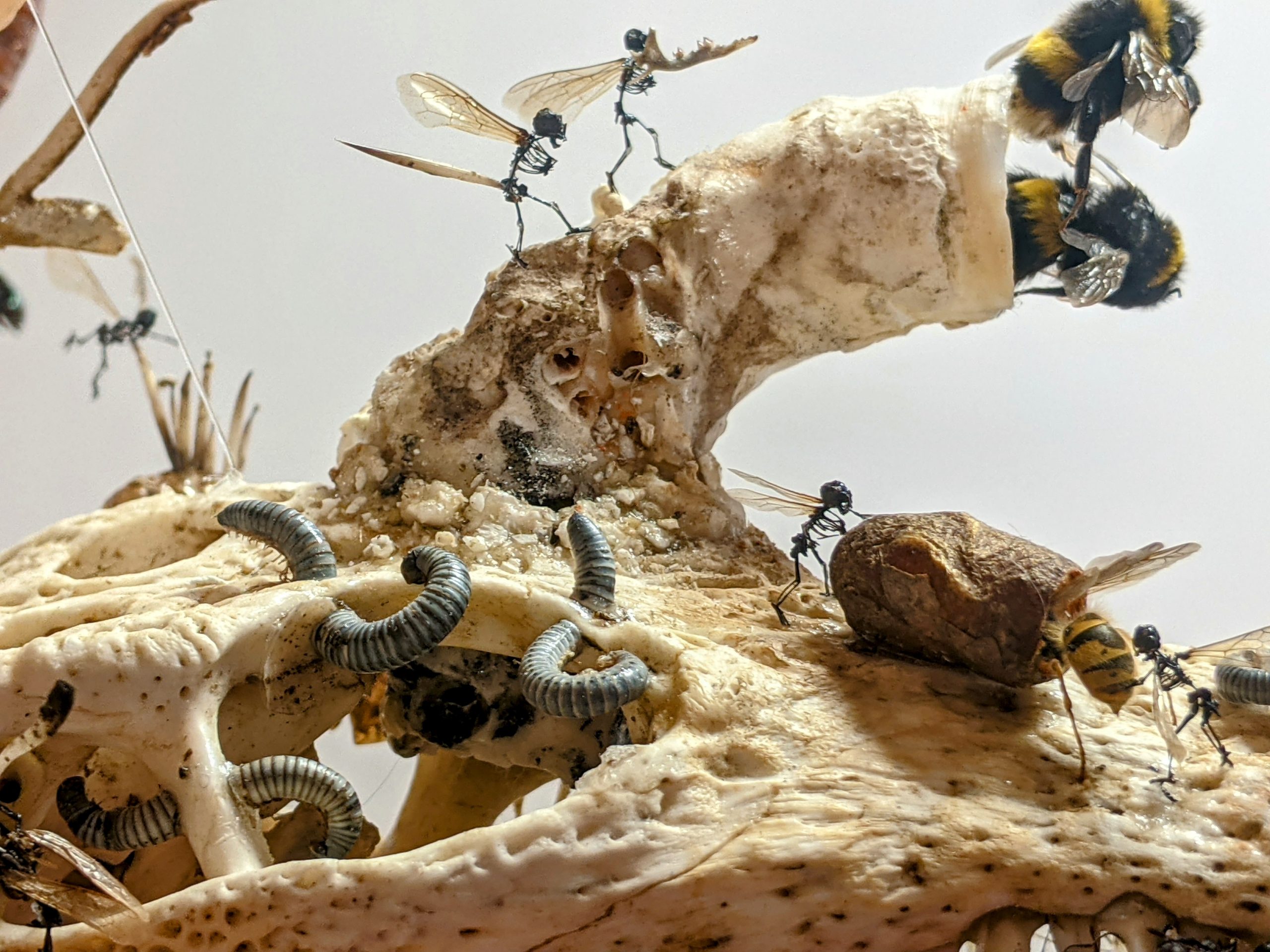
Otherworlds: Psychedelics and Exceptional Human Experiences – Dr. David Luke

This zoom talk is a psychonautic scientific trip to the weirdest outposts of the psychedelic terrain, inhaling anything and everything relevant from psychology, psychiatry, parapsychology, anthropology, neuroscience, ethnobotany, ethnopharmacology, biochemistry, religious studies, cultural history, shamanism and the occult along the way.

This talk is a psychonautic scientific trip to the weirdest outposts of the psychedelic terrain, inhaling anything and everything relevant from psychology, psychiatry, parapsychology, anthropology, neuroscience, ethnobotany, ethnopharmacology, biochemistry, religious studies, cultural history, shamanism and the occult along the way. Staring the strange straight in the third eye this eclectic collection of otherworldly entheogenic research provides a ragtaglledy scientific exploration of syanaesthesia, extra-dimensional percepts, inter-species communication, eco-consciousness, mediumship, possession, entity encounters, near-death and out-of-body experiences, psi, alien abduction experiences and lycanthropy. Essentially, its everything you ever wanted to know about weird psychedelic experiences, but were too afraid to ask…

Dr David Luke is Associate Professor of Psychology at the University of Greenwich, UK, where he has been teaching an undergraduate course on the Psychology of Exceptional Human Experience since 2009, and he is also Honorary Senior Lecturer at the Centre for Psychedelic Research, Imperial College London, and Lecturer on the MSc Consciousness, Spirituality and Transpersonal Psychology for Alef Trust and Liverpool John Moores University. His research focuses on transpersonal experiences, anomalous phenomena and altered states of consciousness, especially via psychedelics, having published more than 100 academic papers in this area, including ten books, most recently Otherworlds: Psychedelics and Exceptional Human Experience (2nd ed., 2019). When he is not running clinical drug trials with LSD, conducting DMT field experiments or observing apparent weather control with Mexican shamans he directs the Ecology, Cosmos and Consciousness salon at the Institute of Ecotechnics, London, and is a cofounder and director of Breaking Convention: International Conference on Psychedelic Consciousness. He has given over 300 invited public lectures and conference presentations; won teaching, research and writing awards; organised numerous festivals, conferences, symposia, seminars, retreats, expeditions, pagan cabarets and pilgrimages; and has studied techniques of consciousness alteration from South America to India, from the perspective of scientists, shamans and Shivaites. He lives life on the edge, of Sussex.

Watch a recording of This Lecture, & 100s of others, for free when you join our Patreon www.patreon.com/theviktorwyndmuseum
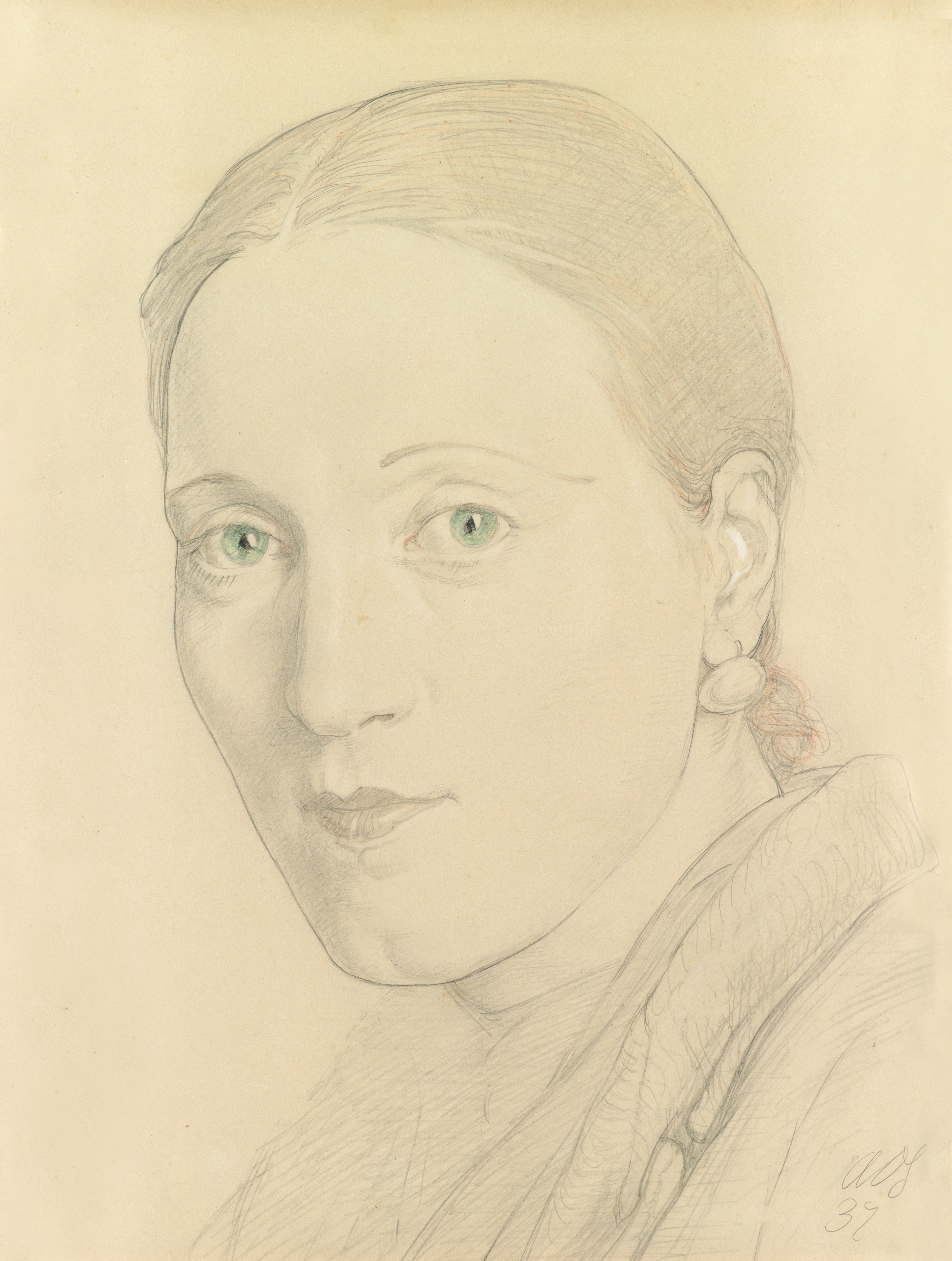
Deanna Petherbridge on Witches & Wicked Bodies: An Illustrated Zoom Lecture

The presentation Witches & Wicked Bodies provides a rich survey of images of European witchcraft from the ancient world to the present day. Witches, even in biblical and classical times were predominantly women and the misogynistic narratives of their wickedness and lewdness propounded by clerics in books such as the Malleus Maleficarum (Hammer of Witches),1486 resulted in enduring stereotypes that were imaginatively re-invented by artists over the centuries. Unlike the disturbing historical accounts of witchcraft and the cruel punishments of the accused by burning and drowning, the visual images of prints and paintings are horrific and mysterious, but also sexually titillating, bizarre and often ribald. They range from hideous and jealous old crones devouring babies or wreaking destructive havoc through storms and fire to beautiful nude witches flaunting their sexuality and bewitching men, or, together with their hideous ancient mentors, stirring cauldrons of potions made from the fat of dead infants and flying up chimneys on broomsticks to participate in black masses and sex with devils. Historical artworks presented female witchcraft as a dangerous inversion of the patriarchal and religious world order, but contemporary artists have challenged these assumptions.

Deanna Petherbridge CBE is an artist, writer and curator. Her practice is drawing-based (predominantly pen and ink drawings on paper), although she has also produced large-scale murals and designed for the theatre. Her publications in the area of art and architecture are concerned with contemporary as well as historical matters and she has concentrated on writing about and promoting drawing. The Primacy of Drawing: Histories and Theories of Practice, 2010 followed years of teaching and is hailed as a seminal text for practitioners and the general public. Her curated exhibitions include The Quick and the Dead: Artists and Anatomy, 1997, Witches and Wicked Bodies, 2013, Artists at Work, 2018. She celebrated a retrospective exhibition of her drawings at the Whitworth Art Gallery, University of Manchester (2016-2017) accompanied by the monograph Deanna Petherbridge: Drawing and Dialogue, 2016. Her recent drawings are concerned with the stirring social issues of the times, including war and forced migration, environmental destruction and the pandemic. Her large-scale triptych The Destruction of the City of Homs, 2016 was on display at Tate Britain during 2019 – 2020.

Image: Henry Fuseli (1741-1825), The Night-Hag Visiting Lapland Witches (detail), 1796, oil on canvas, The Metropolitan Museum of Art, New York

Freud’s Pandemics: A Live Zoom Lecture with Professor Brett Kahr

Sigmund Freud died in the autumn of 1939, literally eighty years before the outbreak of the current coronavirus pandemic.

Although Freud did not have to navigate this chilling global crisis, he did survive the First World War, the so-called Spanish Flu, and, also, the deadly Nazi occupation of Austria. In consequence, he might well have had some important lessons to bequeath to us on how we might remain robust during these terrifying times.

In this special webinar, Professor Brett Kahr, a long-standing Trustee of Freud Museum London and author of several books on the father of psychoanalysis, will explore how Freud handled his own life-threatening challenges, how he remained creative and productive throughout illness and war, and how he forged a community of supporters who protected and enriched him and whom he supported likewise. Professor Kahr will also consider how Freud’s theories, especially those of the early 1920s – a full century ago – can help us to understand the widespread prevalence of denial and disavowal of the traumatic reality of our present-day lives.

Speaker: Professor Brett Kahr is Senior Fellow at the Tavistock Institute of Medical Psychology in London, as well as Visiting Professor of Psychoanalysis and Mental Health in the Regent’s School of Psychotherapy and Psychology at Regent’s University London. He also holds the post of Visiting Professor in the Faculty of Media and Communication at Bournemouth University, linked to the Centre for the Study of Conflict, Emotion and Social Justice. Kahr first worked at the Freud Museum back in 1986, and, subsequently, he became one of the museum’s Trustees. His books include Life Lessons from Freud; Coffee with Freud; and, most recently, Dangerous Lunatics: Trauma, Criminality, and Forensic Psychotherapy (newly released by Confer Books). He is currently completing an intellectual biography of Freud for the “Routledge Historical Biographies” series.

Image: Salvador Dalí, Metamorphosis of Narcissus (detail), 1937

The Philosophy of Monsters: An Illustrated Lecture by Dr Stephen Asma

The category “monster” disrupts the borders and boundaries of what we consider natural, normal, and even intelligible. Our rational systems of order are upended by the monstrous. In this lecture Dr. Asma will examine the role of monsters in cognition and knowledge, the ethical and political uses of monstrosity, the relation to personal identity, and the problem of evil. A philosophical “monsterology” is committed to the idea that we can better understand the human condition by examining what scares us–what makes us vulnerable.

Speaker: Stephen Asma is Professor of Philosophy at Columbia College Chicago, where he is a Senior Fellow of the Research Group in Mind, Science and Culture. Asma is the author of ten books, including The Emotional Mind: Affective Roots of Culture and Cognition (Harvard Univ. Press, April 2019), Why We Need Religion (Oxford Univ. Press, 2018), The Evolution of Imagination (Univ. of Chicago, 2017), On Monsters: An Unnatural History of Our Worst Fears (Oxford Univ. Press, 2009) and The Gods Drink Whiskey (HarperOne, 2005). He writes regularly for the New York Times, the Chronicle of Higher Education, and Aeon magazine.

These are extraordinary times and the plague has hit some harder than others, tickets are by donation – if you possibly can £10 is much appreciated, but £2 is also much appreciated. Thank you for your support.

Watch a recording of This Lecture, & 100s of others, for free when you join our Patreon www.patreon.com/theviktorwyndmuseum
Mike Jay on Mescaline & Art – Zoom Lecture

Mike Jay is the author of Mescaline – a Global History  – A definitive history of mescaline that explores its mind-altering effects across cultures, from ancient America to Western modernity.

Mescaline became a popular sensation in the mid-twentieth century through Aldous Huxley’s The Doors of Perception, after which the word ‘psychedelic’ was coined to describe it. Its story, however, extends deep into prehistory: the earliest Andean cultures depicted mescaline-containing cacti in their temples.

Mescaline was isolated in 1897 from the peyote cactus, first encountered by Europeans during the Spanish conquest of Mexico. During the twentieth century it was used by psychologists investigating the secrets of consciousness, spiritual seekers from Aleister Crowley to the president of the Church of Jesus Christ of Latter-day Saints, artists exploring the creative process, and psychiatrists looking to cure schizophrenia. Meanwhile peyote played a vital role in preserving and shaping Native American identity. Drawing on botany, pharmacology, ethnography, and the mind sciences and examining the mescaline experiences of figures from William James to Walter Benjamin to Hunter S. Thompson, this is an enthralling narrative of mescaline’s many lives

Mike Jay has written widely on the history of science and medicine, and particularly on the discovery of psychoactive drugs during the 18th and 19th centuries. His books on the subject include Emperors of Dreams: drugs in the nineteenth century (2000, revised edition 2011) and most recently High Society: mind-altering drugs in history and culture (2010), which accompanied the exhibition he curated at Wellcome Collection in London. The Atmosphere of Heaven is also the third book in his series of biographical narratives of political reformers in 1790s Britain. It follows The Air Loom Gang (2003, revised edition forthcoming 2012) and The Unfortunate Colonel Despard (2004).

Watch a recording of This Lecture, & 100s of others, for free when you join our Patreon www.patreon.com/theviktorwyndmuseum
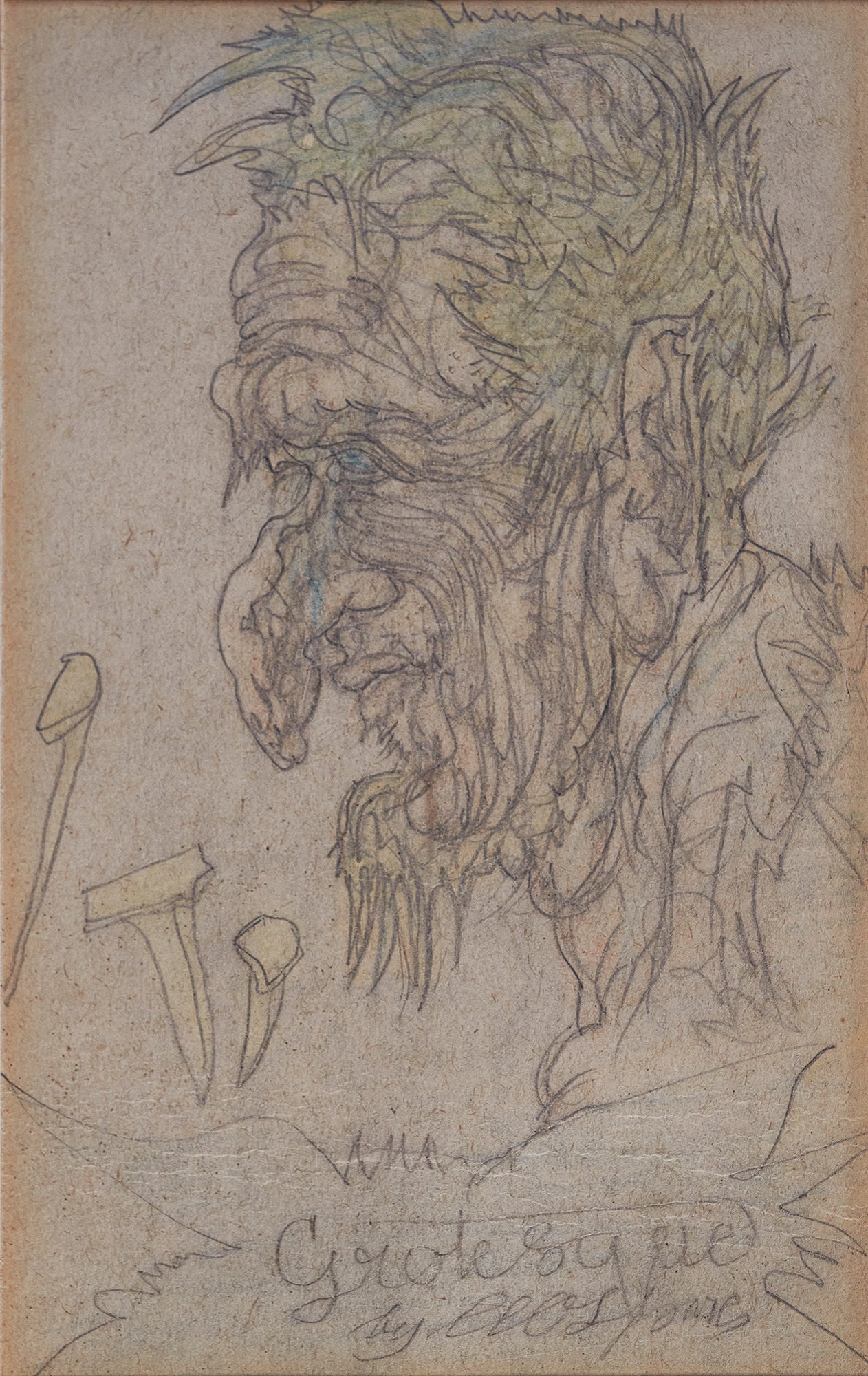
Transformation and Identity in Austin Osman Spare by Michael Staley by zoom

Transmitting the Sacred Fire:

Transformation and Identity in Austin Osman Spare

There is a fervent, compelling mystical and magical vision, first articulated in The Book of Pleasure and subsequently developed throughout his work, which burns at the heart of many of Spare’s drawings and paintings. In this illustrated talk, Michael Staley discusses Spare’s vision with particular reference to a number of pictures which communicate it especially clearly, whilst also drawing upon Spare’s written work and in particular on the mature writings of his from the late 1940s and the 1950s which were published many years later by Kenneth and Steffi Grant in Zos Speaks!

Michael Staley lives in north-west London, and has been immersed in Spare’s work for many years now. In 2011 he published two early bookworks by Spare as Two Grimoires, and is planning the future publication of a number of Spare’s sketchbooks from the 1950s. Michael has a life-long interest in the occult, and is particularly interested in how Spare’s work resonates with other mystical and magical traditions

Britain’s Pagan Heritage With Professor Ronald Hutton

Britain can claim to possess the richest and most diverse collection of physical remains left by pre-Christian religions in any part of Europe, including Celtic, Roman, Germanic and Scandinavian pantheons of goddesses and gods, with others from all over the Roman Empire, and five successive ages of outstanding prehistoric monuments. Ronald Hutton invites you to join him for an evening to be spent looking at these remains and posing the question of how far it is possible to recover the beliefs which inspired their creation. He will propose his own answer to this, and then considers the implications of it in two special case studies, of the most famous prehistoric monument in the world, Stonehenge, and the most carefully studied ancient human body to be found in Britain, the so-called Lindow Man. It will end by asking what the best relationship between professional archaeologists and historians specialising in the subject, and everybody else interested in it, might be in the new century.

Professor Ronald Hutton is a Professor of History at the University of Bristol. He is a leading authority on history of the British Isles in the sixteenth and seventeenth centuries, on ancient and medieval paganism and magic, and on the global context of witchcraft beliefs.

Me and My Shadow: Sympathy with the Devil in Folk Tradition – Jeremy Harte

Making friends with the Devil may sound like a high-risk strategy, but the dark one couldend up being good company – at least for a while. Working together, he’d help his partner magician do good deeds, channel rivers and create new highways. It must be true, because you can still see the works of the Devil in the landscape to this day…

Just as often, however, the two unlikely companions would fall into competitive bickering, matching their strength in simple games and their wit in commercial bets – storytellers loved to create new ways in which an ingenious mortal could get one over on his uncanny friend.

How did rural tradition create these rollicking tales of toxic buddies out of the much darker lore of ceremonial magic? Hell threatens anyone who accepts the Devil’s favour, but this terrible threat is always wriggled out of by a trick condition, a clever wife, or a disintegrating strand of sand rope. Even at the very end, when relations are about to turn nasty, the folk magician finds a burial place that will save him from damnation. (Faustus, on the other hand, was not so lucky.)

The folk Devil is an inconsistent character – frightful and wicked, but also silly, combative, vengeful and vain. It seems that Devil lore was transformed by the English peasantry, an eschatologically insubordinate class who listened to everything preached at them by the holy and the learned, but only heard the parts that fitted their world view. This way of seeing things was much less fearsome than that of the occultists, and much more forgiving than that of the Church…

Jeremy Harte is a researcher into folklore and archaeology, with a particular interest in landscape legends and tales of encounters with other worlds. His book Cloven Country: The Devil and the English Landscape will be published by Reaktion at Halloween this year. Previous books include Explore Fairy Traditions, which won the Katharine Briggs award of the Folklore Society, Cuckoo Pounds and Singing Barrows, and The Green Man. In 2006 he was elected to the Committee of the Folklore Society and has subsequently organised the Society’s Legendary Weekends. Since the foundation of the journal Time & Mind, he has been Reviews Editor. He is curator of Bourne Hall Museum in Surrey.

Your host for this event will be the writer Edward Parnell, author of Ghostland: In Search of a Haunted Country. Edward Parnell lives in Norfolk and has an MA in Creative Writing from the University of East Anglia. He is the recipient of an Escalator Award from the National Centre for Writing and a Winston Churchill Travelling Fellowship. Ghostland (William Collins, 2019), a work of narrative non-fiction, is a moving exploration of what has haunted our writers and artists – as well as the author’s own haunted past; it was shortlisted for the PEN Ackerley 2020 prize, an award given to a literary autobiography of excellence. Edward’s first novel The Listeners (2014), won the Rethink New Novels Prize. For further info see: https://edwardparnell.com

[Image: A man in prison praying to the devil to have him released. Etching by D. Stoop. Credit: Wellcome Collection.]