The Great God Pan – Robin Herne

The Great God Pan

An introduction to the mythology of the Greek deity Pan and how the goat-foot god has cast his influence into art, literature and popular culture to this very day. This talk will reflect on the Victorian and Edwardian fascination with Pan and his appearance in the stories of Saki, Grahame, Benson, Machen and others. To most of the ancients, Pan was a minor rural god beloved of shepherds and rustics, but to the mystics of the Orphic Cultus he was the supreme being, embodiment of all things. The changing views of Pan will be considered along with ways in which he can be understood by modern Jungian theorists.

Bio

Robin Herne is the author of a number of books on pagan and esoteric subjects, including “Pantheon – the Egyptians” (published by Moon Books) which explores the realm of Kemetic mythology. He lives in East Anglia and regularly lectures on a wide variety of topics both academic and spiritual. He enjoys painting, poetry, baking, history, and is owned by a malamute.

don’t worry if you miss it – we will send you a recording valid for two weeks the next day

The Mythology of Wolves – Robin Herne

The Mythology of Wolves

An overview of some key mythological and esoteric traditions about wolves from around the world. How have we come to understand this mysterious, elusive beast – sometimes demonised as a fearsome predator and sometimes romanticised as the very spirit of the wild itself? This talk will consider Norse, Celtic, Greek and Roman views of the wolf and how they have shaped the ways we think about these beautiful creatures today. Robin Herne’s latest book, “The Magic of Wolves” from Moon Books, explores a wide range of lupine folklore and mythological traditions from the ancient world through to modern cinematic and literary understandings.

Bio

Robin Herne is the author of a number of books on pagan and esoteric subjects, including “Pantheon – the Egyptians” (published by Moon Books) which explores the realm of Kemetic mythology. He lives in East Anglia and regularly lectures on a wide variety of topics both academic and spiritual. He enjoys painting, poetry, baking, history, and is owned by a malamute.

don’t worry if you miss it – we will send you a recording valid for two weeks the next day

The Magicians of the Golden Dawn – Professor Ronald Hutton – Zoom Lecture

The Magicians of the Golden Dawn

At the greatest of their seasonal festivals, the Spring Equinox, this is a fit time to consider the most celebrated order of ceremonial magicians in the history of the world, which established the template for most modern ritual magic. The group also contained some of the most vivid characters in the story of that magic, including Samuel Mathers, William Butler Yeats, Arthur Waite and Aleister Crowley. The talk will take a fresh look at how the Hermetic Order of the Golden Dawn was founded, who inspired and led it, and how its rituals were developed. It will examine the complex and controversial place of religion in the order, and the relationship between paganism and Christianity in it. Finally, it will deal with the dramatic and traumatic end of the order and consider its legacy.

Speaker: Professor Ronald Hutton is a Professor of History at the University of Bristol. He is a leading authority on history of the British Isles in the sixteenth and seventeenth centuries, on ancient and medieval paganism and magic, and on the global context of witchcraft beliefs.

Watch a recording of This Lecture, & 100s of others, for free when you join our Patreon 

Antone Minard: The Mari Lwyd: Death, Beer, and Poetry in Victorian Wales

Antone Minard: The Mari Lwyd: Death, Beer, and Poetry in Victorian Wales

The Mari Lwyd is a distinctively South Welsh tradition where guisers lead a figure made from the skull of a horse, challenging for their right to enter. Once moribund, the tradition has revived and become a popular symbol of Welsh culture. While the individual ingredients in the ritual are not unique to Wales, the combination of elements does reveal distinctively Welsh ideas about the natural world and humanity’s relationship to it. This talk will discuss the nineteenth-century evidence for the Mari Lwyd and its parallels elsewhere in Welsh tradition and the ritual’s meaning in traditional Wales.

Bio

Antone Minard holds a PhD in Folklore and Mythology, specializing in Welsh and Breton Folklore. He currently teaches Latin and Mythology at the University of British Columbia in Vancouver, and researches the intersection between the supernatural, cultural world and the natural world of plants and animals.

Curated and Hosted by Dr Amy Hale

Dr Amy Hale is an Atlanta based writer, curator and critic, ethnographer and folklorist speaking and writing about esoteric history, art, culture, women and Cornwall. She is the author of Ithell Colquhoun: Genius of the Fern Loved Gully (Strange Attractor 2020) and is currently working on several Colquhoun related manuscripts. She is also the editor of Essays on Women in Western Esotericism: Beyond Seeresses and Sea Priestesses (Palgrave 2022). She has contributed gallery texts and essays for a number of institutions including Tate, Camden Arts Centre, Art UK, Arusha Galleries, Heavenly Records and she is a curator and host for the Last Tuesday Society lecture series.

don’t worry if you miss it – we will send you a recording valid for two weeks the next day
ESPECIALLY DANGEROUS – The Story of The Snowshill Collection at the Museum of Witchcraft, Boscastle – Mark Hewitt

ESPECIALLY DANGEROUS – The Story of The Snowshill Collection at the Museum of Witchcraft, Boscastle

In the years before his death, the arts and crafts inspired architect, artist and collector Charles Paget Wade bequeathed both his lovingly restored Cotswold home, Snowshill Manor, and his collection of hand-crafted objects sourced from near and far to the National Trust. On his passing in 1956, the Trust approached Cecil Williamson, owner of the Museum of Witchcraft – then located in nearby Bourton-on-the-Water – to investigate a small attic space within Snowshill known as ‘the Witches Garret’. This tiny room housed Wade’s collection of items relating to witchcraft and the occult, which Williamson determined to be ‘especially dangerous’. Despite claiming to have burnt the items he removed from Snowshill, Williamson in fact did something altogether very different with them. Join Mark Hewitt who will delve into the personalities of both Wade and Williamson as well as exploring the tangled journey this collection has been on, examining why it is indeed an especially dangerous group of objects and the impact this collection may yet have on wider culture.

don’t worry if you miss it – we will send you a recording valid for two weeks the next day

Bio

Mark Hewitt is originally from Coventry, but lives and works in Chester, England. He has a degree in International History and has held a lifelong passion for the subject. Having been exposed to the supernatural documentary writing of Peter Underwood at a young age, it was not long before the subject of occultism became another perennial interest, blossoming into an eclectic magical practice informed by both early modern and contemporary methodologies. He is currently the custodian of the Chester Occult Society and has been published in both The Cauldron and the Enquiring Eye. His book ‘Especially Dangerous: Charles Paget Wade, Cecil Williamson and the Snowshill Collection’ is due to be published by Troy Books.

Curated and Hosted by Dr Louise Fenton

Dr Louise Fenton is a senior lecturer at the University of Wolverhampton and a cultural and social historian and anthropologist. She teaches contextual studies in the School of Art and supervises PhD students; she is also an artist and illustrator and uses drawing within her research. Dr Fenton has been researching West African Vodoun, Haitian Vodou, New Orleans Voodoo and Witchcraft, especially curses and cursed objects for many years. She has appeared on the BBC Radio 4 programme, ‘Beyond Belief’ and is a consultant on a new drama for BBC 3.

An introduction to Thelemic Magick Workshop – Julian Vayne

An introduction to Thelemic Magick Workshop

2 week online workshop

19th & 26th March 2024 – 8:00- 9:30 pm GMT

Julian Vayne leads a two part workshop exploring the theory and practice of Crowley’s occultism. Participants will learn about the cultural context in which his approach called ‘Thelema’ developed, and will have the opportunity to try some of the accessible and powerful practices grounded in that tradition. Participants will learn about the ancient Egyptian deities that populate the Crowleyian cosmology, the methods of mediation and mind-control that Crowley suggested, and his approaches to contacting spirits including the Holy Guardian Angel. We’ll also see how Crowley’s work influenced modern esoteric systems ranging from Wicca to neo-Tantra and beyond. These workshops are be suitable for neophytes but may also offer experienced magi a new perspective on Crowley’s system.

don’t worry if you miss it – we will send you a recording valid for two weeks the next day
Bio:

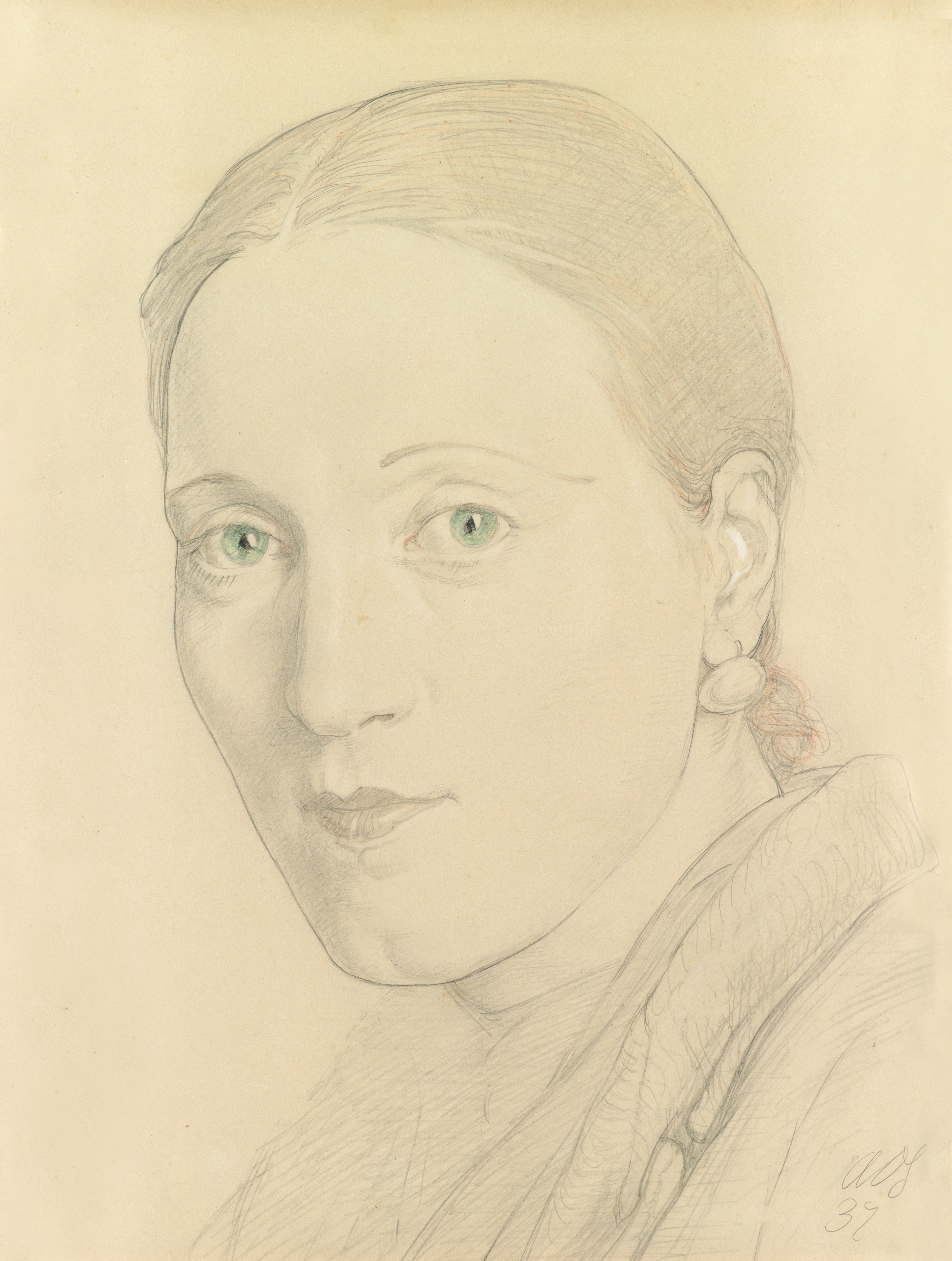
Julian Vayne is a British independent scholar and author with over four decades of experience within esoteric culture: from Druidry to Chaos Magic, from indigenous Shamanism through to Freemasonry and Witchcraft.

Growing up in the Britain of punk and then rave culture Julian immersed himself in the philosophy and techniques of magic. His journey into group ritual practice began within the Western Esoteric Tradition when he was 16. Since then he has worked in ceremony with practitioners from many different lands and lineages. Julian is a senior member of the Magical Pact of the Illuminates of Thanateros and widely recognized as one of Britain’s leading occultists.

The Beastly Prophet: Aleister Crowley and Thelemic Magick – Julian Vayne

The Beastly Prophet: Aleister Crowley and Thelemic Magick

Join Julian Vayne for this informed and accessible deep dive into the story of the most notorious occultist of the 20th century. Discover the backstory of Crowley the man, his role as prophet of a new age, and how his approach to ‘magick’ continues to influence occulture today. Ground breaking and maddening in equal measure, Crowley was an accomplished mounteer, poet, chess player as well as philosopher, prolific writer and founder of a new religion. This lecture will set Crowley in his historical context, trace his influences through later 20th century popular culture and beyond, as well as providing a clear introduction to his esoteric teachings.

don’t worry if you miss it – we will send you a recording valid for two weeks the next day
Bio

Julian Vayne is a British independent scholar and author with over four decades of experience within esoteric culture: from Druidry to Chaos Magic, from indigenous Shamanism through to Freemasonry and Witchcraft.

Growing up in the Britain of punk and then rave culture Julian immersed himself in the philosophy and techniques of magic. His journey into group ritual practice began within the Western Esoteric Tradition when he was 16. Since then he has worked in ceremony with practitioners from many different lands and lineages. Julian is a senior member of the Magical Pact of the Illuminates of Thanateros and widely recognized as one of Britain’s leading occultists.

“Colors are Forces, the Signatures of the Forces”: Esoteric Theories of Color and Modern Art – Dr Amy Hale

“Colors are Forces, the Signatures of the Forces”: Esoteric Theories of Color and Modern Art

This lecture will explore the ways that esoteric understandings of color as an entity and force developed through Neoplatonic thought, Renaissance magic, the earliest sciences of optics and into modern esoteric and occult theory and practice. I will look at the role of color in the Hermetic Order of the Golden Dawn, Theosophy and the work of Rudolph Steiner, perhaps providing greater insight into artists such as Hilma af Klint, Ithell Colquhoun, Ethel Le Rossignol and others who clearly saw color in a way that went far beyond symbol.

Bio:

Dr. Amy Hale is an Atlanta based writer, curator and critic. She has a PhD in Folklore and Mythology from UCLA and has written about topics as diverse as psychogeography, occult performance art, Pagan religious tourism, color theory, and extremist politics in modern Paganism. She has written widely on artist and occultist Ithell Colquhoun, notably the biography Ithell Colquhoun: Genius of the Fern Loved Gully (Strange Attractor 2020) and is currently editing a selection of Colquhoun’s esoteric essays for Strange Attractor (2024) and an edition of Colquhoun’s erotic art and sex magic for Tate Publishing (December, 2023). She is the editor of Essays on Women in Western Esotericism: Beyond Seeresses and Sea Priestesses (Palgrave 2022) and has contributed essays for Tate, Ignota Press, Burlington Contemporary, Correspondences Journal, Camden Arts Centre, Art UK, Arusha Galleries, Heavenly Records and Spike Island, Bristol. She is currently a curator and host for the internationally loved Viktor Wynd’s Last Tuesday Society lecture series and is an Honorary Research Fellow with Falmouth University in Cornwall.

Watch a recording of This Lecture, & 100s of others, for free when you join our Patreon 

Gog and Magog: the Giants in Guildhall – Zoom lecture with John Clark

John Clark, formerly curator of the medieval collections at the Museum of London, investigates the origins and significance of the two figures of giants, known as Gog and Magog, that stand in the medieval Guildhall in the City of London.

In recent years, London’s Lord Mayor’s Show each November has included two large figures made of basketwork, representing heavily-armed giants. They carry pennants with the names Gog and Magog. In the City’s medieval Guildhall there are two massive carved wooden statues of the same pair of giants, made in 1953 to replace earlier figures destroyed in the Blitz in December 1940. And two giants had welcomed Queen Elizabeth I on a visit to the City in 1559. But who were Gog and Magog, and how did they come to be regarded as symbols and guardians of London?

Our story begins in the 1130s, when Geoffrey of Monmouth wrote a fraudulent ‘History of the Kings of Britain’, which tells how Trojan settlers, fleeing after the destruction of Troy by the Greeks, arrived in an island then called Albion, and found it inhabited by giants, whose leader was ‘Goemagog’…

John Clark, for many years curator of the medieval collections at the Museum of London, has long been interested in byways of medieval history, and in particular the way ‘real’ history relates to and interacts with legends and folklore. He has a book in preparation on the subject of his previous lecture, which has the working title: The Green Children of Woolpit: Strangers in a Strange Land.

Your curator and host for this event will be the writer Edward Parnell, author of Ghostland: In Search of a Haunted Country. Edward lives in Norfolk and has an MA in Creative Writing from the University of East Anglia. He is the recipient of an Escalator Award from the National Centre for Writing and a Winston Churchill Travelling Fellowship. Ghostland (William Collins, 2019), a work of narrative non-fiction, is a moving exploration of what has haunted our writers and artists – as well as the author’s own haunted past; it was shortlisted for the PEN Ackerley 2020 prize, an award given to a literary autobiography of excellence. Edward’s folklore-strewn first novel The Listeners (2014), won the Rethink New Novels Prize. For further info see: https://edwardparnell.com

Don’t worry if you miss or can’t attend the event live on the night – the next day we will send ticketholders a recording that will be valid for two weeks.

[Image: the two statues of Gog and Magog in London’s Guildhall.]

Fashion in Folk Horror – Sacrificial Maidens and Ritual Robes – Prof Catherine Spooner

Fashion in Folk Horror – Sacrificial Maidens and Ritual Robes

One of the most striking features of Ari Aster’s 2019 folk horror film Midsommar is its costumes: the embroidered white robes worn by its secluded community, the Harga.

The white dress has a long history within folk horror. White dresses feature prominently in classic folk horror films The Blood on Satan’s Claw (Piers Haggard, 1971) and The Wicker Man (Robin Hardy, 1973) and are one of the most striking features of Australian folk horror Picnic at Hanging Rock (Peter Weir, 1975). This visual motif is closely associated with traditional May Day festivities, as well as with the imagery of high ritual magic. However, it also comes from a more commercial source: in the early1970s, peasant smocks and faux-Edwardian white dresses were the height of fashion.This fashion traded on images of idealised pastoral femininity and rural nostalgia that folk horror characteristically disrupts.

Drawing on images from 1970s fashion magazines, this talk traces the uneasy relationship between fashion and folk horror. It shows how the costumes of folk horror films enabled the critique of idealised pastoral femininity and rural nostalgia even as they provided a language and imagery that informed fashion editorial and advertising of the time. Finally, the talk draws parallels between the fashions of the 1970s and the way that the ‘cottagecore’ trend accompanies a new wave of folk horror films in the twenty-first century.

Bio:

Catherine Spooner is Professor of Literature and Culture at Lancaster University. She has published widely on Gothic in Victorian and contemporary literature, film and popular culture, with a particular emphasis on fashion. Her seven books include Fashioning Gothic Bodies, Contemporary Gothic and Post-millennial Gothic: Comedy, Romance and the Rise of Happy Gothic, which was awarded the 2019 Allan Lloyd Smith Memorial Prize. Her most recent book, The Cambridge History of the Gothic Volume 3:

The Twentieth and Twenty-first Centuries, co-edited with Dale Townshend, was published in September 2021. She is currently writing a book on the cultural history of the white dress, to be published by Bloomsbury in 2024, and a folk horror novel set in Lancashire.

Curated and Hosted by

Dr. Amy Hale is an Atlanta based writer, curator and critic, ethnographer and folklorist speaking and writing about esoteric history, art, culture, women and Cornwall. She is the author of Ithell Colquhoun: Genius of the Fern Loved Gully (Strange Attractor 2020) and is currently working on several Colquhoun related manuscripts. She is also the editor of Essays on Women in Western Esotericism: Beyond Seeresses and Sea Priestesses (Palgrave 2022). She has contributed gallery texts and essays for a number of institutions including Tate, Camden Arts Centre, Art UK, Arusha Galleries, Heavenly Records and she is a curator and host for the Last Tuesday Society lecture series.

don’t worry if you miss it – we will send you a recording valid for two weeks the next day