There is Death in the Pot – Lena Heide-Brennand – Zoom

There is Death in the Pot

Join us for an exhilarating lecture exploring Frederick Accum’s groundbreaking work, “There is Death in the Pot,” a pivotal text from the 1800s that unearths the shocking truths about food safety and the dangers lurking in our diets. Delve into Accum’s daring investigation into food adulteration, revealing how common substances were manipulated to deceive consumers and endanger public health. This lecture will take you on a journey through the historical context of food science, the rise of consumer awareness, and the implications of Accum’s findings on modern food legislation. With engaging discussions and thought-provoking insights, discover how Accum’s legacy continues to resonate in today’s culinary world. Don’t miss this chance to gain a deeper understanding of a topic that is as relevant now as it was over two centuries ago!

Bio:

Lena Schattenherz Heide-Brennand is a Norwegian lecturer with a master degree in language, culture and literature from the University of Oslo and Linnaeus University. She has been lecturing and teaching various subjects since 1998. Her field of interest and main focus has always been topics that others have considered strange, eccentric and eerie, and she has specialised in a variety of dark subjects linked to folklore, mythology and Victorian traditions and medicine. Her students often point out her thorough knowledge about the subjects she is teaching, in addition to her charismatic appearance. She refers to herself as a performance lecturer and always gives her audience an outstanding experience

don’t worry if you miss it – we will send you a recording valid for two weeks the next day
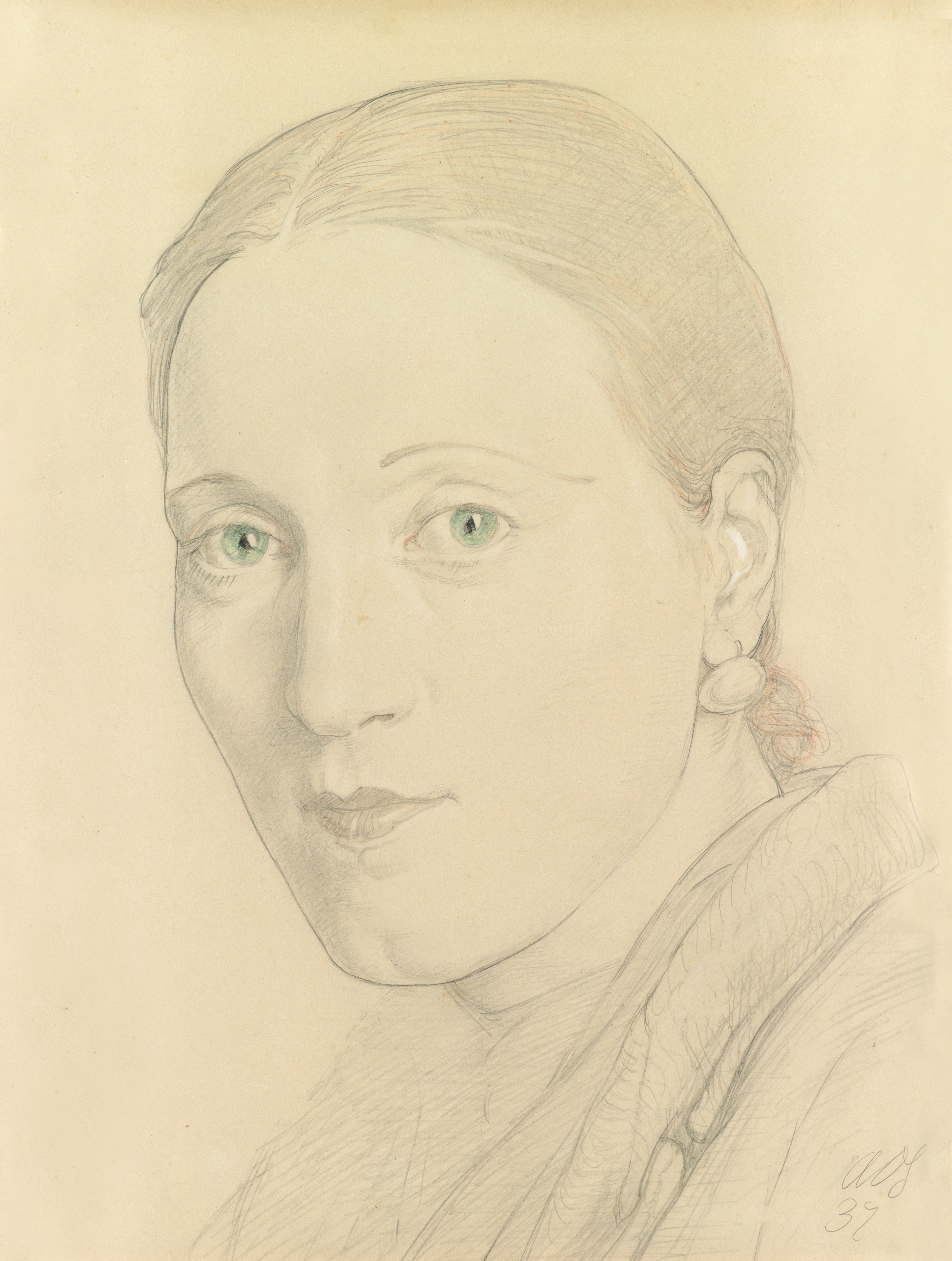
How Alex Comfort Discovered the “Joy of Sex” – Eric Laursen

How Alex Comfort Discovered the “Joy of Sex”

In 1972, Dr. Alex Comfort authored the international bestseller that revolutionized the ancient genre of the sex manual—the culmination of a quarter-century writing and advocating for greater sexual freedom. But his career encompassed much more, as a pioneering gerontologist and geriatrician, a poet, novelist, and critic, anarchist and pacifist, and one of Britain’s leading public intellectuals and controversialists of the postwar decades.How did it all fit together?Eric Laursen, author of the new biography Polymath, will explore the roots of Alex Comfort’s achievement, from social medicine and scientific positivism to the mystical poetry of William Blake and the speculations of the Renaissance alchemists to Vedic philosophy, quantum physics, and the “technology of the emotions.” All of these fields informed Comfort’s lifelong quest to fully understand the human. Along the way, we will trace the intersection of his anarchist politics and his radical new perspective on sexual identity and practice.

Bio:

Eric Laursen is a longtime activist, historian, and journalist, living in western Massachusetts. His previous books are The People’s Pension: The Struggle to Defend Asocial Security Since Reagan (2012), The Duty to Stand Aside: Nineteen Eighty-Four and the Wartime Quarrel of George Orwell and Alex Comfort (2018), and The Operating System: An Anarchist Theory of the Modern State (2021).

Curated & Hosted by

Marguerite Johnson is a cultural historian of the ancient Mediterranean, specialising in sexuality and gender, particularly in the poetry of Sappho, Catullus, and Ovid, as well as magical traditions in Greece, Rome, and the Near East. She also researches Classical Reception Studies, with a regular focus on Australia. In addition to ancient world studies, Marguerite is interested in sexual histories in modernity as well as magic in the west more broadly, especially the practices and art of Australian witch, Rosaleen Norton. She is Honorary Professor of Classics and Ancient History at The University of Queensland, and a Fellow of the Australian Academy of the Humanities.

don’t worry if you miss it – we will send you a recording valid for two weeks the next day

Ithell Colquhoun Between the Sacred and the Profane – Dr Amy Hale

Ithell Colquhoun Between the Sacred and the Profane

When it came to pushing people’s buttons, Ithell Colquhoun leaned right into it. In both her visual art and her writing Colquhoun confronted her audiences with images that are explicit, beautifully erotic and also repulsive, promoting encounters with the divine through transgression and the abject. The potential for public engagement with her bold ideas was clearly something Colquhoun valued.  On more than one occasion gallerists refused to hang a painting of hers that was considered to be too scandalous, and she would replace it with something just as juicy, as she was generally uncompromising about what she thought needed to be seen. Between 1939 and 1943 Colquhoun developed what appeared to have been a complex system of sex magic including images of queer desire and explicit diagrammatic depictions of sexual positions and women’s pleasure. Although until recently most of these images were never displayed there is no question that she intended for many of these quite radical pieces to have an audience. In her writings, Colquhoun depicted a variety of forbidden topics in a manner both horrific and coldly detached, including incest and a range of bodily functions and conditions. Her vignettes and prose poems referred to excreta, menstruation, skin conditions, scabs, open sores, and decay. While many of the more shocking pieces were never published for obvious reasons, the manuscript treatment of the drafts indicated her hopes that they would eventually be read.

This tantalizingly illustrated lecture will theorize Ithell Colquhoun’s tendency toward confrontation and taboo, the ways in which she challenged both her own boundaries and those of her imagined readers and viewers.  With influences ranging from Tantra, to surrealism, the occult and Bataille, Colquhoun embraced transgression to drive her own enlightenment and also to shift and elevate perceptions of what can be seen and experienced as holy.  In her words: “Life is not beautiful but it is rich: All must be accepted.”

Bio

Amy Hale is an Atlanta based writer and critic with a PhD in Folklore and Mythology from UCLA (1998). She has written widely on artist and occultist Ithell Colquhoun, and has been an academic advisor to the 2025 Colquhoun retrospective at Tate St. Ives and Tate Britain. She wrote the first scholarly biography of Colquhoun, Ithell Colquhoun: Genius of the Fern Loved Gully (Strange Attractor, 2020) followed by the collection Sex Magic: Diagrams of Love, (Tate Publishing, 2024), and the forthcoming A Walking Flame: Selected Magical Essays of Ithell Colquhoun (Strange Attractor 2025).  She is also the editor of the groundbreaking collection Essays on Women in Western Esotericism: Beyond Seeresses and Sea Priestesses (Palgrave 2022). She has written extensively on magic and contemporary art, and has written for Tate, Burlington Contemporary, Art UK, The Australian Centre for Contemporary Art, Correspondences Journal and other institutions. She is an Honorary Research Fellow with Falmouth University in Cornwall, a trustee of the UK Charity Rediscovering Art by Women (RAW) and a member of the British Art Network. Beyond the Supernatural: Magic in Contemporary Art is due to be published with Tate Publishing in 2026.


Dirty Ding: Keeper of The Forbidden Library – Christopher Josiffe – Zoom

Dr Eric Dingwall was a friend, associate, rival and occasional enemy of the more publicity-hungry Harry Price. Appointed Research Officer for the Society for Psychical Research in the 1920s, his ultra-sceptical stance frustrated and occasionally infuriated his SPR colleagues, but private communications tell a different story. More than one physical medium had impressed and mystified him with their displays of apparently fraud-proof and inexplicable phenomena in the séance room.

An intelligence officer during WW2, he was later appointed Honorary Assistant Curator of the British Museum’s Private Case, a sub rosa collection of pornographic and blasphemous literature. Dingwall was an acknowledged expert in this area, especially the former, and became an unofficial police consultant, assisting their investigation of crimes with unusual sexual or occult overtones.

This talk by librarian and author Christopher Josiffe (Gef! The Strange Tale of an Extra-Special Talking Mongoose) will shed light on a most secretive and intriguing character.

Don’t worry if you miss it – we will send you a recording valid for two weeks the next day.

The Cosmic Operas of Hindemith and Vivier – Meredith Michael – Zoom

The Cosmic Operas of Hindemith and Vivier 
In the aftermath of two world wars and countless other crises, musicians in the later 20th century who wished to re-awaken audiences to the music of the spheres sometimes turned to grand, large-scale works of music, like opera. This was true of composers Paul Hindemith and Claude Vivier, who both wrote “cosmic” operas featuring revolutionary astronomers as characters.

Hindemith’s “Die Harmonie der Welt” focuses on Johannes Kepler’s turbulent life, but includes hidden structures  that only become apparent at the end of the piece, when Kepler dies. Vivier’s “Kopernikus” casts Nicolaus Copernicus along with a myriad of other historical and fictional characters who perform an “opéra-rituel” meant to help the protagonist, Agni, transcend to a higher plane of existence. This presentation will explore these composers’ philosophies about the relationship between music and the cosmos, as well as how these operas attempt to align the listener with the order of the universe.

Meredith Michael is a musicologist who studies relationships between music and outer space. She has presented her work internationally on astronomers and musicians from Caroline Herschel to Gustav Holst, and she is currently finishing a dissertation on musical constructions of mythology in the 20th century. Meredith is also active in podcasting, working as a production assistant and occasional guest on the Weird Studies podcast , and producing her own podcast with Gabriel Lubell, Cosmophonia.

Don’t worry if you miss it – we will send you a recording valid for two weeks the next day.

The Devil’s Bargain – Ed Simon – Zoom

The figure of the mage is among the most alluring Renaissance characters. In plays from Marlowe’s Dr. Faustus to Shakespeare’s The Tempest, necromancers plumbed the depths of hermetic and occult knowledge to gain tremendous (and dangerous) power. Yet this figure wasn’t mere literary invention, for Renaissance humanism was attracted to subjects magical, and often these characters were based on real personages. In particular, Dr. Faust, the wizard who sold his soul to the Devil in exchange for knowledge and power, was drawn directly from the historical record, a mysterious and shadowy scholar who nonetheless endures in the countless permutations of his legend. In this lecture, join Dr. Ed Simon in a consideration of the “real” Dr. Faust.
Ed Simon is Public Humanities Special Faculty in the English Department of Carnegie Mellon University, the editor of The Pittsburgh Review of Books, and a staff writer for Literary Hub. A widely published writer, he is the author of over a dozen books, including Pandemonium: A Visual History of Demonology and Devil’s Contract: The History of the Faustian Bargain. 
don’t worry if you miss it – we will send you a recording valid for two weeks the next day

‘For All of Your Protection Needs’: The witch-bottle through history – Dr Ceri Houlbrook and Dr Julia Phillip

‘For All of Your Protection Needs’: The witch-bottle through history

Witch-bottles were used in the seventeenth century to counteract suspected bewitchment. Filled with nails, pins, and urine, and then buried, they were believed to harm the witch and lift the curse. Witch-bottles are still being made and used today – but for very different purposes. Clearly no tradition survives unbroken or unaltered, and customs surrounding the making of witch-bottles are no exception. Over the centuries, perceptions of witchcraft have changed greatly – and witch-bottles have adapted to these changes. This talk examines what happens to the witch-bottle between its first known appearance in the seventeenth century and its reimagining in contemporary Paganism.

Speakers’ Bios

Dr Ceri Houlbrook is a Senior Lecturer in Folklore and History at the University of Hertfordshire, and Programme Leader of the Folklore Studies MA. She is also a Council member of the Folklore Society and editor of its newsletter. Ceri is primarily interested in contemporary adaptations of historic customs and creations of folklore, having published books on coin-trees, love-locks, concealed objects, and witch-bottles. In 2023, Ceri published her debut novel, based on her archival research into letters to Father Christmas: Winter’s Wishfall, published by Bonnier Books.

Dr Julia Phillips is Hon Senior Research Associate at the University of Bristol. She received her PhD for her research examining how witches and witchcraft were featured in newspapers in Victorian Britain. Her primary research interests are the study of witchcraft in the nineteenth century and the development of modern pagan witchcraft in the twentieth century.

Recent publications:

Phillips, Julia. 2021. ‘Madeline Montalban: Magus of the Morning Star.’ In Essays on Women in Western Esotericism: Beyond Seeresses and Sea Priestesses, edited by Amy Hale, 229-254. Cham: Springer International Publishing.

Phillips, Julia. ‘The Museum of Witchcraft and Magic: Toward a New History of British Wicca.’ Magic, Ritual, and Witchcraft, vol. 16 no. 2, 2021, p. 173-200. Project MUSE, doi:10.1353/mrw.2021.0028.

Houlbrook, Ceri and Phillips, Julia. ‘For All of Your Protection Needs: Tracing the “witch-bottle” from the Early Modern Period to TikTok.’ Magic, Ritual, and Witchcraft (2023, volume 18.1).

Curated and Hosted by

Marguerite Johnson is a cultural historian of the ancient Mediterranean, specialising in sexuality and gender, particularly in the poetry of Sappho, Catullus, and Ovid, as well as magical traditions in Greece, Rome, and the Near East. She also researches Classical Reception Studies, with a regular focus on Australia. In addition to ancient world studies, Marguerite is interested in sexual histories in modernity as well as magic in the west more broadly, especially the practices and art of Australian witch, Rosaleen Norton. She is Honorary Professor of Classics and Ancient History at The University of Queensland, and a Fellow of the Australian Academy of the Humanities.

don’t worry if you miss it – we will send you a recording valid for two weeks the next day

Do You Believe in Fairies? Dr Simon Young’s Fairy Census – Zoom

Do You Believe in Fairies? Dr Simon Young’s Fairy Census

And it came to pass in those days, that there went out a decree from Oberon, that all the fairies should be counted…

In 2014 Simon Young began the Fairy Census, a project to collect two thousand fairy experiences. Now a decade later Young has published a thousand of these accounts and aims to reach two thousand by 2035. He has used the resulting database to study the people who see fairies. For instance, what age are fairy seers? Why are the fairies seen shrinking in size? Why are women more likely to see fairies than men? Why do driving and watching television seem to increase the likelihood of a fairy encounter? And what about the growing number of fairy wings? For this and many more fairy world problems and for thoughts on how we interact with the supernatural more generally tune in to see Simon speak about on the Fairy Census, 12 Jan 2025.

Bio

Dr Simon Young is a British folklore historian based in Italy. He has written extensively on the nineteenth-century supernatural. His book The Boggart (from Exeter University Press) and The Nail in the Skull and Other Victorian Urban Legends (from Mississippi University Press) came out in 2022. He is the editor of Exeter New Approaches to Legends, Folklore and Popular Legends and teaches history at UCEAP (Florence). Over the years he has run courses on the History of Christianity, Italian Food History, Italian Media History, Contemporary Italian History, the Second World War in Italy and Italian Renaissance History.

Articles listing: https://independent.academia.edu/SimonYoung43

Latest books: https://www.amazon.co.uk/Boggart-Folklore-History-Placenames-Approaches/dp/1905816901/ref

[Free downloadable source book, click ‘open access]: https://www.exeterpress.co.uk/en/Book/2114/The-Boggart-Sourcebook.html

Curated & Hosted by

Marguerite Johnson is a cultural historian of the ancient Mediterranean, specialising in sexuality and gender, particularly in the poetry of Sappho, Catullus, and Ovid, as well as magical traditions in Greece, Rome, and the Near East. She also researches Classical Reception Studies, with a regular focus on Australia. In addition to ancient world studies, Marguerite is interested in sexual histories in modernity as well as magic in the west more broadly, especially the practices and art of Australian witch, Rosaleen Norton. She is Honorary Professor of Classics and Ancient History at The University of Queensland, and a Fellow of the Australian Academy of the Humanities.

don’t worry if you miss it – we will send you a recording valid for two weeks the next day

The History of the Dog – Man’s Best Friend – Lena Heide-Brennand – Zoom

The History of the Dog – Man’s Best Friend

We have celebrated and done a talk on our feline friends, so now it is time to honour our dogs. From the loyal companions of ancient hunter-gatherers to the esteemed guardians of royal courts, dogs have played a pivotal role in shaping societies across the globe. Did you know that the bond between humans and dogs dates back over 15,000 years?

This remarkable relationship began when wolves were domesticated, leading to a partnership that would evolve through various eras. In ancient Egypt, dogs were revered as symbols of protection and loyalty, often depicted in art and even mummified alongside their owners.

Fast forward to the Middle Ages, where dogs served not only as hunting partners but also as status symbols for nobility, influencing fashion and culture. In more recent times, dogs have taken on diverse roles, from service animals aiding those with disabilities to beloved family pets bringing joy and companionship.

This heartwarming illustrated talk highlights the enduring significance of dogs in our culture and societies showcasing their unwavering loyalty and adaptability throughout history. Join us as we celebrate the incredible bond that has shaped human societies and continues to enrich our lives today!

Bio:

Lena Schattenherz Heide-Brennand is a Norwegian lecturer with a master degree in language, culture and literature from the University of Oslo and Linnaeus University. She has been lecturing and teaching various subjects since 1998. Her field of interest and main focus has always been topics that others have considered strange, eccentric and eerie, and she has specialised in a variety of dark subjects linked to folklore, mythology and Victorian traditions and medicine. Her students often point out her thorough knowledge about the subjects she is teaching, in addition to her charismatic appearance. She refers to herself as a performance lecturer and always gives her audience an outstanding experience

don’t worry if you miss it – we will send you a recording valid for two weeks the next day
Old Norse Seiðr Practice – Lena Heide-Brennand – Zoom

Old Norse Seiðr Practice

This is going to be a mesmerizing journey into the mystical world of Norse mythology with our captivating talk on the Seiðr- tradition.Seiðr was an ancient form of Norse magic and shamanistic practice that was prominent in the pre-Christian Scandinavian and Germanic cultures. Associated primarily with the goddess Freyja and later with the god Odin, seiðr involved a variety of magical techniques, including divination, manipulation of fate, and communication with spirits.

Practitioners of seiðr, often referred to as seiðkones (female practitioners) or seiðmenn (male practitioners), were believed to have possessed the ability to enter altered states of consciousness, allowing them to access hidden knowledge and influence events. This practice could include trance states, chanting, and rituals to invoke deities or spirits. Seiðr was often viewed with a mixture of reverence and suspicion, as its practitioners were sometimes marginalized due to the association with femininity and the unknown.

Historical accounts indicate that seiðr was utilized for various purposes, such as healing, predicting the future, and even casting spells to affect the lives of your enemies.

This online talk will delve into the enigmatic practice of seiðr. With stunning illustrations and a lecture that weaves together history, mythology, and magic, Lena invites you to explore the profound connection between the natural world and the mystical forces that shaped the lives of our ancestors.

Prepare to be spellbound as we dive into a talk on empowerment and the timeless quest for understanding in a world where magic was both a gift and a curse.

Bio:

Lena Schattenherz Heide-Brennand is a Norwegian lecturer with a master degree in language, culture and literature from the University of Oslo and Linnaeus University. She has been lecturing and teaching various subjects since 1998. Her field of interest and main focus has always been topics that others have considered strange, eccentric and eerie, and she has specialised in a variety of dark subjects linked to folklore, mythology and Victorian traditions and medicine. Her students often point out her thorough knowledge about the subjects she is teaching, in addition to her charismatic appearance. She refers to herself as a performance lecturer and always gives her audience an outstanding experience

don’t worry if you miss it – we will send you a recording valid for two weeks the next day