Scott Cunningham – The Path Taken –  Christine Ashworth – Zoom

The life and legacy of author, herbalist and pagan trailblazer Scott Cunningham

In his all too brief lifetime, Scott Cunningham (1956-1993) wrote over 16 books which beteeen them changed the way that pagans, wiccans and occultists practiced and thought about their craft. Over thirty years after his death, his books remain hugely influential .

Tonight, join his sister, author Christine Cunningham Ashworth for an intimate talk and Q&A about Scott, inspired by her acclaimed book Scott Cunningham – The Path Taken. Discover the personal stories behind his beloved works and gain insight into the man who shaped modern Pagan literature.

” Here you will learn how Scott, writing in the 1970s and 80s, felt he had to live in two closets, both as a gay man and as a witch. Still, he legitimized solitary witchcraft by helping individuals ‘remember’ the natural, everyday practice of magic; he made Wicca, its knowledge, and essential practices, available to everyone.”
–Mary K. Greer, author of Women of the Golden Dawn and Archetypal Tarot

About the Speaker

Christine Ashworth’s biography of her brother, Scott Cunningham – The Path Taken – Honoring the Life and Legacy of a Wiccan Trailblazer, was published in September 2023 by Red Wheel/Weiser Books. You can find her at ChristineAshworth.com.

Don’t worry if you can’t make the live event on the night – we will send you a recording valid for two weeks the next day.


International Women Day Special – Witches and Bitches – Lena Heide-Brennand

International Women Day Special – Witches and Bitches

“Huldre, witches, and bitches – Views on women through the ages.” It’s quite peculiar , but women have always posed a bit of a challenge for society throughout all eras. Just think of the philosophical discussions the ancient Greeks had many centuries before our era, where respected men in society gathered to speculate on whether women could actually be categorized as human beings or merely as bothersome creatures. They concluded that women should not be taken seriously. The perception of women has changed countless times through the ages. Women have been seductresses, nightmares, huldre, witches, and bitches. They have been labelled hysterical beings destined to stay within the walls of the home, dedicating their lives to their husbands, children, and the household. Women have changed politics, academia, finance, and the workforce. They have been the muses of art, the goddesses of the catwalk, and the eternal headache of the conservative patriarchy. Welcome to an informative and entertaining lecture where we dive into the history of the societal role of the woman and the development of the feminist movement.

Bio:

Lena Schattenherz Heide-Brennand is a Norwegian lecturer with a master degree in language, culture and literature from the University of Oslo and Linnaeus University. She has been lecturing and teaching various subjects since 1998. Her field of interest and main focus has always been topics that others have considered strange, eccentric and eerie, and she has specialised in a variety of dark subjects linked to folklore, mythology and Victorian traditions and medicine. Her students often point out her thorough knowledge about the subjects she is teaching, in addition to her charismatic appearance. She refers to herself as a performance lecturer and always gives her audience an outstanding experience, Lena’s New Book – Mythical Creatures in Scandinavian Folklore is now available on Amazon

don’t worry if you miss it – we will send you a recording valid for two weeks the next day

The Gods of Egypt – RavenRissy – Zoom

The Gods of Egypt

Ancient Egypt! Mysteries and wonder! Hieroglyphs, mummies, kings, pharaohs and the Book of the Dead, but all of this would not be possible without the Gods! This lecture will give an overview of the different types of Egyptian Gods, where they lived when visiting earth and how the Gods were depicted. RavenRissy will share a glimpse into the life of an Ancient Egyptian and how the ideology took a drastic turn for a period of time with the Amarna Period, all the way from sunny Brisbane Australia.

Speaker Bio

RavenRissy has a degree in Graphic Design, as well as a BA in the Art and Archaeology of the Ancient Near East, specializing in Egyptology, Art History and Archaeology. She has studied internationally in Cyprus, Italy, and Germany. RavenRissy has over 15+ years of experience working within Paganism and Mythology. She is the founder of the Pagan Folk band Hem Netjer, founder of Pagan Folk Nights event group, co-founder of Wyld Women’s Weekend, May Queen, featured in the book Spinning Wyrd and has studied at Magic Universities based in Scandinavia, Latin America and Europe. She is an accomplished artist, musician, author, lecturer. RavenRissy is currently teaching classes privately. You can find RavenRissy at: https://linktr.ee/RavenRissy

Hosted & Curated by:

Lena Schattenherz Heide-Brennand is a Norwegian lecturer with a master degree in language, culture and literature from the University of Oslo and Linnaeus University. She has been lecturing and teaching various subjects since 1998. Her field of interest and main focus has always been topics that others have considered strange, eccentric and eerie, and she has specialised in a variety of dark subjects linked to folklore, mythology and Victorian traditions and medicine. Her students often point out her thorough knowledge about the subjects she is teaching, in addition to her charismatic appearance. She refers to herself as a performance lecturer and always gives her audience an outstanding experience, Lena’s New Book – Mythical Creatures in Scandinavian Folklore is now available on Amazon

don’t worry if you miss it – we will send you a recording valid for two weeks the next day

Medieval Graffiti – with Wayne Perkins

Medieval Graffiti: Apotropaic Symbols & Ritual Protection Marks

Surveys undertaken by the author have recorded a fascinating corpus of medieval and historic graffiti which includes compass-drawn circles, ‘Marian’ marks, pentangles & saltires, all of which will be discussed in this illustrated talk.

Many of the marks are so-called ‘ritual protection marks’ – also known as ‘apotropaics’ (from the Greek, ‘to turn away evil’) – whose purpose was to defend the buildings against evil spirits and to confer good luck. This graffiti spans the entire medieval period but appears to peak between AD 1650 –1850, the time of the so-called ‘witch craze’ in Europe. Recent re-evaluation of these marks has revealed many more subtleties and diverse meanings than hitherto imagined, and we’ll explore them tonight.

The talk will begin with examples culled from the medieval buildings of England, then expand the discussion to compare the corpus of graffiti with international examples.

About the Speaker

Wayne Perkins is an archaeologist of 23 years with a special interest in apotropaic graffiti, folklore and concealed objects recovered from ancient buildings.

Don’t worry if you can’t make the live event on the night – we will send you a recording valid for two weeks the next day.


The Unsettling Legacy of Edgar Allan Poe’s ‘The Fall of the House of Usher’ – with Antony Clayton – Zoom

Mansion of Gloom: The Unsettling Legacy of Edgar Allan Poe’s ‘The Fall of the House of Usher’

Edgar Allan Poe’s atmospheric tale of madness and premature burial has intrigued and disconcerted readers ever since it first appeared in 1839. In the twentieth century, it attracted interpretations from all fields of artistic creativity: film, television, theatre, opera, music, literature and art.

There have been around twenty film and television adaptations: European filmmakers, from the aesthete Impressionist Jean Epstein in 1928 to schlockmeister Jess Franco in the 1980s, American directors Roger Corman and Curtis Harrington, Czech animation wizard Jan Svankmajer, and British directors such as Ken Russell and Ivan Barnett, whose 1946 adaptation was filmed at a Hastings guesthouse which at the time was the home of notorious occultist Aleister Crowley. Roderick Usher has been played by many eminent actors including Martin Landau, Denholm Elliott, Oliver Reed and, of course, Vincent Price.

The story remains relevant – 2020 saw the release of Lady Usher and in 2023 horror filmmaker Mike Flanagan created the acclaimed eight-episode series The Fall of the House of Usher for Netflix. Musically it has inspired an opera by Philip Glass, an unfinished opera by Debussy and concept albums by The Alan Parsons Project, Peter Hammill and Lou Reed. Steven Berkoff has adapted the story for the stage, Ray Bradbury wrote a science fiction story ‘Usher II’ and numerous artists including Arthur Rackham, Harry Clarke, Alastair and Leonor Fini have produced illustrations.

The House of Usher’s fortunes continue to rise.


About the Speaker

London-born and now living in Hastings, Antony Clayton is the author of Subterranean City: Beneath the Streets of London (2001 & 2010), London’s Coffee Houses (2003), Decadent London (2005, 2019), Secret Tunnels of England, Folklore and Fact (September 2015), Netherwood: Last Resort of Aleister Crowley (2012 & 2017) and Mansion of Gloom: The Unsettling Legacy of Poe’s ‘The Fall of the House of Usher’ (December 2024). He has given talks at the British Library, ICA, Conway Hall, Freemason’s Hall and various other venues in and out of London.

Your curator and host for this event will be the writer Edward Parnell, author of Ghostland: In Search of a Haunted Country. Ghostland (William Collins, 2019), a work of narrative non-fiction, is a moving exploration of what has haunted our writers and artists – as well as the author’s own haunted past; it was shortlisted for the PEN Ackerley 2020 prize, an award given to a literary autobiography of excellence. Edward’s first novel The Listeners (2014), won the Rethink New Novels Prize. His latest book is Eerie East Anglia (pub. Aug 2024) for the British Library’s Tales of the Weird series. For further info see: https://edwardparnell.com

Don’t worry if you can’t make the live event on the night – we will send you a recording valid for two weeks the next day.

[Image: a scene from Roger Corman’s 1960 adaptation of The Fall of the House of Usher.]

Richard Dadd – the Artist of Bedlam Asylum – Lena Heide Brennand – Zoom

Richard Dadd-the Artist of Bedlam Asylum

Discover the enigmatic world of Richard Dadd, the brilliant yet troubled artist who created mesmerizing works during his time at Bedlam Asylum. Join us for an intriguing lecture that delves into the life and art of Dadd, whose masterpieces reflect a unique blend of fantasy, madness, and the haunting beauty of the human psyche. From his vivid depictions of mythical creatures to his intricate landscapes, Dadd’s art offers a glimpse into his tumultuous mind and the turbulent era in which he lived. As we explore his captivating journey from promising artist to asylum inmate, we’ll uncover the themes of obsession, isolation, and imagination that permeate his work. This lecture promises to be a visual and intellectual feast, inviting art lovers and history enthusiasts alike to engage with the legacy of a man whose genius was forever intertwined with his struggles. Don’t miss this opportunity to unravel the complexities of Richard Dadd’s artistry and the shadows of Bedlam.

Bio:

Lena Schattenherz Heide-Brennand is a Norwegian lecturer with a master degree in language, culture and literature from the University of Oslo and Linnaeus University. She has been lecturing and teaching various subjects since 1998. Her field of interest and main focus has always been topics that others have considered strange, eccentric and eerie, and she has specialised in a variety of dark subjects linked to folklore, mythology and Victorian traditions and medicine. Her students often point out her thorough knowledge about the subjects she is teaching, in addition to her charismatic appearance. She refers to herself as a performance lecturer and always gives her audience an outstanding experience

don’t worry if you miss it – we will send you a recording valid for two weeks the next day

The Birth of Horror: Exploring Early 1900s Horror Cinema – Lena Heide-Brennand – Zoom

The Birth of Horror: Exploring Early 1900s Horror Cinema

Join us for a captivating lecture on the origins of horror cinema, delving into the eerie and groundbreaking films of the early 1900s. Discover how pioneering filmmakers like Georges Méliès and F.W. Murnau crafted some of the first horror masterpieces, such as “Le Manoir du Diable” (1896) and “Nosferatu” (1922). We’ll explore the cultural and historical contexts that influenced these early works, the innovative techniques used to create suspense and fear, and the lasting impact these films have had on the genre.

We’ll also examine the profound impact of silent films on the horror genre. Without the use of sound, early filmmakers relied heavily on visual storytelling, expressive acting, and innovative special effects to convey terror and suspense. This era laid the foundation for many of the visual and thematic elements that continue to define horror cinema today.

Additionally, we’ll discuss the transition to sound in horror films and how it revolutionised the genre. The introduction of sound brought new dimensions of fear through eerie sound effects, chilling scores, and the power of dialogue. This transition allowed filmmakers to create more immersive and psychologically complex horror experiences, forever changing the landscape of horror cinema.

Whether you’re a horror aficionado or a curious newcomer, this lecture promises to be a spine-chilling journey into the dawn and evolution of horror cinema.

Bio:

Lena Schattenherz Heide-Brennand is a Norwegian lecturer with a master degree in language, culture and literature from the University of Oslo and Linnaeus University. She has been lecturing and teaching various subjects since 1998. Her field of interest and main focus has always been topics that others have considered strange, eccentric and eerie, and she has specialised in a variety of dark subjects linked to folklore, mythology and Victorian traditions and medicine. Her students often point out her thorough knowledge about the subjects she is teaching, in addition to her charismatic appearance. She refers to herself as a performance lecturer and always gives her audience an outstanding experience, Lena’s New Book – Mythical Creatures in Scandinavian Folklore is now available on Amazon

don’t worry if you miss it – we will send you a recording valid for two weeks the next day

“Where Did the Witch’s Hat Come From? The Checkered Past of a Pointy Icon” – Dr Yvonne Owens – Zoom

“Where Did the Witch’s Hat Come From? The Checkered Past of a Pointy Icon”

In this presentation, I deal with the Welsh national costume for women as a possible source and inspiration for what is now the familiar image of the Witch’s hat and delve into the ale-wives’ tall hat, a millinery device to advertise their wares in crowded markets and street fairs. The 17th and 18-centuries’ positive fashion influences on elite Witch figures, the negative anti-Puritan and anti-Quaker influences, and some other related discussions are explored. But there are also the medieval ladies’ pointy headdresses, called henins, and the magical Scythian women’s tall, pointed headdresses to think of. The famed ‘Siberian Ice Maiden’ is the mummy of a woman from the 5th century BC, found in 1993 in a kurgan (mound burial chamber) of the Pazyryk culture in Republic of Altai, Russia. She was buried in her full regalia, including a tall conical hat, as a magical personage, which is to say a shaman, warrior and/or priestess- queen. A very ancient Hittite Goddess of Hurrian descent, Sauska (also known as Shaushka, Sausga, and Anzili) was a deity of fertility, war, and healing. She is thought by some scholars to be the original source for Inanna, and Ishtar stylings. She wore a very tall conical hat as part of her sacred regalia. The pointy black hat was just one of many symbols connected to witchcraft in the past. Some early images of witches did include the wide-brimmed pointy hat, but basically the conical Witch’s hat is an early modern convention. The depiction of witches with conical hats was especially popular in England and Scotland.

Bio

Yvonne Owens is a past Research Fellow at the University College of London, and holds an M.Phil. (European Studies) and Ph.D. (History of Art) from UCL. She was awarded a Marie Curie Ph.D. Fellowship in 2005 for her interdisciplinary dissertation on Renaissance portrayals of women in art and sixteenth-century Witch Hunt discourses. Her publications to date have mainly focused on representations of women and the gendering of evil “defect” in classical humanist discourses, cross-referencing these figures to historical art, natural philosophy, medicine, theology, science and literature. Her book, Abject Eroticism in Northern Renaissance Art: the Witches and Femme Fatales of Hans Baldung Grien (Bloomsbury London) was published in 2020 and her edited anthology of collected essays, titled Trans-Disciplinary Migrations: Science, the Sacred, and the Arts, was published by Cambridge Scholars Publishers in 2024. Previous books include The Witch’s Book of Days (1993, Beach Holme Publishing, with Jessica North and Jeanne Kozocari), The Cup of Mari Anu (1994, Horned Owl), and The Journey of the Bard (1995, Horned Owl).

Curated & Hosted by:

Marguerite Johnson is a cultural historian of the ancient Mediterranean, specialising in sexuality and gender, particularly in the poetry of Sappho, Catullus, and Ovid, as well as magical traditions in Greece, Rome, and the Near East. She also researches Classical Reception Studies, with a regular focus on Australia. In addition to ancient world studies, Marguerite is interested in sexual histories in modernity as well as magic in the west more broadly, especially the practices and art of Australian witch, Rosaleen Norton. She is Honorary Professor of Classics and Ancient History at The University of Queensland, and a Fellow of the Australian Academy of the Humanities.

don’t worry if you miss it – we will send you a recording valid for two weeks the next day

The picture credit is: Portrait of an innkeeper known as ‘Mother Louse’, after David Loggan, c. 1650-1700, The British Museum.
Whale Tales: Myths, Folklore and Legends of Whales and Dolphins – with Professor Joanna Page

Our fascination with whales and dolphins stretches a long way back in history. The oldest rock art depicting dolphins has been dated to around 43,000 years ago, and whales and dolphins have figured prominently in the myths, folktales and legends of many different cultures. This Zoom talk will explore stories from ancient Greece to modern-day Brazil, via the Old Testament, the Qu’ran, the mediaeval bestiary, Scottish folklore, and the First Nations tribes of the Pacific Northwest. It will demonstrate that in many instances, myth actually meets science: our understanding today of the intelligence and creativity of whales and dolphins, and their rich social lives, often reveals important truths at the heart of these legends.


Professor Joanna Page is based at the University of Cambridge, where she directs CRASSH, one of the largest interdisciplinary research centres in the world. Her interests are broadly located within the environmental humanities, and many of the books she has published explore the relationship between science and culture. She also works for the marine conservation charity ORCA, giving talks on marine biology and ecology, and surveying whales and dolphins in the North Atlantic and beyond.

Your curator and host for this event will be the writer Edward Parnell, author of Ghostland: In Search of a Haunted Country. Ghostland (William Collins, 2019), a work of narrative non-fiction, is a moving exploration of what has haunted our writers and artists – as well as the author’s own haunted past; it was shortlisted for the PEN Ackerley 2020 prize, an award given to a literary autobiography of excellence. Edward’s first novel The Listeners (2014), won the Rethink New Novels Prize. His latest book is Eerie East Anglia (pub. Aug 2024) for the British Library’s Tales of the Weird series. For further info see: https://edwardparnell.com

Don’t worry if you can’t make the live event on the night – we will send you a recording valid for two weeks the next day.

[Image: A narwhal and large sperm whale. Engraving. Wellcome Collection. Source: Wellcome Collection.]

The Sorcerer and the Ice Age Imagination – Natalie Lawrence – Zoom


The Sorcerer and the Ice Age Imagination

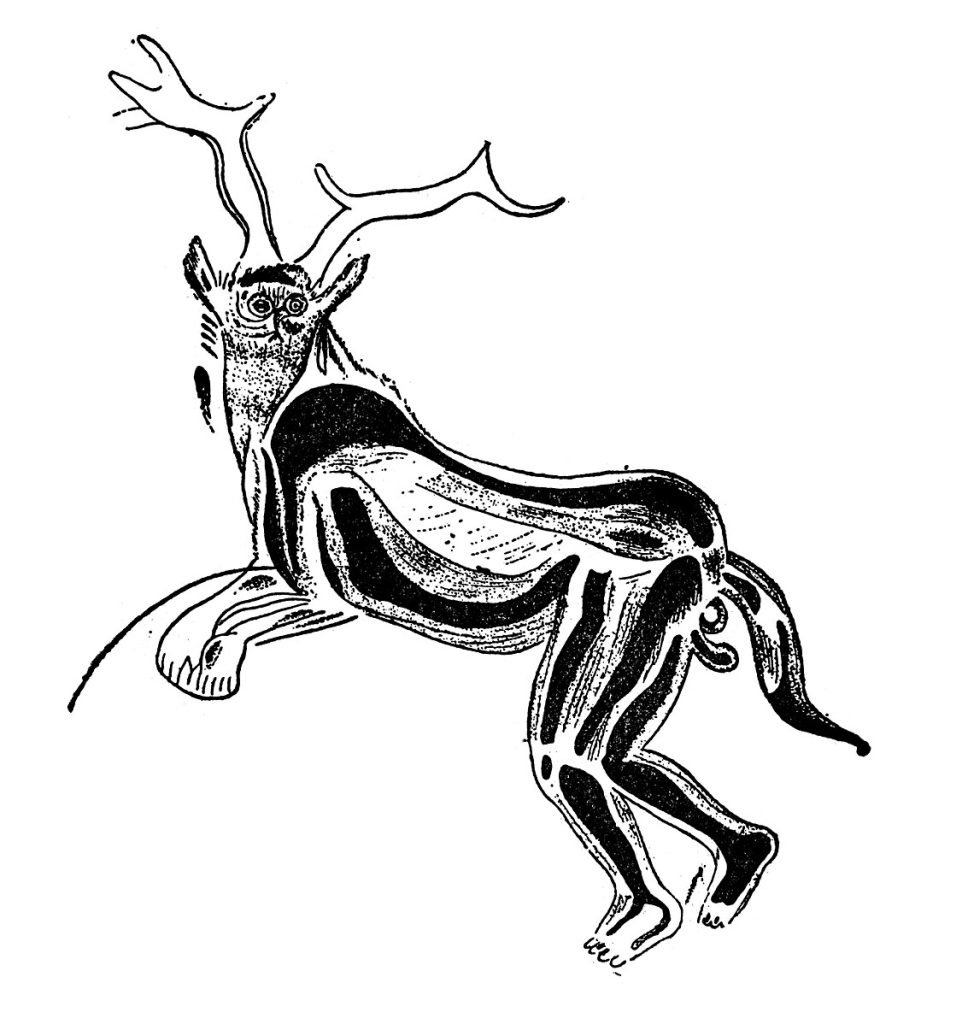
Some of the earliest evidence of the human experience is preserved on the walls of caves and rock shelters. Shapes, creatures, monsters and all manner of doodles and artworks are found in the places where our ancestors took refuge, and in places they could only reach by crawling into the bowels of the earth – for reasons that we can only now infer. These images communicate over many thousands of years: exquisite observations of other species, playful experimentation, community, and, very likely, the nature of spiritual experience over most of human history.

This talk will explore the story of the Trois Freres caves in South West France, in which a strange hybrid figure called The Sorcerer was found after WW2. His enigmatic form and the creatures he is surrounded with tell us of the monsters and myths our ancestors imagined: how they dealt with a life in the Ice Age landscape surrounded by giants and predators; how they came together to explore the depths of their consciousnesses. Their experiences have much to tell us about humanity today.

Bio
Natalie Lawrence is an author and historian of science living in London. She has a degree in zoology, and MSc and PhD in history and philosophy of science from the University of Cambridge. Her latest book is Enchanted Creatures: Our Monsters and Their Meanings just came out with Weidenfeld & Nicolson.