“Come away, O human child!”—a Zoom talk on Changeling Folklore with Simon Young

For the past three years, Dr Simon Young has been part of an international team investigating changeling legends: the widespread belief that supernatural beings (fairies, trolls, witches) substitute humans with magical look-alikes. With the team’s findings now published (The Exeter Companion to Changeling Lore, 2025) and hundreds of records at his disposal, Simon will explore the what, when, and how of changeling folklore.

This remarkable tradition spans far beyond western Ireland, reaching Armenia, the Egyptian Delta, and even tribal Papua New Guinea. It stretches not only through the medieval and modern periods but back into antiquity itself. The team has grappled with fascinating questions: Are child changelings more common than adult ones? How do legends of human mothers exchanging children relate to changeling lore? And perhaps most intriguingly: why did this belief system take hold across perhaps a quarter of the globe?


About the Speaker

Dr Simon Young is a British folklore historian based in Italy. He is the editor of Exeter New Approaches to Legends, Folklore and Popular Legends and teaches history at University of Virginia’s Siena Campus (CET). He has written extensively on the 19th-century supernatural. His book The Boggart (from Exeter University Press) and The Nail in the Skull and Other Victorian Urban Legends (from Mississippi University Press) came out in 2022, with other recent books on The Wollaton Gnomes (2023) The Deerness Mermaid (2025) and the opening volume of his Fairy Census (2023). Simon also co-presents the supernatural podcast Boggart and Banshee with Chris Woodyard.

Articles listing: https://independent.academia.edu/SimonYoung43
Substack: https://britishmythology.substack.com/


Your curator and host for this event will be the author Edward Parnell, author of Ghostland: In Search of a Haunted Country. Ghostland (William Collins, 2019), a work of narrative non-fiction, is a moving exploration of what has haunted our writers and artists – as well as the author’s own haunted past; it was shortlisted for the PEN Ackerley 2020 prize, an award given to a literary autobiography of excellence. Edward’s first novel The Listeners (2014), won the Rethink New Novels Prize. His latest book is All the Fear of the Fair (Oct 2025) part of the British Library’s Tales of the Weird series, for which he also edited Eerie East Anglia (2024). For further info see: https://edwardparnell.com

Don’t worry if you can’t make the live event on the night – we will send you a recording valid for two weeks the next day.

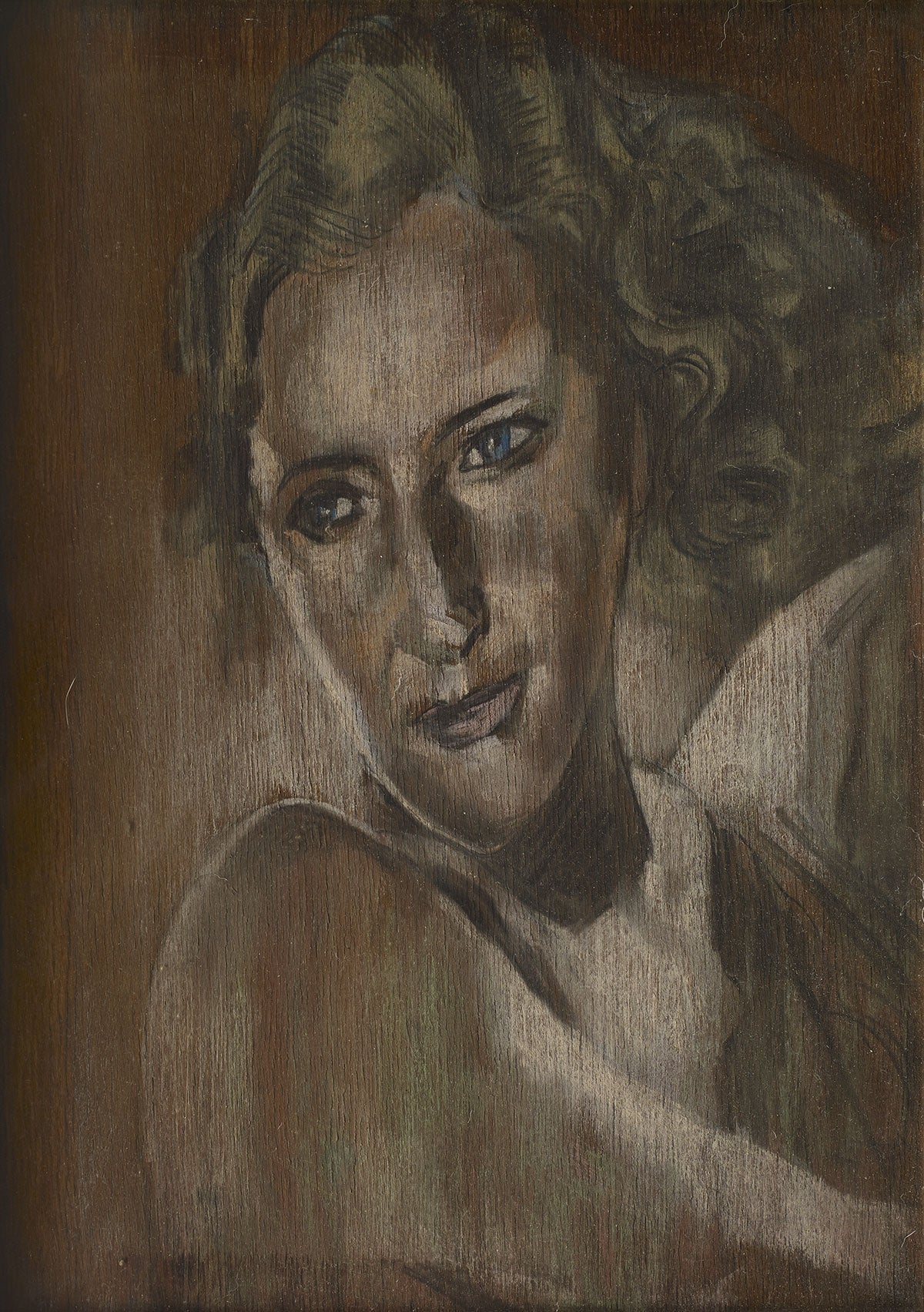
[Image: from The Changeling, attributed to Henry Fuseli (1741–1825), from The Leonora Hall Gurley Memorial Collection.]

Spirits of Dark and Lonely Water – a Zoom talk with John Clark

In 1973 Britain’s Central Office of Information commissioned a film, directed at children, to warn them of the dangers of playing near ponds and rivers. Presiding over it was a sinister Spirit of Dark and Lonely Water, voiced by the actor Donald Pleasance. In this presentation we shall look at how a similar approach was adopted by parents in the 19th century, and how they used ‘imaginary monsters’ to scare children away from dangerous waters. Our starting point is a recent Royal Mail stamp depicting just such a monster, named Grindylow. By way of the world of Harry Potter and the writings of 20th- and 19th-century folklorists we shall track Grindylow and her sisters Jenny Greenteeth and Nellie Longarmsto their lairs in the ponds and flooded marl pits of north-west England in the early 1800s.


Your speaker is John Clark, who was for many years Curator of the medieval collections of the Museum of London (now London Museum). Since his retirement in 2009 he has continued to research and publish on a range of subjects, including medieval horses and their equipment, London legends, and folklore and fairylore. His book on the medieval story of the Green Children of Woolpit, The Green Children of Woolpit: Chronicles, Fairies and Facts in Medieval England, bringing together the results of some 25 years of research, was published in 2024 by University of Exeter Press in their series New Approaches to Legends, Folklore and Popular Belief.

Your curator and host for this online event will be the writer Edward Parnell, author of Ghostland: In Search of a Haunted Country. Ghostland (William Collins, 2019), a work of narrative non-fiction, is a moving exploration of what has haunted our writers and artists – as well as the author’s own haunted past; it was shortlisted for the PEN Ackerley 2020 prize, an award given to a literary autobiography of excellence. Edward’s first novel The Listeners (2014), won the Rethink New Novels Prize. He has edited two anthologies of classic ghost stories for the British Library’s Tales of the Weird series – Eerie East Anglia (2024) and his latest, All the Fear of the Fair: Uncanny Tales of Circus and Sideshow (pub. Oct 2025). For further info see: https://edwardparnell.com

Don’t worry if you can’t make the live event on the night – the next day we will send you a recording valid for two weeks.


[Image: montage of a still from Lonely Water (Central Office for Information, 1973) and a depiction of Grindylow by Adam Simpson for the Royal Mail’s 2025 ‘Myths and Legends’ stamp series (© Stamp Design Royal Mail Group Ltd, 2025).]

The Mermaids of Staithes – a Zoom talk with Professor Sarah Peverley

The Mermaids of Staithes: Sea, Superstition, Egg-Broth and Loss in a Yorkshire Legend

Join mermaid expert Sarah Peverley for an illustrated talk about the vengeful tale of the mermaids of Staithes. Well-known locally along the north-east coast of Yorkshire, England, the legend concerns the capture and escape of two mermaids, who speak enigmatically about egg-broth and curse the community that hurts them. The tale has notable parallels with other mermaid stories from Cornwall, Wales, Scotland, and the Isle of Man, all of which were recorded in print from the eighteenth to the nineteenth centuries, except the Staithes story.

Through deductive source analysis, this talk identifies the oldest verbal and published versions of the legend on record and explores analogues to the egg-broth superstition, which attest to the story’s emergence much earlier in the eighteenth century and connect it to popular superstitions about the sea. By situating the tale’s publication in context, it is also possible to connect its first occurrence in print to recurrent losses from inundations, coastal erosion and the economic decline of Staithes’s fishing industry in the early twentieth century. Featuring the sea, superstitions, mermaids, witches and folklore, there is something for everyone in the history of this charming tale.


Professor Sarah Peverley is an academic, writer and broadcaster who divides her time between being immersed in the depths of mermaid history and lost in the medieval world. As professor of medieval literature and culture at the University of Liverpool she teaches across English and History and regularly speaks at festivals and heritage events. She has consulted for organisations like Guinness World Records, and has written, presented or appeared in over eighty TV, radio and press features. She is currently writing a cultural history of the mermaid. For more information see www.sarahpeverley.com.

Your curator and host for this event will be the writer Edward Parnell, author of Ghostland: In Search of a Haunted Country. Ghostland, a work of narrative non-fiction, is a moving exploration of what has haunted our writers and artists – as well as the author’s own haunted past; it was shortlisted for the PEN Ackerley 2020 prize, an award given to a literary autobiography of excellence. Edward’s first novel The Listeners (2014), won the Rethink New Novels Prize. He recently edited Eerie East Anglia: Fearful Tales of Field and Fen (2024) for the British Library’s Tales of the Weirdseries. For further info see:
https://edwardparnell.com

Don’t worry if you can’t make the live event on the night – we will send you a recording valid for two weeks the next day.

Whale Tales: Myths, Folklore and Legends of Whales and Dolphins – with Professor Joanna Page

Our fascination with whales and dolphins stretches a long way back in history. The oldest rock art depicting dolphins has been dated to around 43,000 years ago, and whales and dolphins have figured prominently in the myths, folktales and legends of many different cultures. This Zoom talk will explore stories from ancient Greece to modern-day Brazil, via the Old Testament, the Qu’ran, the mediaeval bestiary, Scottish folklore, and the First Nations tribes of the Pacific Northwest. It will demonstrate that in many instances, myth actually meets science: our understanding today of the intelligence and creativity of whales and dolphins, and their rich social lives, often reveals important truths at the heart of these legends.


Professor Joanna Page is based at the University of Cambridge, where she directs CRASSH, one of the largest interdisciplinary research centres in the world. Her interests are broadly located within the environmental humanities, and many of the books she has published explore the relationship between science and culture. She also works for the marine conservation charity ORCA, giving talks on marine biology and ecology, and surveying whales and dolphins in the North Atlantic and beyond.

Your curator and host for this event will be the writer Edward Parnell, author of Ghostland: In Search of a Haunted Country. Ghostland (William Collins, 2019), a work of narrative non-fiction, is a moving exploration of what has haunted our writers and artists – as well as the author’s own haunted past; it was shortlisted for the PEN Ackerley 2020 prize, an award given to a literary autobiography of excellence. Edward’s first novel The Listeners (2014), won the Rethink New Novels Prize. His latest book is Eerie East Anglia (pub. Aug 2024) for the British Library’s Tales of the Weird series. For further info see: https://edwardparnell.com

Don’t worry if you can’t make the live event on the night – we will send you a recording valid for two weeks the next day.

[Image: A narwhal and large sperm whale. Engraving. Wellcome Collection. Source: Wellcome Collection.]

Medieval Mermaids – a Zoom talk with Professor Sarah Peverley

Medieval Mermaids: Sirens of Shipwreck, Salvation and Folklore

Spotting a mermaid in the Middle Ages was easy. In both real and imaginary waterscapes merfolk had many guises, appearing as saints, sinners, and fantastic creatures. Chroniclers recorded encounters with merpeople, especially in the oceans encircling the British Isles and Ireland, which were believed to be home to a burgeoning population of seductive sirens with sleep-inducing voices and a propensity for shipwrecking sailors.

Across medieval Europe, fountains, pools, marshes, and rivers teemed with water spirits inherited from earlier mythologies, some of which were said to have founded royal dynasties, like Melusine of Lusignan. But mermaids and their male counterparts (mermen) also had a foothold on land, inhabiting the borders of richly illuminated manuscripts, swimming through the decorative stone and woodwork of churches, and adorning images of the world like the Hereford Mappa Mundi. Even noble households were not immune to the charms of fish-tailed women, as mermaids frolicked on royal embroideries and paraded across the heraldry of families like the Berkeleys.

Focusing on mermaids in medieval culture, this illustrated talk draws on literary and visual evidence, to offer new ways of thinking about the evolution of the mermaid. Join Professor Sarah Peverley as she draws on fresh evidence from her ‘Mermaids of the British Isles and Ireland, c. 450-1500’ project to consider the various ways that medieval people used mermaids and the complex interpretative frameworks that defined their aesthetic.

No prior knowledge of the Middle Ages is required, just a love of mythical creatures and a sense of adventure as we dive into mermaid history!


Professor Sarah Peverley is an academic, writer and broadcaster who divides her time between being immersed in the depths of mermaid history and lost in the medieval world. As professor of medieval literature and culture at the University of Liverpool she teaches across English and History and regularly speaks at festivals and heritage events. She has consulted for organisations like Guinness World Records, and has written, presented or appeared in over eighty TV, radio and press features. She is currently writing a cultural history of the mermaid. For more information see www.sarahpeverley.com.

Your curator and host for this event will be the writer Edward Parnell, author of Ghostland: In Search of a Haunted Country. Ghostland (William Collins, 2019), a work of narrative non-fiction, is a moving exploration of what has haunted our writers and artists – as well as the author’s own haunted past; it was shortlisted for the PEN Ackerley 2020 prize, an award given to a literary autobiography of excellence. Edward’s first novel The Listeners (2014), won the Rethink New Novels Prize. For further info see: https://edwardparnell.com

Don’t worry if you can’t make the live event on the night – we will send you a recording valid for two weeks the next day.

[Image: a Mermaid in The Luttrell Psalter: London, British Library.]

Queer as Folklore – a Zoom talk with Sacha Coward

The vampire we know today has a convoluted story, from the rebellious first wife of Adam in Eden, to the original lesbian countess and the bisexual enigma that was Lord Byron. How and why are these creatures of the night so infamously queer-coded?

Unicorns originated as both a sexual and religious icon, with links to fertility and the male phallus. They’ve been used to both elevate and insult the bisexual community. Where does this leave them today and how have ‘girly’ unicorns become sexy again?

From the ancient Syrian goddess Atargatis, through to Hans Christian Andersen, the painting of Sea Maidens by Evelyn De Morgan, the burnt books of Nazi Germany and the merman in Trafalgar Square, why are mermaids so beloved by the queer community?

Learn about out all this and more as Sacha Coward takes us on an illustrated Zoom talk through the hidden queer history of myths and monsters.

Sacha Coward has worked in museums and heritage for over 10 years. For the past three years, he has been freelancing as an historian, public speaker, and researcher. He has run LGBTQ+ focused tours for museums, cemeteries, archives, and cities around the world. He has written articles for a huge number of publications, including Metro, Gay Star News, National Theatre, Art UK, Queer Bible, Royal Museums Greenwich, and Dig It Scotland, with a focus on LGBTQ+ history, underrepresented audiences in heritage and mythology and folklore.

Queer as Folklore is Sacha’s first book and is being published by Unbound in 2024. For more info see: https://www.sachacoward.com

Your curator and host for this event will be the writer Edward Parnell, author of Ghostland: In Search of a Haunted Country. Edward Parnell lives in Norfolk and has an MA in Creative Writing from the University of East Anglia. He is the recipient of an Escalator Award from the National Centre for Writing and a Winston Churchill Travelling Fellowship. Ghostland (William Collins, 2019), a work of narrative non-fiction, is a moving exploration of what has haunted our writers and artists – as well as the author’s own haunted past; it was shortlisted for the PEN Ackerley 2020 prize, an award given to a literary autobiography of excellence. Edward’s first novel The Listeners (2014), won the Rethink New Novels Prize. For further info see: https://edwardparnell.com

[Image: The Sea Maidens by Evelyn De Morgan. 1885/1886.]

Don’t worry if you can’t make the live event on the night – we will send you a recording valid for two weeks the next day.

Gog and Magog: the Giants in Guildhall – Zoom lecture with John Clark

John Clark, formerly curator of the medieval collections at the Museum of London, investigates the origins and significance of the two figures of giants, known as Gog and Magog, that stand in the medieval Guildhall in the City of London.

In recent years, London’s Lord Mayor’s Show each November has included two large figures made of basketwork, representing heavily-armed giants. They carry pennants with the names Gog and Magog. In the City’s medieval Guildhall there are two massive carved wooden statues of the same pair of giants, made in 1953 to replace earlier figures destroyed in the Blitz in December 1940. And two giants had welcomed Queen Elizabeth I on a visit to the City in 1559. But who were Gog and Magog, and how did they come to be regarded as symbols and guardians of London?

Our story begins in the 1130s, when Geoffrey of Monmouth wrote a fraudulent ‘History of the Kings of Britain’, which tells how Trojan settlers, fleeing after the destruction of Troy by the Greeks, arrived in an island then called Albion, and found it inhabited by giants, whose leader was ‘Goemagog’…

John Clark, for many years curator of the medieval collections at the Museum of London, has long been interested in byways of medieval history, and in particular the way ‘real’ history relates to and interacts with legends and folklore. He has a book in preparation on the subject of his previous lecture, which has the working title: The Green Children of Woolpit: Strangers in a Strange Land.

Your curator and host for this event will be the writer Edward Parnell, author of Ghostland: In Search of a Haunted Country. Edward lives in Norfolk and has an MA in Creative Writing from the University of East Anglia. He is the recipient of an Escalator Award from the National Centre for Writing and a Winston Churchill Travelling Fellowship. Ghostland (William Collins, 2019), a work of narrative non-fiction, is a moving exploration of what has haunted our writers and artists – as well as the author’s own haunted past; it was shortlisted for the PEN Ackerley 2020 prize, an award given to a literary autobiography of excellence. Edward’s folklore-strewn first novel The Listeners (2014), won the Rethink New Novels Prize. For further info see: https://edwardparnell.com

Don’t worry if you miss or can’t attend the event live on the night – the next day we will send ticketholders a recording that will be valid for two weeks.

[Image: the two statues of Gog and Magog in London’s Guildhall.]

Celtic Myths – The Spanking Goddess and Other Discarded Tales – Clare Murphy

Celtic Myths – The Spanking Goddess and Other Discarded Tales

Stellar storyteller Clare Murphy exhumes the Celtic canon to bring the wild women who never made the cut, back into the light.

A shapeshifter spanks her opponents, a queen balances on the point of a spear, a goddess is caught in a face-off with death, heroes are defeated by mother-daughter warriors, and we witness the first divorce…and the woman won.

These are not your regular myths. Expect wicked tales of badass deities, feral fighters, unorthodox sex, hairy bodies, mastery, and goddess-on-goddess battles – not for the faint-hearted and definitely for grown-ups.

Storyteller Bio:

Clare Muireann Murphy has been telling stories since 2006 on stages all over the world including The Globe Theatre London, Open Eye Theatre Minneapolis, and Fabula Festival Sweden.

Her work ranges from the political folkloric work to playful Science-story pieces that explore where quantum physics, philosophy and mythology meet. She has had the honour of performing for President Mary Robinson of Ireland, NASA Jet Propulsion Laboratory and the writers at the Royal Shakespeare Company. She has worked outside of the world of performance teaching all kinds of people from scientists to veterans.

Her festivals include Cape Clear Festival Ireland, Beyond the Border Wales, National Storytelling Festival Jonesborough USA, Alden Biesen Storytelling Festival Belgium and many others.

don’t worry if you miss it – we will send you a recording valid for two weeks the next day

Mermaids across the Millennia – a Zoom talk with Professor Sarah Peverley

Elusive, beguiling, dangerous, the mermaid is one of the most popular and long-lived of all the mythical creatures that humans have invented. For over four millennia she has been humanity’s constant companion, swimming through our stories, art and beliefs and appearing in many guises.

This illustrated talk will consider a selection of the most influential, surprising, and less well-known mermaids witnessed around the world. Tracking the development of merfolk across time and continent, it will look at the visual nuances of mermaids depicted by different cultures as well as the expansive mythologies and ideas attached to them. Tapping into religion, politics, art and folklore, the talk is a siren call to all lovers of the sea who want to journey through the fascinating history of the mermaid from her emergence of merfolk in the religions of the ancient Near East right through to the rise of the mermaid economy in the twentieth and twenty-first centuries.


Professor Sarah Peverley is academic, writer and broadcaster who divides her time between being immersed in the depths of mermaid history and lost in the medieval world. As professor of medieval literature and culture at the University of Liverpool she teaches across English and History and regularly speaks at festivals and heritage events. She has consulted for organisations like Guinness World Records, and has written, presented or appears in over eighty TV, radio and press features. She is currently writing a cultural history of the mermaid. For more information see www.sarahpeverley.com.

Your curator and host for this event will be the writer Edward Parnell, author of Ghostland: In Search of a Haunted Country. Edward Parnell lives in Norfolk and has an MA in Creative Writing from the University of East Anglia. He is the recipient of an Escalator Award from the National Centre for Writing and a Winston Churchill Travelling Fellowship. Ghostland (William Collins, 2019), a work of narrative non-fiction, is a moving exploration of what has haunted our writers and artists – as well as the author’s own haunted past; it was shortlisted for the PEN Ackerley 2020 prize, an award given to a literary autobiography of excellence. Edward’s first novel The Listeners (2014), won the Rethink New Novels Prize. For further info see: https://edwardparnell.com

Don’t worry if you can’t make the live event on the night – we will send you a recording valid for two weeks the next day.

It Was Upon a Lammas Night: Summerisle and The Wicker Man – Zoom talk with Edward Parnell

2023 is the 50th Anniversary of the release of Robin Hardy’s folk horror film classic The Wicker Man. In this illustrated Zoom talk, Edward Parnell will explore the real-life locations of Dumfries and Galloway (and also Skye and further up Scotland’s west coast) that were used to such great effect to create the mythical Summerisle in the movie. After Edward’s talk there will be an opportunity for a Q&A with ticketholders.

Come of your own free will to the appointed place…

Edward Parnell is the author of Ghostland: In Search of a Haunted Country. Edward lives in Norfolk and has an MA in Creative Writing from the University of East Anglia. He is the recipient of an Escalator Award from the National Centre for Writing and a Winston Churchill Travelling Fellowship. Ghostland (William Collins, 2019), a work of narrative non-fiction, is a moving exploration of what has haunted our writers, artists and filmmakers – as well as the author’s own haunted past; it was shortlisted for the PEN Ackerley 2020 prize, an award given to a literary autobiography of excellence. His first book, The Listeners (2014), won the Rethink New Novels Prize. For further info see: https://edwardparnell.com

Don’t worry if you miss it or can’t make it on the night – we will send you a recording valid for two weeks the next day.