Ithell Colquhoun Between the Sacred and the Profane – Dr Amy Hale

Ithell Colquhoun Between the Sacred and the Profane

When it came to pushing people’s buttons, Ithell Colquhoun leaned right into it. In both her visual art and her writing Colquhoun confronted her audiences with images that are explicit, beautifully erotic and also repulsive, promoting encounters with the divine through transgression and the abject. The potential for public engagement with her bold ideas was clearly something Colquhoun valued.  On more than one occasion gallerists refused to hang a painting of hers that was considered to be too scandalous, and she would replace it with something just as juicy, as she was generally uncompromising about what she thought needed to be seen. Between 1939 and 1943 Colquhoun developed what appeared to have been a complex system of sex magic including images of queer desire and explicit diagrammatic depictions of sexual positions and women’s pleasure. Although until recently most of these images were never displayed there is no question that she intended for many of these quite radical pieces to have an audience. In her writings, Colquhoun depicted a variety of forbidden topics in a manner both horrific and coldly detached, including incest and a range of bodily functions and conditions. Her vignettes and prose poems referred to excreta, menstruation, skin conditions, scabs, open sores, and decay. While many of the more shocking pieces were never published for obvious reasons, the manuscript treatment of the drafts indicated her hopes that they would eventually be read.

This tantalizingly illustrated lecture will theorize Ithell Colquhoun’s tendency toward confrontation and taboo, the ways in which she challenged both her own boundaries and those of her imagined readers and viewers.  With influences ranging from Tantra, to surrealism, the occult and Bataille, Colquhoun embraced transgression to drive her own enlightenment and also to shift and elevate perceptions of what can be seen and experienced as holy.  In her words: “Life is not beautiful but it is rich: All must be accepted.”

Bio

Amy Hale is an Atlanta based writer and critic with a PhD in Folklore and Mythology from UCLA (1998). She has written widely on artist and occultist Ithell Colquhoun, and has been an academic advisor to the 2025 Colquhoun retrospective at Tate St. Ives and Tate Britain. She wrote the first scholarly biography of Colquhoun, Ithell Colquhoun: Genius of the Fern Loved Gully (Strange Attractor, 2020) followed by the collection Sex Magic: Diagrams of Love, (Tate Publishing, 2024), and the forthcoming A Walking Flame: Selected Magical Essays of Ithell Colquhoun (Strange Attractor 2025).  She is also the editor of the groundbreaking collection Essays on Women in Western Esotericism: Beyond Seeresses and Sea Priestesses (Palgrave 2022). She has written extensively on magic and contemporary art, and has written for Tate, Burlington Contemporary, Art UK, The Australian Centre for Contemporary Art, Correspondences Journal and other institutions. She is an Honorary Research Fellow with Falmouth University in Cornwall, a trustee of the UK Charity Rediscovering Art by Women (RAW) and a member of the British Art Network. Beyond the Supernatural: Magic in Contemporary Art is due to be published with Tate Publishing in 2026.
 

Atlas holds up the World: The Anatomy of Myth – Cat Irving – Zoom

Atlas holds up the World: The Anatomy of Myth

The Greek poet Hesiod tells the story of the defeat of the Titans. While many of his brothers were banished to Tartarus, Atlas was condemned to hold up the sky forever. Remembering this story, the uppermost bone of our spine – the one which supports our skull – is known as our atlas verterbra. This talk by anatomist and Human Remains Conservator will consider the way that classical mythology has influenced our medical language, and look at the way pathology may have influenced the formation of mythology – while also asking the important questions such as where does the centaur keep his lungs?

Cat Irving has been the Human Remains Conservator for Surgeons’ Hall since 2015 and has been caring for anatomical and pathological museum collections for over twenty years. After a degree in Anatomical Science she began removing brains and sewing up bodies at the Edinburgh City Mortuary. Following training in the care of wet tissue collections at the Royal College of Surgeons of England she worked with the preparations of William Hunter at the Hunterian Museum at Glasgow University, where she is now Consultant Human Remains Conservator. Cat is a licensed anatomist, and gives regular talks on anatomy and medical history. She recently carried out conservation work on the skeleton of serial killer William Burke

Don’t worry if you miss it – we will send you a recording valid for two weeks the next day

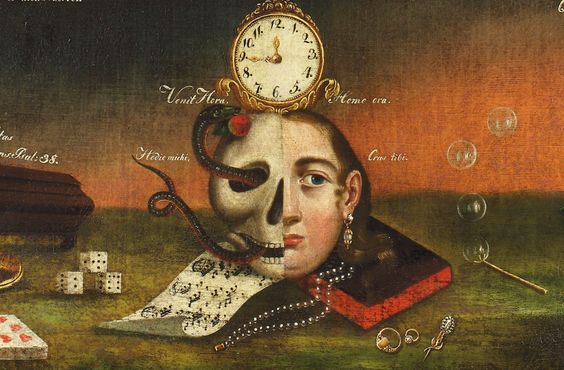
Memento Mori -Joanna Ebenstein – Zoom


Memento Mori

Many of us in the contemporary Western world view death as purely negative—something to be pushed out of our minds, shunned, and avoided. Thinking about death, particularly one’s own, is seen as morbid, if not downright pathological. But, not long ago, contemplating death was widely used as a powerful tool that helped us fear mortality less, put the difficulties of our lives in perspective, and live according to our higher values. (It still is, in some places.) By coming to terms with our own death, we were understood to become wise.

This richly illustrated talk—based on Morbid Anatomy founder’s new book Memento Mori: The Art of Contemplating Death to Live a Better Life, will look at a number of the ways that people in different times and places have befriended, imagined, pictured or related to death. We will look at psychopomps—literally, “soul guides”—understood to help people move through the dying process. We will learn about the “books of the dead,” guides to preparing for a good death and afterlife experience. And we will investigate the memento mori (Latin for “remember you must die”), which are objects, works, or practices meant to remind one of their death in order to help them ascertain their true valuesand live them out in the world, so as to die with the fewest deathbed regrets. 

Joanna Ebenstein is the founder and creative director of Morbid Anatomy. An internationally recognized death expert, she is the author of several books, including Anatomica: The Exquisite and Unsettling Art of Human Anatomy, Death: A Graveside Companion, and The Anatomical Venus: Wax, God, Death and the Ecstatic. She is also an award-winning curator, photographer, and graphic designer, and the teacher of the many times sold-out class Make Your Own Memento Mori: Befriending Death with Art, History and the Imagination. The descendant of Holocaust survivors, she traces her lineage back to Judah Loew ben Bezalel, credited with creating the Golem in sixteenth-century Prague.

Don’t worry if you miss it – we will send you a recording valid for two weeks the next day

Monster World – Peter Bebergal – Zoom

Monster Worlds
In the 1970s, the sometimes-garish world of monster-movie pop culture was a comfort, an external expression of grotesquery and strangeness that the culture was feeling inside but had no name for. Rather than making us more afraid, monsters mythologized our own abstract worries about sexuality, nuclear war, race and the other, as well as personifying our collective sense of being untethered from mystery and enchantment. The talk will track the changing face of monsters as mythic and literary creatures as our culture’s own lingering unease began to morph, moving from the shadowed myths of the past into the daytime horrors of serial killers and gore and argue that we need monsters again to learn how to reimagine what frightens us in a way that remythologizes our anxieties and will offer a path for a re-enchanting our imaginations using monsters as a guide, looking at current examples in film, television, and comics.

Bio:
Peter Bebergal writes widely on the speculative and slightly fringe. His essays and reviews have appeared in The Virginia Quarterly Review, The New Yorker, The Times Literary Supplement, Boing Boing, The Believer, and The Quietus. He is the author of Strange Frequencies: The Extraordinary Story of the Technological Quest for the Supernatural and Season of the Witch: How the Occult Saved Rock and Roll, among others. Bebergal studied religion and culture at Harvard Divinity School. He lives in Cambridge, Massachusetts.

Don’t worry if you miss it – we will send you a recording valid for two weeks the next day

The Cosmic Operas of Hindemith and Vivier – Meredith Michael – Zoom

The Cosmic Operas of Hindemith and Vivier 
In the aftermath of two world wars and countless other crises, musicians in the later 20th century who wished to re-awaken audiences to the music of the spheres sometimes turned to grand, large-scale works of music, like opera. This was true of composers Paul Hindemith and Claude Vivier, who both wrote “cosmic” operas featuring revolutionary astronomers as characters.

Hindemith’s “Die Harmonie der Welt” focuses on Johannes Kepler’s turbulent life, but includes hidden structures  that only become apparent at the end of the piece, when Kepler dies. Vivier’s “Kopernikus” casts Nicolaus Copernicus along with a myriad of other historical and fictional characters who perform an “opéra-rituel” meant to help the protagonist, Agni, transcend to a higher plane of existence. This presentation will explore these composers’ philosophies about the relationship between music and the cosmos, as well as how these operas attempt to align the listener with the order of the universe.

Meredith Michael is a musicologist who studies relationships between music and outer space. She has presented her work internationally on astronomers and musicians from Caroline Herschel to Gustav Holst, and she is currently finishing a dissertation on musical constructions of mythology in the 20th century. Meredith is also active in podcasting, working as a production assistant and occasional guest on the Weird Studies podcast , and producing her own podcast with Gabriel Lubell, Cosmophonia.

Don’t worry if you miss it – we will send you a recording valid for two weeks the next day.

The Devil’s Bargain – Ed Simon – Zoom

The figure of the mage is among the most alluring Renaissance characters. In plays from Marlowe’s Dr. Faustus to Shakespeare’s The Tempest, necromancers plumbed the depths of hermetic and occult knowledge to gain tremendous (and dangerous) power. Yet this figure wasn’t mere literary invention, for Renaissance humanism was attracted to subjects magical, and often these characters were based on real personages. In particular, Dr. Faust, the wizard who sold his soul to the Devil in exchange for knowledge and power, was drawn directly from the historical record, a mysterious and shadowy scholar who nonetheless endures in the countless permutations of his legend. In this lecture, join Dr. Ed Simon in a consideration of the “real” Dr. Faust.
Ed Simon is Public Humanities Special Faculty in the English Department of Carnegie Mellon University, the editor of The Pittsburgh Review of Books, and a staff writer for Literary Hub. A widely published writer, he is the author of over a dozen books, including Pandemonium: A Visual History of Demonology and Devil’s Contract: The History of the Faustian Bargain. 
don’t worry if you miss it – we will send you a recording valid for two weeks the next day

Clay-eaters: A Brief History of Geophagy – Jennifer Lucy Allan – Zoom

Clay-eaters: A brief history of geophagy

This talk collates recorded instances of geophagy across human history and in the animal kingdom, detailing cases involving Taoist magic, syncretic religious sites in Central America, parrots who may or may not have indigestion, and the ancient physician Galen, who stockpiled terra sigillata from Lemnos in AD167. In early Western anthropological reports, geophagy was often discredited as ‘primitive’ or ‘debased’ behaviour, but this talk calls for another look at clay eaters across cultures, detailing the ways in which earth has been used as folk medicine, famine prevention, and as a natural dietary supplement for centuries.

Jennifer Lucy Allan is a writer and broadcaster. Her first book, The Foghorn’s Lament was published in 2021, on sound, memory and the coast. She is a presenter on BBC Radio 3’s long running music show Late Junction, and has written for various outlets on music and culture over the last 15 years. Her most recent book Clay: A Human History was published in 2024.

Don’t worry if you miss it – we will send you a recording valid for two weeks the next day

The Sun Machine Is Coming Down – Nicholas Royle – Zoom

Nicholas Royle’s David Bowie, Enid Blyton and the Sun Machine has been described as ‘bizarre, brilliant and unlike any book you’ve ever read’ (The Telegraph). What does David Bowie have to do with Enid Blyton? And what even is a sun machine?

David Bowie, Enid Blyton and the Sun Machine is not only a paean to Bowie’s music and to Blyton’s storytelling (especially the Famous Five books), but also a moving and at moments hilarious account of everyday family life during the pandemic, and a passionate defence of the love of literature and art at a time when they seem more than ever imperilled. In his talk Royle will discuss how the book came to be written, introduce some of the puppets who feature (especially Mole), and give a couple of short readings. There will also be time for questions and discussion.

Nicholas Royle has taught and lectured at universities across Europe and North America for over four decades. He is the author of many books, including two highly acclaimed novels, Quilt (2010) and An English Guide to Birdwatching (2017); the memoir, Mother (2020); and groundbreaking studies of literature such as Telepathy and Literature: Essays on the Reading Mind (1990), The Uncanny (2003), and Veering: A Theory of Literature (2011). With Andrew Bennett he is also author of the bestselling academic textbook, Introduction to Literature, Criticism and Theory (sixth edition, 2023). Royle is joint managing editor of the Oxford Literary Review and is currently completing a book on The New Fantastic.

Don’t worry if you miss it – we will send you a recording valid for two weeks the next day

The Centre of a Thousand Legends: A Brief History of Boleskine House and Aleister Crowley – Dr Andrew Wiseman – Zoom

The Centre of a Thousand Legends: A Brief History of Boleskine House and Aleister Crowley

This presentation offers a brief history of Boleskine House, located on the southern shore of Loch Ness, in the central Scottish Highlands. Commissioned by Archibald Campbell Fraser (1736–1815), son of the infamous Simon Fraser, Lord Lovat, and completed with Masonic honours in 1809, Boleskine House already had a strange, perhaps even notorious history, and decidedly even more so during and after Aleister Crowley’s tenure.A year after joining the Hermetic Order of the Golden Dawn, Crowley purchased the property in 1899 for the ‘sole’ purpose of undertaking a magical rite known as the Abramelin ritual, an operation aimed at coming into contact with his Holy Guardian Angel, or inner genius.Drawing upon extensive research undertaken for a forthcoming publication, I will delve into the reasons why Boleskine House was chosen by a young practitioner of the occult, why it was so important during his formative years and thereafter, and will attempt to disambiguate fact from fiction.

Speaker Bio

Andrew Wiseman is a cultural historian, specialising in the Scottish Highlands from the late medieval to the modern period, who has developed a keen interest, perhaps even an unhealthy one, in Boleskine House and its long-held association with the iconoclastic occultist Aleister Crowley. He is currently editing a number of works, and has authored around twenty chapters and articles as well as numerous blogs and mainstream publications. As author of the forthcoming title Lord Boleskine: Aleister Crowley and the House of the Beast 666, a detailed and engaging account of Crowley’s residence at his Highland home will be offered as well as the controversial legacy which he left in his wake.

Curated & Hosted by

Marguerite Johnson is a cultural historian of the ancient Mediterranean, specialising in sexuality and gender, particularly in the poetry of Sappho, Catullus, and Ovid, as well as magical traditions in Greece, Rome, and the Near East. She also researches Classical Reception Studies, with a regular focus on Australia. In addition to ancient world studies, Marguerite is interested in sexual histories in modernity as well as magic in the west more broadly, especially the practices and art of Australian witch, Rosaleen Norton. She is Honorary Professor of Classics and Ancient History at The University of Queensland, and a Fellow of the Australian Academy of the Humanities.

Images:

Boleskine House as photographed in 1912

‘With pipe, purity and posture’: Aleister Crowley as explorer and poet, May 1906, New York

don’t worry if you miss it – we will send you a recording valid for two weeks the next day

Major Arcana – The Tarot of Leonora Carrington – Prof. Susan Aberth – Zoom

Major Arcana – The Tarot of Leonora Carrington

The British-born artist Leonora Carrington (1917–2011) is one of the more fascinating figures to emerge from the Surrealist movement. As both a writer and painter, she was championed early by André Breton and joined the exiled Surrealists in New York, before settling in Mexico in 1943. The magical themes of Carrington’s otherworldly paintings are well-known, but the recent discovery of a suite of tarot designs she created for the Major Arcana was a revelation for scholars and fans of Carrington alike. Drawing inspiration from the Tarot of Marseille and the popular Waite-Smith deck, Carrington brings her own approach and style to this timeless subject, creating a series of iconic images. Executed on thick board, brightly coloured and squarish in format, Carrington’s Major Arcana shines with gold and silver leaf, exploring tarot themes through what Gabriel Weisz Carrington describes as a ‘surrealist object’.

This tantalising discovery, made by the curator Tere Arcq and scholar Susan Aberth, has placed greater emphasis upon the role of the tarot in Carrington’s creative life and has led to fresh research in this area.

Speaker Bio

Susan L. Aberth is the Edith C. Blum Professor in the Art History and Visual Culture Program at Bard College.  She received her B.A. from UCLA, M.A. from the Institute of Fine Arts, New York University, and her Ph.D. from the Graduate Center, City University of New York.  In 2022 she received a Curatorial Research grant from the Andy Warhol Foundation for travel in connection with research into the  esoteric traditions in the Americas. Her book publications include The Tarot of Leonora Carrington (2020, reissued in an expanded edition 2022) co-authored with Mexican curator Tere Arcq; Leonora Carrington: Surrealism, Alchemy and Art (2004, Lund Humphries & Turner, Spain). She has contributed to numerous books and exhibition catalogues: Surrealism and Magic, Guggenheim Venice (2022); Hilma af Klint (Zwirner Gallery, 2022), Olga de Amaral (Lisson Gallery, 2022), Not Without My Ghosts (2020, Traveling exhibition in England); Agnes Pelton: Desert Transcendentalist (Phoenix Art Museum, 2019), Juanita Guccione: Otherwhere (Napa Valley Museum, 2019), Surrealism, Occultism and Politics: In Search of the Marvelous (Routledge Press, 2018), Leonora Carrington: Cuentos Magicos (Museo de Arte Moderno & INBA, Mexico City, 2018), Unpacking: The Marciano Collection (Delmonico Books, Prestel, 2017), and Leonora Carrington and the International Avant-Garde (Manchester University Press, 2017), as well as to Journal of Surrealism of the Americas, Artforum, Abraxas: International Journal of Esoteric Studies, and Black Mirror.

don’t worry if you miss it – we will send you a recording valid for two weeks the next day