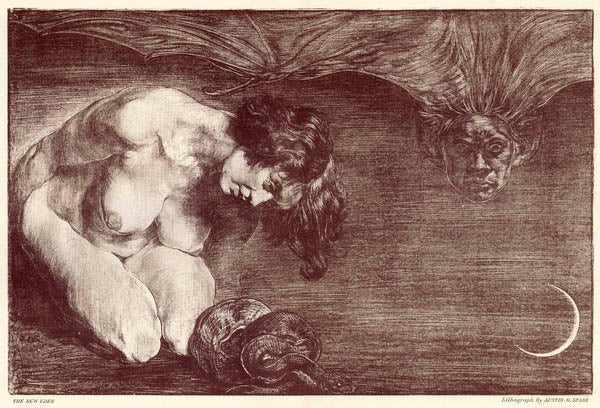
Divining the Past, Present, and Future: Oracles Series 2: 4 lectures – Zoom

Divining the Past, Present, and Future: Oracles, Series 2 – Four Lectures

Join us for Series Two as we journey once again into the histories and mysteries of divination. Delivered by leading scholars in the field

Curated & Hosted by

Marguerite Johnson is a cultural historian of the ancient Mediterranean, specialising in sexuality and gender, particularly in the poetry of Sappho, Catullus, and Ovid, as well as magical traditions in Greece, Rome, and the Near East. She also researches Classical Reception Studies, with a regular focus on Australia. In addition to ancient world studies, Marguerite is interested in sexual histories in modernity as well as magic in the west more broadly, especially the practices and art of Australian witch, Rosaleen Norton. She is Honorary Professor of Classics and Ancient History at The University of Queensland, and a Fellow of the Australian Academy of the Humanities. She lives in Mytilene on the Greek island of Lesvos.

Attendees will receive a recording of each lecture valid for 4 weeks.
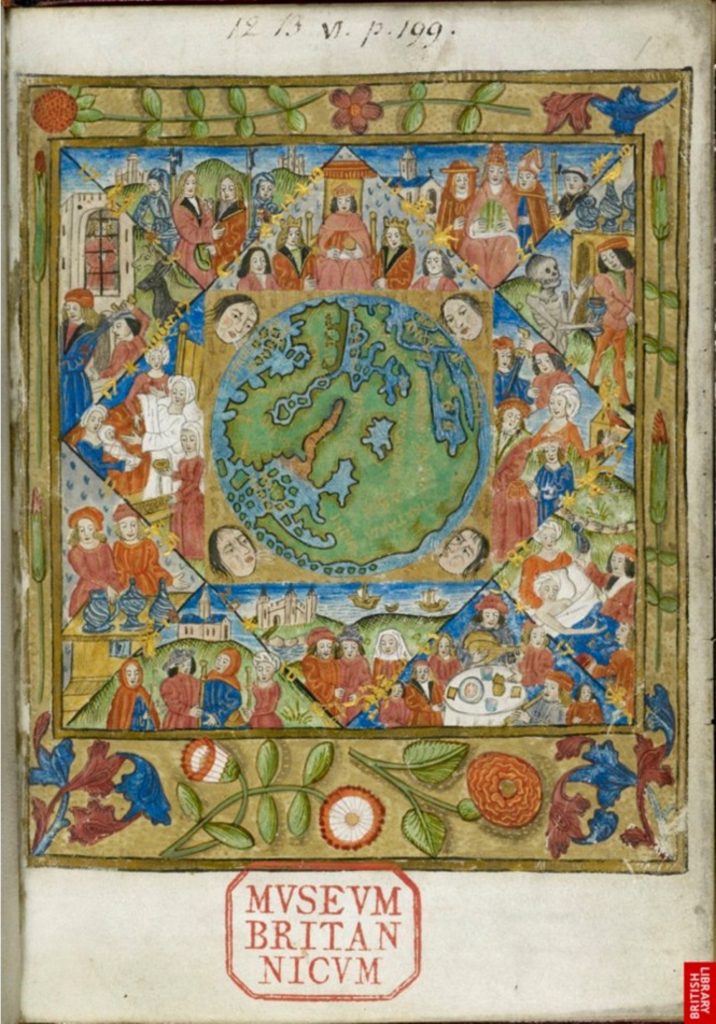


Lecture  1 – Astrology in Renaissance Michelle Pfeffer 20 September 2026

In this talk we return to a period in European history when astrology was considered a science. For centuries astrologers were learned mathematicians with respected positions in universities and governments. Astrology was even taught at Oxford! Yet by the seventeenth century, astrology was fast losing its place in mainstream science. This talk explores contests over astrology’s legitimacy that were taking place at the same time as astrology was thriving in the public sphere more than ever before.

Bio:

Michelle Pfeffer is a historian of science and religion at the University of Oxford. Her latest book, Inventing Immortality (2026), was about the history of the soul, and she is now writing a new book about how astrology stopped being considered a science. With David Zeitlyn she curated an exhibition at the Bodleian Library, ‘Oracles Omens Answers’ (Dec 2024-April 2025), and co-edited the related book, Divination, Oracles, and Omens, published by Bodleian Library Press.

Caption: Horoscope diagram from BL Royal Manuscript Collection. Public Domain.
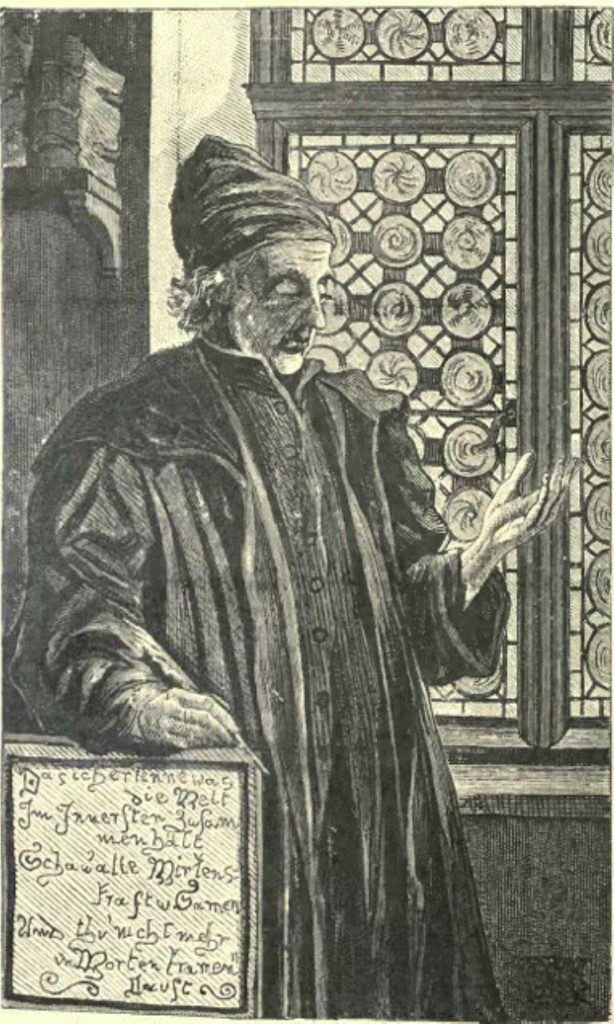


Lecture  2  – The Future is in Your Hands: Palmistry in Britain and the United StatesJoan Navarre27 September 2026

In the waning years of the nineteenth century, a palmistry craze swept through Great Britain and the United States. On both sides of the Atlantic, people gazed at the lines in their hands and searched for clues about their future. Join Dr. Joan Navarre in a fascinating consideration of Palmistry—or Cheiromancy—the time-honoured art that seeks insight through consulting the hand. Could wealth be on your horizon? Romance? A long life? The Future is in Your Hands.

Bio:

Joan Navarre, PhD, is the International Vice Chair of the Æ George Russell Society.
A tenured Professor of English and Film Studies at the University of Wisconsin-Stout, USA, she has authored numerous articles on the subject of palmistry. Co-founder of the Oscar Wilde Society of America, she is currently completing a documentary on Oscar Wilde’s 1882 tour of the United States. Joan owns and operates Merrion Square Productions, a film company dedicated to researching, documenting, and interpreting stories central to the Irish Literary Renaissance.

Caption: Frontispiece from Edward Heron-Allen’s A Manual of Cheirosophy (1885). Public Domain.


Lecture  3 – The Prophecy of Rope and Silver: The Unique History and Symbolism of Tibetan Rope Divination Alexander K. Smith4 October 2026

Divination Tibetan societies employ a wide range of divination practices, from state oracles and astrological calculations to everyday techniques involving dice and rosaries. This lecture explores one such practice: a rare form of rope divination known as ju thig. After examining the ritual procedures and social contexts surrounding Tibetan rope divination, I consider the roles played by diviners within their communities and the kinds of questions brought before them. Finally, I situate ju thig within the broader history and mythology of Tibetan divination, highlighting its complex synthesis of Tibetan, Central Asian, Indian, and Chinese influences.

Bio:

Dr. Alexander K. Smith is a Tibetologist, ethnographer, and filmmaker. He currently serves as the creative director of Ligature Historical, a Frankfurt-based animation studio specializing in historical and cultural documentaries. He holds a PhD in Tibetan and Himalayan Studies from the École Pratique des Hautes Études (EPHE–PSL, Paris) and an MA in Tibetan Studies from the University of Oxford. His research focuses on Tibetan divination, ritual practice, and social history, drawing on extensive ethnographic fieldwork in Tibetan communities in North India. His scholarly publication include Divination in Exile: Interdisciplinary Approaches to Ritual Prognostication in the Tibetan Bon Tradition, published by Brill in 2021.

Caption: Jamgön Ju Mipham Gyatsho (Ju Mipham, 1846–1912), Zhang zhung ju thig. Monastic Library, sMan-ri Monastery, Dolaji, Himachal Pradesh. Photo by Dr. Alexander K. Smith (2014).
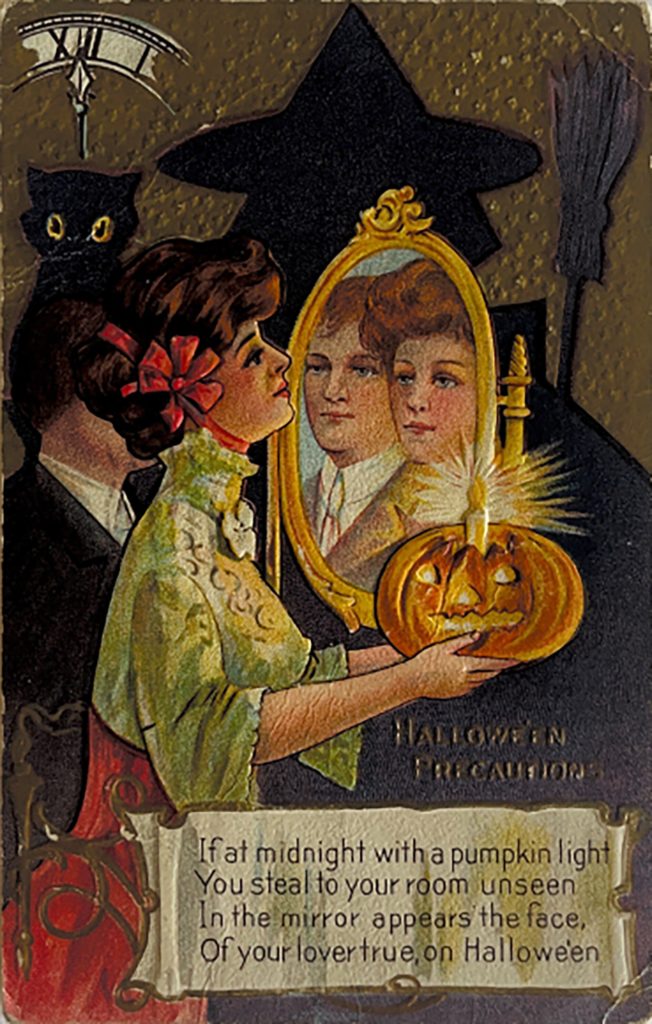


Lecture  4 – Romantic Divination Customs in Early Halloween PostcardsLisa Gabbert25 October 2026

This talk examines the folk beliefs and practices represented in early Halloween postcards. Although Halloween in the US today is largely associated with death, horror, and even gore, 19th and early 20th century postcards and other sources reveal that Halloween was more of a romantic time, closely associated with love divination practices. People engaged in romantic parlor games and participated in customs designed to predict one’s future marital prospects, such as the burning nuts, pouring wax or lead into water, and mirror divination. Such customs give context to other early Halloween images, such as witches, fairies, and even human-like pumpkins, which are sometimes depicted as potential paramours.

Bio:

Lisa Gabbert is Professor of Folklore Studies in the Department of History at Utah State University. She is the author of three books and numerous book chapters and articles. She is interested in all things folkloric, but particularly festivity and its overlaps with play, legendry, and sacred and supernatural figures. Other interests include folklore and landscape, and folklore in medical contexts. She currently is co-editor of the Journal of American Folklore and President of the Western States Folklore Society.

Caption: Vintage Halloween Card (1909). Public Domain.


Freyja: Norse Goddess of Sexuality, Death, Magic and Love – Olof Ormika Lindqvist – Zoom

Freyja: Norse Goddess of Sexuality, Death, Magic and Love

Is Freyja truly the goddess of love?

Is that really her primal realm, as she has so often been presented in modern interpretations, or has this characterization obscured a far more complex and enigmatic figure?

This talk questions the long-standing categorization of Freyja, suggesting that her identity has been shaped and perhaps even constrained by scholarly traditions dating back to the 19th century. By critically examining these inherited frameworks, we open the possibility that Freyja’s nature has been simplified in ways that reflect the romantic and cultural ideals of that era rather than the full scope of her mythological presence.

Drawing on a range of sources, including Old Norse texts, Scandinavian folklore, and contemporary forms of devotion, this presentation explores the many dimensions of Freyja’s character. Rather than a singular goddess of love, she emerges as a multifaceted and dynamic figure whose attributes span magic, death, desire, and life force itself.

We reconsider Freyja as a powerful practitioner and transmitter of seiðr, the ancient form of Norse magic, which she is said to have taught to the Æsir and even to Oðinn himself. In this role, she stands not only as the figure of the vǫlva, but as a bearer of esoteric knowledge and transformative power.

At the same time, Freyja appears as a formidable goddess of death, receiving half of those slain in battle into her own realm, something often overlooked comparing to the more familiar association of the afterlife with Oðinn and Valhall. This aspect positions her within the sphere of war, fate, and the liminal boundary between life and death.

Finally, we encounter Freyja as a deity of autonomous and sovereign sexuality—one who chooses freely when and with whom she shares her ecstatic life force. This dimension challenges reductive interpretations and instead presents a figure defined by agency, vitality, and profound independence.

These are just three of the realms Freyja reside over. The list goes on including fertility, healing, agriculture and crafts, showing her central role in ancient Scandinavian society.

Through this exploration, Freyja is revealed not as a static symbol of love, but as a richly layered and compelling presence whose true nature resists simple categorization.

Speaker Bio:

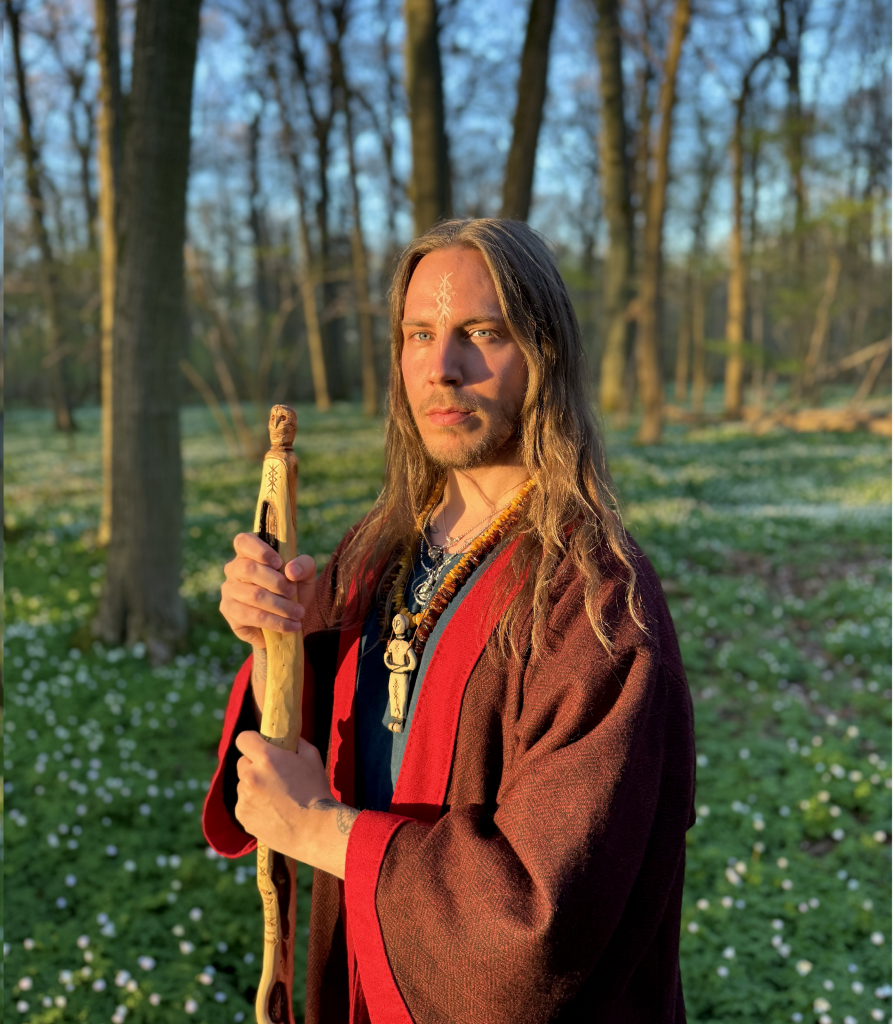
Olof is a Vitki, Seiðrman and folklorist. He grew up close to nature on Gotland, a Swedish island in the Baltic Sea from a family of folklorists. The many sacred sites and living folklore of the island gave him a profound connection to the footprints of his ancestors. For over thirteen years he has worked with the Nordic Wisdom Tradition in a way that is animist, shamanic, and rooted in the soil beneath our feet. He facilitates a two-year training which takes people on the path of the Vitki/Völva, both in Sweden and the Netherlands. His work has a strong emphasis on honouring and communicating with the landscape with all its inhabitants. Olof is also a painter, dancer and singer, bringing creative and embodied energy into his teachings.


Curated & Hosted by:

Lena Schattenherz Heide-Brennand is a Norwegian lecturer with a master degree in language, culture and literature from the University of Oslo and Linnaeus University. She has been lecturing and teaching various subjects since 1998. Her field of interest and main focus has always been topics that others have considered strange, eccentric and eerie, and she has specialised in a variety of dark subjects linked to folklore, mythology and Victorian traditions and medicine. Her students often point out her thorough knowledge about the subjects she is teaching, in addition to her charismatic appearance. She refers to herself as a performance lecturer and always gives her audience an outstanding experience

don’t worry if you miss it – we will send you a recording valid for two weeks the next day

Vampire Epidemics from Mesopotamia to the New World – John Blair – Zoom

Vampire Epidemics from Mesopotamia to the New World

Why have so many people, at so many different times and places, believed that corpses can work harm to the living, and have thought it necessary to ‘kill’ them over again? This lecture explores the vampire phenomenon in its psychological, social and historical contexts. It argues that the propensity to believe in dangerous corpses is not a human universal, but activated by a combination of belief-systems with episodes of trauma. In some ways it is a classic instance of persecution mania, except that the victims are already dead, and therefore cannot suffer. Killing the dead is better than killing the living.

Speaker Bio:

John Blair is an Emeritus Fellow of The Queen’s College, Oxford, and Emeritus Professor of Medieval History and Archaeology at the University of Oxford. His main research is on early medieval north-western Europe. His earlier books include The Church in Anglo-Saxon Society (2005) and Building Anglo-Saxon England (2018).

Curated & Hosted by:

Lena Schattenherz Heide-Brennand is a Norwegian lecturer with a master degree in language, culture and literature from the University of Oslo and Linnaeus University. She has been lecturing and teaching various subjects since 1998. Her field of interest and main focus has always been topics that others have considered strange, eccentric and eerie, and she has specialised in a variety of dark subjects linked to folklore, mythology and Victorian traditions and medicine. Her students often point out her thorough knowledge about the subjects she is teaching, in addition to her charismatic appearance. She refers to herself as a performance lecturer and always gives her audience an outstanding experience

don’t worry if you miss it – we will send you a recording valid for two weeks the next day

Are you a lizard person?: The strange history of the reptilian conspiracy theory – Joseph P Laycock – Zoom

Are you a lizard person?: The strange history of the reptilian conspiracy theory

According to conspiracy theorists like David Icke, our world has always been ruled by a race of evil, shape-shifting, reptilian humanoids who masquerade as human and assume positions of power. More than a dozen violent crimes, including murders and bombings, have been committed by people trying to stop the reptilians. This talk traces the conspiracy theory from its origins in the stories of Texas writer Robert E. Howard, through occult groups during the Great Depression, and finally to the early internet. It will also apply a religious studies approach to explore why the conspiracy theory is so enduring.

Speaker Bio:

Joseph P. Laycock is a professor of religious studies at Texas State University. His research explores new religious movements, moral panic, and spirit possession, among other topics. His books include The Penguin Book of Cults (2025), The Exorcist Effect: Religion, Horror, and Demonic Belief (2023), and Speak of the Devil: How the Satanic Temple is Changing the Way We Talk About Religion (2020). He is also a co-general editor for the journal Nova Religio is a professor of religious studies at Texas State University. His research explores new religious movements, moral panic, and spirit possession, among other topics. His books include The Penguin Book of Cults (2025), The Exorcist Effect: Religion, Horror, and Demonic Belief (2023), and Speak of the Devil: How the Satanic Temple is Changing the Way We Talk About Religion (2020). He is also a co-general editor for the journal Nova Religio

Curated & Hosted by

Marguerite Johnson is a cultural historian of the ancient Mediterranean, specialising in sexuality and gender, particularly in the poetry of Sappho, Catullus, and Ovid, as well as magical traditions in Greece, Rome, and the Near East. She also researches Classical Reception Studies, with a regular focus on Australia. In addition to ancient world studies, Marguerite is interested in sexual histories in modernity as well as magic in the west more broadly, especially the practices and art of Australian witch, Rosaleen Norton. She is Honorary Professor of Classics and Ancient History at The University of Queensland, and a Fellow of the Australian Academy of the Humanities. She lives in Mytilene on the Greek island of Lesvos.

don’t worry if you miss it – we will send you a recording valid for two weeks the next day

Convulsive Beauty: Hysteria and the Surrealist movement – Sarah Jaffray – Zoom

Convulsive Beauty: hysteria and the Surrealist movement

André Breton, the founder of the surrealist movement, declared ‘Beauty will be CONVULSIVE or it will not be at all.’

This talk explores the history behind Breton’s ‘convulsive’ beauty and how it can help us understand Surrealism. We’ll see how the context war and hysteria studies inspired Surrealists to challenge conceptions of ‘normalcy’ and how they helped shape the possibilities of a new world.

Image credit: Paul Richer, from Études cliniques sur l’hystéro-épilepsie ou grande hystérie, 1881 (via Wellcome Collection)

Speaker Bio:

Sarah Jaffray is an art historian, educator, curator and writer based in London.   Currently the head of art history at City Lit, London’s largest adult education college, Sarah has also worked in curatorial positions at the British Museum, the Bridget Riley Art Foundation and Wellcome Collection. Her art historical work is interested in late 19th and early 20th century Europe and the U.S. with emphasis on institutional systems of power.

Curated & Hosted by:

Lena Schattenherz Heide-Brennand is a Norwegian lecturer with a master degree in language, culture and literature from the University of Oslo and Linnaeus University. She has been lecturing and teaching various subjects since 1998. Her field of interest and main focus has always been topics that others have considered strange, eccentric and eerie, and she has specialised in a variety of dark subjects linked to folklore, mythology and Victorian traditions and medicine. Her students often point out her thorough knowledge about the subjects she is teaching, in addition to her charismatic appearance. She refers to herself as a performance lecturer and always gives her audience an outstanding experience

don’t worry if you miss it – we will send you a recording valid for two weeks the next day

The wicked women whom the Devil feared – Tommy Kuusela, PhD – Zoom

The wicked women whom the Devil feared

There are also many folk tales about wicked women whom the Devil feared or with whom he worked closely – women who were not thought of as witches, only as wicked during their lifetimes. one example is a woman known as the Pintorpa Lady, who was the wicked lady of Eriksberg Castle. It is said that she ordered a crofter to fell the largest oak tree in the park and transport it to her. The crofter used the lady’s two deceased husbands as draught horses. Later, she is seen dancing with the Devil before accompanying him to hell. Another woman, known as Sko-Ella or Kitta Grå, once made a bet with the Devil that she could break up a married couple – something the Devil had failed to do. If she succeeded, she would receive a pair of fine new shoes. She succeeded, but the Devil did not dare to hand the shoes over to her directly, instead passing them to her using a stick. This very motif can be found in several Swedish medieval church paintings. In this talk, I will examine these stories and use folklore studies to analyze them. They tell us different things: one is humorous but at the same time misogynistic, the other is critical of the aristocracy.

Speaker Bio:

Tommy Kuusela earned his PhD in History of Religions at Stockholm University in 2017. He has published more than 70 articles on Swedish folklore and Old Norse religion. He works at one of Sweden’s oldest and largest folklore archives, founded in 1914 in Uppsala. Kuusela is often on the move, both in Sweden and abroad, giving talks at conferences, museums or for organizations. He is often contacted by different media such as television, radio, newspapers and podcasts. He is the host of Sweden’s biggest folklore podcast with more than 2,2 million downloads.

Curated & Hosted By:

Lena Schattenherz Heide-Brennand is a Norwegian lecturer with a master degree in language, culture and literature from the University of Oslo and Linnaeus University. She has been lecturing and teaching various subjects since 1998. Her field of interest and main focus has always been topics that others have considered strange, eccentric and eerie, and she has specialised in a variety of dark subjects linked to folklore, mythology and Victorian traditions and medicine. Her students often point out her thorough knowledge about the subjects she is teaching, in addition to her charismatic appearance. She refers to herself as a performance lecturer and always gives her audience an outstanding experience

don’t worry if you miss it – we will send you a recording valid for two weeks the next day

The future is weird: Jeff Vandermeer, science, ritual, and the strangeness of climate crisis – Dr Juni Kvarving – Zoom

The future is weird: Jeff Vandermeer, science, ritual, and the strangeness of climate crisis

Change is scary.

As we push ourselves past climate tipping points and end what once seemed like immutable normalities, weird fiction has made a notable comeback. Through the frightening weird ecologies of Jeff VanderMeer’s Southern Reach series (the source material for the film Annihilation, dir. Alex Garland), this talk argues that leaning into both the horror and excitement of strangeness is key to addressing crises.

Guiding you through the strange roots of the weird literary tradition and drawing on Lacanian psychoanalysis, I argue that we can look to VanderMeer’s Area-X as a necessary confrontation with the limits of our reality. My talk will particularly focus on how his fiction inverts the uncanny and explores the way ritual, science and faith appears when faced with the Real. This weird aesthetic, what I call the eco-weird,models how we can come to terms with the horror of breaking our unsustainable reality so we can pursue a strange but better future—if we dare.

Speaker Bio:

Juni Kvarving is a researcher, writer, and editor. She recently completed her PhD at the University of Kent about the narrative aesthetics of climate emergency and tipping points in contemporary American utopian novels. Alongside her research, she co-directed the New Voices in Postcolonial Studies Network (NVPoco), worked at Wasafiri Magazine for International Contemporary Writing, edited for Holland House Books, and taught as an Assistant Lecturer at the University of Kent and Course Instructor at CIEE London. Juni is currently interested in nostalgic aesthetics and the environment, and is co-editing a forthcoming special issue on “The American Dream/American Nightmare” with the European Journal of American Culture. Website: https://junikvarving.com/

Curated & Hosted By:

Lena Schattenherz Heide-Brennand is a Norwegian lecturer with a master degree in language, culture and literature from the University of Oslo and Linnaeus University. She has been lecturing and teaching various subjects since 1998. Her field of interest and main focus has always been topics that others have considered strange, eccentric and eerie, and she has specialised in a variety of dark subjects linked to folklore, mythology and Victorian traditions and medicine. Her students often point out her thorough knowledge about the subjects she is teaching, in addition to her charismatic appearance. She refers to herself as a performance lecturer and always gives her audience an outstanding experience

don’t worry if you miss it – we will send you a recording valid for two weeks the next day

Tales from the Time Between Times – Owen Staton – Zoom

Tales from the Time Between Times

When the veil thins and the night presses close, when the wind moves like a whisper through the trees and the firelight dances with a life of its own… that is when the old stories wake.

Come, draw nearer to the firepit at the heart of the forest, where shadows stretch long and the past is never truly past. Here, storyteller Owen Staton invites you into that liminal hour — the time between times — where myth and memory walk hand in hand.

Hear the hollow laughter of the Mari Lwyd as she rattles her skull at the threshold. Catch a fleeting glimpse of the Tylwyth Teg, fair and terrible, watching from just beyond the circle of light. And listen… closely… for even the Devil himself is said to wander these woods when the darkness is at its deepest.

These are not just stories. They are echoes. Warnings. Invitations.

An evening of Welsh ghost lore, rich with atmosphere, humour, and a creeping sense of something older than the land itself — told as only Owen Staton can tell it.

The fire is waiting.
The night is listening.
All that remains… is for you to step into the dark.

Speaker Bio:

Owen Staton is a Welsh storyteller and performer with over thirty years’ experience bringing the myths and legends of Wales to life for audiences across the world. As host of the acclaimed Time Between Times podcast, he has built a reputation for weaving atmosphere, humour, and a touch of the uncanny into every tale. Now in his fifty-third year, Owen continues to travel the old paths of story… though his hair, by his own admission, remains entirely beyond his control.

Curated & Hosted by:

Lena Schattenherz Heide-Brennand is a Norwegian lecturer with a master degree in language, culture and literature from the University of Oslo and Linnaeus University. She has been lecturing and teaching various subjects since 1998. Her field of interest and main focus has always been topics that others have considered strange, eccentric and eerie, and she has specialised in a variety of dark subjects linked to folklore, mythology and Victorian traditions and medicine. Her students often point out her thorough knowledge about the subjects she is teaching, in addition to her charismatic appearance. She refers to herself as a performance lecturer and always gives her audience an outstanding experience

don’t worry if you miss it – we will send you a recording valid for two weeks the next day

The Yule Lads: Tricksters, Terrors, and the Dark Christmas of Iceland – Lena Heide-Brennand – Zoom

The Yule Lads: Tricksters, Terrors, and the Dark Christmas of Iceland

In Iceland, Christmas does not arrive quietly.

It comes creeping down from the mountains—one figure at a time.

The thirteen Yule Lads, now often softened into mischievous gift-bringers, were once something far less comforting: a band of strange, intrusive beings who descended upon farms in the darkest nights of winter. Each with their own unsettling habits—slamming doors, licking spoons, stealing food—they moved through the household not as welcome guests, but as presences to be endured.

Behind them loomed their mother, Grýla, a monstrous figure said to hunt disobedient children and boil them alive. And beyond her, the vast, silent threat of the Yule Cat, who stalked the snowy landscape in search of those without new clothes to wear.

This lecture explores the darker origins of the Yule Lads within Icelandic folklore: their connection to older troll traditions, their role in seasonal discipline and social control, and the gradual transformation of these figures under the influence of modern Christmas traditions. Through folklore, literature, and cultural history, we will trace how fear, humour, and survival intertwine in one of the most unique festive traditions in the world.

Why thirteen? Why do they arrive one by one? And what do their strange behaviours reveal about life in a harsh and isolated landscape?

This is not the story of Christmas cheer.It is the story of what comes down from the mountains when the nights are longest—and the world feels most fragile.

Speaker Bio:

Lena Schattenherz Heide-Brennand is a Norwegian lecturer with a master degree in language, culture and literature from the University of Oslo and Linnaeus University. She has been lecturing and teaching various subjects since 1998. Her field of interest and main focus has always been topics that others have considered strange, eccentric and eerie, and she has specialised in a variety of dark subjects linked to folklore, mythology and Victorian traditions and medicine. Her students often point out her thorough knowledge about the subjects she is teaching, in addition to her charismatic appearance. She refers to herself as a performance lecturer and always gives her audience an outstanding experience

don’t worry if you miss it – we will send you a recording valid for two weeks the next day

Vampires Before Dracula: Disease, Panic, and the Management of the Undead – Lena Heide-Brennand – Zoom

Vampires Before Dracula: Disease, Panic, and the Management of the Undead

Long before Dracula gave the vampire a cloak, a castle, and a seductive gaze, the undead were something far more troubling: a practical problem.

In the villages of Eastern and Central Europe, the dead did not always stay buried. Bodies were said to rise, to feed, to return to their families—not as spirits, but as flesh that would not decay properly. Livestock sickened. Children wasted away. Entire households fell ill. And in response, communities acted—not with superstition, but with a grim, methodical logic.

This talk explores the historical phenomenon of the so-called “vampire panics” of the 17th and 18th centuries, when officials, clergy, and physicians were drawn into investigations of the undead. Corpses were exhumed and examined. Reports were written. Remedies were prescribed. The boundary between folklore, medicine, and early science began to blur in unsettling ways.

Why did certain bodies become vampires? What did people actually see when they opened the grave? And how did disease—particularly those that distort the body in death—shape the belief that the dead were feeding on the living?

From stakes driven through the heart to sickles laid across the throat, from garlic and fire to the careful repositioning of the corpse, this lecture reveals the ritual technologies developed to contain the restless dead. These were not random acts of fear, but structured responses to a world in which death itself seemed unstable.

Drawing on historical case studies, medical misunderstandings, and the anthropology of death, this talk repositions the vampire not as a figure of gothic romance, but as something far older and more disturbing: a body that refuses to behave.

Because before the vampire became seductive, it was unmanageable.

Speaker Bio:

Lena Schattenherz Heide-Brennand is a Norwegian lecturer with a master degree in language, culture and literature from the University of Oslo and Linnaeus University. She has been lecturing and teaching various subjects since 1998. Her field of interest and main focus has always been topics that others have considered strange, eccentric and eerie, and she has specialised in a variety of dark subjects linked to folklore, mythology and Victorian traditions and medicine. Her students often point out her thorough knowledge about the subjects she is teaching, in addition to her charismatic appearance. She refers to herself as a performance lecturer and always gives her audience an outstanding experience

don’t worry if you miss it – we will send you a recording valid for two weeks the next day