Dragons – Professor Ronald Hutton Zoom Lecture

A recording of this lecture will be available to ticket holders for two weeks after the lecture

In the modern Western world, dragons occupy a curious dual space. On the one hand for many people and in many stories, they retain a traditional role as terrifying and predatory monsters which must be slain by heroes. On the other, they are as frequently now represented as friends and allies, faithful steeds or embodiments of benign earth energies. Things get more complex and interesting when it is realised that these two aspects are themselves ancient: in the Old World, western dragons have generally been malevolent, and the dragons of the Far East benevolent. So why is this, and why has the western attitude changed in the modern era? Also, did dragons ever exist, and could they exist, and why did so many humans believe in them if they did not? These are the questions which Ronald Hutton sets out to answer in this talk.

Speaker: Professor Ronald Hutton is a Professor of History at the University of Bristol. He is a leading authority on history of the British Isles in the sixteenth and seventeenth centuries, on ancient and medieval paganism and magic, and on the global context of witchcraft beliefs.

Solstice Dispensary of Herbal Midsummer Madness- The Apothecary’s Daughter

Make hay (metaphorically speaking!) with The Apothecary’s Daughteras on Zoom as she discusses the meaning and rituals behind the summer solstice, whilst bringing to light a selection of her favourite seasonal plants, and those with particular connection to the magic of midsummer.

SUMMER SOLSTICE CELEBRATION: A dispensary of herbal midsummer madness with The Apothecary’s Daughter

Make hay (metaphorically speaking!) with The Apothecary’s Daughter as she discusses the meaning and rituals behind the summer solstice, whilst bringing to light a selection of her favourite seasonal plants, and those with particular connection to the magic of midsummer.

St John’s Wort, Chamomile, Lavender and Sage are just a handful that will be harvested and celebrated. This is a time to purify and connect with the spiritual fires within, and to gather one’s protective mantle in preparation for the darker times ahead.

Maria Vlotides began The Apothecary’s Daughter after completing a degree in Herbal Medicine at the University of Westminster in 2007. Having initially read PPE at Oxford University during the dark ages, she found herself hanging out with increasing regularity at the University’s Botanical Garden, fascinated by plant beds and the magic held within leaves and buds. She had a clinical practice until 2016 and has since continued to focus on teaching and writing. Her book Pharmapoetica in collaboration with poet and author Chris McCabe was nominated for the Ted Hughes Award in 2013. Visit www.the-apothecarys-daughter.com

The Eloquent Blood: The Goddess Babalon and The Construction of Femininities in Western Esotericism – Dr. Manon Hedenborg White

In the first century CE, a beautiful, lustful woman astride a seven-headed beast appeared in the apocalyptic visions of John of Patmos, chronicled in the biblical Book of Revelation. In 1909, the Whore of Babylon, Mother of Abominations, re-appeared in the Algerian desert before the British occultist Aleister Crowley (1875–1947). For Crowley, she was the goddess Babalon — representing passionate union with all of existence and the sacredness of liberated (and especially feminine) sexuality. Join Manon Hedenborg White for an exploration of Babalon and her meaning in modern occultism as a goddess of ego-death, eroticism, and transgressive femininity. We will follow Babalon from Aleister Crowley’s mysticism and sexual magic, via the ”Babalon Working” of American rocket scientist John Whiteside Parsons and his lover, the artist Marjorie Cameron, through the Left-Hand Path Tantra of the enigmatic British occultist Kenneth Grant, up until the present, when radical occultists are reinterpreting Babalon as a goddess of feminine empowerment and queer liberation.

Manon Hedenborg White holds a PhD in the History of Religions from Uppsala University. She is the author of ”The Eloquent Blood: The Goddess Babalon and the Construction of Femininities in Western Esotericism” (Oxford University Press, 2020).

Beau Dick and the Ceremonial Art of Potlatch with John Cussans

A hereditary chief and master carver from the Kwakwa̱ka̱ʼwakw First Nation, Beau Dick was one of the most prominent and influential First Nations artists before his untimely passing in March 2017. His powerful sculptures, firmly rooted in the ceremonial culture of his ancestors, bridge the worlds of contemporary art, the potlatch traditions of the First Peoples of the Pacific North West and environmental activism.

In this talk John Cussans will discuss Beau’s work in relation to gift-giving, title-conferring and theatrical ceremonies that connect several First Nation groups, the legends informing some of his most powerful works and his copper-breaking actions against the Canadian government in 2013.


Speaker: John Cussans is an artist, arts educator and writer working across the fields of contemporary art, cultural history and critical art theory. His work explores the legacies of colonialism, psychoanalysis and surrealism in art, cinema and popular culture from ethnographic, science fictional and social psychology perspectives. He has written and taught on Western constructions of the alien, inhuman and primitive and their subversions in art, anti-psychiatry and philosophy, with a specific focus on the cultures of British Columbia and Haiti. He is a member of SMRU (Social Morphologies Research Unit) a collaboration between artists and anthropologists based at University College London.

He has a PhD in Cultural History from the Royal College of Art, an MA in Art History and Theory from the University of Essex and a BA in Graphic Design and Illustration from Northumbria University. He has taught contextual studies, art history and fine art studio practice at many educational institutions including Bergen Academy of Art and Design (Norway), Emily Carr University of Art and Design (Vancouver), Goldsmiths College (London), Central Saint Martins (London), the Royal Academy (London) and the Royal College of Art (London). Between 2015 and 2018 he was the MFA Course Director at the Ruskin School of Art in Oxford.

He is senior lecturer in Fine Art at the University of Worcester where he leads the BA Fine Art and BA Fine Art with Psychology.

The Archaeology Of British Surrealism: A Lecture By David Haycock On Zoom

Andre Breton did not believe that he had invented Surrealism in the early 1920s. Rather – as a sort of archaeologist of the unconscious – he was uncovering something that had always been there, existing at all times and in all places. Steeped as they were in the work of William Blake and Lewis Carroll, this idea of Surrealism was particularly appealing to many of the British artists and writers who became involved in the movement in the 1930s. Surrealism promised to break down the boundaries between everything: ‘The divisions we may hold between night and day – waking world and that of the dream, reality and the other thing, do not hold,’ wrote Paul Nash, one of the leading British surrealists. ‘They are penetrable, they are porous, translucent, transparent; in a word they are not there.’

In this talk, freelance art historian Dr David Boyd Haycock – curator of the short lived ‘British Surrealism’ exhibition at Dulwich Picture Gallery in the spring of 2020 – will explore the history of the movement in this country, from the Gothic to the Neo-Romantic.

The Botanical Mind: Art, Mysticism & The Cosmic Tree – Gina Buenfeld – Zoom

The magical kingdoms of plants and fungi are too often overlooked, yet the mysteries that reside in their forms and behaviours reveal a significance to human consciousness and spirituality that reaches deep into our evolutionary past, to the beginning of life itself. The symbolic forms of the tree, plant or mushroom appear in global mythologies around the world and in the languages of religious and occult mysticism, from Kabala, Gnosticism, Alchemy and Hermeticism to Tantra, Rosicrucianism and Theosophy. Plants perform a kind of alchemy by transmuting celestial energy from our nearest star into a habitable, terrestrial – material – world and the archetypes of the Cosmic Tree and the Mandala are symbolic motifs that connect the transcendent and terrestrial realms through a world axis – the Axis Mundi. These forms also direct us to the inner realm of the mind, of consciousness, of spirituality – a world that opens-up through the fractal and sacred geometries so resplendent in the vegetal and fungal kingdoms and in encounters with psychoactive plant medicines like ayahuasca, psilocybin and mescalin.

Departing from a recent exhibition at Camden Art Centre – The Botanical Mind: Art, Mysticism and The Cosmic Tree – this talk will explore the ways in which plants have informed artists, mystics and scientists throughout history and around the world. Drawing on the wisdom traditions of indigenous peoples in the Amazon rainforest, where plants reside at the centre of their cosmologies, this talk will speculate on the function of pattern and music as ways to connect and communicate with the life-field we humans are entangled with – a realm that includes microbial, vegetal, and animal life.

Gina Buenfeld-Murley is Exhibitions Curator at Camden Art Centre, London where she has co-curated The Botanical Mind: Art, Mysticism and The Cosmic Tree (2020-21); A Tale of Mother’s Bones: Grace Pailthorpe, Reuben Mednikoff and the Birth of Psychorealism (2019); Athanasios Argianas, Hollowed Water (2020); Wong Ping, Heart Digger (2019); Yuko Mohri, Voluta, (2018); Joachim Koester, In the Face of Overwhelming Forces (2017); João Maria Gusmão & Pedro Paiva, Papagaio (2015); Bonnie Camplin (2016) and Rose English (2016). Recent independent curatorial projects include Gäa: Holistic Science and Wisdom Tradition, at Newlyn Art Gallery and The Exchange, Cornwall, and Origin Story, at The Wäinö Aaltonen Museum of Art, Turku, Finland (both 2019). In 2017 she was curatorial resident at Helsinki International Curatorial Programme, Finland and has been researching the place of plants within indigenous cultures in Europe and South America, including in Finnish Lapland (Samí shamanism) and in the Colombian, Peruvian and Brazilian areas of the Amazon Rainforest where she researched the sacred geometries and music of the Yawanawa, Huni Kuin and Shipibo-Conibo peoples. In 2014-15 she was curator-in-residence with Arts Initiative Tokyo (AIT) and established Tokyo Correspondence, a series of exhibitions, residencies and research visits, facilitating cultural dialogue between artists in the UK and Japan and curated At the Still Point of the Turning World at Shibaura House Tokyo, featuring work by Manon de Boer; Joachim Koester; Simon Martin; Ursula Mayer; Jeremy Millar; Sriwhana Spong; Jesse Wine; and Caroline Achaintre. She was previously Director at Alison Jacques Gallery, London.

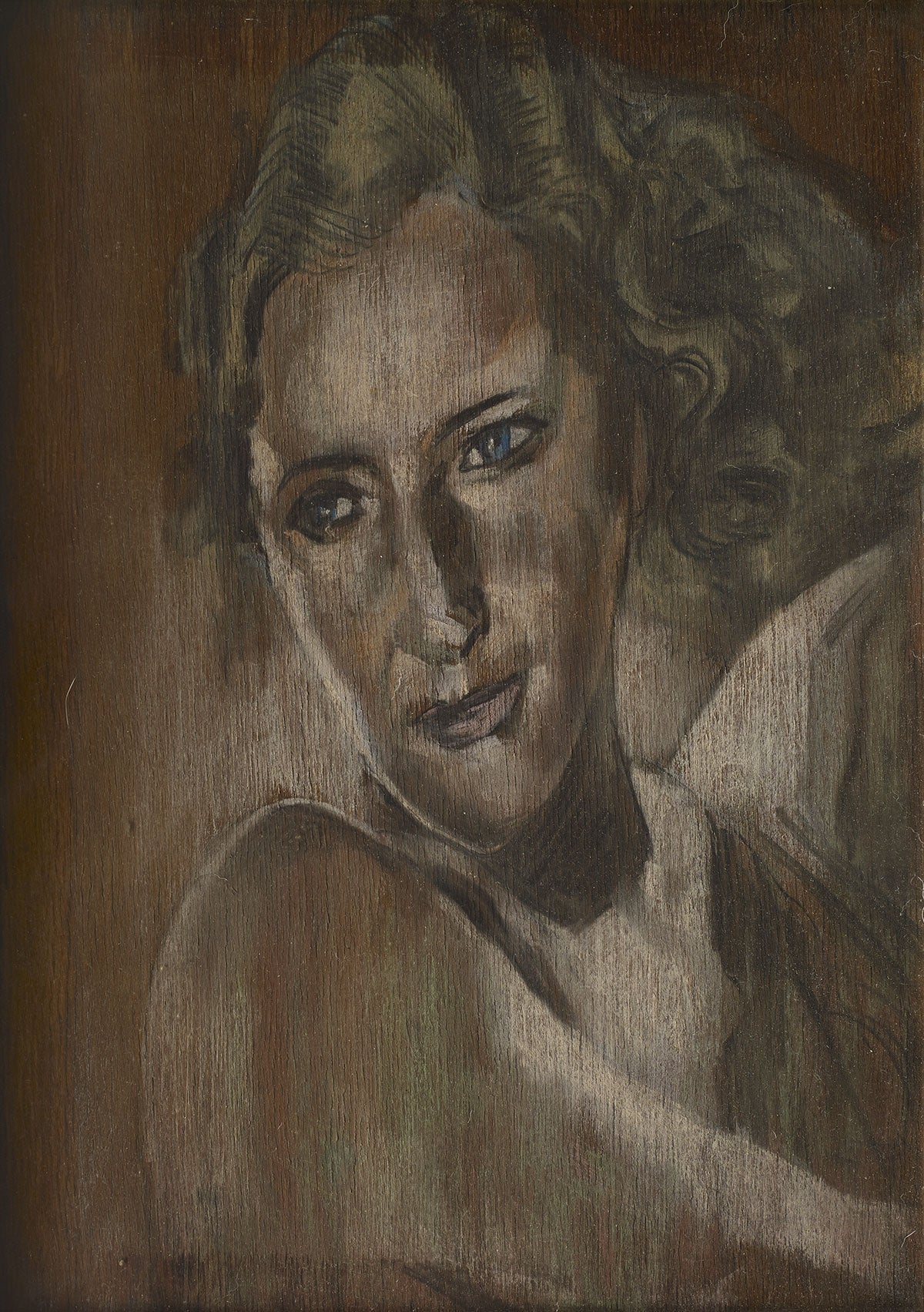
Image Sunset Birth by Ithell Colquhoun

Mexican Masks & Rituals – Phyllis Galembo – Zoom Lecture

PHYLLIS GALEMBO has traveled extensively to photograph the visually stunning ceremonial dress of religious and cultural practitioners in Africa, North and South America, India, and the Caribbean since 1985. Her latest body of work, turns to Mexico, where Galembo captures cultural performances with a subterranean political edge. Her signature portraiture style directly engages her subjects who are informally posed and strikingly attired, their traditional ritual dress reflecting color and light.

Masking is a complex tradition in which the participants transcend the physical world and enter the spiritual realm. Masks, costumes and body paint transform the human body and encode a rich range of political, artistic, theatrical, social and religious meanings onto the human form. In this lecture Galembo highlights the artistry of the performers, how they use materials to morph into fantastical and idealized representations of mythical figures. She captures her subjects suspended between past, present and future, with their religious, political and cultural affiliation, their personal and collective identities inscribed onto their bodies.

Galembo has published several monographs Sodo, Haiti: 1997-2001, will be published by Datz Books this year. Other publications include; Mexico: Masks, Rituals (2019), Maske (2016), Dressed for thrills: 100 years of Halloween costumes & masquerade (2002), Divine inspiration: from Benin to Bahia (1993), Vodou: Visions and Voices of Haiti (1998) Pale Pink (1983).

Galembo was a Guggenheim Foundation Fellow in 2014 as well as a New York Foundation for the Arts Fellow in 2016, 2010, and 1996. She earned an MFA from the University of Wisconsin at Madison, 1977.

Galembo has had solo exhibitions at the Boca Rotan Museum of Art, Florida, the International Center for Photography (ICP), new York, the Smithsonian Institution, Washington D.C., the Tang Museum, and the American Museum of Natural History, New York, among other venues and has appeared at the Venice Biennale, Documenta, and in several group exhibitions. Her work is in the collections of the Metropolitan Museum of Art, Philadelphia Museum of Art, Houston Museum of Art, International Center for Photography (ICP), New York Public Library, Schomburg Center for Research in Black Culture, Yale University Art Gallery, Library of Congress among others. Her work has been widely reviewed and published in print and other media.

Ms. Galembo is currently represented by Axis Gallery, NY.

Beyond Purple Emperors, Extremes of Butterflying – Matthew Oates – by Zoom

The science and social science of butterflies just gets better and better. Our love affair with these fickle sprites of the sunshine hours continually deepens. The more we learn about them, the more we discover and the more complex they become, and the more we are enthralled and entertained. This talk looks at all this, and more.

The science and social science of butterflies just gets better and better. Our love affair with these fickle sprites of the sunshine hours continually deepens. The more we learn about them, the more we discover and the more complex they become, and the more we are enthralled and entertained. This talk looks at all this, and more. Don’t expect dull statistics and the doom and gloom of biodiversity decline. This will be a riot of joy, wonder and humour. It will jump readily between the sciences (ecology) and arts (aesthetics), between the practical and the theoretical. The aim is to stimulate interest in our butterflies and the world they inhabit.

Matthew will talk about some of his favourite butterflies, notably the monarch of them all, the haughty and downright naughty Purple Emperor; will summarise what’s happening now in the world of British butterflies, and what the prospects for the future are (the impact of climate change, and much much more). All this is happening within the context of massive renewed interest in our natural world stimulated by, believe it or not, the Covid-19 lockdown restrictions – in which masses of people flocked to the Great Outdoors, and found considerable solace and belonging there.

Matthew Oates is a nature poet, writer and broadcaster who has dedicated his life to our butterflies. He writes regularly for the Nature Notebook column in The Times and is the author of In Pursuit of Butterflies (2015) and His Imperial Majesty, a natural history of the Purple Emperor (2020). For many years he has been one of the leading lights of the butterfly conservation movement, and is an acknowledged expert of grazing ecology, chalk downland management, and the ecology of several of our resident butterflies. At the same time, he is keenly interested in the metaphysics of our relationship with butterflies.

Photo By Charlie Jackson – Purple Emperor, CC BY 2.0

Philip Terry on Oulipo, France’s Longest Lasting Literary Group

Founded in 1960 by Raymond Queneau and François Le Lionnais, Oulipo (the Ouvroir de littérature potentielle or Workshop of Potential Literature), has in its over six decades explored literary constraints and mathematics in writing, and continues to flourish today, making it the longest lasting literary group in France. This talk will give examples of Oulipian practice from France and elsewhere, including precursors (what Oulipo term “anticipatory plagiarists”), and writers outside Oulipo who have explored similar methods.

Speaker: Philip Terry was born in Belfast, and is a poet, translator, and a writer of fiction. He has translated the work of Georges Perec, Stéphane Mallarmé and Raymond Queneau, and is the author of the novel tapestry, shortlisted for the Goldsmiths Prize. His poetry volumes include Oulipoems, Shakespeare’s Sonnets, Dante’s Inferno, and Dictator, a version of the Epic of Gilgamesh in Globish. He is currently translating Ice Age signs from the caves at Lascaux. The Penguin Book of Oulipo, which he edited, was published in Penguin Modern Classics in 2020.

The History and Mystery of Haitian Vodou, Zoom Lecture by Dr Louise Fenton

Vodou is a religion that emerged from the cultural traditions of enslaved Africans, syncretised with forced Catholicism, on the Caribbean Island of Haiti.

Often misrepresented, stereotyped and misunderstood, this talk will discuss the history of Haitian Vodou. Vodou is a religion that emerged from the cultural traditions of enslaved Africans, syncretised with forced Catholicism, on the Caribbean Island of Haiti. Dr Louise Fenton will explore the evolution of Vodou before offering a visual journey through the intricacies of the religion, an overview of the belief systems and the rituals. Vodou has had a turbulent history, persistently facing persecution. This talk will explore the attempts by the Church and State to eradicate this religion through the anti-superstition campaigns and the US Occupation. It will then examine some of the mysteries that have evolved through the literary and cinematic representations in the early twentieth century, those that have reinforced prejudice and led to the generalised term ‘Voodoo’ in the Western imagination. This talk will offer an overview of Vodou, a vibrant religion and a cultural force that has survived and thrived.

Speaker: Dr Louise Fenton is a Senior Lecturer at the University of Wolverhampton. Her PhD in Caribbean history from the University of Warwick was on the History and Influence of Haitian Vodou within British and American cultural production. Louise’s research interests are in Haitian Vodou, New Orleans Voodoo, Icelandic Witchcraft and European Witchcraft. She has written about the demise of the cinematic zombie in Recovering 1940s Horror Cinema (Lexington, US, 2014) essays on various representations of Vodou in The Voodoo Encyclopaedia: Magic, Ritual and Religion (ABC-Clio, US, 2015), poppets and the social history of curses. She curated the 2017 exhibition at the Museum of Witchcraft and Magic Poppets, Pins and Power, which explored the social history of curses and cursed objects. As an artist Louise also uses her visual practice within her research and is currently working on Atmospheric Spaces and Enchanted Places.

Watch a recording of This Lecture, & 100s of others, for free when you join our Patreon www.patreon.com/theviktorwyndmuseum