Ancient Monsters: Greek and Roman Traditions
September 28th
In this illustrated lecture Dr. Asma will explore some of the dominant types of monsters in ancient Western literature, natural history, and philosophy. We will learn about classic beasties like Cyclopes, but also lesser-known topics like Plato’s monster, and Aristotle’s theory of monstrosity.
Watch a recording of This Lecture, & 100s of others, for free when you join our Patreon www.patreon.com/theviktorwyndmuseum
The Museum of Witchcraft and Magic is in the beautiful Cornish village of Boscastle, UK. It was opened in this location in 1960 and is still there today. The founder of the museum, Cecil H Williamson, acquired an array of artifacts, some donated, some bought and some that he may have made. These artifacts include a collection that were made to harm, or worse, to kill. They do not all come from practitioners, some were made in domestic settings as revenge. Dr Louise Fenton has been researching the collection of curses and cursed objects at the Museum of Witchcraft and Magic for the past ten years. In this fully illustrated talk she will discuss a range of reasons for the creation of the curses, what the intention was behind the objects, and some of the stories behind these fascinating artifacts.
The Unnatural History of Cornwall – curated by Dr.Amy Hale brings stories of the weird and wonderful from Cornwall to a wider audience, with an emphasis on Cornish voices from the past and the present.
Traditional ballads and the tunes that go with them can be quite separate entities that connect and part company as they travel through time. There is a sense in which both carry the stories and interpretations of the people and communities with which they engage. Indeed, these stories and meanings will often tell us more about these people and their social milieu than the origins of the tradition. During the course of its travels the story of the Pencarrow Hunt and Black John has connected with some interesting characters and provides the perfect study for an “unnatural history”.
The Unnatural History of Cornwall – curated by Dr. Amy Hale brings stories of the weird and wonderful from Cornwall to a wider audience, with an emphasis on Cornish voices from the past and the present.
Speaker: Tony ‘Doc’ Shiels arrived in St Ives, Cornwall in 1958, a hopeful and ambitious young artist. For a few years his painting career went well, but he grew impatient with the limitations of abstract art. Instead, emboldened by Dada and Surrealism, his life became stranger and more magical. He displayed the disembodied head of an Egyptian princess, sawed a woman in half, and carried out some bizarre monster-raising stunts involving Morgawr the Cornish sea serpent. He included his wife, children and friends in many of these exploits and, indeed, after appearing in the national media, in the mid-1970s they became briefly known across Britain as ‘The weirdest family in the land’.
Curator: Dr. Amy Hale is an Atlanta-based anthropologist and folklorist writing about esoteric history, art, culture, women and Cornwall in various combinations. Her biography of Ithell Colquhoun, Genius of the Fern Loved Gully, is available from Strange Attractor Press, and she is also the editor of the forthcoming collection Essays on Women in Western Esotericism: Beyond Seeresses and Sea Priestesses from Palgrave Macmillan. Other writings can be found at her Medium site https://medium.com/@amyhale93 and her website www.amyhale.me.
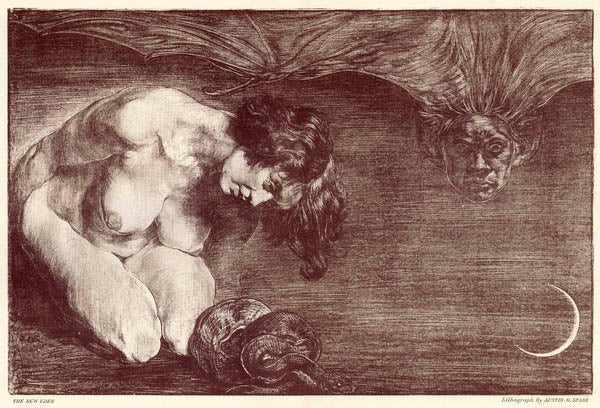
Lilith – From Demon to Feminist Icon
The talk follows Lilith’s trajectory from her origins as an evil entity in Jewish folklore and demonology, to being a feminist icon today. We get to meet the Pre-Raphaelite poets, romantic painters, and lesbian Luciferians who all helped shape the image of her. We delve into the work of 19th-century occultists like Eliphas Lévi and Madame Blavatsky. We encounter the early feminists who saw a kindred spirit in rebellious Lilith. We examine her role in present-day political activism, Jewish feminist theology, Satanism and esoteric groups. Drawing on this multitude of voices, the talk also discusses broader mechanisms of counter-reading, mythical reinvention, and cultural subversion.
Per Faxneld is Associate Professor in History of Religions at Södertörn University (Stockholm), author of “Satanic Feminism Lucifer as the Liberator of Woman in Nineteenth Century Culture” and a devotee of weird antiques, ominous music, and sinister sartorialism. He is the author of three monographs, two edited volumes, and numerous articles on Satanism, occultism, and esoteric art. In 2020, Faxneld made his literary debut with “Offerträdet” (“The Tree of Sacrifice”), an illustrated collection of folk horror tales set in 19th-century northern Sweden.
From Fantômas to the murderous delirium of the Papin Sisters, the criminal imaginary of modern Paris formed the basic cultural material from which the surrealist movement first stitched together its political and intellectual priorities. The surrealists established many of the basic coordinates of their poetic universe according to the images of violence and atrocity that formed the dramatic and often documentary core of modern popular culture. Ardent readers of the press and active consumers of popular culture, the poets and artists of the surrealist movement were also champions of real-life killers, particularly women: this included the anarchist Germaine Berton, who gunned down the managing editor of the reactionary right-wing newspaper L’Action Française in 1923, as well as the patricide Violette Nozière, who poisoned her father in 1933 in retaliation, she claimed, for a lifetime of sexual abuse. Such figures were criminalized by the popular press, yet for many surrealists their violent acts were counterstrikes against pervasive structural violence, which the surrealist group extended to colonialism, bourgeois morality, and, most of all, the rise of right-wing nationalism in Western Europe. Understanding crime—and distinguishing systematic violence from sudden, perverse outbursts— was fundamental to the surrealist movement’s responses to pressing political and intellectual events of the twentieth century.
Ghosts I have Nearly Seen
A Natural History of Ghosts tells of my attempts since childhood to see a ghost: a full-fat apparition rather than simply noises and feelings. I still have not seen one. Rather than do the usual talk about Christmas and ghost-stories I thought – why don’t I talk about my most personal experiences of the supernatural and uncanny? It was touched on at the beginning of the NHOG, but not really followed up since I didn’t want to skew the believing/sceptical balance of the book. In truth I have had alarming Ouija-board experiences in Oxford Colleges and the house of the former dictator of Cuba, have experienced JOTTS, have witnessed friends plagued one Christmas at the residence of a famous Screaming Skull, been subject to hypnopompic hallucinations for decades while on the verge of slumber (and subsequently had to attend an NHS Sleep Clinic earlier this year).
How does one navigate the subject when you heart believes, and your head does not? This is the story of my close-shaves with the ghostly.
Roger Clarke lives in Shoreditch, London. A published poet, librettist and short-story writer, he paid the bills as a literary critic on the Sunday Times and wrote three film columns a week for The Independent Newspaper. A Natural History of Ghosts has been translated in many languages including Japanese and Korean.
Your host for this event will be the writer Edward Parnell, author of ‘Ghostland: In Search of a Haunted Country’. Edward Parnell lives in Norfolk and has an MA in Creative Writing from the University of East Anglia. He is the recipient of an Escalator Award from the National Centre for Writing and a Winston Churchill Travelling Fellowship. Ghostland (William Collins, 2019), a work of narrative non-fiction, is a moving exploration of what has haunted our writers and artists – as well as the author’s own haunted past; it was shortlisted for the PEN Ackerley 2020 prize, an award given to a literary autobiography of excellence. Edward’s first novel The Listeners (2014), won the Rethink New Novels Prize. For further info see: https://edwardparnell.com
CABARETS OF DEATH – Playing with Death and the Afterlife in Popular Amusements
A Live, Illustrated Zoom Talk with historian Joanna Ebenstein
Cabarets of Death: Playing with Death and the Afterlife in Popular Amusements: By Joanna Ebenstein, editor of Mel Gordon’s “Cabarets of Death: Death, Dance and Dining in Early Twentieth-Century Paris”
From 1892 until 1954, three cabaret-restaurants in Paris’ Montmartre district enraptured tourists with their grotesque portrayals of death in the afterworlds of Hell, Heaven, and Nothingness. Each had specialized cuisines and morbid visual displays with flashes of nudity and shocking optical illusions. These cabarets were considered the most curious and widely featured amusements in the city. Entrepreneurs even hawked graphic postcards of their ironic spectacles and otherworldly interiors.
This illustrated talk will tell the story of the death themed cabarets of Paris, and situation them within the context of the history of death themed amusements—from phantasmagoria shows to Grand Guiginol to Coney Island’s disaster spectacles—in the age of rationality and beyond.
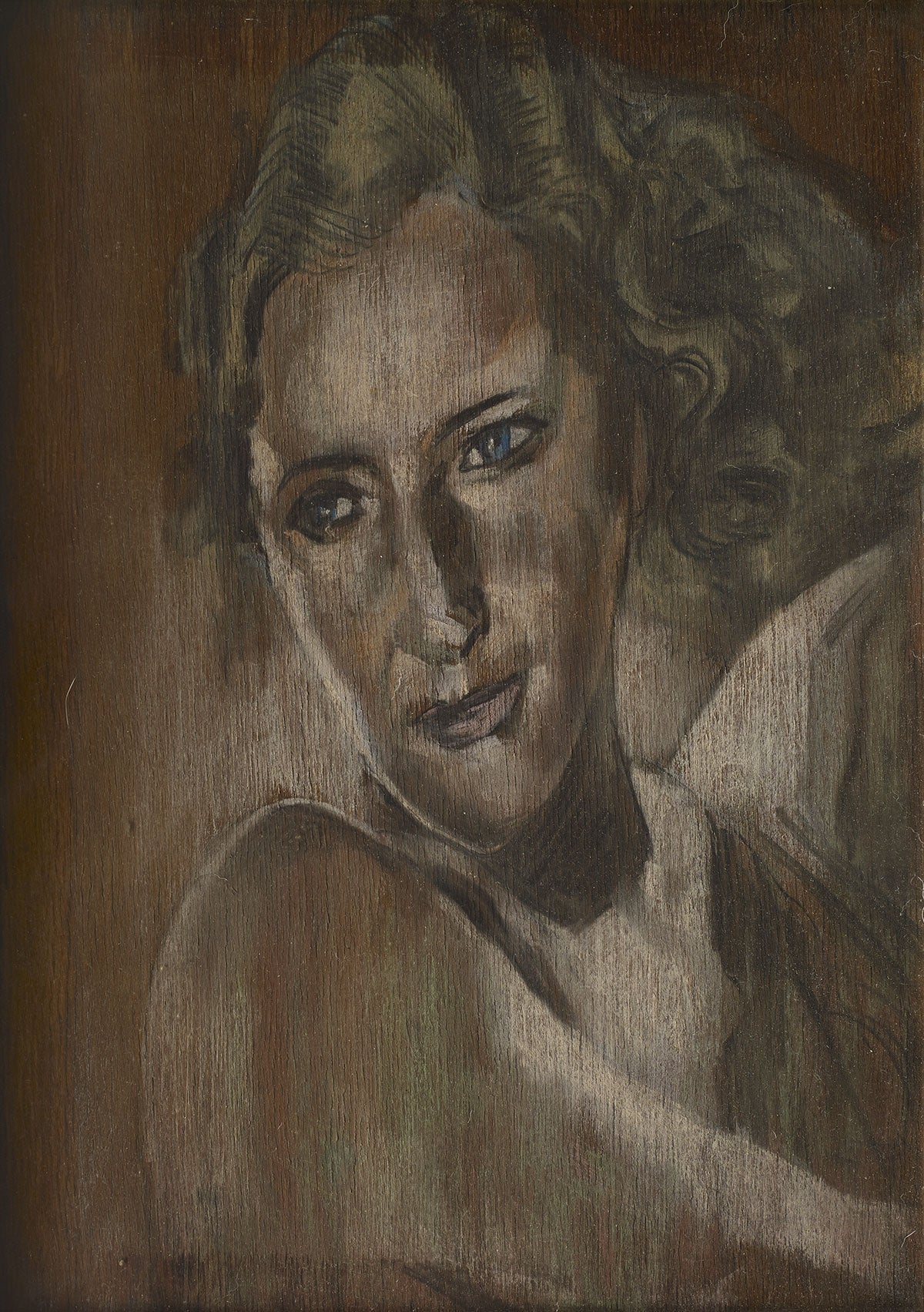
In Leonora Carrington´s oeuvre, fantastic animals and beings inhabit magical worlds. Goddesses and magicians perform rituals in places filled with symbols and references abound to a range of occult traditions dating back to antiquity.
Her paintings bring together Celtic traditions and Egyptian, Hebrew, Mesopotamian and Greek mysteries. There are references To alchemy, astrology, the Cabala, Tarot, herbalism, magic and witchcraft. As Edward James once stated: “her paintings sometimes Seem to have materialized in a cauldron at the stroke of midnight. Carrington´s interest in magic and witchcraft began in childhood and expanded with her encounter with the surrealists. Nevertheless, the imprint of Mexico and the Mesoamerican religions and magical rituals has often been overlooked. In this talk I will explore the syncretism of some of the Celtic and British traditions and the ones she encounter once she settled in Mexico where she produced the majority of her work.
Tere Arcq was Chief Curator of the Museum of Modern Art in Mexico and Director of an International Art Investment Fund. As an independent curator, she creates and produces exhibitions in Mexico and abroad. Her most recent is Leonora Carrington Magical Tales at Museum of Modern Art in Mexico City and MARCO in Monterrey. In 2012 she curated In Wonderland. The Adventures of Women Surrealists in Mexico and the United States, an international project presented at the Los Angeles County Museum of Art (LACMA), The National Museum of Fine Arts in Quebec and The Modern Art Museum in Mexico.
Her expertise in the art world includes, teaching; edition of art books and exhibition catalogues; collaboration in the production of documentaries and short films on artists and the design and organization of specialized art tours for collectors. She is a frequent lecturer at museums, institutions and universities worldwide.
Tere Arcq is an Art Historian with a Masters Degree in Museum Studies and Art Management.
After a long period when there were few witchcraft trials in England, in the mid-1640s, during the civil war, there was a devastating outbreak in the eastern counties. Self-professed witchfinders, assisted by midwives and other searchers, rode from place to place investigating rumours and encouraging witnesses. Around 300 suspects were arrested, a third of them executed. Something of the witchfinders’ methods, and the underlying causes of their crusade, drifted across the Atlantic to the American colonies. New England, which had seemed unbothered by witchcraft in the first twenty-seven years of its history, hanged its first witch in 1647. One of the best documented outbursts took place in Springfield, Massachusetts, in 1651, when the fear and rage of a frontier community focused upon a labouring couple, Hugh and Mary Parsons. This talk tells their tragic story, and suggests how their fate was rooted in turbulent old England as well as in the unique conditions of the New World.