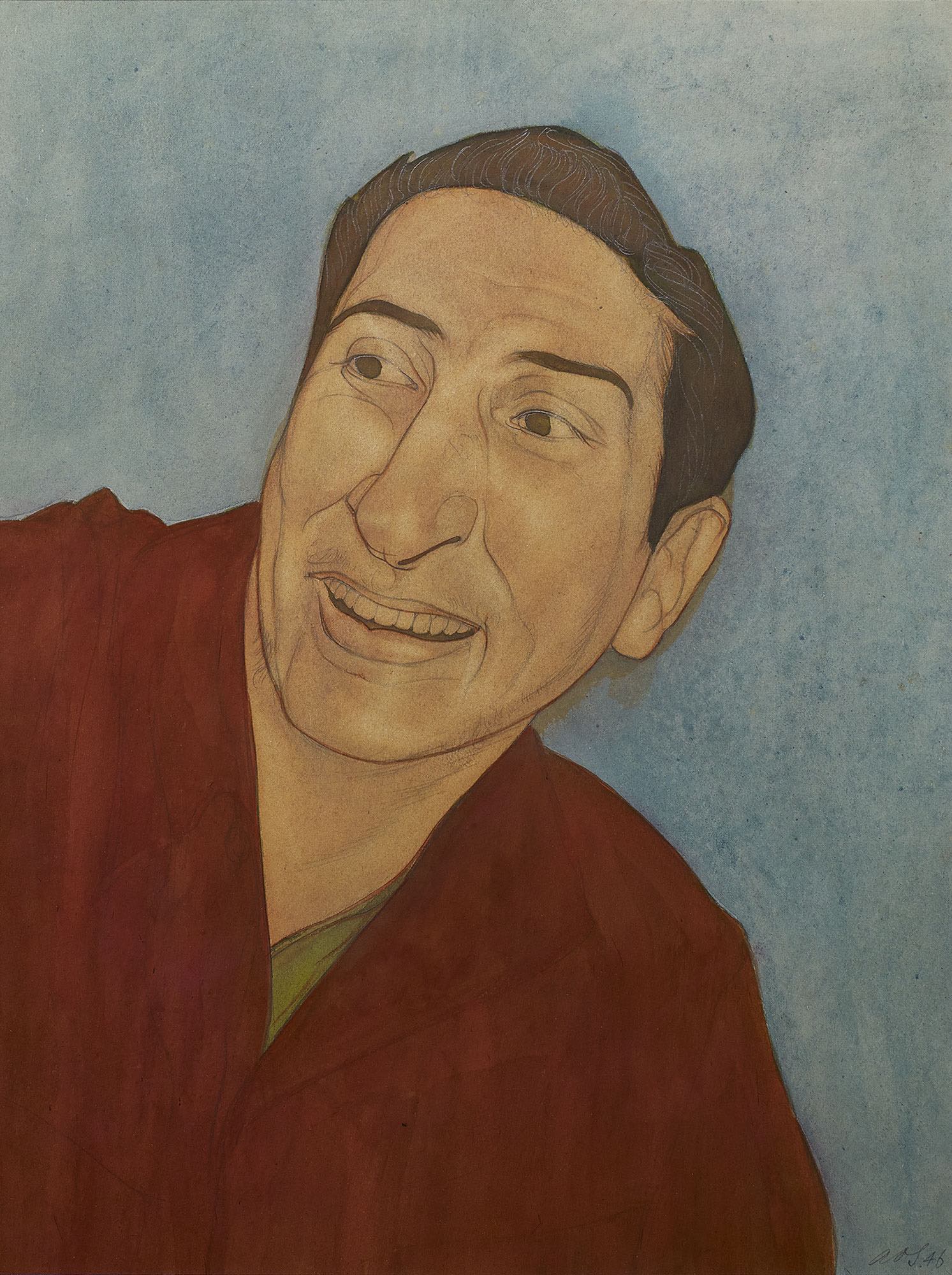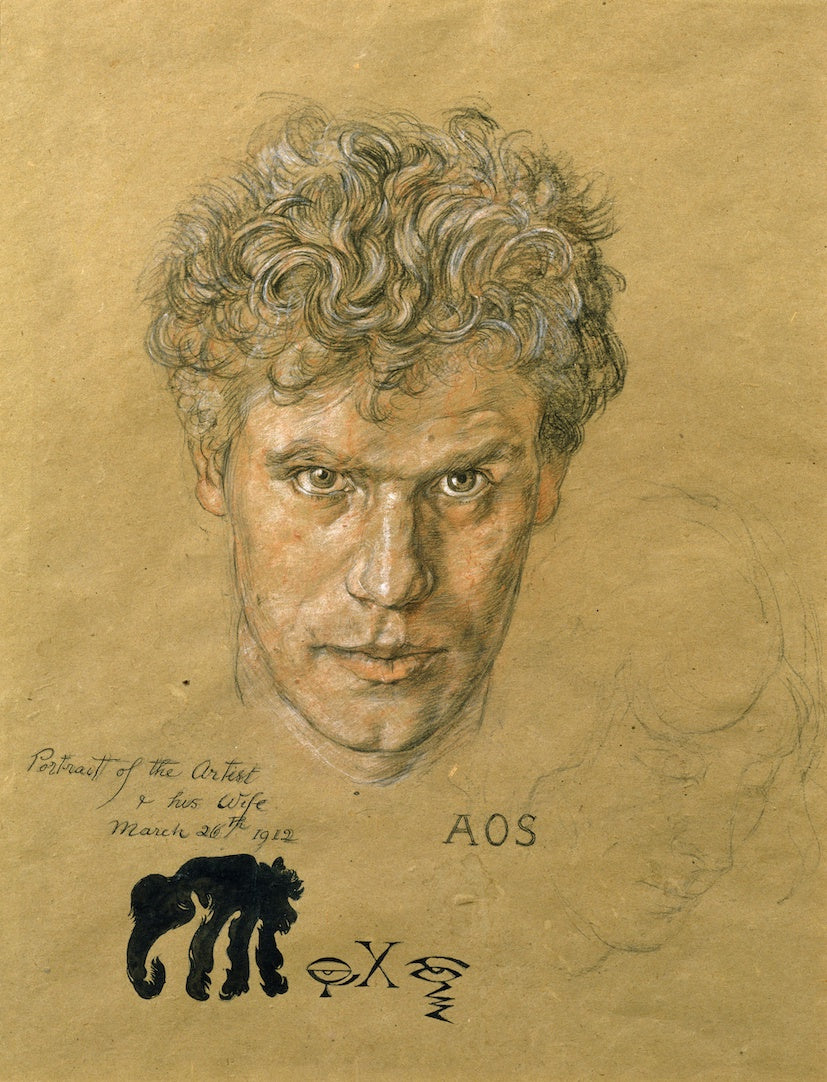
British Women Surrealists by Nayia Yiakoumaki – zoom lecture

Nayia Yiakoumaki discusses the research and making of the exhibition Phantoms of Surrealism.

This archive show took place at Whitechapel Gallery ( 27 April – 12 December 2021). Artists presented were Elizabeth Andrews (1882–1977), Ruth Adams (1893–1948), Eileen Agar (1898–1991), Claude Cahun (1894–1954), Ithell Colquhoun (1906–1988), Diana Brinton Lee (n/a–1982), Grace Pailthorpe (1883–1971), Elizabeth Raikes (1907–1942), Edith Rimmington (1902–1986), Sheila Legge (1911–1949) who exhibited at the London International Surrealist Exhibitions or with the Artists International Association. AIA was dedicated to the ‘Unity of Artists for Peace, Democracy and Cultural Development’ and staged an anti-war exhibition at Whitechapel Gallery in 1939 which included a Surrealist section. Drawn from the Whitechapel Gallery archives and other national collections, including the National Galleries of Scotland, Edward James Archives and Jersey Heritage Trust, as well as private collections, photographs, documents and dazzlingly designed printed matter reveal women’s contribution to these ground-breaking shows.

Nayia Yiakoumaki is Curator and Head of Curatorial studies at Whitechapel Gallery, where she has developed an innovative programme of research exhibitions which investigate unknown histories of art and curating. Yiakoumaki runs the Whitechapel Gallery’s MA course Curating Art and Public Programmes in association with London South Bank University. From 2016-2017 she co-directed the Athens Biennale as Director of Research and International Networks. She is on the committees of the board for Wroclaw Contemporary, Poland; Women’s Art Library, UK and is a Trustee at Matt’s Gallery, UK. Yiakoumaki has curated a number of successful exhibitions including John Latham: Anarchive (2010), Rothko in Britain (2012), Stephen Willats: Concerning Our Present Way of Living (2014), Guerrilla Girls: Is it even worse in Europe? (2016-2017), Staging Jackson Pollock (2018), Queer Spaces: London, 1980s – Today (2019), Exercising Freedom: Encounters with Art, Artists and Communities (2021) and Phantoms of Surrealism (2020-2021).

Demonization: Xenophobia and the Other – Dr Stephen Asma

a recording of this lecture will be sent to ticketholders who miss it

Philosophy of Monsters Series – Prof. Stephen Asma

General Course Description

The category “monster” disrupts the borders and boundaries of what we consider natural, normal, and even intelligible. Our rational systems of order are upended by the monstrous. In this lecture series Dr. Asma examines the role of monsters in cognition and knowledge, the ethical and political uses of monstrosity, the relation to personal identity, and the problem of evil. A philosophical “monsterology” is committed to the idea that we can better understand the human condition by examining what scares us–what makes us vulnerable.

Demonization: Xenophobia and the Other – May 29th 2022

In this illustrated lecture Dr. Asma will explore how monster culture has played a role in antisocial representation of humans outside one’s own tribe. Stories and images embedded in religious, literary, and scientific narratives have conceptualized strangers as threats. Are there specific trends in such scapegoating? How do moral panics draw on established monster tropes and metaphors? And is it possible to overcome these entrenched tendencies in our social psychodynamics?

In this lecture Professor Asma will look at the way some monster stories and images were used in racist propaganda as well as the vilification of ethnic groups. Special attention will be given to longstanding antisemitic monster narratives in Europe, African American demonization in 19th and 20th century, and more recent cases of Islamophobia. Asma argues that demonizing outsiders is lamentable but a common feature of all human group interaction when there is competition for resources. Asma will show how most demonization strategies divide into accusations of “barbarism” on the basis of innate flaws or deleterious cultural conventions.

Speaker:

Stephen Asma is Professor of Philosophy at Columbia College Chicago, where he is a Senior Fellow of the Research Group in Mind, Science and Culture. Asma is the author of ten books, including On Monsters: An Unnatural History of Our Worst Fears (Oxford Univ. Press), The Emotional Mind: Affective Roots of Culture and Cognition (Harvard Univ. Press), The Evolution of Imagination (Univ. of Chicago), and The Gods Drink Whiskey (HarperOne). He writes regularly for the New York Times, the Chronicle of Higher Education, and Aeon magazine.

Tickets are for this lecture only – please book the rest in the series separately

Philosophy of Monsters Series – Prof. Stephen Asma

Previous ones in the series are available to view on demand:

Watch a recording of This Lecture, & 100s of others, for free when you join our Patreon www.patreon.com/theviktorwyndmuseum

Philosophizing Aliens, UFOs, and Astrobiology – Dr Stephen Asma

a recording of this lecture will be sent to ticketholders who miss it

Philosophy of Monsters Series – Prof. Stephen Asma

General Course Description

The category “monster” disrupts the borders and boundaries of what we consider natural, normal, and even intelligible. Our rational systems of order are upended by the monstrous. In this lecture series Dr. Asma examines the role of monsters in cognition and knowledge, the ethical and political uses of monstrosity, the relation to personal identity, and the problem of evil. A philosophical “monsterology” is committed to the idea that we can better understand the human condition by examining what scares us–what makes us vulnerable.

Philosophizing Aliens, UFOs, and Astrobiology – April 24th 2022

In this illustrated lecture Dr. Asma will examine the essential philosophical issues surrounding the existence of alien life, UFOs, and contact. Scenarios and risk-management responses will be discussed, as well as questions of epistemology, philosophy of mind, and evolution.

Popular mainstream alien-mania quickly settles into sci-fi tropes that, albeit fun, obscure more serious questions about the biology, psychology, and the philosophical meaning of alien life. But in the Academy, scholars also avoid these serious questions in favor of a purely cultural analysis of alien reports, preferring to study the human history and cultural impact of alien storytelling while taking a somewhat dismissive stance toward the possible reality of extraterrestrial life.

In this lecture, Professor Asma will not try to convince skeptics or true believers to change their minds, but rather consider the interesting evolutionary questions about alien bodies, brains, cultures, and technologies. Would aliens have similar anatomies or emotional palettes with mammals for example? Would they converge on the same science as humans? Given what we know about large civilizational human clashes, can we infer anything about the political consequences of contact?

Speaker:

Stephen Asma is Professor of Philosophy at Columbia College Chicago, where he is a Senior Fellow of the Research Group in Mind, Science and Culture. Asma is the author of ten books, including On Monsters: An Unnatural History of Our Worst Fears (Oxford Univ. Press), The Emotional Mind: Affective Roots of Culture and Cognition (Harvard Univ. Press), The Evolution of Imagination (Univ. of Chicago), and The Gods Drink Whiskey (HarperOne). He writes regularly for the New York Times, the Chronicle of Higher Education, and Aeon magazine.

Tickets are for this lecture only – please book the rest in the series separately

Philosophy of Monsters Series – Prof. Stephen Asma

Previous ones in the series are available to view on demand:

Watch a recording of This Lecture, & 100s of others, for free when you join our Patreon www.patreon.com/theviktorwyndmuseum

Inner Monsters: Psychopaths and Psychologizing Monsters – Dr Stephen Asma

a recording of this lecture will be sent to ticketholders who miss it

Philosophy of Monsters Series – Prof. Stephen Asma

General Course Description

The category “monster” disrupts the borders and boundaries of what we consider natural, normal, and even intelligible. Our rational systems of order are upended by the monstrous. In this lecture series Dr. Asma examines the role of monsters in cognition and knowledge, the ethical and political uses of monstrosity, the relation to personal identity, and the problem of evil. A philosophical “monsterology” is committed to the idea that we can better understand the human condition by examining what scares us–what makes us vulnerable.

Inner Monsters: Psychopaths and Psychologizing Monsters – March 6th 2022

In this illustrated lecture, Professor Asma will examine the transition from traditional external monsterology (e.g., creatures, demons, etc.) to our contemporary fascination with psychopaths and inner monsters of human psychology. Why has the 20th and 21st century focused so heavily on monsters of the mind?

Asma will describe the “subjective turn” in philosophy during the Modern era that eventually gave us an aesthetics of the “sublime,” Schopenhauer’s monstrous “will” and Freud’s view of the mind as an alienated and conflicted psyche. We will focus on a few famous cases including the Leopold and Loeb trial, the cases of John Wayne Gacy and Jeffrey Dahmer, and some reflections on narcissism in Incel mass shootings. These cases will be examined in light of recent psychological work on empathy.

Speaker:

Stephen Asma is Professor of Philosophy at Columbia College Chicago, where he is a Senior Fellow of the Research Group in Mind, Science and Culture. Asma is the author of ten books, including On Monsters: An Unnatural History of Our Worst Fears (Oxford Univ. Press), The Emotional Mind: Affective Roots of Culture and Cognition (Harvard Univ. Press), The Evolution of Imagination (Univ. of Chicago), and The Gods Drink Whiskey (HarperOne). He writes regularly for the New York Times, the Chronicle of Higher Education, and Aeon magazine.

Tickets are for this lecture only – please book the rest in the series separately

Watch a recording of This Lecture, & 100s of others, for free when you join our Patreon www.patreon.com/theviktorwyndmuseum

The Last Wild Men of Borneo by Carl Hoffman – Zoom Lecture

This will be recorded for ticketholders only

Two modern adventurers sought a treasure possessed by the legendary” Wild Men of Borneo.” One found riches. The other vanished forever. Had he shed “civilization” or gone mad? Global headlines suspected murder. Lured by these mysteries, Carl Hoffman journeyed to find the truth, discovering that nothing is as it seems in the world’s last Eden. Tracing the entwined tales of Michael Palmieri, one of the world’s most successful tribal art field collectors, and Bruno Manser, the Swiss environmentalist who abandoned Western society to live among the Penan nomads of the rainforest, Hoffman reveals both the grandeur and the precarious fate of the one of our last wild places.

Carl Hoffman is the critically acclaimed author of five books. His New York Times bestselling Savage Harvest: A Tale of Cannibals, Colonialism, and Michael Rockefeller’s Tragic Quest, was a New York Times “Editor’s Choice,” a NY Times best seller and one of the Washington Post’s 50 notable books of 2014. The Last Wild Men of Borneo was a finalist for the Banff Mountain Book Competition and an Edgar Award. The Lunatic Express was one of the Wall Street Journal’s ten best books of 2010. His most recent, Liar’s Circus, was named one of Kirkus Review’s 100 best books of 2020. He is a former contributing editor to National Geographic Traveler and Wired magazines and he has travelled on assignment to eighty countries.

The History of Christmas – Professor Ronald Hutton – Zoom Lecture

Most people realise that the way in which they celebrate Christmas now was largely developed by the Victorians, but also that there are aspects of it which descend directly from very important and very ancient pagan festivals. This talk is designed to explain when and how our familiar midwinter customs developed, and why. It will look at the origins of the rituals, the decorations, the pastimes and the characters that have come to be associated with the modern Christmas, and also at those we have lost from the previous two millennia. In the process it will suggest that the most ancient associations of all are perhaps those which we take most for granted, or regard as the most commercialised, today.

Speaker: Professor Ronald Hutton is a Professor of History at the University of Bristol. He is a leading authority on history of the British Isles in the sixteenth and seventeenth centuries, on ancient and medieval paganism and magic, and on the global context of witchcraft beliefs.

Watch a recording of This Lecture, & 100s of others, for free when you join our Patreon www.patreon.com/theviktorwyndmuseum

Fairy Tales – Professor Ronald Hutton – Zoom Lecture

a recording of this lecture will be available to ticket holders for two weeks after the event

The classic fairy tale is a story about how a person or a group of people copes with a supernatural event or a supernatural being, usually under circumstances of extreme stress. Every known culture tells them, so they are probably intrinsic to the human race. This talk traces their development within Europe, from the earliest times to the present, and in the process shows how some of the best-known today, like Cinderella and Snow White, appeared. It also tells the life stories of the greatest modern collectors or composers of such stories, the Brothers Grimm and Hans Christian Andersen, which are as colourful as many of the narratives they published. It traces the continuation of the literary fairy story up to J. R. R. Tolkien, and asks which famous modern works of fantasy fiction are, and are not, fairy tales.

Speaker: Professor Ronald Hutton is a Professor of History at the University of Bristol. He is a leading authority on history of the British Isles in the sixteenth and seventeenth centuries, on ancient and medieval paganism and magic, and on the global context of witchcraft beliefs.

Paganism and Folklore – Professor Ronald Hutton – Zoom Lecture

a recording of this lecture will be available to ticket holders for two weeks after the event

The period between 1890 and 1970 was the heroic and formative age for British folklore collecting, in which a huge trove of popular traditions and customs was assembled by middle-class scholars. A fundamental belief which drove those scholars was that rural people were essentially unchanging, and so preserved relics of very ancient religion and culture in their seasonal rites and their stories. It inspired promient academics, who made considerable use of the folklore concerned in major works of theory such as Sir James Frazer’s The Golden Bough. The purpose of this talk is to find out why the early folklorists had such an interest in ancient paganism and such a conviction that traces of it had survived in the British countryside. It is an investigation that takes us from the halls of academe and the villages of England to India, and the pages of Dr Jekyll nd Mr Hyde, and Dracula.

Speaker: Professor Ronald Hutton is a Professor of History at the University of Bristol. He is a leading authority on history of the British Isles in the sixteenth and seventeenth centuries, on ancient and medieval paganism and magic, and on the global context of witchcraft beliefs.

Modern Druidry – Professor Ronald Hutton – Zoom Lecture

a recording of this lecture will be available to ticket holders for two weeks after the event

Since 1990, Druidry has emerged as one of the main components of contemporary spirituality, especially but not exclusively as part of the contemporary Pagan revival. This process is, however, but the latest aspect of a long series of interactions between the ancient figure of the Druid and modern culture, particularly in Britain. This talk is designed to consider those interactions, and the representations since 1700 of Druids as patriotic heroes, sages and scholars, exemplars of ecological self-awareness and mystics, and (alternatively) as bloodthirsty and bigoted priests who epitomised ignorance and oppression. It will show how Druid societies emerged in modern Britain, and spread across the Western world, and how eventually Druidry came to take its place as an important contemporary religious tradition, and why.

Speaker: Professor Ronald Hutton is a Professor of History at the University of Bristol. He is a leading authority on history of the British Isles in the sixteenth and seventeenth centuries, on ancient and medieval paganism and magic, and on the global context of witchcraft beliefs.

The Historical King Arthur – Professor Ronald Hutton – Zoom Lecture

a recording of this lecture will be available to ticket holders for two weeks after the event

Arthur is probably the best-known legendary hero in Western tradition, to judge from the wide dispersal of the stories about him in modern culture, and especially their manifestations on the cinema and television screen and in novels. This draws in turn on his medieval popularity, which resulted in somebody who was originally a Welsh national figure becoming a subject for writers all over Western Europe. Was there, however, a genuine leader behind the later legend? This evening’s presentation looks at the evidence for one in historical texts and archaeological finds, and also at the way in which a general disposition among experts to believe in a historical Arthur in the years around 1970 turned into a general tendency not to believe in him during those around 2000. It will show that despite this, the issue is not closed down yet.

Speaker: Professor Ronald Hutton is a Professor of History at the University of Bristol. He is a leading authority on history of the British Isles in the sixteenth and seventeenth centuries, on ancient and medieval paganism and magic, and on the global context of witchcraft beliefs.