Ossian 1: The Scottish Highlands: Epic Mode – Dòmhnall Uilleam Stiùbhart – Zoom

Ossian 1: The Scottish Highlands: Epic Mode

In this opening talk we’ll investigate the heroic stories and ballads of the Scottish Highlands telling of the adventures of the warrior band known as the Fèinn, and their leader Fionn mac Cumhail or Finn MacCool. These exciting, complex, and often moving stories are part of the common heritage of Scotland and Ireland. The earliest texts of the ‘Finn Cycle’ were composed well over a millennium ago, and the tales have been told and retold, written and read (and filmed!), added to and adapted, from then till now.

The stories can sparkle with life and creative energy. The Fèinn fight enemy invaders: mortal kings of Lochlann, or Greece, or even of the Entire World. They struggle to defeat otherworldly hags on land and sea. Again, disagreements among the heroes themselves can sometimes lead to quarrels and even murder. But these tales are about far more than violence alone: they tell of romantic encounters and love-affairs, of hunts and heroic quests, of romance, enchantment, and foolishness.

For previous generations, these tales were not counted as fiction, but as historical fact. The stories of these warriors were entwined with Scottish Highland genealogies and local landscapes, with proverbs and everyday life. Looking beyond the performances of the tales, we can appreciate just how deeply the lore of the Fèinn was woven into Scottish Gaelic culture.

Speaker Bio:

Dòmhnall Uilleam Stiùbhart is a leading Scottish scholar of Gaelic language, folklore, and oral tradition. He is Associate Professor in Celtic and Scottish Studies at the University of Edinburgh and has long been associated with School of Scottish Studies, where he has contributed extensively to research on narrative tradition, belief, and vernacular culture.

His work focuses particularly on Gaelic storytelling, popular belief, charm traditions, and the cultural worlds of the Highlands and Islands, combining rigorous scholarship with a deep respect for living oral heritage. Stiùbhart is known for his ability to bridge academic research and community knowledge, often working closely with tradition bearers and archival materials alike.

In addition to his academic publications, he has played an important role in public folklore work in Scotland, including education, heritage projects, and the preservation and interpretation of Gaelic intangible cultural heritage. His scholarship is marked by clarity, cultural sensitivity, and a strong commitment to keeping Gaelic voices central to the study of Scotland’s past and present.

Curated & Hosted by:

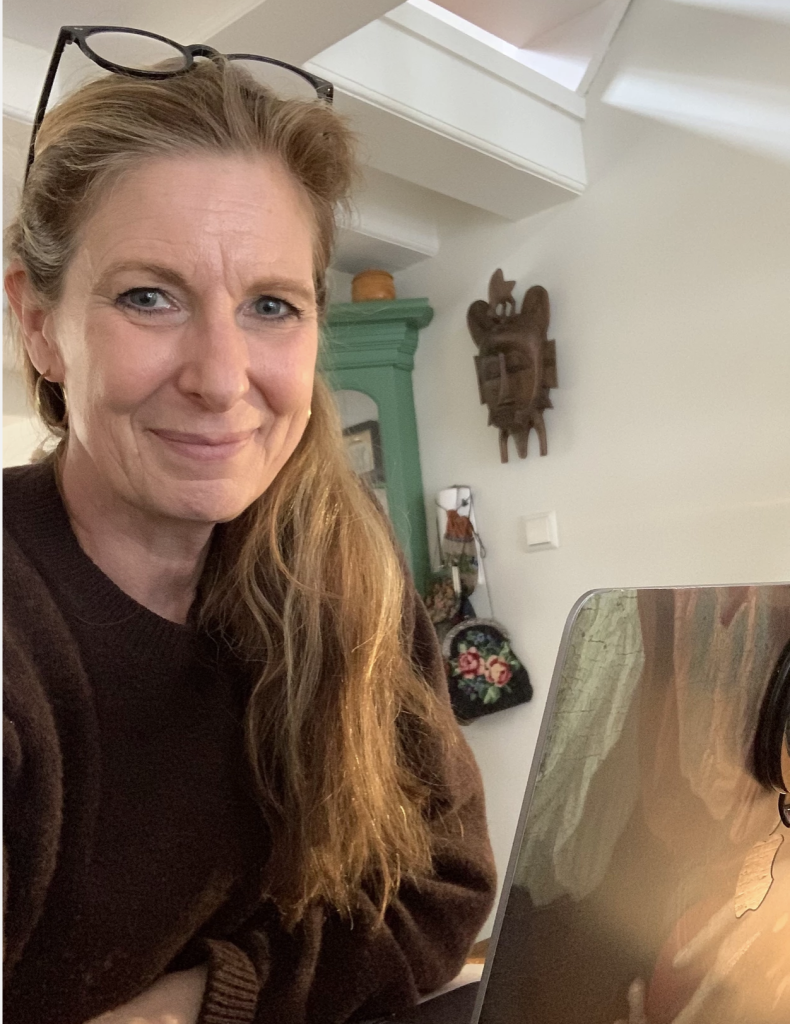
Lena Schattenherz Heide-Brennand is a Norwegian lecturer with a master degree in language, culture and literature from the University of Oslo and Linnaeus University. She has been lecturing and teaching various subjects since 1998. Her field of interest and main focus has always been topics that others have considered strange, eccentric and eerie, and she has specialised in a variety of dark subjects linked to folklore, mythology and Victorian traditions and medicine. Her students often point out her thorough knowledge about the subjects she is teaching, in addition to her charismatic appearance. She refers to herself as a performance lecturer and always gives her audience an outstanding experience

don’t worry if you miss it – we will send you a recording valid for two weeks the next day
Good Dragons are Rare: An Inquiry into Dragons Old and New – Professor Thomas Honegger – Zoom

Good Dragons are Rare: An Inquiry into Dragons Old and New

Prof. Tolkien once noted: “There are in any case many heroes but very few good dragons.” (M&C 17) Modern readers may wonder what he meant by ‘good dragons’ – certainly not virtuous or ‘morally good’ dragons, which are, basically, a modern invention. As Tolkien himself points out, a ‘good dragon’ is a beast that displays the typical characteristics of draco without becoming a mere (allegorical) representative of draconitas (i.e. the vice of avarice). Yet ‘death by allegory’ is not the only danger literary dragons have to face. My talk looks at the symbolic and narrative functions of dragons in Germanic literature throughout the ages. As will be shown, most dragons before (but also after) Tolkien do not live up to their full literary potential as protagonist, but remain either allegorical figures of evil, devices for testing the hero’s qualities, steeds, or Disney-pets. It is only such dragons as Smaug in The Hobbit or Chrysophylax Dives in Farmer Giles of Ham who live up to Tolkien’s idea of what a ‘good dragon’ should be: a dangerous protagonist in its own right partaking in the rich symbolism of the different traditions without being reduced to these ‘symbolic’ functions only.

Speaker Bio:

Thomas Honegger is Professor of English Medieval Studies at the Institut für Anglistik/Amerikanistik, Friedrich-Schiller-Universität Jena. His research focuses on medieval English and Germanic literature, myth, monsters, and the afterlives of medieval narratives in modern fantasy. He is internationally recognised for his work on dragons, legendary creatures, heroism, and the complex relationship between symbolism and storytelling from the Middle Ages to Tolkien and beyond. A gifted lecturer and sharp cultural historian, Honegger is particularly interested in how medieval imagination continues to shape modern fantasy worlds, refusing simple allegory in favour of richly ambivalent, intellectually challenging interpretations.

Curated & Hosted By:

Lena Schattenherz Heide-Brennand is a Norwegian lecturer with a master degree in language, culture and literature from the University of Oslo and Linnaeus University. She has been lecturing and teaching various subjects since 1998. Her field of interest and main focus has always been topics that others have considered strange, eccentric and eerie, and she has specialised in a variety of dark subjects linked to folklore, mythology and Victorian traditions and medicine. Her students often point out her thorough knowledge about the subjects she is teaching, in addition to her charismatic appearance. She refers to herself as a performance lecturer and always gives her audience an outstanding experience

don’t worry if you miss it – we will send you a recording valid for two weeks the next day

Egyptian mythology – Garry Shaw – Zoom

Egyptian mythology

To the ancient Egyptians, mythology was more than tales of past heroes and the activities of gods, it was something lived each day – mythology explained the world around them, and made it understandable. In this lecture, we’ll explore the fascinating myths and legends of ancient Egypt while travelling along the Nile from Aswan to Alexandria. As we stop at key locations, we’ll meet the gods and goddesses worshipped there, learn about their mythology, and see the monuments associated with them. We will delve into creation myths, featuring the divine craftsman Ptah and the sun god Re-Atum; myths of the world around us, explaining how divine forces influence the sky, sun, moon, and the Nile; and myths of the afterlife realm, demons, and ghosts. As well as stories of famous divinities, like Re, Horus, Thoth, Isis, Osiris, and Seth, the talk will also recount lesser known myths, such as those from the Book of the Faiyum. This lecture is based on Shaw’s book: Egyptian Mythology: A Traveller’s Guide from Aswan to Alexandria (Thames & Hudson, 2021).

Speaker Bio:

Garry J. Shaw is an author and journalist, covering archaeology, history, world heritage, exhibitions, and travel. He writes on the latest research and breaking news, and has written features on diverse topics, from the world’s most mysterious manuscripts and the Near East after the Bronze Age collapse, to heritage destruction in Yemen and heritage crime in post-revolution Egypt. He has a PhD in Egyptology, and is the author of eight books including Egyptian Mythology: A Traveller’s Guide from Aswan to Alexandria (Thames & Hudson, 2021) and The Story of Tutankhamun: An Intimate Life of the Boy Who Became King (Yale University Press, 2022). His newest book, Cryptic: From Voynich to the Angel Diaries, the Story of the World’s Mysterious Manuscripts (Yale University Press, 2025), is a New Yorker best book of 2025.

Curated & Hosted by:

Lena Schattenherz Heide-Brennand is a Norwegian lecturer with a master degree in language, culture and literature from the University of Oslo and Linnaeus University. She has been lecturing and teaching various subjects since 1998. Her field of interest and main focus has always been topics that others have considered strange, eccentric and eerie, and she has specialised in a variety of dark subjects linked to folklore, mythology and Victorian traditions and medicine. Her students often point out her thorough knowledge about the subjects she is teaching, in addition to her charismatic appearance. She refers to herself as a performance lecturer and always gives her audience an outstanding experience

don’t worry if you miss it – we will send you a recording valid for two weeks the next day

Different Perspectives in Art – Mariska Beekenkamp-Wladimiroff – Zoom

Different Perspectives in Art

The Renaissance is often hailed as the turning point in art history. The moment lineair perspective was truly understood in Western Art, leading to new heights in artist’s achievements. However, what if lineair perspective is not the holy grail?

Join us as we discuss the many different perspectives used by artists throughout art history. We will look at one point perspective, multiple point perspective, continuing perspective, reverse perspective (inverted perspective), the 4th dimension and other ways to look at or experience the space in a work of art. Art works from different moments in times will be chosen, focussing on Western European art although references will be made to other regions in the world.

Speaker Bio:

Mariska Beekenkamp-Wladimiroff read Social Psychology at the University of Amsterdam before returning to university to do an MA in Netherlandish Art at the Courtauld in London. Organizing and presenting live, online, and recorded cultural events for her own organisation Art Historical London, she also partners with other interesting platforms across the globe. She is passionate about educational causes and supports a number in her free time. Always on the move Mariska splits her time between Amsterdam and London.


Mariska Beekenkamp

Curated & Hosted by:

Lena Schattenherz Heide-Brennand is a Norwegian lecturer with a master degree in language, culture and literature from the University of Oslo and Linnaeus University. She has been lecturing and teaching various subjects since 1998. Her field of interest and main focus has always been topics that others have considered strange, eccentric and eerie, and she has specialised in a variety of dark subjects linked to folklore, mythology and Victorian traditions and medicine. Her students often point out her thorough knowledge about the subjects she is teaching, in addition to her charismatic appearance. She refers to herself as a performance lecturer and always gives her audience an outstanding experience

don’t worry if you miss it – we will send you a recording valid for two weeks the next day

Symbolism in Art: Geometrical shapes – Mariska Beekenkamp-Wladimiroff – Zoom

Symbolism in Art: Geometrical shapes

As centuries passed, a language of symbols developed so that artists could tell stories with deeper and more intricate emphasis, instantly understandable for an audience which did not always share the same spoken language and which was often illiterate.

Ascribing symbolic and sacred meaning to certain geometric shapes and proportions has been in used since ancient times, across many cultures. Even though many of these symbols are still in use today, modern audiences have lost the ability to recognize and read them. In this lecture we will discuss shapes which have played an important role in European arts.

Speaker Bio:

Mariska Beekenkamp-Wladimiroff read Social Psychology at the University of Amsterdam before returning to university to do an MA in Netherlandish Art at the Courtauld in London. Organizing and presenting live, online, and recorded cultural events for her own organisation Art Historical London, she also partners with other interesting platforms across the globe. She is passionate about educational causes and supports a number in her free time. Always on the move Mariska splits her time between Amsterdam and London.


Mariska Beekenkamp

Curated & Hosted by:

Lena Schattenherz Heide-Brennand is a Norwegian lecturer with a master degree in language, culture and literature from the University of Oslo and Linnaeus University. She has been lecturing and teaching various subjects since 1998. Her field of interest and main focus has always been topics that others have considered strange, eccentric and eerie, and she has specialised in a variety of dark subjects linked to folklore, mythology and Victorian traditions and medicine. Her students often point out her thorough knowledge about the subjects she is teaching, in addition to her charismatic appearance. She refers to herself as a performance lecturer and always gives her audience an outstanding experience

don’t worry if you miss it – we will send you a recording valid for two weeks the next day
Myths and Possibilities: Hieronymus Bosch and Pieter Bruegel the Elder – Mariska Beekenkamp-Wladimiroff – Zoom

Myths and Possibilities: Hieronymus Bosch and Pieter Bruegel the Elder

This lecture delves into the fertile borderlands between reality and imagination in European art. Focusing on the period that bridges the late Middle Ages and the dawn of the Early Modern era, we will consider how artists used visual invention to explore the unknown, the wondrous, and the impossible.

At the center of our discussion stand Hieronymus Bosch and Pieter Bruegel the Elder — painters whose fantastical landscapes, hybrid creatures, and teeming moral allegories continue to puzzle and fascinate viewers today. Their works conjure dreamlike realms filled with spiritual anxieties, earthly pleasures, and surreal visions that defy logical explanation. Yet these images did not arise in isolation. They are deeply rooted in medieval visual culture, from illuminated manuscripts and marginalia to theatre, folklore, and religious storytelling traditions that blurred the lines between the sacred and the strange.

Join us as we trace how these traditions shaped the visual culture of the time.

Speaker Bio:

Mariska Beekenkamp-Wladimiroff read Social Psychology at the University of Amsterdam before returning to university to do an MA in Netherlandish Art at the Courtauld in London. Organizing and presenting live, online, and recorded cultural events for her own organisation Art Historical London, she also partners with other interesting platforms across the globe. She is passionate about educational causes and supports a number in her free time. Always on the move Mariska splits her time between Amsterdam and London.


Mariska Beekenkamp

Curated & Hosted by:

Lena Schattenherz Heide-Brennand is a Norwegian lecturer with a master degree in language, culture and literature from the University of Oslo and Linnaeus University. She has been lecturing and teaching various subjects since 1998. Her field of interest and main focus has always been topics that others have considered strange, eccentric and eerie, and she has specialised in a variety of dark subjects linked to folklore, mythology and Victorian traditions and medicine. Her students often point out her thorough knowledge about the subjects she is teaching, in addition to her charismatic appearance. She refers to herself as a performance lecturer and always gives her audience an outstanding experience

don’t worry if you miss it – we will send you a recording valid for two weeks the next day

Psychedelics as Catalysts of Creativity – Dr Sam Gandy – Zoom

2. Psychedelics as Catalysts of Creativity

The infernal subconscious, the fantastic telepathy, and now: the psychedelic muse. In this second instalment of Fey’s Shadow Salon, our Study of the Unseen moves onto the topic of creativity and how it may be sparked by an altered state of consciousness.

Psychedelics have been shown to successfully lead to shifts in modes of thinking and to evoke a range of effects with important implications for creativity. Substances like psilocybin or LSD have played a powerful role in fuelling creativity within the sciences, sparking both inspiration and insight in a range of domains. As it may well be expected that our capacity for innovation and problem-solving will be crucial in the coming, challenge-ridden decades, the question arises: could psychedelics play a helpful role in this undertaking?

In this discussion, we will look at notable examples of psychedelic-induced scientific breakthroughs, how this boost in creativity and problem-solving comes about, why this phenomenon could be significant to the future of humanity, and – finally – how might psychedelics be best utilized if seeking to use them as tools for innovation.

Speaker Bio:

Sam is a PhD ecologist, independent researcher and science communicator. He has a lifelong love of nature, and his work has spanned the ecological and the psychedelic fields. His work as an independent researcher has involved collaborations with a range of academics and institutes including collaborators from the University of Zurich, University of Virginia, University of Greenwich, the Centre for Psychedelic Research at Imperial College London, Onaya Science, Beckley Psytech and the Institute of Noetic Sciences. He has broad research interests, but primary among them is the capacity of psychedelics to influence the human relationship with nature.

Hosted and Curated by:

Fey, a mediator between the otherworldly and the mundane. Outside of the salon (Ada Kałużna), a researcher with interest in philosophy of mind, psychedelic experience and the extraordinary Past scientific officer at the Beckley Foundation. Community-builder and traveler.

LINK: https://www.researchgate.net/profile/Ada_Kaluzna2

don’t worry if you miss it – we will send you a recording valid for two weeks the next day


Fey’s Shadow Salon – a lecture series where we explore the elusive, chart the intangible, and investigate the invisible. Come around as we initiate the first season of the Salon, the Study of the Unseen, on the eclipse of 3rd March and stay for the ride through labyrinths of the human psyche, from the seven circles of the Jungian unconscious, to the psychedelic fountains of creativity, to the tall peaks of imagination where the ancient Spirits dwell.

1. “Books of Visions”: Jung, Dante, and the Making of the Red Book – 3 Mar 2026

2. Psychedelics as Catalysts of Creativity – 30 April 2026

3. Dreams of Death: Navigating States of Dazzling Darkness – 14 May 2026

4. The I Ching Oracle – 28 May 2026

5. Spirit of Creativity – 28 July 2026

“Books of Visions”: Jung, Dante, and the Making of the Red Book – Dr Tommaso Priviero – Zoom

1. “Books of Visions”: Jung, Dante, and the Making of the Red Book

What astonishing dimensions may lie, yet unseen, within your mind? What labyrinths of woe and wonder await your discovery?

The inaugural talk of Fey’s Shadow Salon investigates this question by comparing two texts, as monumental as mystifying: the Divine Comedy and the Red Book. Pack your bags and buckle up – we’re going to hell!

Dante’s Commedia, one of the defining works of European literature, recounts the protagonist’s visionary journey into hell and back in order to meet again his beloved Beatrice. Seven centuries later, the Swiss psychiatrist and founder of analytical psychology C.G. Jung underwent his own “season in hell”, a period of wide inner explorations which he later referred to as the years of his “confrontation with the unconscious”. Jung took record of these experiences in a series of personal notebooks that formed the Red Book, which he regarded as the most difficult and important experiment of his life. During this period, Dante’s poem served as a source of guidance and inspiration. For Jung, the Commedia was less a literary masterpiece than a first-hand account of a profound existential transformation: a “meditation book” enriched with archetypal symbolism. As Jung’s inner journey unfolded, the story of the Commedia began to intersect with his own explorations, at historical, psychological, and symbolical levels. This talk traces this encounter and suggests a new way to explore the relations between depth psychology and what Jung termed “visionary works”, i.e., artistic or literary creations based on life-transforming experiences of extraordinary states of consciousness.

Bio:

Dr Tommaso Priviero is an academic and analytical psychologist based in London. He received his PhD from University College London (UCL) and currently holds a Leverhulme Early Career Fellowship at Queen Mary University of London (QMUL). His work focuses on the history of psychology and psychoanalysis, featuring in journals such as The International Journal of Jungian Studies, The European Yearbook of the History of Psychology, The International Journal of Psychoanalysis and Education, The Journal for the History of the Behavioural Sciences, among others. His most recent monograph, Of Fire and Form: Jung, Dante, and the Making of the Red Book (Routledge, 2023; with a preface by Sonu Shamdasani) is the recipient of the prestigious 2025 “Eugenio Montale Fuori di Casa” award. He is a registered member of the Society of Analytical Psychology (SAP), the British Psychoanalytic Council (BPC) and the International Association for Analytical Psychology (IAAP).

Hosted and Curated by:

Fey, a mediator between the otherworldly and the mundane. Outside of the salon (Ada Kałużna), a researcher with interest in philosophy of mind, psychedelic experience and the extraordinary Past scientific officer at the Beckley Foundation. Community-builder and traveler.

LINK: https://www.researchgate.net/profile/Ada_Kaluzna2

don’t worry if you miss it – we will send you a recording valid for two weeks the next day


Fey’s Shadow Salon – a lecture series where we explore the elusive, chart the intangible, and investigate the invisible. Come around as we initiate the first season of the Salon, the Study of the Unseen, on the eclipse of 3rd March and stay for the ride through labyrinths of the human psyche, from the seven circles of the Jungian unconscious, to the psychedelic fountains of creativity, to the tall peaks of imagination where the ancient Spirits dwell.

1. “Books of Visions”: Jung, Dante, and the Making of the Red Book – 3 Mar 2026

2. The Reality of the Invisible – 2 April 2026

3. Psychedelics as Catalysts of Creativity – 30 April 2026

4. The I Ching Oracle – 28 May 2026

5. Spirit of Creativity – 28 July 2026

Ghosts of the North: The Haunted Folklore of Norway & Sápmi – Lena Heide-Brennand – Zoom

Ghosts of the North: The Haunted Folklore of Norway & Sápmi

 From Draugr to Stallo: Spirits at the Edge of the Arctic Night.

Step into the spectral North, where the boundaries between the living and the dead are thin as ice. In this eerie, richly illustrated lecture, we lead you into the haunted world of Scandinavia and Sápmi ghost traditions—creaking with drowned sailors, mountain spirits, shamans, and the dreaded draugr, who rise from the sea with frozen rage.

Discover how Sámi noaidi communicated with the underworld through drums and trance, why the Norwegian coast, according to folklore,is filled with ghost ships and eerie spirits, and how the eternal twilight of the Arctic produced some of the most chilling spectral traditions on earth.

A night of folklore, death-myth, Arctic magic—and the ghosts who never went away.

Perfect for: lovers of folklore, hauntings, indigenous spirit-worlds, and the uncanny North.

Image: Theodor Kittelsen Draugen, ca. 1891 (The Sea-Ghost)

Speaker Bio:

Lena Schattenherz Heide-Brennand is a Norwegian lecturer with a master degree in language, culture and literature from the University of Oslo and Linnaeus University. She has been lecturing and teaching various subjects since 1998. Her field of interest and main focus has always been topics that others have considered strange, eccentric and eerie, and she has specialised in a variety of dark subjects linked to folklore, mythology and Victorian traditions and medicine. Her students often point out her thorough knowledge about the subjects she is teaching, in addition to her charismatic appearance. She refers to herself as a performance lecturer and always gives her audience an outstanding experience

don’t worry if you miss it – we will send you a recording valid for two weeks the next day


Heroine or Succubus? Blodeuwedd, Taliesin, and Artificial Life – Dr Mark Williams – Zoom

Heroine or Succubus? Blodeuwedd, Taliesin, and Artificial Life

‘Blodeuwedd is one of the unforgettable heroines of Welsh mythology. In the Fourth Branch of the Mabinogi (c.1100) she is created out of flowers to be the wife of the hero Lleu of the Skilful Hand, whom she ultimately betrays. A century of commentators and creative people have seen her as a feminist figure, who follows her own heart and desires and who suffers a cruel and unjust punishment by being turned into an owl. This talk ranges widely over the theme of the artificial women in western literature – Pandora, Pygmalion’s famous statue – to suggest ways in which the original audience of the Fourth Branch of the Mabinogi might have interpreted the story—ways which might be strikingly different and less approving than the one which has become normal in our own cultural context. Is she a misunderstood heroine—or a succubus?!

Speaker Bio:

Dr Mark Williams is Fellow and Tutor in English at St Edmund Hall, University of Oxford, and a specialist in the Celtic literatures and languages. He is the author of Ireland’s Immortals: A History of the Gods of Irish Myth (2016) and The Celtic Myths that Shape the Way We Think (2021). He is also a qualified Jungian psychoanalyst in private practice in Oxford.

Curated & Hosted by:

Lena Schattenherz Heide-Brennand is a Norwegian lecturer with a master degree in language, culture and literature from the University of Oslo and Linnaeus University. She has been lecturing and teaching various subjects since 1998. Her field of interest and main focus has always been topics that others have considered strange, eccentric and eerie, and she has specialised in a variety of dark subjects linked to folklore, mythology and Victorian traditions and medicine. Her students often point out her thorough knowledge about the subjects she is teaching, in addition to her charismatic appearance. She refers to herself as a performance lecturer and always gives her audience an outstanding experience

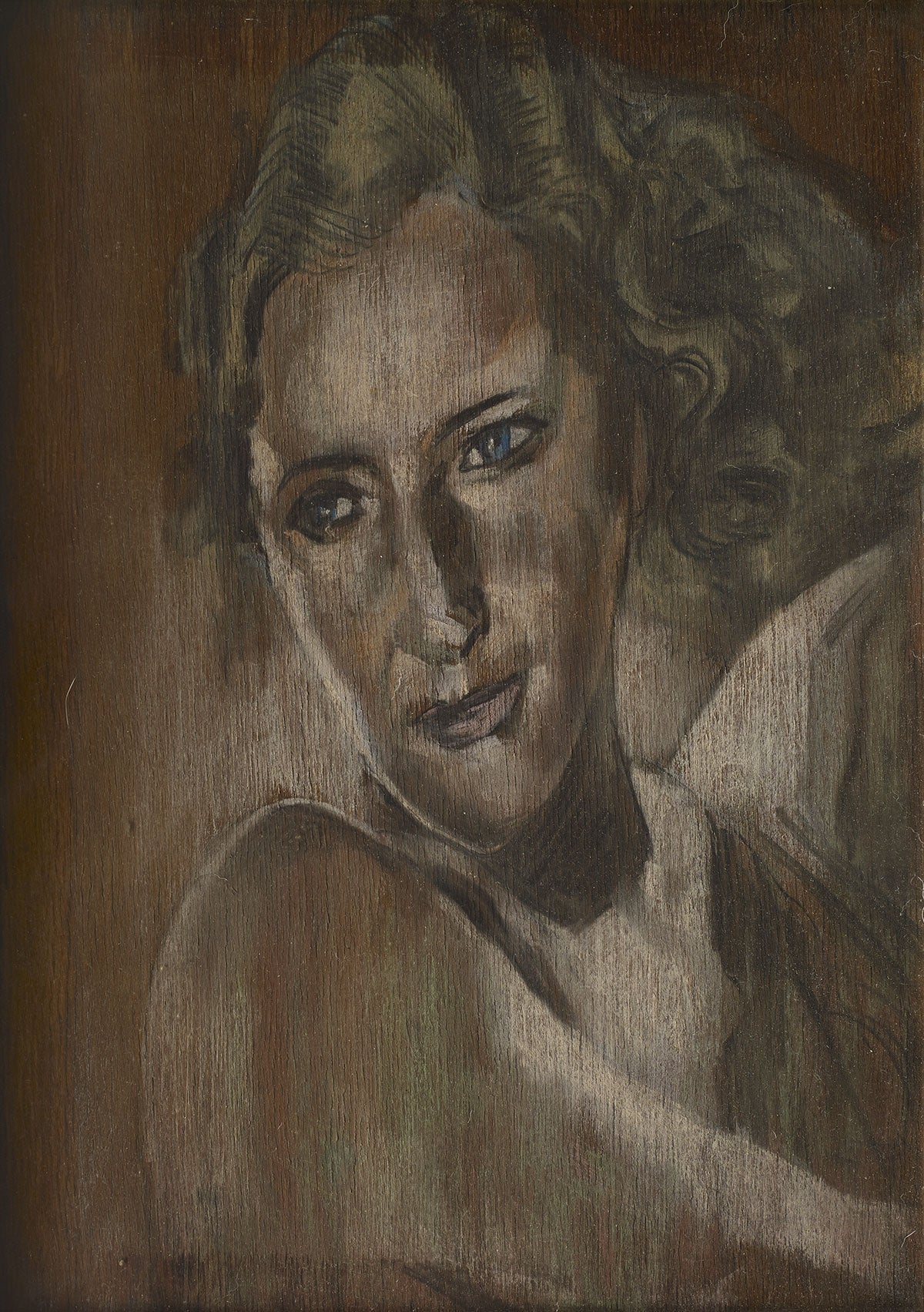
Image: Drawing by Lena HB

don’t worry if you miss it – we will send you a recording valid for two weeks the next day