Trolls in Nordic Myth & Folkore – Dr. Tommy Kuusela

We have all seen supernatural trolls in movies, art, advertisement, video games, or maybe as statues, dolls and miniatures for different board games; from the trolls of famous artists such as the Norwegian Theodor Kittelsen and the Swede John Bauer, to the charming (initially Danish) trolls seen in the animated movies by Dreamwork studios, the delightful Finnish Moomin trolls by Tove Jansson, and the big clumsy trolls of Peter Jackson’s adaptions of J.R.R. Tolkien’s works. Trolls have become well-known and are everywhere in popular culture. But are they the same kind of trolls that we find in older texts – in Old Norse mythology or the folk legends and folktales of the North? The trolls were supernatural beings in nature, and their natural environment was the pre-industrial fishing and farming communities of Scandinavia. Although common in folklore, descriptions of them differs from the trolls we encounter in contemporary culture. The trolls of folklore and myths could be violent and threatening, they sometimes appear as big, nasty and ugly, but most were described as ambivalent, some even as beautiful and helpful. This lecture will look closer at the history of trolls; from the meaning of the word troll, the earliest trolls in Viking Age mythological poetry, the many different types of trolls that appear in manuscripts from the Middle ages, the trolls of folk belief, folk legends and folktales that have been recorded until the early 20th century in Scandinavia, to the trolls of contemporary popular culture and the trolls that lurks on the internet.

Bio

Dr. Tommy Kuusela (PhD in History of Religions); Researcher and archivist at The Institute for Language and Folklore in Uppsala, Sweden

Recent publications (in English):

* Kuusela, Tommy. 2022. ā€œInitiation by White Snake and the Acquisition of Supernatural Knowledgeā€, in The Wild Hunt for Numinous Knowledge: Perspectives on and from the Study of Pre-Christian Nordic Religions in Honour of Jens Peter SchjĆødt / [ed] Karen Bek-Pedersen, Sophie BĆønding, Luke John Murphy, Simon Nygaard, and Morten Warmind (Religionsvidenskabeligt Tidsskrift, 74), Aarhus: Afdeling for Religionsvidenskab/Institut For Kultur og Samfund, pp. 153-169.

* Kuusela, Tommy. 2021. ā€œThe Giants and the Critics: A Brief History of Old Norse Giantologyā€, in Folklore and Old Norse Mythology / [ed] Frog and Joonas Ahola (Folklore Fellows’ Communications, 323). Helsinki: The Kalevala Society, pp. 471-498.

* Kuusela, Tommy. 2021. ā€œSwedish Fairy Belief: Traffic Accidents, Folklore, and the Cold Light of Reasonā€, in De Natura Fidei: Rethinking Religion Across Disciplinary Boundaries. Volume II / [ed] Mathew Jibu George, New Delhi: Authorspress , 2021, pp. 256-276.

* Kuusela, Tommy. 2020. ā€œSpirited Away by the Female Forest Spirit in Swedish Folk Beliefā€, in Folklore: the journal of the Folklore Society 131 (2), pp. 159-179.

* Kuusela, Tommy. 2019. ā€œHalls, Gods, and Giants: The Enigma of Gullveig in Ɠưinn’s Hallā€, in Myth, Materiality, and Lived Religion: In Merovingian and Viking Scandinavia / [ed] Klas Wikstrƶm af Edholm, Peter Jackson Rova, Andreas Nordberg, Olof Sundqvit, Torun Zachrisson, Stockholm: Stockholm University Press, pp. 25-53.

Watch a recording of This Lecture, & 100s of others, for free when you join our PatreonĀ 

An Evening in Asgard – The Home of the Norse Gods – Lena Heide-Brennand

Asgard was the spectacular home world of the Aesir gods.Ā Odin, Thor and Loki are characters that ā€œeveryoneā€ these days have some knowledge about due to their appearance in a lot of different types of popular culture. The gods and demigods of Asgard have definitely become fan favourites, but it turns out that there is generally little knowledge of who these heroes are really based on. In this lecture I will introduce you to the most famous gods of Asgard and tell you all about the impact they had on the Vikings back in the days when Thor and Odin played a major role in Scandinavian everyday life. Historians refer to three principal sources that depict Asgard; the Poetic Edda, the Prose Edda, and Heimskringla, which consists of several sagas. They will be the sources for this lecture as well. This will be an evening of captivating tales about the main characters of Asgard and the creatures that existed alongside them; we will meet Odin’s mighty horse Sleipnir, Midgardsormen -the world-circling serpent and the monstrous wolf FenrisĆŗlfr. Norse mythology has a cacophony of crazy creatures, charismatic gods and beautiful goddesses that will fascinate, spark curiosity and entertain you all at the same time.

Bio

Lena Schattenherz Heide-Brennand is a Norwegian lecturer with a master degree in language, culture and literature from the University of Oslo and Linnaeus University. She has been lecturing and teaching various subjects since 1998. Her field of interest and main focus has always been topics that others have considered strange, eccentric and eerie, and she has specialised in a variety of dark subjects linked to folklore, mythology and Victorian traditions and medicine. Her students often point out her thorough knowledge about the subjects she is teaching, in addition to her charismatic appearance. She refers to herself as a performance lecturer and always gives her audience an outstanding experience

Watch a recording of This Lecture, & 100s of others, for free when you join our PatreonĀ 

ā€œOdin battles Fenrirā€ drawing by Arthur Rackham 1910

ā€œLoki tricks Alberich” TheĀ RhinegoldĀ and theĀ Valkyrie sketch by Arthur Rackham,1910

The Erotic Folktales of Norway – Lena Heide-Brennand

Once upon a time, in the nineteenth century, the famous Norwegian duo P.C. AsbjĆørnsen and JĆørgen Moe began traveling all around rural Norway, collecting the tales, legends, and fables that the locals had to tell them. Most of these stories were published at the time they were collected and written down. However, there was a significant number of other tales that were suppressed and hidden away due to their explicit depiction of the sexual side of human experience. The manuscripts stayed hidden from public in the archives of the University of Oslo for nearly a century before being brought to light and published in Norway for the first time in 1977 under the title ā€œErotic Folktales from Norwayā€. It was a huge success and sold a lot of copies and it was obvious that people took a great interest in the adult stories as well. In this lecture we will be focusing on those steamy, hilarious and astonishingly graphic stories that have been passed down through generations in all corners of the cold North.

Like the traditional stories told to children, erotic folktales also include stories about the Hulder, Trolls, the famous Ash Lad, and princesses, as well as sinners and Adam and Eve. The only difference is that these characters are showing a very sexual side of themselves that is meant for adult listeners only. In this lecture, maybe we will find out just how far men would go to experience the intimate company of the alluring Hulder? And what would happen to the women once they were spellbound by the handsome NĆøkken before he decided to drown them? Have you ever wondered if the Ash Lad was sexually involved with any of the princesses he visited? Welcome to an evening that might make you blush, laugh and cringe all at the same time. NB! Explicit language and adult content.

Bio

Lena Schattenherz Heide-Brennand is a Norwegian lecturer with a master degree in language, culture and literature from the University of Oslo and Linnaeus University. She has been lecturing and teaching various subjects since 1998. Her field of interest and main focus has always been topics that others have considered strange, eccentric and eerie, and she has specialised in a variety of dark subjects linked to folklore, mythology and Victorian traditions and medicine. Her students often point out her thorough knowledge about the subjects she is teaching, in addition to her charismatic appearance. She refers to herself as a performance lecturer and always gives her audience an outstanding experience

Watch a recording of This Lecture, & 100s of others, for free when you join our PatreonĀ 

More Mythical Creatures in Scandinavian Folklore – Lena Heide-Brennand

A follow-up lecture on more of the magical, mysterious and scary creatures we meet in Scandinavian folklore that we did not have time to introduce you to in the first lecture. This time we will get to know the legendary Kraken, the good and evil little Vette, the dangerous Draugen and the eerie Mare, in addition to a the more famous Icelandic elves (Álfafólk). We will take a close look at the origin of these characters that have haunted and scared the Scandinavian people through centuries, and there will be spine chills guarantees when myths meet tales claiming to be based on true stories re-told by those very few individuals who were lucky enough to survive an encountering. Welcome to another evening in the company of the most fascinating legends Scandinavian folklore has to offer.

Bio

Lena Schattenherz Heide-Brennand is a Norwegian lecturer with a master degree in language, culture and literature from the University of Oslo and Linnaeus University. She has been lecturing and teaching various subjects since 1998. Her field of interest and main focus has always been topics that others have considered strange, eccentric and eerie, and she has specialised in a variety of dark subjects linked to folklore, mythology and Victorian traditions and medicine. Her students often point out her thorough knowledge about the subjects she is teaching, in addition to her charismatic appearance. She refers to herself as a performance lecturer and always gives her audience an outstanding experience

Watch a recording of This Lecture, & 100s of others, for free when you join our PatreonĀ 

Draugen

Illustration by Joakim Skovgaard (1889 el. 1890). ‘The Werewolf”.

Icelandic elves

Ancient Witches & The Goddess Hecate – Prof Marguerite Johnson

Ancient Witches

Magic and witchcraft were integral parts of the lives of ancient Greeks and Romans. Real practitioners existed – usually men when it came to so-called ‘high’ magic or ‘learned’ magic – with women, we can assume, practising more informal folk magic, which has left a less permanent trace. However, the chief deity of magic and witchcraft was the goddess, Hecate and ancient literature is full of female practitioners, often exhibiting outlandish and unbelievable talents. This lecture discusses Hecate as the preeminent god of witches and the witches of Greek and Roman literature. From Homer’s Circe to Euripides’ Medea, to the terrifying necromancer, Erictho from Lucan’s Pharsalia, we consider how and why the ancients insisted on representing their literary practitioners as female, when evidence points to men as the main source of all things magical. We end by tracing the ancient origins of the wicked witch of the west back to the terrifying figures of the ancient imagination.

Bio:

Marguerite Johnson is Professor of Classics and Ancient History at The University of Newcastle, Australia. Her research expertise is predominantly in ancient Mediterranean cultural studies, particularly in representations of gender, sexualities, and the body. She also researches Classical Reception Studies, and ancient magic. Marguerite has published on magic, particularly the portrayal of witches, in Greek and Latin literature and was dramaturg on professional productions of Theocritus’ Idyll 2 (‘The Sorceress’) in 2019 and Euripides’ Medea in 2021. She also researches and publishes on the Australian witch, Rosaleen Norton, with whom she has held a fascination since childhood. Marguerite delivers one of the few undergraduate courses on ancient occultism (AHIS2370: Magic and Witchcraft in Greece and Rome) and supervises several PhD students working on aspects of historical and literary magic.

Watch a recording of This Lecture, & 100s of others, for free when you join our Patreon www.patreon.com/theviktorwyndmuseum

How the Freemasons Made the Modern World – Prof. John Dickie

To the rest of us, Freemasonry is mysterious and suspect. Yet its story is peopled by some of the most distinguished men of the last three centuries: Winston Churchill and Walt Disney; Wolfgang Mozart and Shaquille O’Neal; Benjamin Franklin and Buzz Aldrin; Rudyard Kipling and ‘Buffalo Bill’ Cody; Duke Ellington and the Duke of Wellington.

Founded in London in 1717 as a set of character-forming ideals and a way of binding men in fellowship, Freemasonry proved so addictive that within two decades it had spread across the globe. Masonic influence became pervasive. Under George Washington, the Craft became a creed for the new American nation. Masonic networks held the British empire together. Under Napoleon, the Craft became a tool of authoritarianism and then a cover for revolutionary conspiracy. Both the Mormon Church and the Sicilian mafia owe their origins to Freemasonry.

The Masons were as feared as they were influential. In the eyes of the Catholic Church, Freemasonry has always been a den of devil-worshippers. For Hitler, Mussolini and Franco the Lodges spread the diseases of pacifism, socialism and Jewish influence, so had to be crushed.

Professor Dickie will talk about his book – The Craft, translated into ten languages – which is a surprising and enthralling exploration of a movement that not only helped to forge modern society, but still has substantial contemporary influence. With 400,000 members in Britain, over a million in the USA, and around six million across the world, understanding the role of Freemasonry is as important now as it has ever been.

Bio

John Dickie is Professor of Italian Studies at University College London. Hodder & Stoughton published his Cosa Nostra: A History of the Sicilian Mafia in 2004, to ecstatic reviews. It became an international bestseller, with over 20 translations, and won the CWA Dagger Award for Non-fiction that year. Since then he has published Delizia!: The Epic History of the Italians and their Food (2007) – now a six-part TV series for HIstory Channel Italia and other networks worldwide. His most recent books are Mafia Brotherhoods (2011) and Mafia Republic: Italy’s Criminal Curse (2013).

In 2005 the President of the Italian Republic appointed him a Commendatore dell’Ordine della Stella della Solidarieta Italiana.

Watch a recording of This Lecture, & 100s of others, for free when you join our Patreon

The Museum of Drugs: Under the Influence – a history of drug use from early evolution to criminalisation – Ben Curran

Under the Influence – a history of drug use from early evolution to criminalisation.

Archaeological and social anthropological evidence suggests that drug use played an important role in our early evolution as Homo sapiens; affording us the means of deeper introspection and wider connection within social groups and structures. Drugs have played an important role in the economic development of our civilisations, as valuable commodities to be traded across land and sea. They have been vital in our creative development, influencing art, literature, music, dance, and ritual.

Yet in modern times, drugs have become synonymous with crime and disorder; vilified in the media as the root cause of many of our social ills, and lambasted by politicians who are keen to demonstrate they are tough and uncompromising. Since 1971, we have been engaged in a War on Drugs, a war that has seen trillions of dollars of investment with little sign of it reaching an imminent conclusion, despite mounting calls for a paradigm shift.

How did we arrive at this point in our history?

Using a unique collection of antiques and artefacts, Under the Influence explores the historical events, the myths and moral panics, that have resulted in the criminalisation of the production, supply, and possession of drugs throughout the world.

The collection includes some artefacts that are of a challenging nature, including items depicting racial stereotypes. They are presented as part of the lecture for the purpose of adopting an anti-discriminatory position.

Bio

Ben Curran, (He/ Him), has worked in supported housing, drug rehabilitation, outreach services, and senior leadership positions, throughout the last 25 years. He has been a guest lecturer at the University of East Anglia and the University of Delaware, as well as a trainer in the field of drug use, legislation and policy. Ben Curran is the founder, CEO, and Curator of the Museum of Drugs, www.museumofdrugs.com, a charity established to provide public exhibitions and lectures on the history of drugs with the aim of challenging discrimination.

don’t worry if you miss it – we will sendĀ you a recording valid for two weeks the next day

Nature, Shamanism and Psychoactive Drugs in Greek Bronze Age Religion by Dr Caroline Tully

Nature, Shamanism and Psychoactive Drugs in Greek Bronze Age Religion

What kind of religious activities were practised in the Greek Bronze Age? Through examination of ancient visual art, objects and texts, this lecture will explain how aspects of Aegean religion can be considered shamanic. The lecture will primarily focus on ā€œglyptic artā€ (miniature images engraved on gold signet rings and stone seals) which is the most extensive body of Aegean Bronze Age representational art. It will look at ritual scenes depicted in glyptic art for evidence of shamanism including consumption of psychoactive drugs, adoption of special body postures, trance, spirit possession, communication with supernatural beings, metamorphosis and the journey to other worlds. The lecture will also look at the presence of nature in ritual scenes, particularly sacred trees. In the majority of these scenes human figures approach the trees in a calm and reverential manner, but in seven examples the ritual participant clasps and vigorously shakes the tree. The reasons for interpreting this activity as indicating a shamanic-style altered state of consciousness and prophetic consultation of the tree through the sound of its rustling leaves will then be explained. Comparative examples of prophetic trees from Near Eastern and Greek literature such as the Hebrew Bible, the Ugaritic Epic of Baal and Hesiod’s Theogony will be discussed, and later Greek tree oracles such as that of Zeus at Dodona will be compared with the glyptic images.

Bio:

Dr. Caroline Tully is a lecturer and tutor at the University of Melbourne, Australia. Caroline’s research interests include religion and ritual in the Bronze Age Aegean and East Mediterranean, Reception of the Ancient World, and Contemporary Paganisms. She is the author of The Cultic Life of Trees in the Prehistoric Aegean, Levant, Egypt and Cyprus (Peeters: Leuven, 2018), many other articles and book chapters, and is associate editor of The Pomegranate: The International Journal of Pagan Studies. Caroline is also a professional tapestry weaver at the Australian Tapestry Workshop and a tarot reader and workshop facilitator at Muses of Mystery.

See her Academia page here: https://unimelb.academia.edu/CarolineTully

See her blog, Necropolis Now, here: http://necropolisnow.blogspot.com/

Watch a recording of This Lecture, & 100s of others, for free when you join our PatreonĀ 

City of the Beast: The London of Aleister Crowley by Phil Baker

“I dreamed I was paying a visit to London,” Aleister Crowley wrote in Italy, continuing, “It was a vivid, long, coherent, detailed affair of several days, with so much incident that it would make a good-sized volume.” Crowley had a love-hate relationship with London, but the city was where he spent much of his adult life, and it was the capital of the culture that created him: Crowley was a post-decadent with deviant Victorian roots in the cultural ferment of the 1890s and the magical revival of the Golden Dawn.

Not a walking guide, although many routes could be pieced together from its pages, this is a biography by sites. A fusion of life-writing with psychogeography, steeped in London’s social history from Victoria to the Blitz, it draws extensively on unpublished material and offers an exceptionally intimate picture of the Great Beast. We follow Crowley as he searches for prostitutes in Hyde Park and Pimlico, drinks absinthe and eats Chinese food in Soho, and finds himself down on his luck in Paddington Green–and yet never quite losing sight of the illumination that drove him: the abiding rapture, he wrote in his diary, which makes a ‘bus in the street sound like an angel choir!

Bio

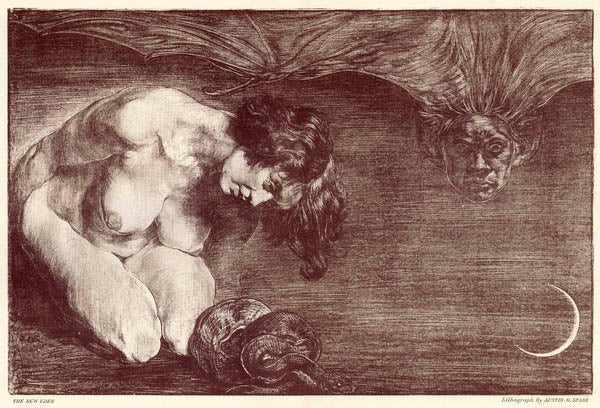
Phil Baker’s previous books include the definitive biography of Austin Osman Spare, London: City of Cities, a critical study of Samuel Beckett and a cultural history of absinthe. He lives in London and walks everywhere.

Watch a recording of This Lecture, & 100s of others, for free when you join our PatreonĀ 

The Story of a Cornish Witch: Joan Wytte (Fighting Fairy Woman of Bodmin), the Archives and the Imagination by Helen Cornish

The remains of Joan Wytte, alleged witch of Bodmin, were displayed for over 30 years in the Museum of Witchcraft and Magic in Cornwall. Buried in the woods behind the town in 1998 her memorial stone has become a pilgrimage destination for those keen to ensure she is not forgotten. While there is no archive evidence to support the claims made about her life and death, she remains an important figure. This talk looks at how the life and death of Joan Wytte has become a foundational stone for modern witches in search of practical ancestors and considers how this story reveals how we think about historical witchcraft accusations and their relevance to us today.

Notice: this talk will include images of human remains.

Bio:

Dr Helen Cornish (Anthropologist, Goldsmiths): I have carried out anthropological fieldwork with British witches and Pagans on histories of modern witchcraft since 2000. Much of my research has been in Sussex and at the Museum of Witchcraft and Magic.

Watch a recording of This Lecture, & 100s of others, for free when you join our PatreonĀ