The Irish Goddess Morrigan – Lora O’Brien

The Irish Goddess Mórrígan

The Irish Goddess Mórrígan is a popular but still often enigmatic or misunderstood deity, associated with battle, death, and prophecy in Irish mythology. This presentation will answer the questions: Who is She?; When and where did Her stories take place?; What does She do?; Why and how might people work with Her in the modern age? You will experience the unique perspective of an indigenous Mórrígan Priestess who has studied the lore directly, and lived right by the Mórrígan’s ‘fit abode’ for over a decade; guiding people – both physically and spiritually – on a daily basis to seek the presence of the Great Queen at the Síd ar Cruachán in Rathcroghan, County Roscommon.

Speaker Bio:

Lora O’Brien is a modern Draoí – a practitioner and priest of indigenous Irish magic and spirituality. She has been consciously following a pagan path for 30 years, and dedicated specifically to the Irish Goddess Mórrígan in 2004. She managed one of Ireland’s most important sacred sites – Cruachán/Rathcroghan – for a decade, and is a co-founder and legal celebrant with Pagan Life Rites Ireland. With her partner, Jon O’Sullivan, she is the co-founder of the Irish Pagan School. Lora is currently a candidate for a Masters Degree in Irish Regional History (2023).

Watch a recording of This Lecture, & 100s of others, for free when you join our Patreon 

The Long Lost Friend: An American Grimoire – Dan Harms

don’t worry if you miss it – we will send you a recording valid for two weeks the next day

The Long Lost Friend: An American Grimoire

Two centuries ago, in a valley near Reading, Pennsylvania, a man wrote a book of charms, incantations, and recipes taken from German tradition. Although he received condemnation for revealing magical secrets, his book became an instant classic. It became a sourcebook of spells for German-speaking immigrants, and its promises of invulnerability brought it wider success – until its reputation was stained with bloody murder.

This talk explores The Long-Lost Friend, an American grimoire that became a sensation in its native Pennsylvania and far beyond. We will explore its author, John George Hohman, the culture in which he lived, and the spells in the book itself – and why it is no longer used within that community.

Speaker Bio:

Dan Harms is a librarian and author from upstate New York, and editor of the Llewellyn annotated edition of The Long-Lost Friend. He has also edited The Book of Oberon, Angels, Demons, and Spirits, and the Cthulhu Mythos Encyclopedia. His research interests include early modern grimoires, nineteenth-century ritual magic, and roleplaying games.

Curated and Hosted by Dr Amy Hale

Dr. Amy Hale is an Atlanta-based anthropologist and folklorist writing about esoteric history, art, culture, women and Cornwall in various combinations. Her biography of Ithell Colquhoun, Genius of the Fern Loved Gully, is available from Strange Attractor Press, and she is also the editor of the forthcoming collection Essays on Women in Western Esotericism: Beyond Seeresses and Sea Priestesses from Palgrave Macmillan. Other writings can be found at her Medium site https://medium.com/@amyhale93 and her website www.amyhale.me.

Watch a recording of This Lecture, & 100s of others, for free when you join our Patreon 

The Untold Chapter Of British Traditional Wicca – Julia Phillips

don’t worry if you miss it – we will send you a recording valid for two weeks the next day

The Untold Chapter Of British Traditional Wicca

‘Julia Phillips is one of the best current historians of Wicca and is breaking genuinely new ground in tracing the way in which the religion developed.’ (Ronald Hutton)

Modern pagan witchcraft commonly known as Wicca, or British Traditional Wicca, emerged publicly in England in the 1950s, influenced by the notion promoted by Margaret Murray of a continuing tradition of a Pagan religion that had survived centuries of persecution. Retired civil servant Gerald Gardner (1884-1964) claimed that had been initiated into such a cult in Hampshire, England, in 1939 and in December 1950 he met Cecil Williamson (1909-1999), whose childhood encounters with practitioners of a traditional style of English rural witchcraft inspired a lifelong passion for witchcraft and magic. In 1951 Williamson purchased a farm on the Isle of Man, which he turned into a Museum of Witchcraft and invited Gardner to take up a role as the ‘resident witch.’ Using original sources, Julia Phillips tells the story of this significant chapter in the story of the establishment and development of Wicca, placing Williamson and Gardner, and the Museum of Witchcraft, within the context of post-war Britain.

Speaker Bio

Julia Phillips is a post graduate researcher in the Department of History at University of Bristol. Her interest in occultism began in the 1970s, when she attended lectures at the Society for Psychical Research in London. Over the past fifty years Phillips has studied and written on many different subjects related to the occult and magic and her research about this untold chapter of British Traditional Wicca was published in Magic, Ritual and Witchcraft, (University of Pennsylvania Press, Volume 16, Number 2, Fall 2021).

Photo: Cecil Williamson 28 January 1951, Sunday Mercury

Curated and Hosted by Dr. Amy Hale

Dr. Amy Hale is an Atlanta-based anthropologist and folklorist writing about esoteric history, art, culture, women and Cornwall in various combinations. Her biography of Ithell Colquhoun, Genius of the Fern Loved Gully, is available from Strange Attractor Press, and she is also the editor of the forthcoming collection Essays on Women in Western Esotericism: Beyond Seeresses and Sea Priestesses from Palgrave Macmillan. Other writings can be found at her Medium site https://medium.com/@amyhale93 and her website www.amyhale.me.

Watch a recording of This Lecture, & 100s of others, for free when you join our Patreon 
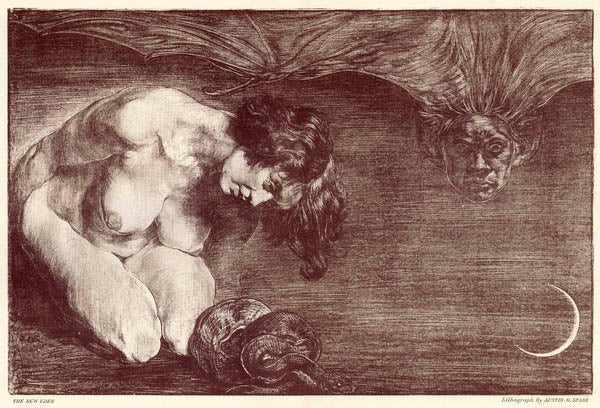
The Magical Women of Ireland by Dr. Gillian Kenny

don’t worry if you miss it – we will send you a recording valid for two weeks the next day

The Magickal Women Ireland

A look at how women have engaged in (or been rumored to have engaged in) magical practices over thousands of years in Ireland. Ranging across time from the battle queens of mythology to the nineteenth century wise woman and healer Biddy Early this talk will introduce listeners to the links between women and magic in Irish history and how women may have used ritual/spells and material goods to affect the world around them. Gillian will talk about various aspects of Irish women’s magic including

1. Protective magic

2. Cursing in Irish practice

3. The belief in the evil eye

4. Love magic and magic to control fertility and birth

5. The Christianisation of magical practice

6. Imported magical beliefs

Bio

Dr. Gillian Kenny is an Hon Research Associate at the Centre for Gender and Women’s Studies in Trinity College Dublin. Her specialism is women’s lives in medieval and early modern Ireland and Europe. She is also interested in the lives of those considered outsiders in the medieval world and is currently researching that topic. She has taught in both UCD and TCD and has published extensively on women’s history. She has also appeared in and written on various historical topics on TV/podcasts and in newspapers/magazines.

Twitter – @medievalgill

www.medievalgill.com

medievalireland.blogspot.com

Watch a recording of This Lecture, & 100s of others, for free when you join our Patreon 

Suffolk Ghost Tales – Kirsty Hartsiotis

don’t worry if you miss it – we will send you a recording valid for two weeks the next day

All places have ghost stories. Laurie Lee, in Cider with Rosie, says, ‘There were ghosts in the stones, in the trees, and the walls, and every field and hill had several.’ He’s talking about Gloucestershire, but, even now, a hundred years on from when Lee was a boy, it still holds true across the country. But of all counties, Suffolk is a little bit special when it comes to ghosts…

The low cliffs, pebble beaches and faded hotels of his home county have become fixed in our minds as subtly dangerous places with a hint of folk horror. All those lost places… Visit Dunwich to see the last grave of All Saints teetering on the edge of the cliff, visit Aldeburgh and see the House in the Clouds bright and distant across the marshes, go to lonely Minsmere and see the ruined chapel, all that remains of a monastery and village abandoned, go to Covehithe … if it’s still there.

Suffolk is, after all, the home county of one of the greatest tellers of ghost tales – M R James. James moved to Suffolk aged three, when his father became rector of Great Livermere, up near the Norfolk border. His family lived there from 1865 until 1909, so James had a foot in Suffolk for much of his life. Several of his tales, Oh, Whistle and I’ll Come to You, my Lad; A Warning to the Curious; The Ash-tree and more, are set in Suffolk, and develop the disquieting aesthetic we now recognise in the landscape.

These fictions tap into the folk tales of the county, and there is no shortage of tales of ghosts, both true and tall, recorded in Suffolk. Most of the ghost tales still told seem to date back to no earlier than the 17th century – one of the earlier ghosts is Jonah Snell, whose story was possibly revived due to the uncovering of his gibbet post in the 1950s. Likewise, there are ghost stories about 17th century figures associated with the county’s sad history of persecution of witches, such as Amy Denny and Rose Cullender in Lowestoft. But Suffolk does have earlier ghosts recorded in its monastic chronicles. Now off Mildenhall Road in Bury St Edmunds, the site of Babwell Friary is right on the edge of today’s town. Before the friary was founded in the 13th century, Babwell was a marshy, fenny area, and there was found the county’s earliest named ghost: Leofstan, a luckless sheriff in Bury who fell foul of St Edmund.

As a storyteller who has come to specialise in local tales, I’ve been telling ghost stories for a good many years. One of the things I’ve noticed is that it’s these ghostly tales that people most respond to – because they have stories of their own. Of all the categories of local folk tale, it’s ironic that the ghost tale is the most living! Many of us know someone who has had a strange experience of a ghostly nature, or may even have had one ourselves. When I tell local ghost stories to audiences ranging from local WIs to school groups, I generally get some back.

I should say that I’ve never had much in the way of supernatural experiences myself – probably the scariest thing that’s happened in my researches was accidently standing next to a bird-scarer in a wood I wasn’t supposed to be in when it went off… I imagine they heard my shriek a mile away! Although, I will confess that we found there was a distinctly edgy atmosphere in Potsford Wood by Jonah Snell’s gibbet post. But we’ve been a bit naughty – we’ve gone visiting these ghostly locations in the middle of the day. What would have happened if we had visited by night? Probably the only ghost locations we’ve visited at night have been those hotbeds of supernatural activity – pubs!

With the season turning to midwinter and Christmas, there is more night than day, despite the lights being lit in our towns and cities. Christmas trees and other decorations are starting to go up in our homes. So, it’s time to tell these winter tales, these stories of ‘spirits and ghosts that glide by night,’ as Christopher Marlowe says in The Jew of Malta. It’s long been the tradition to tell ghost stories at Christmas, for at midwinter the night holds sway, and in the words of an early 11th century German abbess, Brigid, ‘the night is the domain of the dead.’ It’s a time to gather with friends and family and share stories, and it’s a time to remember those who have gone before, even as we look forward to a fresh new year and new possibilities.

M R James was aware of the tradition of telling ghost tales in the dark of the year, writing in Ghost Stories of an Antiquary in 1904: ‘I wrote these stories … and most of them were read to patient friends, usually at the seasons of Christmas…’ So, pull up a chair, stoke the fire, turn on the fairy lights and start telling winter tales of ghost and spirits – and if they are Suffolk tales, so much the better! Did I tell you the one about the man who tried to get buried treasure from the county’s ghosts and met the monk-headed dog? Ah well, that’s another story!

Bio

Kirsty Hartsiotis, who is originally from Suffolk, has been a storyteller for more than twenty years, both solo and with her group Fire Springs. She came to storytelling with a lifelong love of stories and history, and a background in drama, heritage and education. She’s also a writer, and is the author of Suffolk Folk Tales and, with Cherry Wilkinson, Suffolk Ghost Tales, as well as a number of other folk tale collections. With her other hat on, she’s a museum curator, curating the Designated Arts and Crafts Movement collection at a Gloucestershire museum, and an Accredited Arts Society lecturer in art history – and folklore.

Photo Credit: The Potsford Ghost © Kirsty Hartsiotis

Zombies: The New Dead – a Zoom talk with Roger Luckhurst

In 1968, medical science radically re-defined death. It was no longer marked by the cessation of the heart, but by the absence of brain activity. This was a product of new technologies, which could sustain the physical body for prolonged periods on support machines in Intensive Care Units, but without the hope of a recovery of brain function. It produced early on a weird state between physical death and actual death occupied by profoundly anomalous beings. A kind of undead…

It is perhaps no coincidence that in 1968 George Romero released his Night of the Living Dead and launched the modern zombie story – beings somewhere between life and death, best dispatched by a shot to the head, not the heart. Since then, the number of types of people who occupy this shadowy position between life and death, or between two deaths, has only expanded. This talk will explore some of these conditions, and also examine how they pop up in horror fiction and film.


Roger Luckhurst is a Professor who teaches at Birkbeck College, University of London. He has written on mummies, vampires, and zombies, and was once welcomed onto Radio 3’s ‘The Verb’ as ‘the go-to guy for the undead.’ His most recent book is Gothic: An Illustrated History, from Thames and Hudson (2021).

Your host for this event will be the writer Edward Parnell, author of Ghostland: In Search of a Haunted Country. Edward Parnell lives in Norfolk and has an MA in Creative Writing from the University of East Anglia. Ghostland (William Collins, 2019), a work of narrative non-fiction, is a moving exploration of what has haunted our writers and artists – as well as the author’s own haunted past; it was shortlisted for the PEN Ackerley 2020 prize, an award given to a literary autobiography of excellence. Edward’s first novel The Listeners (2014), won the Rethink New Novels Prize. For further info see: https://edwardparnell.com

[Image: a scene from Night of the Living Dead (1968). Direction and cinematography both by George A. Romero, Public domain, via Wikimedia Commons]

Watch a recording of This Lecture, & 100s of others, for free when you join our Patreon 

Inside The World of Stonehenge – Dr. Neil Wilkin & Dr. Jennifer Wexler

Towering above the Wiltshire countryside, Stonehenge is perhaps the world’s most awe-inspiring ancient stone circle.

Shrouded in layers of speculation and folklore, this iconic British monument has spurred myths and legends that persist today. Featuring in a special exhibition that ran from February – July 2022, the British Museum revealed the secrets of Stonehenge, shining a light on its purpose, cultural power and the people that created it.

The exhibit followed the story of Britain and Europe from 4000 to 1000 BC, focusing on the restless and highly connected age of Stonehenge – a period of immense transformation and radical ideas that changed society forever.

This talk will look at some of the human stories behind the stones as revealed through a variety of fascinating objects. Among these are stone axes from the North Italian Alps, stunning gold jewellery and astonishing examples of early metalwork including the Nebra Sky Disc – the world’s oldest surviving map of the stars. A remarkably preserved 4,000-year-old timber circle dubbed Seahenge also took centre stage in the show, on loan for the very first time. All these objects offer important clues about the beliefs, rituals, and complex worldview of Neolithic people, helping to build a vivid sense of life for Europe’s earliest ancestors.

Bio’s

Dr. Neil Wilkin is the Curator of Early Europe at the British Museum and was lead Curator of this exhibition

Dr Jennifer Wexler is the Project Curator on the World of Stonehenge exhibit and an independent researcher and consultant working as a field and museum archaeologist in the UK, Italy, Egypt, and the USA.

Watch a recording of This Lecture, & 100s of others, for free when you join our Patreon 

Witch Trials in Iceland (1600 – 1720) – Dr Louise Fenton

The persecution and execution of Witches and Witchcraft are widely documented throughout Europe. Witchcraft in Iceland during the seventeenth century is less documented, however, documents do exist to give a thorough account of these times. There were around 120 trials in Iceland with twenty-two executions. What makes Iceland so different to the rest of Europe is that of the twenty-two executed, only one was a woman. In Iceland during this time men were deemed to be more magical, the practitioners of Witchcraft were primarily men, they were also more literate, and therefore had more power. Prior to the reformation, and contact with Europe more widely, magic and religion were not divisive in the land of fire and ice. It was only after the Witch Craze began to sweep Europe that it came to the shores of Iceland. The harsh conditions of life in this country could explain why it was not as fierce or as long-lived, there were many other issues to deal with just to survive.

Bio

Dr Louise Fenton of the University of Wolverhampton will discuss how the Witch-craze reached the remote shores of Iceland and will disclose the accusations and punishment, the spells, the magic books and symbols and how witchcraft is represented today. This is a fully illustrated talk based on research that Dr Louise Fenton has undertaken to introduce the history of Icelandic Witchcraft.

Watch a recording of This Lecture, & 100s of others, for free when you join our Patreon 

Folktales of Fools & Wisemen – Michael O’Connor

Before schooling was widely available, for most people the classroom was at the fireside, the field and the country lane, where the bards told their tales.

Many such folk tales exist to convey life-lessons in an entertaining way. These stories are not the pontifications of ancient philosophers: they are the gleanings of countless storytellers, everyday men and women with hard-won life experiences and pockets full of folklore. The tales reflect the times and places of their origin, but have been handed down from generation to generation, evolving to meet changing times. Some are amusing; some are thought-provoking; all have been polished and honed for so long that their message slips, almost imperceptibly, into the mind.

Fools and Wise Men retells these stories for new generations – repaying our debts to the bards of old.

Many of us know the tale of the irascible samurai and the inscrutable sage who disarms his antagonist with a single sentence. It’s a common and successful formula for a ‘wisdom tale’. But historically there have been few samurai in Southampton, and sadly the gurus of Gateshead are not well-known. But for over 1000 years, in this country, storytellers have been creating, stealing, adapting, and cherishing stories that pass on lessons from life in a completely sage-free environment. Not the mystical wisdom of the ancients, but down-to-earth lessons from life, learned in the school of hard knocks. Not heavy handed moralising, but entertaining tales that subtly plant seeds of practical wisdom in the mind.

Mike O’Connor has re-evaluated the way we look at stories, the way we select stories, and the way we tell them. In this concert he invites us to relax and enjoy a selection of such tales from the British Isles. They are witty, hilarious, thought provoking and completely engaging.

Bio Mike O’Connor lives in St Ervan, Cornwall. He is a musicologist and musician, a folklorist and storyteller, and he specialises in the culture of his adopted home. As a result he is known for the songs and folk-music of TV’s ‘Poldark’. As well as many academic works, Mike is the author of ‘Cornish Folk Tales’, Cornish Folk Tales for Children’, ‘Isles of Scilly Folk Tales’ and ‘Fools and Wise Men – Folk Tales of Wisdom.’

Telling since the first days of the revival, his past major performances include ‘Imravoe’, ‘Tristan and Iseult’, ‘Return to Lyonesse’ and ‘Odysseus Dreaming’. He has performed at folk and storytelling festivals all over the country, most recently at the Festival at the Edge and Sidmouth International Folk Festival.

don’t worry if you miss it – we will send you a recording valid for two weeks the next day

Detegitur Benignitas Superna: Qabalah and the Early Days of Wicca – Jack Chanek

The Hermetic Order of the Golden Dawn left a lasting mark on British occultism, and the decades following its collapse saw a proliferation of occult traditions and orders that were profoundly influenced by its magical practices. It is nearly impossible to identify an occult movement from the twentieth century that was untouched by the Golden Dawn and its Qabalistic system of magic.

One interesting case study for the Golden Dawn’s influence is the modern witchcraft revival begun by Gerald Gardner. Much has been made of the Golden Dawn’s influence on Wicca, but unlike many influential twentieth-century occultists, Gardner never belonged to the Golden Dawn, and none of his rituals are explicitly Qabalistic. Nonetheless, Gardner was familiar with Qabalistic magic, as were other key figures in Wicca such as Doreen Valiente and Alex Sanders. This talk will explore what these figures actually had to say about Qabalah and its influence on their magic, showing what Qabalah had to offer for the founders of Wicca.

Bio

Jack Chanek is the author of Qabalah for Wiccans and Tarot for Real Life. He is a Qabalist, Gardnerian Wiccan, Tarot reader, and Slavic polytheist. Jack lives in New Jersey, where he works as an academic philosopher researching Immanuel Kant’s philosophy of science.

Hosted by

Dr. Amy Hale is an Atlanta-based anthropologist and folklorist writing about esoteric history, art, culture, women and Cornwall in various combinations. Her biography of Ithell Colquhoun, Genius of the Fern Loved Gully, is available from Strange Attractor Press, and she is also the editor of the forthcoming collection Essays on Women in Western Esotericism: Beyond Seeresses and Sea Priestesses from Palgrave Macmillan. Other writings can be found at her Medium site https://medium.com/@amyhale93 and her website www.amyhale.me.

don’t worry if you miss it – we will send you a recording valid for two weeks the next day