Reverend Robert Kirk’s “The Secret Commonwealth of Elves and Fairies” – Domhnall Uilleam Stiùbhart – Zoom

Reverend Robert Kirk’s “The Secret Commonwealth of Elves and Fairies”

It is not entirely usual for a respectable, scholarly minister in the Church of Scotland to compile a learned treatise about the mysterious and treacherous world of invisible supernatural beings, as well as the occult ability of Second Sight by which they could be perceived. The Rev. Robert Kirk (1644–92) was minister successively of Balquhidder and Aberfoyle, two parishes on the border between the Highlands and the Lowlands. Kirk translated the psalms into Gaelic; he supervised the printing in London of a Gaelic Bible; and in the last year of his life he composed an extraordinary manuscript entitled ‘The Secret Commonwealth of Elves and Fairies’. He was not only writing in an attempt to make sense to his readers – and to himself – of the different folk legends and supernatural beliefs he had heard about the fairies or sìthichean from the people of the Highlands; he was also trying to prove the existence of a local spirit realm in order to vindicate the Christian worldview itself.

In his talk, Dr Stiùbhart will introduce us to Kirk’s life and works, comparing the beliefs presented in the ‘Secret Commonwealth’ to similar, and dissimilar, traditions recorded more recently in the Highlands and beyond. He will also examine Kirk’s other writings, in particular the commonplace books in which, for over two decades, the minister recorded his thoughts and opinions, as well as summaries of what he was reading at the time. How did Kirk try to organise and categorise the many different types of beliefs and stories he had read and heard, from folktales to learned magic? How did he try to make their messages agree with the lessons from the Bible he taught every Sunday? What can we learn from Kirk about what Gaelic-speaking Highlanders really believed about fairies and Second Sight in his lifetime – and how might these beliefs be different from those recorded by folklorists from later generations?

Bio

Domhnall Uilleam Stiùbhart is a Senior Lecturer at Sabhal Mòr Ostaig, University of the Highlands and Islands, and Course Leader there for the MSc in Cultar Dùthchasach agus Eachdraidh na Gàidhealtachd (Material Culture and Gàidhealtachd History). He has lectured and published extensively on the history, literature, material culture, ethnology, folklore and popular culture of the Scottish Highlands from the seventeenth century onwards, and is often interviewed on these subjects for radio and television.

don’t worry if you miss it – we will send you a recording valid for two weeks the next day

Marvelous Births in Old Norse Myth and Saga – Bernt Ø. Thorvaldsen

Marvelous Births in Old Norse Myth and Saga

In Old Norse culture, there is a number of stories about peculiar conceptions and births. The god Heimdall is said to have been born of nine giantess women, possibly without male involvement. The eight-legged and exceptional stallion, Sleipnir, is born of a male god in the guise of a mare. From the world of humans, there is a tale of a man who was conceived when his mother ate a rotten fish! Kinship and gender roles were important in Old Norse culture, not least because they anchored each individual in what was undoubtedly the most important institution of the time, the family. Deviant kinship and marvelous births were important for explaining the resulting offspring, such as the eight-legged stallion Sleipnir and the powerful god Heimdall, but such myths also provide a unique window into a culture that on the one hand is quite alien, but on the other hand, themes something as modern as transgression of gender norms and complex parental constellations.

Bio:

Bernt Ø. Thorvaldsen (b. 1976) is a professor of Norwegian at the University of South-Eastern Norway, where he teaches language and literature. Thorvaldsen is an expert on Old Norse culture, with Old Norse mythology and Edda poetry as his speciality.

Curated and Hosted By:

Lena Schattenherz Heide-Brennand is a Norwegian lecturer with a master degree in language, culture and literature from the University of Oslo and Linnaeus University. She has been lecturing and teaching various subjects since 1998. Her field of interest and main focus has always been topics that others have considered strange, eccentric and eerie, and she has specialised in a variety of dark subjects linked to folklore, mythology and Victorian traditions and medicine. Her students often point out her thorough knowledge about the subjects she is teaching, in addition to her charismatic appearance. She refers to herself as a performance lecturer and always gives her audience an outstanding experience

don’t worry if you miss it – we will send you a recording valid for two weeks the next day

The most terrifying creatures of Slavic Mythology- part 1 of 3 – Lena Heide-Brennand

The most terrifying creatures of Slavic mythology – Part 1 of 3

Have you ever heard the stories about Baba Yaga, Kikimora or the Strzyga? Slavic folktales and mythology are full of creatures and characters that can only be characterized as the most terrifying ones in the world through history. Tonight we will open up that portal to a creepy and chilling world filled with demon-like characters and ghosts and spirits that are neither humans nor animals but still appear and act like both. Expect descriptions and pictures of scary loners of the darkest woods and even to experience close encounters with witch-like creatures lurking in every dark corner of the harrowing tales told to children and adults alike through the ages in and around the Slavic countries. Embrace yourself for an evening with constant goosebumps…and a following sleepless night.

Bio:

Lena Schattenherz Heide-Brennand is a Norwegian lecturer with a master degree in language, culture and literature from the University of Oslo and Linnaeus University. She has been lecturing and teaching various subjects since 1998. Her field of interest and main focus has always been topics that others have considered strange, eccentric and eerie, and she has specialised in a variety of dark subjects linked to folklore, mythology and Victorian traditions and medicine. Her students often point out her thorough knowledge about the subjects she is teaching, in addition to her charismatic appearance. She refers to herself as a performance lecturer and always gives her audience an outstanding experience

don’t worry if you miss it – we will send you a recording valid for two weeks the next day

Chilling ghost stories of the Scandinavian countries – Lena Heide-Brennand

Chilling ghost stories of the Scandinavian countries

Welcome to an evening where we get to know the different ghost stories from the countries in the north. Ghost stories and legends are important parts of the folklore and mythology, as well as the religious history.

The different ghost creatures We cannot verify whether ghosts exist or not, but we will get those goosebumps going when we encounter the eerie ghosts and undead creatures forever wandering between the world of the living and the world of the dead.

Stories about the ghosts in Scandinavia date to pre-Viking era, and they were even darker and scarier back in pre-Christian time than what they are today. We find them in the old Icelandic sagas, the old Norse literature, and the numerous stories of the spirits of the undead Mylings, the Utburd , the Deildegast the Dokkalfarand and the numerous different Grey ladies have stirred up many a good night’s sleep through the centuries. The ghosts rooming around the far north are said to be spookier and more evil than anywhere else in the world.

In this lecture, you will be introduced to them all. Spine- chilling doesn’t even cover it- you will after this lecture feel a presence of something in the room with you. But is it one of the more evil spirits haunting you, or is it one of the nicer ones?

Bio:

Lena Schattenherz Heide-Brennand is a Norwegian lecturer with a master degree in language, culture and literature from the University of Oslo and Linnaeus University. She has been lecturing and teaching various subjects since 1998. Her field of interest and main focus has always been topics that others have considered strange, eccentric and eerie, and she has specialised in a variety of dark subjects linked to folklore, mythology and Victorian traditions and medicine. Her students often point out her thorough knowledge about the subjects she is teaching, in addition to her charismatic appearance. She refers to herself as a performance lecturer and always gives her audience an outstanding experience

don’t worry if you miss it – we will send you a recording valid for two weeks the next day

Clowns through the Centuries – Lena Heide-Brennand

Clowns through the Centuries

In this lecture we will travel back in time to the origin of the clown as an entertainment figure and as the icon of the travelling circuses.

How did the idea of the clown as a comedy character come to life? When was the peak of the popularity of the clown figure? How has the character developed through the ages? Why the red nose and the make up? This, and many more questions about the enigmatic clown character will be answered in this lecture.

We will talk about the different clowns that have amused and amazed their audience through history, and there will be a presentation of different types of clowns from different cultures. There will be old photographs, modern clown characters and the clowns’ place in mythology, society and, of course, in comedy. Warm welcome to this inspiring entertainment lecture

Bio:

Lena Schattenherz Heide-Brennand is a Norwegian lecturer with a master degree in language, culture and literature from the University of Oslo and Linnaeus University. She has been lecturing and teaching various subjects since 1998. Her field of interest and main focus has always been topics that others have considered strange, eccentric and eerie, and she has specialised in a variety of dark subjects linked to folklore, mythology and Victorian traditions and medicine. Her students often point out her thorough knowledge about the subjects she is teaching, in addition to her charismatic appearance. She refers to herself as a performance lecturer and always gives her audience an outstanding experience

don’t worry if you miss it – we will send you a recording valid for two weeks the next day

Satan’s Places: In search of Baphomet and the Black Mass – Andy Sharp

Satan’s Places: In search of Baphomet and the Black Mass

We take a chronological trip from antiquity to the kaleidoscopic 1960s following the hoof steps of the Devil, his sacrifices and sacrileges, some apocryphal, others horrifically real. This richly illustrated talk traces an itinerary from the ruins of Mendes in Egypt via the tophets of Tunisia to the hills of Dublin, before heading to Belgium and Paris to luxuriate in the sumptuous robes of 19th-century European decadence, in search of the bona fide Black Mass. We explore the obsessions of Joris-Karl Huysmans’ brilliant depiction of Satanism in his infamous novel Là-bas, and the opulent churches and strange events in Bruges that fired his imagination, before reprising the fictional Mass at the denouement of his book.

Bio

Andy Sharp: is a writer and multimedia artist, best known for his occultural research project English Heretic. His new book, The Astral Geographic, a study of magic through landscape, is published by Watkins in October 2023

don’t worry if you miss it – we will send you a recording valid for two weeks the next day

Attendees will receive a discount code if they want to purchase the book

Balkan Folklore and Gender – Margaret Hiebert Beissinger

Balkan Folklore and Gender

Folklore plays a central role in the cultures of today’s southeast European or Balkan countries. This lecture provides an overview of the rich and varied oral traditions and oral literary genres of the central and northern Balkans: Bulgaria, Serbia, Bosnia, Croatia, and Romania. Cultural identity in this cluster of Balkan lands is informed by geography (all contiguous nations), history (500 years, starting in the late 15th century, of Ottoman rule followed by the 20th-century chapter of communist governments), religion (mainly Orthodox Christian but also Catholic and Muslim), ethnicity (primarily South Slavic, Romanian, and Romani), and gender (marked divisions in the traditional roles of men and women).

The focus of this talk is on gender and its significant role in Balkan folklore. In traditional society, the domain of women has typically been oriented around the “private” and personal sphere: nurturing the family and home and overseeing the stages of the life cycle. Men, by contrast, have routinely dominated in the “public” and communal arena; they maintain and oversee what goes on in the world outside the home, including agricultural and civic functions. These traditional distinctions strongly color the gender roles that are assumed in Balkan folklore. Women “manage” birth, marriage, and death rites and their customs and oral poetry, while men by and large perform the folklore of the calendrical cycle, centered especially in winter and spring festivities. The performance of oral traditional narrative genres are also typically determined by gender; women tell folktales in private settings while men sing narrative poetry in public. This discussion examines how gender has informed traditional life and folklore in the Balkans for generations as well as how these roles are evolving in the 21st century.

Bio:

Margaret Hiebert Beissinger teaches in the Department of Slavic Languages and Literatures at Princeton University.  She received her Ph.D. at Harvard University, specializing in Romanian and South Slavic folklore. Her research and writing focusses on Balkan cultures and oral traditions, oral epic, and Romani traditional culture and music-making, with a focus on southern Romania, where she has undertaken extensive fieldwork especially among Romani musicians.  She is the author of numerous articles, chapters, and The Art of the Lăutar: The Epic Tradition of Romania (1991) and is coeditor of Epic Traditions in the Contemporary World: The Poetics of Community (1999) as well as Manele in Romania: Cultural Expression and Social Meaning in Balkan Popular Music (2016). She is currently editing The Oxford Handbook of Slavic and East European Folklore (forthcoming, 2024).

don’t worry if you miss it – we will send you a recording valid for two weeks the next day

Picture: Traditional Bosnian Muslim women preparing the bride for her wedding

The Devils of Loudun: A Case of Demonic Possession in 17th century France – Wayne Perkins

The Devils of Loudun: A Case of Demonic Possession in 17th century France

In 1952, writer Aldous Huxley published ‘The Devils of Loudun,’ an account of a 17th century case of demonic possession in an Ursuline Convent, in Loudun, France. A rather more salacious re-telling was filmed by Ken Russell as ‘The Devils’ starring Oliver Reed in 1971. It has proven to be one of the most bizarre and baffling cases of possession in Europe.

In 1617, Urbain Grandier rode into the town of Loudun, France to assume his new role as priest of the church of St Pierre du Marche and canon of Collegiale of Sainte Croixe. Young, handsome and charismatic, he had been an exemplary student and was much feted for greatness by his Jesuit peers.

Yet, seventeen years later, he was found guilty of sorcery, for having made a pact with the devil and responsible for the demonic possession of the nuns residing in the town’s Ursuline Convent. His trial culminated in a period of incarceration and put to such horrific torture that he was left unable to stand. He was eventually burnt alive at the stake before his beloved Sainte Croixe in the town’s market place. Witnesses claimed to have seen demons escaping from the flames.

How could such a turn of fortunes have occurred in such a short space of time?

And how could a man of God find himself accused of maleficium?

It is one of the strangest and most infamous cases of witchcraft in 17th century France and early modern Europe.

Bio:

Wayne Perkins has been an archaeologist for over 22 years, seven of those spent excavating in France. He is a member of the Chartered Institute for Archaeologists.

don’t worry if you miss it – we will send you a recording valid for two weeks the next day
Get Thee Behind Me, Satan – Carl Abrahamsson

Get Thee Behind Me, Satan

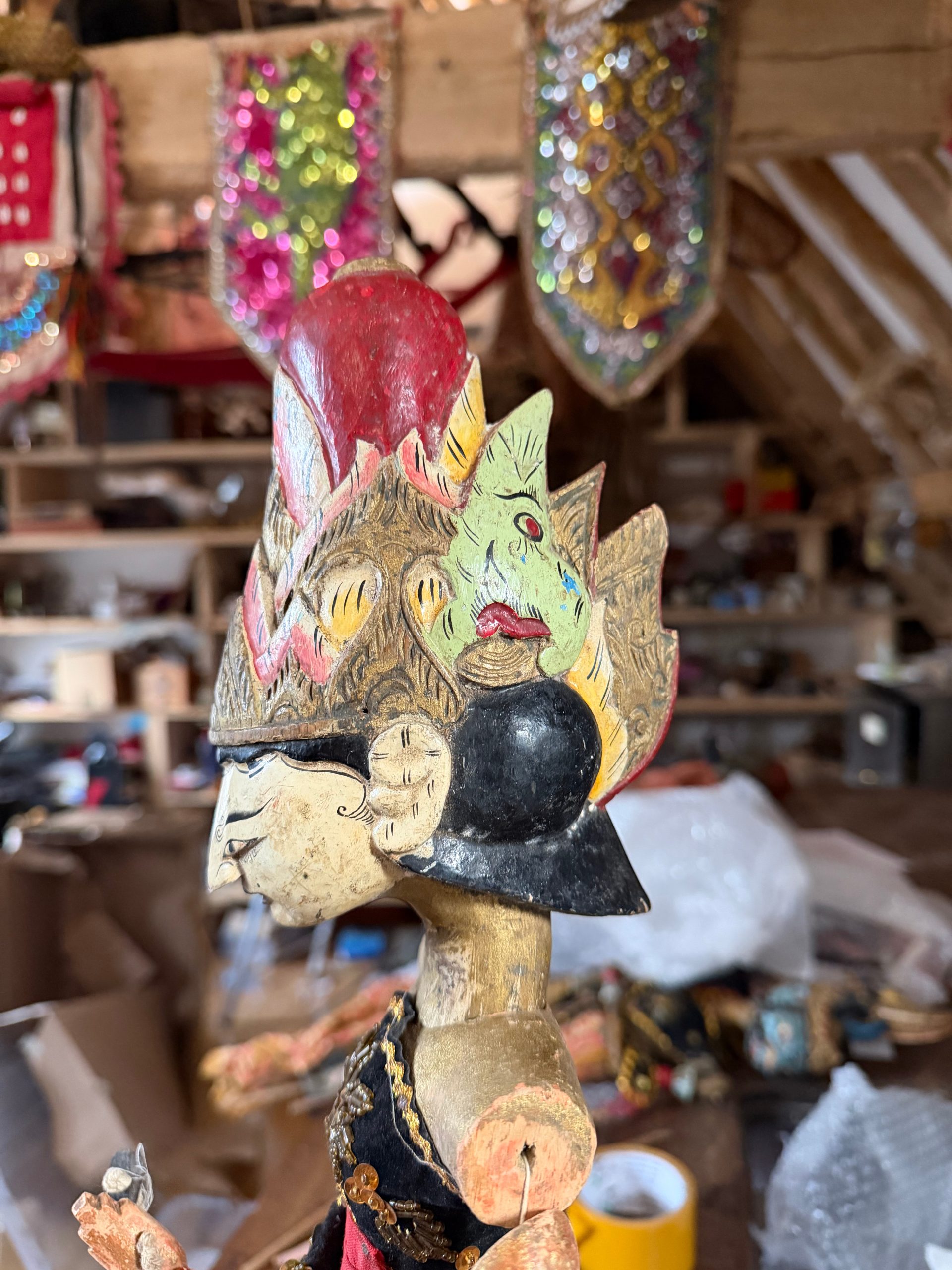
Taking a look at some golden era Hollywood films, Carl Abrahamsson ponders the occasional occurrence of Satan in various guises. How come this popular yet stigmatized figure/symbol popped up when and as it did in Hollywood? Expect an infernal rollercoaster through masterpieces like ”Madam Satan”, ”Seven Footsteps to Satan”, ”Angel on my shoulder” and many more. Was Satan merely an entertaining symbol of the Immoral, or perhaps of the Immortal principle of lust for life and proud defiance?

Speaker Bio

Carl Abrahamsson (b 1966) is a Swedish author whose passionate interest in the occult has also made him take creative detours into film-making, music-making, photography, and into founding and running the Institute of Comparative Magico-anthropology.

don’t worry if you miss it – we will send you a recording valid for two weeks the next day
Mermaids across the Millennia – a Zoom talk with Professor Sarah Peverley

Elusive, beguiling, dangerous, the mermaid is one of the most popular and long-lived of all the mythical creatures that humans have invented. For over four millennia she has been humanity’s constant companion, swimming through our stories, art and beliefs and appearing in many guises.

This illustrated talk will consider a selection of the most influential, surprising, and less well-known mermaids witnessed around the world. Tracking the development of merfolk across time and continent, it will look at the visual nuances of mermaids depicted by different cultures as well as the expansive mythologies and ideas attached to them. Tapping into religion, politics, art and folklore, the talk is a siren call to all lovers of the sea who want to journey through the fascinating history of the mermaid from her emergence of merfolk in the religions of the ancient Near East right through to the rise of the mermaid economy in the twentieth and twenty-first centuries.


Professor Sarah Peverley is academic, writer and broadcaster who divides her time between being immersed in the depths of mermaid history and lost in the medieval world. As professor of medieval literature and culture at the University of Liverpool she teaches across English and History and regularly speaks at festivals and heritage events. She has consulted for organisations like Guinness World Records, and has written, presented or appears in over eighty TV, radio and press features. She is currently writing a cultural history of the mermaid. For more information see www.sarahpeverley.com.

Your curator and host for this event will be the writer Edward Parnell, author of Ghostland: In Search of a Haunted Country. Edward Parnell lives in Norfolk and has an MA in Creative Writing from the University of East Anglia. He is the recipient of an Escalator Award from the National Centre for Writing and a Winston Churchill Travelling Fellowship. Ghostland (William Collins, 2019), a work of narrative non-fiction, is a moving exploration of what has haunted our writers and artists – as well as the author’s own haunted past; it was shortlisted for the PEN Ackerley 2020 prize, an award given to a literary autobiography of excellence. Edward’s first novel The Listeners (2014), won the Rethink New Novels Prize. For further info see: https://edwardparnell.com

Don’t worry if you can’t make the live event on the night – we will send you a recording valid for two weeks the next day.