The Satanic Panic: Its Roots and Branches – Peg Aloi

The Satanic Panic: Its Roots and Branches

Although the recent resurrection of the Satanic Panic discourse tends to locate this phenomenon in the late 1980s through the early 1990s (thanks to a storyline on the series Stranger Things), the roots of this cultural oddity go back decades further. Of course, one could argue that the fear of Satan and all his works has been part of human history for centuries, as long as Christianity remains a powerful religious influence in the world, that fear is likely to continue. But the late 20th century Satanic Panic marked a volatile confluence of factors: an occult revival in the 1960s followed by a rise in secularism in the 1970s, and increased religious factionalism combined with the rise of right-wing political movements in the early 1980s. By the early 1990s, the stage was set for a number of prominent events that later came to define the Satanic Panic era. This talk will explore a number of disparate but often related elements that converged to create the Satanic Panic of the 1980s-’90s, including Satanic themed horror films (such as Rosemary’s Baby, The Exorcist, and The Omen), the Manson Family murders, and the rise of the Moral Majority in the US.

Bio:

Peg Aloi is a freelance film and TV critic, a former professor of media studies, and co-editor (with Hannah Sanders) of The New Generation Witches: Teenage Witchcraft in Contemporary Culture (Routledge) and Carnivale and the American Grotesque: Critical Essays on the HBO Series (Macfarland). With Hannah she also co-organized two scholarly conferences at Harvard University on paganism, witchcraft and media. Peg’s forthcoming book The Witching Hour: How Witches Enchanted the World is a cultural analysis of the witch in contemporary media. Recently Peg was featured in the documentary film The Witches of Hollywood. She is currently editing a collection of essays for The University of Liverpool Press: Women in Folk Horror: Cradles, Cauldrons, Forests and Blood. Peg was also one of the co-founders of The Witches’ Voice and wrote about film and TV for the site for over a decade, and her long-running blog “The Witching Hour” can now be found on Substack. Peg also works as a professional gardener.

Curated & Hosted by

Amy Hale is an Atlanta based writer, curator and critic, ethnographer and folklorist speaking and writing about esoteric history, art, culture, women and Cornwall. She is the author of Ithell Colquhoun: Genius of the Fern Loved Gully (Strange Attractor 2020) and is currently working on several Colquhoun related manuscripts. She is also the editor of Essays on Women in Western Esotericism: Beyond Seeresses and Sea Priestesses (Palgrave 2022). She has contributed gallery texts and essays for a number of institutions including Tate, Camden Arts Centre, Art UK, Arusha Galleries, Heavenly Records and she is a curator and host for the Last Tuesday Society lecture series.

don’t worry if you miss it – we will send you a recording valid for two weeks the next day

Hymns, Myths and Mysteries of Orpheus – Ronnie Pontiac

Hymns, Myths and Mysteries of Orpheus

Despite the immense influence of the Hymns of Orpheus, did Orpheus even exist? Were the Hymns of Orpheus a literary hoax, possibly perpetrated by Pythagoras? Why did Ficino, the father of the Renaissance, write that “No magic is more powerful than that of the Orphic hymns.” What were the allegedly Orphic death passports and what are the passwords one most know in the land of the dead? How did these obscurities influence, to name only a few, Plato, the troubadours, Dante, the Italian Renaissance, the history of opera, Agrippa, Shakespeare, the English Romantic poets, the Parisian magus Eliphas Levi, Aleister Crowley, Jean Cocteau, Rainer Maria Rilke, Jack Kerouac, Jim Morrison, and the current Broadway hit musical Hadestown? Who were the wandering poet priests of Orpheus and why did Plato and Euripides despise them? Significantly, how can we benefit from the work attributed to Orpheus today?

Bio

Ronnie Pontiac was esotericist Manly P. Hall’s research assistant for seven years. He’s the author of American Metaphysical Religion: Esoteric and Mystical Traditions of the New World and co-author of The Magic of the Orphic Hymns: A New Translation for the Modern Mystic, both published by Inner Traditions. He’s lectured for the Theosophical Society in America, Camp Chesterfield, the European School of Theosophy, and the Last Tuesday Society. He’s also guitarist of Lucid Nation which evolved from a riot grrrl punk band to an experimental rock group. He’s produced award winning documentary films including Viva Cuba Libre: Rap is War.

Curated & Hosted by

Amy Hale is an Atlanta based writer, curator and critic, ethnographer and folklorist speaking and writing about esoteric history, art, culture, women and Cornwall. She is the author of Ithell Colquhoun: Genius of the Fern Loved Gully (Strange Attractor 2020) and is currently working on several Colquhoun related manuscripts. She is also the editor of Essays on Women in Western Esotericism: Beyond Seeresses and Sea Priestesses (Palgrave 2022). She has contributed gallery texts and essays for a number of institutions including Tate, Camden Arts Centre, Art UK, Arusha Galleries, Heavenly Records and she is a curator and host for the Last Tuesday Society lecture series.

don’t worry if you miss it – we will send you a recording valid for two weeks the next day

Formidable Warrior Women: Tales of the Amazons in Antiquity – Connie Skibinski

Formidable Warrior Women: Tales of the Amazons in Antiquity

Tales of the Amazons, a female-only society of fierce warriors, captured the imagination of the ancient Greeks and Romans. In antiquity, Amazons inspired a range of reactions – some saw them as a threat to the Greek patriarchal state, while others treated them as valiant heroes. This presentation examines a wide range of art and literature to trace changing attitudes towards these warrior women throughout Greece and Rome.

Bio:

Connie Skibinski is an Early Career Research having recently completed a PhD (Classics) at The University of Newcastle. Her primary research interest is Greco-Roman mythology and the adaptation of ancient mythology from the Medieval period to the contemporary era. Her doctoral thesis is a Classical Reception study of the Amazon Queen Penthesilea, examining written and visual representations from antiquity to the twenty-first century. Connie has published on the Amazons in contemporary media and is currently co-editing three edited volumes (on Xena, Wonder Woman and ancient women). She is also working on a contracted monograph on Amazons in Medieval literature, as well as a book chapter that examines the ancient Amazons through a queer theory lens.

don’t worry if you miss it – we will send you a recording valid for two weeks the next day
Art of The Solomon Islands – Kevin Conru

Art of The Solomon Islands – Kevin Conru

“A place of tropical sun, aquamarine-blue sea, white-sand palm-fringed beaches and some of the friendliest people you will ever meet in your life – the Solomon Islands are the sort of South Pacific location that many of us dream of, but often know little about.”  Mark Cocker

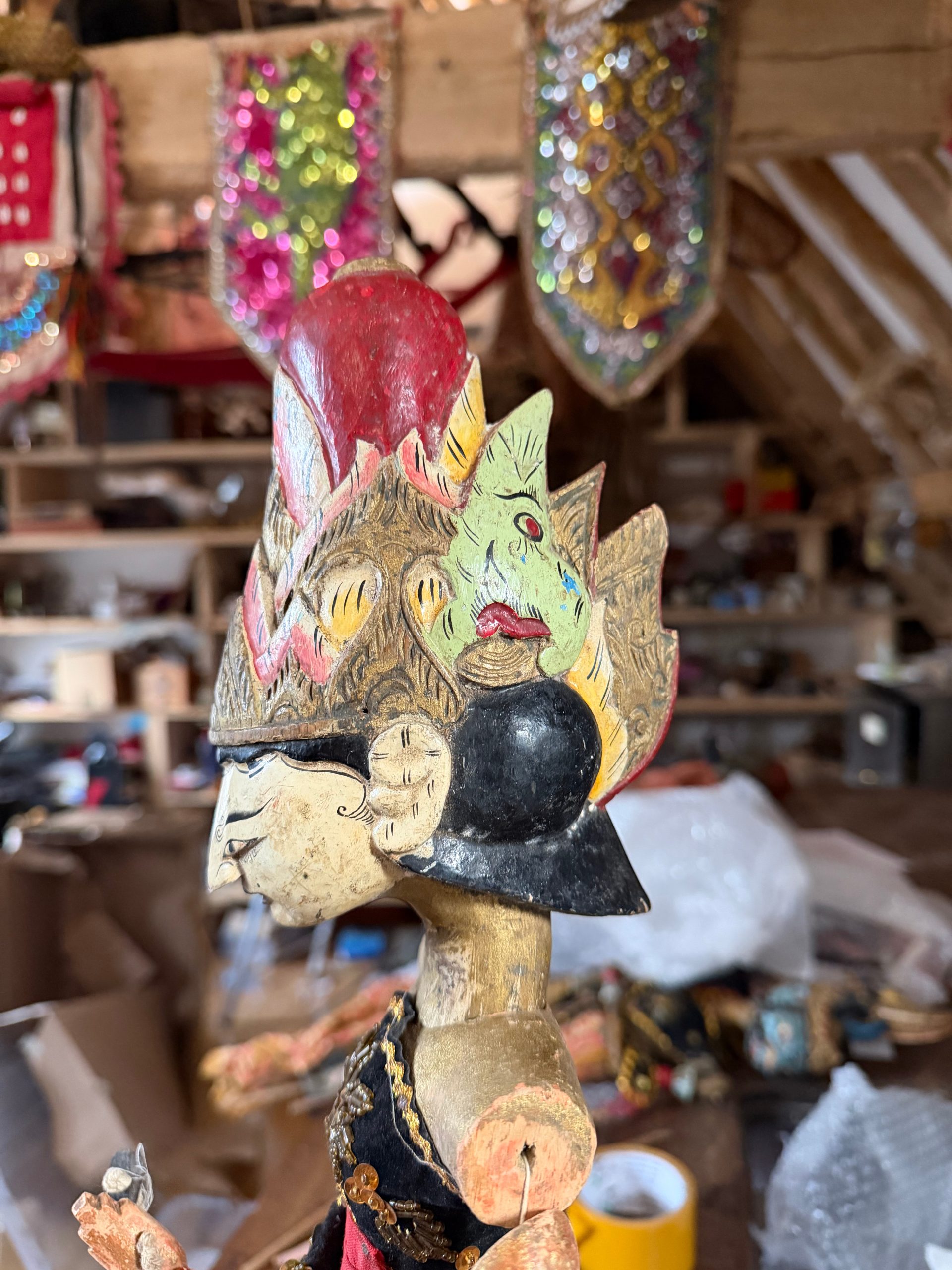
The sea is the single greatest source of inspiration for the art from the Solomon Islands, which are located northeast of New Guinea. Artistic forms, embellishments, designs, functions, and materials are drawn from a watery canvas that are subtly nuanced, yet richly homogenous. In the art of the Solomons, there is a link between the visual and the practical. Objects are created with an understanding of pure, aquiline forms, and are shaped to give the most graceful outline and poised balance.

This book presents the Conru collection of art from the Solomon Islands, which encompasses a broad assortment of images, weapons, body ornaments and other artifacts. So numerous and diverse are the objects from this island group that it is difficult for a single collection to be totally representative. However, the collection approximates a representative status, comprising masks from Nissan and Buka, a large figure from Bougainville, as well as imagery and other artifacts from the western down through the southeastern islands. The artworks range from the eighteenth to the early twentith centuries.

Bio

Kevin Conru is known for his publications on Southern African art, on the arts of the Pacific Islands and on the photographs of Hugo Bernatzik. He has travelled extensively in the Pacific and is a member of the Pacific Arts Association and the Oceanic Art Society. He has an Arts Policy MA from The City University, London, and is an orchestral double bassist.  He has published online the South Seas diary of a turn-of-the 20th century Australian journalist, and has produced a major book on the art of the Bismarck Archipelago in Melanesia which was released in September, 2013.

This book formed the basis of the Rotterdam Wereld Museum’s Ring of Fire exhibition that took place in 2013-2014.

He has curated an important exhibition of Papua New Guinea masterpieces from the Royal Museum for Central Africa, which was held in Brussels in 2014.
Along with Robert Hales, he published a comprehensive book on the archive of William Oldman. His most recent books/exhibitions include Sepik/Ramun Art in 2019 and Polynesian Art in 2023 He has one of the most important private collections dedicated to the art from the Solomon Islands. He has one of the most important private collections dedicated to the art from the Solomon Islands

don’t worry if you miss it – we will send you a recording valid for two weeks the next day
Darkling Shadows & Midsummer Madness: The Weird Fiction of R Murray Gilchrist – Daniel Pietersen

Darkling Shadows & Midsummer Madness: The Weird Fiction of R Murray Gilchrist

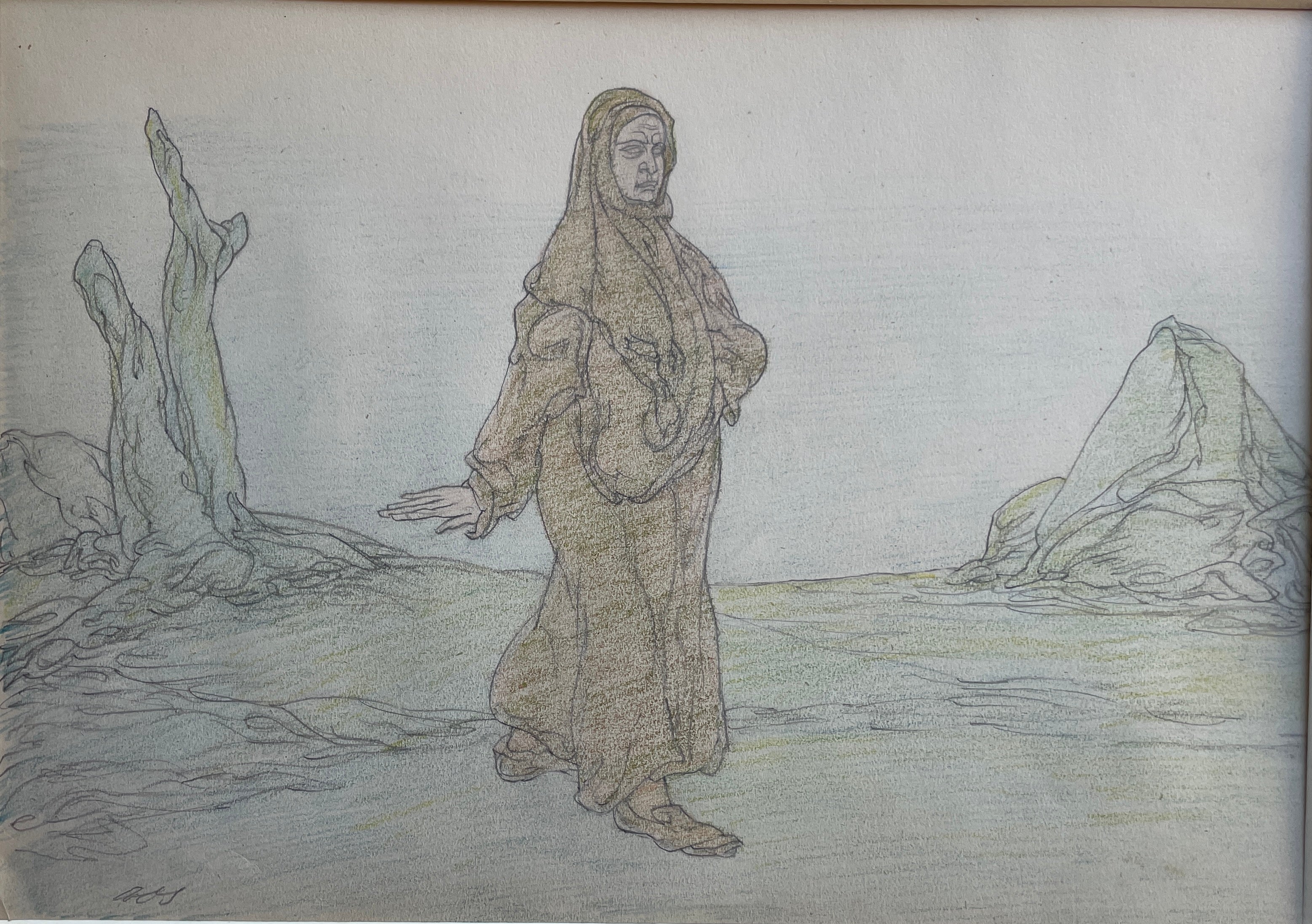
At the start of the 20thC Robert Murray Gilchrist was a celebrated if reclusive writer, able to count the likes of HG Wells amongst his friends and one of the rare few who found a home in the pages of the notorious Yellow Book. Yet, after his death in 1917, he was quickly forgotten and the strange vistas of his eerie tales faded rapidly from view. In this talk, Gilchrist scholar Daniel Pietersen will use newly-unearthed details of the writer’s life to explore this change in fortunes and why Gilchrist – a writer who explored the edgelands of Gothic, Decadent and what we would now call Weird fiction – is due a modern-day reader’s renewed attention.

Bio  

Daniel Pietersen is the editor of I Am Stone: the Gothic Weird Tales of R Murray Gilchrist, part of the British Library’s Tales of the Weird series. He is a writer and critic with an interest in how weird and gothic themes are represented across film, literature and videogaming. Daniel’s work has appeared in publications like Dead Reckonings, Revenant and Sublime Horror and he is a regular guest lecturer for the Romancing the Gothic project. Daniel lives in a very old house in Edinburgh with a necromancer and pet hellhound.
don’t worry if you miss it – we will send you a recording valid for two weeks the next day

Brothers Zara and Raum: The Real Story of a Fake Buddhist Rosicrucian Order – Philip Deslippe

Brothers Zara and Raum: The Real Story of a Fake Buddhist Rosicrucian Order

In the early 1930s, two young men from Idaho took Buddhist ordination vows in San Francisco from a Japanese Rinzai Zen teacher named Nyogen Senzaki. Soon after, the pair left for an extended tour throughout Asia and were celebrated in the press as pioneering Buddhists, but were actually on their own mission for a mysterious Rosicrucian order with the aim to rectify the world’s religions.

This talk will tell the history of Francis Ormsby, Lewis Colburn, and their group, the Ordo Magiaro. It is a fascinating story of spiritual exploration, international travel, and imposture that included a coup and death by drowning, an affair that led to an international scandal, time in a naval prison, and pioneering treatment for alcoholics.

Speaker Bio:

Philip Deslippe is a PhD candidate in the Department of Religious Studies at the University of California, Santa Barbara who focuses on metaphysical, Asian, and marginal religious traditions in modern America. He has published in numerous academic journals and popular venues, and edited and introduced The Kybalion: The Definitive Edition for Tarcher/Penguin in 2011.

don’t worry if you miss it – we will send you a recording valid for two weeks the next day
Sheela-Na-Gigs: Power, Politics and Sexuality – Jenny Butler

Sheela-Na-Gigs: Power, Politics and Sexuality

Sheela-na-gigs are sculpted female forms displaying their, sometimes exaggerated, vulvas. While these carvings are found through much of Europe, there is the highest concentration of them in Ireland and Britain, with many also found in France and Spain. Archaeologically, they are categorised as “grotesques”, similar to gargoyles, found on church architecture and thought to ward off evil influence. While there is no consensus on their origin or age, some scholars place the emergence of such carvings in the 11th century. This talk tracks the history of Sheela-na-gigs in Ireland against the backdrop of Irish history. The women of Ireland were subjugated during an era in which female sexuality itself came to be regarded as vulgar, shameful, and deviant. In contemporary Ireland, there has been a resurgence of interest and cultural (re)connection with the Sheela-na-gig. The symbol has been utilised in political campaigns for women’s empowerment, in art, and in spirituality and examples are given of how today the Sheela is a vibrant, powerful, and celebrated form.

Bio

Dr Jenny Butler is President of the Irish Society for the Academic Study of Religions (ISASR). She is a Lecturer in the Study of Religions Department at University College Cork and a Principal Investigator of UCC’s Environmental Research Institute (ERI). Her research interests are in the area of New Religious Movements, Western esotericism, and folk religion. Her monograph 21st Century Irish Paganism: Worldview, Ritual, Identity is forthcoming from Routledge.

don’t worry if you miss it – we will send you a recording valid for two weeks the next day

Lewis Carroll and Surrealism – Mark Richards

Lewis Carroll and Surrealism

Surrealist writers and artists have been fascinated by Lewis Carroll’s works for over a century. Eileen Agar described him as a “herald of surrealism”, while André Breton refers to him as the “first teacher in the art of playing hooky” and references to the Alice books can be seen in dozens of surrealist artworks.Carroll’s influence on the Surrealists is both fascinating and indisputable. But, to what extent can we refer to Carroll himself as a “Surrealist”? A close examination of his life and works, his diaries and letters, reveal a man fascinated by dreams, differing states of consciousness and a desire to explore the absurd.

This talk will demonstrate Carroll’s influence on the Surrealists, explore the remarkable mind of the author of Alice’s Adventures in Wonderland and attempt to understand why this often misunderstood, English mathematician deserves a place in the history of Surrealism.

Bio

Mark Richards has been studying the life and works of Lewis Carroll for nearly 50 years. He is a collector, a former Chair of The Lewis Carroll Society and is currently developing the Lewis Carroll Resources website. (lewiscarrollresources.net)

don’t worry if you miss it – we will send you a recording valid for two weeks the next day

Alice in Wonderland – Lena Heide-Brennand

Alice in Wonderland

This is a must-attend lecture for all you mad Alice in Wonderland fans out there. The first part of the lecture is a traditional lecture on the story behind Lewis Carroll’s classic and the second half of the lecture is the launch of Lena Heide-Brennand’s new book where she has re-written the whole story into a 112 pages long poem staying very true to the original content, but with a slightly darker twist. The book is also richly illustrated with Heide-Brennand’s own dark and gothic mixed media artwork. This is the description of her version of the classic:

Lena Heide-Brennand’s dark and poetic interpretation of Lewis Carroll’s “Alice in Wonderland” is an enchanting and captivating one where Alice’s dreams take a rhythmic and playful form. In this adaptation, Heide-Brennand has seamlessly blended the atmospheric visuals from the 1915 film version with her own unique mixed media artworks. These original artworks transport us into a world of dark and gothic beauty, infused with steampunk Victorian vibes and a subtle touch of horror undertones. The result is a visually stunning experience that sets the mood for a darker and more mysterious atmosphere, capturing the essence of Alice’s strange and twisted dreams.

One of the most fascinating aspects of Heide-Brennand’s version is the poetic narrative style. Alice in Wonderland unfolds as a 112-page long poem, where every line is meticulously crafted with end rhymes. This poetic form not only pays homage to the original story, first published in 1865, but also adds a lyrical touch that enhances the enchantment of Alice’s magical journey. However, be prepared for a departure from the traditional children’s versions of Alice’s adventures. In Heide-Brennand’s adaptation, Alice’s dreams take her through scenes and encounters that are far more eerie and dark. The artist delves deep into the recesses of Alice’s imagination, exploring the hidden depths of her subconscious, and visually bringing forth characters and settings that are both mesmerizing and haunting. As you turn the pages you will encounter twisted versions of familiar characters like the Cheshire Cat, the Queen of Hearts, and the Hatter. These iconic figures, rendered through Heide-Brennand’s unique artistic lens, take on a new life and add layers of complexity to their personalities.

Prepare to be enthralled by the interplay of light and shadow, and the subtle nuances that breathe life into each character. The dark and scenic mixed media artworks that accompany the poetic narrative serve as windows into Alice’s psyche. With each turn of the page, you will be transported to eerie landscapes, mysterious forests, and intricate settings that mirror the intricacies of Alice’s mind. The detailed craftsmanship and the rich colour palette create a visual feast for the eyes, immersing you in a world that is simultaneously beautiful and foreboding.

Bio:

Lena Schattenherz Heide-Brennand is a Norwegian lecturer with a master degree in language, culture and literature from the University of Oslo and Linnaeus University. She has been lecturing and teaching various subjects since 1998. Her field of interest and main focus has always been topics that others have considered strange, eccentric and eerie, and she has specialised in a variety of dark subjects linked to folklore, mythology and Victorian traditions and medicine. Her students often point out her thorough knowledge about the subjects she is teaching, in addition to her charismatic appearance. She refers to herself as a performance lecturer and always gives her audience an outstanding experience

don’t worry if you miss it – we will send you a recording valid for two weeks the next day

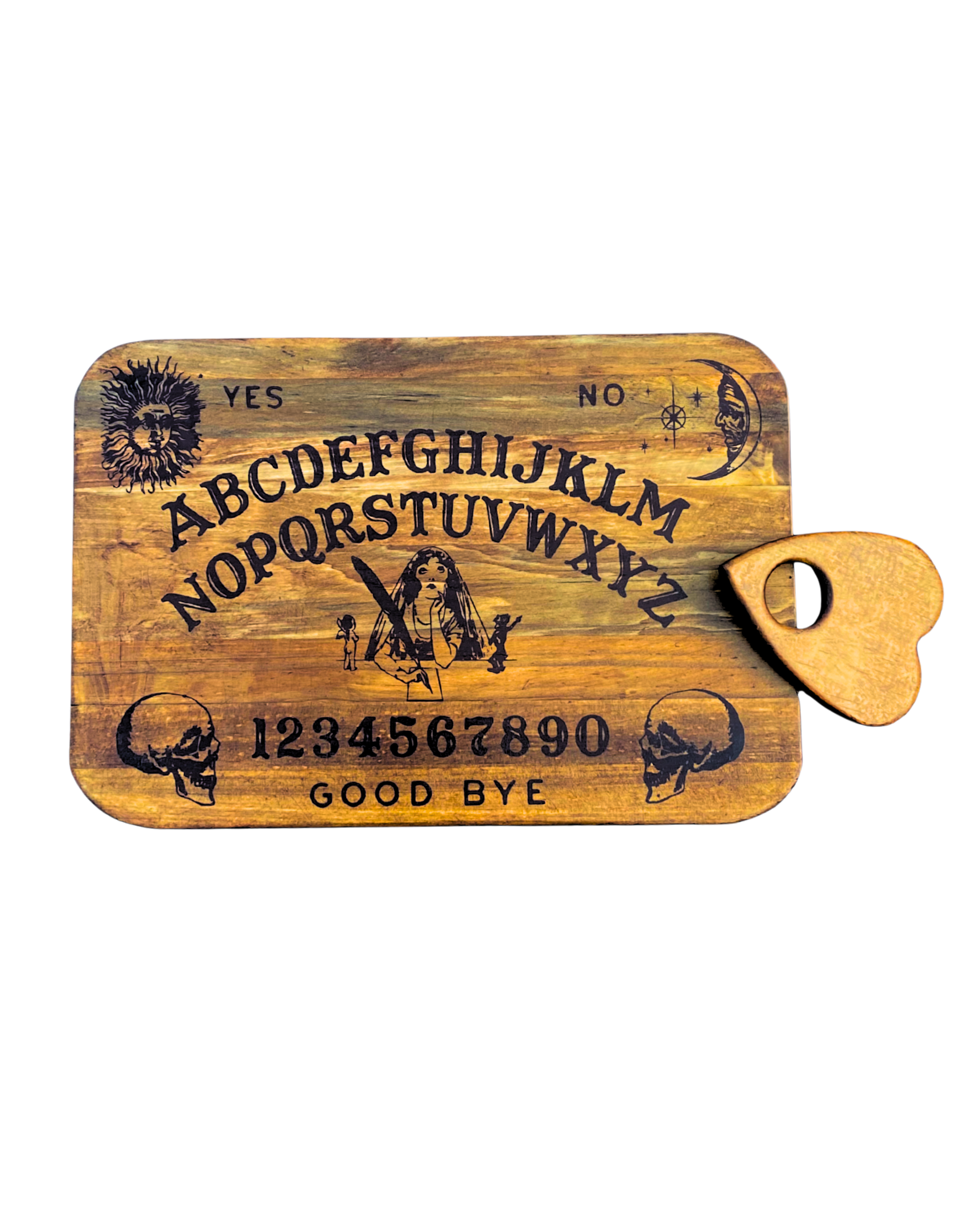
“You Are to Do What We Say”: The Adventures of Arthur Conan Doyle and his Spirit Guide Pheneas – Michael W Homer

“You Are to Do What We Say”: The Adventures of Arthur Conan Doyle and his Spirit Guide Pheneas

Sir Arthur Conan Doyle encountered a spirit named Pheneas through the mediumship of his wife from 1922-1930. Doyle published approximately one-third of these revelations in Pheneas Speaks (1927) and contemplated supplementing them with another book after Pheneas’ prophecies led to the establishment of a worldwide Spiritualist church. But when Doyle died in 1930, several letters were published in which he wondered if spirits from the other side had misled him. Michael W. Homer’s presentation will use previously unpublished materials to explore the séances in which Pheneas appeared to Doyle’s home circle.

Bio

Michael W. Homer is a trial lawyer in Salt Lake City, a Fellow of the Utah State Historical Society, Chair of the J. Willard Marriott Library Advisory Board, University of Utah, and member of Board of Advisors, Office of Undergraduate Advancement, University of Utah. He is the Honorary Italian Consul in Utah and has been recognized by the President of the Republic as a Cavaliere dell’Ordine della Stella D’Italia (Knight of the Order of the Star of Italy). He has written numerous articles concerning Arthur Conan Doyle and Sherlock Holmes published by BSI Press, The Illustrious Clients of Indianapolis, The Arthur H. Clark Company, Elledici, SugarCo, Effidieffe, Presses Universitaires de Lyon, Rupert Books, Encyclopedia of Occultism & Parapsychology, Utah Historical Quarterly, ACD: Journal of the Arthur Conan Doyle Society, Manitoba History, SYZYGY: Journal of Alternative Religion and Culture, Dialogue, A Journal of Mormon Thought, and Theosophical History.

Curated and Hosted by

Shannon Taggart is an artist and author exploring the intersection between Spiritualism, photography, and the representation of belief. Her work has been exhibited and featured internationally, including within the publications TIME, New York Times Magazine, Discover, and Newsweek. Taggart’s monograph, SÉANCE (Fulgur Press, 2019), was named one of TIME’s ‘Best Photobooks of 2019.’ https://www.shannontaggart.com/

don’t worry if you miss it – we will send you a recording valid for two weeks the next day

Shannon Taggart’s Supernatural Mystery Symposium

Selections from the annual event on supernatural mystery and strange cultural history, curated by Shannon Taggart and hosted in Lily Dale, NY, USA—the town home to the world’s largest Spiritualist community.

Dr. Raymond Buckland’s ‘Wide World of Spirit – Steven Intermill and Toni Rotonda – 25 September

Séance: Spiritualism, Photography and the Search for Ectoplasm – Shannon Taggart – 2 October

Publishing the Paranormal – Charles and Penelope Emmons – 04 October

Supernatural Mystery Symposium:  Art & The Paranormal – JF Martel – 05 October

Music from Elsewhere – Doug Skinner – 22 October

The Adventures of Arthur Conan Doyle – Michael W Homer – 07 November

Spiritual Spectacles: Mother’s Work and the Shaker Era of Manifestations – Maria Molteni – 18 November

Ted Serios: The Mind’s Eye, with Emily Hauver – 21 November