The Sun Machine Is Coming Down – Nicholas Royle – Zoom

Nicholas Royle’s David Bowie, Enid Blyton and the Sun Machine has been described as ‘bizarre, brilliant and unlike any book you’ve ever read’ (The Telegraph). What does David Bowie have to do with Enid Blyton? And what even is a sun machine?

David Bowie, Enid Blyton and the Sun Machine is not only a paean to Bowie’s music and to Blyton’s storytelling (especially the Famous Five books), but also a moving and at moments hilarious account of everyday family life during the pandemic, and a passionate defence of the love of literature and art at a time when they seem more than ever imperilled. In his talk Royle will discuss how the book came to be written, introduce some of the puppets who feature (especially Mole), and give a couple of short readings. There will also be time for questions and discussion.

Nicholas Royle has taught and lectured at universities across Europe and North America for over four decades. He is the author of many books, including two highly acclaimed novels, Quilt (2010) and An English Guide to Birdwatching (2017); the memoir, Mother (2020); and groundbreaking studies of literature such as Telepathy and Literature: Essays on the Reading Mind (1990), The Uncanny (2003), and Veering: A Theory of Literature (2011). With Andrew Bennett he is also author of the bestselling academic textbook, Introduction to Literature, Criticism and Theory (sixth edition, 2023). Royle is joint managing editor of the Oxford Literary Review and is currently completing a book on The New Fantastic.

Don’t worry if you miss it – we will send you a recording valid for two weeks the next day

‘For All of Your Protection Needs’: The witch-bottle through history – Dr Ceri Houlbrook and Dr Julia Phillip

‘For All of Your Protection Needs’: The witch-bottle through history

Witch-bottles were used in the seventeenth century to counteract suspected bewitchment. Filled with nails, pins, and urine, and then buried, they were believed to harm the witch and lift the curse. Witch-bottles are still being made and used today – but for very different purposes. Clearly no tradition survives unbroken or unaltered, and customs surrounding the making of witch-bottles are no exception. Over the centuries, perceptions of witchcraft have changed greatly – and witch-bottles have adapted to these changes. This talk examines what happens to the witch-bottle between its first known appearance in the seventeenth century and its reimagining in contemporary Paganism.

Speakers’ Bios

Dr Ceri Houlbrook is a Senior Lecturer in Folklore and History at the University of Hertfordshire, and Programme Leader of the Folklore Studies MA. She is also a Council member of the Folklore Society and editor of its newsletter. Ceri is primarily interested in contemporary adaptations of historic customs and creations of folklore, having published books on coin-trees, love-locks, concealed objects, and witch-bottles. In 2023, Ceri published her debut novel, based on her archival research into letters to Father Christmas: Winter’s Wishfall, published by Bonnier Books.

Dr Julia Phillips is Hon Senior Research Associate at the University of Bristol. She received her PhD for her research examining how witches and witchcraft were featured in newspapers in Victorian Britain. Her primary research interests are the study of witchcraft in the nineteenth century and the development of modern pagan witchcraft in the twentieth century.

Recent publications:

Phillips, Julia. 2021. ‘Madeline Montalban: Magus of the Morning Star.’ In Essays on Women in Western Esotericism: Beyond Seeresses and Sea Priestesses, edited by Amy Hale, 229-254. Cham: Springer International Publishing.

Phillips, Julia. ‘The Museum of Witchcraft and Magic: Toward a New History of British Wicca.’ Magic, Ritual, and Witchcraft, vol. 16 no. 2, 2021, p. 173-200. Project MUSE, doi:10.1353/mrw.2021.0028.

Houlbrook, Ceri and Phillips, Julia. ‘For All of Your Protection Needs: Tracing the “witch-bottle” from the Early Modern Period to TikTok.’ Magic, Ritual, and Witchcraft (2023, volume 18.1).

Curated and Hosted by

Marguerite Johnson is a cultural historian of the ancient Mediterranean, specialising in sexuality and gender, particularly in the poetry of Sappho, Catullus, and Ovid, as well as magical traditions in Greece, Rome, and the Near East. She also researches Classical Reception Studies, with a regular focus on Australia. In addition to ancient world studies, Marguerite is interested in sexual histories in modernity as well as magic in the west more broadly, especially the practices and art of Australian witch, Rosaleen Norton. She is Honorary Professor of Classics and Ancient History at The University of Queensland, and a Fellow of the Australian Academy of the Humanities.

don’t worry if you miss it – we will send you a recording valid for two weeks the next day
Do You Believe in Fairies? Dr Simon Young’s Fairy Census – Zoom

Do You Believe in Fairies? Dr Simon Young’s Fairy Census

And it came to pass in those days, that there went out a decree from Oberon, that all the fairies should be counted…

In 2014 Simon Young began the Fairy Census, a project to collect two thousand fairy experiences. Now a decade later Young has published a thousand of these accounts and aims to reach two thousand by 2035. He has used the resulting database to study the people who see fairies. For instance, what age are fairy seers? Why are the fairies seen shrinking in size? Why are women more likely to see fairies than men? Why do driving and watching television seem to increase the likelihood of a fairy encounter? And what about the growing number of fairy wings? For this and many more fairy world problems and for thoughts on how we interact with the supernatural more generally tune in to see Simon speak about on the Fairy Census, 12 Jan 2025.

Bio

Dr Simon Young is a British folklore historian based in Italy. He has written extensively on the nineteenth-century supernatural. His book The Boggart (from Exeter University Press) and The Nail in the Skull and Other Victorian Urban Legends (from Mississippi University Press) came out in 2022. He is the editor of Exeter New Approaches to Legends, Folklore and Popular Legends and teaches history at UCEAP (Florence). Over the years he has run courses on the History of Christianity, Italian Food History, Italian Media History, Contemporary Italian History, the Second World War in Italy and Italian Renaissance History.

Articles listing: https://independent.academia.edu/SimonYoung43

Latest books: https://www.amazon.co.uk/Boggart-Folklore-History-Placenames-Approaches/dp/1905816901/ref

[Free downloadable source book, click ‘open access]: https://www.exeterpress.co.uk/en/Book/2114/The-Boggart-Sourcebook.html

Curated & Hosted by

Marguerite Johnson is a cultural historian of the ancient Mediterranean, specialising in sexuality and gender, particularly in the poetry of Sappho, Catullus, and Ovid, as well as magical traditions in Greece, Rome, and the Near East. She also researches Classical Reception Studies, with a regular focus on Australia. In addition to ancient world studies, Marguerite is interested in sexual histories in modernity as well as magic in the west more broadly, especially the practices and art of Australian witch, Rosaleen Norton. She is Honorary Professor of Classics and Ancient History at The University of Queensland, and a Fellow of the Australian Academy of the Humanities.

don’t worry if you miss it – we will send you a recording valid for two weeks the next day
Pet Cemeteries: How We Came to Bury Our Non-human Friends – Paul Koudounaris – Zoom


Pet Cemeteries: How We Came to Bury Our Best Nonhuman Friends

When a little dog named Cherry died in 1881, his owners arranged for a grave in a nearby gatekeeper’s garden in London. At this time, the idea that a pet, even one that had lived as a family member, might be given a dignified burial was considered comical. But when other pet owners followed suit, the world’s first urban pet cemetery was born. More soon followed, and the idea eventually spread throughout the world. The talk will detail the history—always touching, oft times comical, and sometimes weird—of the people who fought to give birth to the ideal that an animal that has been loved as a family deserves the same care and dignity in death.

Paul Koudounaris has a PhD in Art History from UCLA. He is the author of three books on the visual culture of death, Empire of Death, Heavenly Bodies, and Memento Mori, as well as a history of domestic felines, A Cat’s Tale, co-written by his cat Baba, and named a Barnes and Noble Book of the Year in 2020. Faithful Unto Death, his book on pet cemeteries and animal burials, the world’s first definitive history of the subject, was published in October, 2024.

don’t worry if you miss it – we will send you a recording valid for two weeks the next day
The History of the Dog – Man’s Best Friend – Lena Heide-Brennand – Zoom

The History of the Dog – Man’s Best Friend

We have celebrated and done a talk on our feline friends, so now it is time to honour our dogs. From the loyal companions of ancient hunter-gatherers to the esteemed guardians of royal courts, dogs have played a pivotal role in shaping societies across the globe. Did you know that the bond between humans and dogs dates back over 15,000 years?

This remarkable relationship began when wolves were domesticated, leading to a partnership that would evolve through various eras. In ancient Egypt, dogs were revered as symbols of protection and loyalty, often depicted in art and even mummified alongside their owners.

Fast forward to the Middle Ages, where dogs served not only as hunting partners but also as status symbols for nobility, influencing fashion and culture. In more recent times, dogs have taken on diverse roles, from service animals aiding those with disabilities to beloved family pets bringing joy and companionship.

This heartwarming illustrated talk highlights the enduring significance of dogs in our culture and societies showcasing their unwavering loyalty and adaptability throughout history. Join us as we celebrate the incredible bond that has shaped human societies and continues to enrich our lives today!

Bio:

Lena Schattenherz Heide-Brennand is a Norwegian lecturer with a master degree in language, culture and literature from the University of Oslo and Linnaeus University. She has been lecturing and teaching various subjects since 1998. Her field of interest and main focus has always been topics that others have considered strange, eccentric and eerie, and she has specialised in a variety of dark subjects linked to folklore, mythology and Victorian traditions and medicine. Her students often point out her thorough knowledge about the subjects she is teaching, in addition to her charismatic appearance. She refers to herself as a performance lecturer and always gives her audience an outstanding experience

don’t worry if you miss it – we will send you a recording valid for two weeks the next day
Old Norse Seiðr Practice – Lena Heide-Brennand – Zoom

Old Norse Seiðr Practice

This is going to be a mesmerizing journey into the mystical world of Norse mythology with our captivating talk on the Seiðr- tradition.Seiðr was an ancient form of Norse magic and shamanistic practice that was prominent in the pre-Christian Scandinavian and Germanic cultures. Associated primarily with the goddess Freyja and later with the god Odin, seiðr involved a variety of magical techniques, including divination, manipulation of fate, and communication with spirits.

Practitioners of seiðr, often referred to as seiðkones (female practitioners) or seiðmenn (male practitioners), were believed to have possessed the ability to enter altered states of consciousness, allowing them to access hidden knowledge and influence events. This practice could include trance states, chanting, and rituals to invoke deities or spirits. Seiðr was often viewed with a mixture of reverence and suspicion, as its practitioners were sometimes marginalized due to the association with femininity and the unknown.

Historical accounts indicate that seiðr was utilized for various purposes, such as healing, predicting the future, and even casting spells to affect the lives of your enemies.

This online talk will delve into the enigmatic practice of seiðr. With stunning illustrations and a lecture that weaves together history, mythology, and magic, Lena invites you to explore the profound connection between the natural world and the mystical forces that shaped the lives of our ancestors.

Prepare to be spellbound as we dive into a talk on empowerment and the timeless quest for understanding in a world where magic was both a gift and a curse.

Bio:

Lena Schattenherz Heide-Brennand is a Norwegian lecturer with a master degree in language, culture and literature from the University of Oslo and Linnaeus University. She has been lecturing and teaching various subjects since 1998. Her field of interest and main focus has always been topics that others have considered strange, eccentric and eerie, and she has specialised in a variety of dark subjects linked to folklore, mythology and Victorian traditions and medicine. Her students often point out her thorough knowledge about the subjects she is teaching, in addition to her charismatic appearance. She refers to herself as a performance lecturer and always gives her audience an outstanding experience

don’t worry if you miss it – we will send you a recording valid for two weeks the next day

Witchcraft and Magic in the Nordic Middle Ages – Lena Heide-Brennand – Zoom

Witchcraft and Magic in the Nordic Middle Ages

Jump onboard the broom stick and join Lena on the journey into the past in yet another part of the online lecture series, Scandinavian Witchcraft. This time we will focus on Witchcraft and Magic in the Nordic Middle Ages. Delve into the rich tapestry of Nordic history as we explore the mystical practices, beliefs, and cultural significance of witchcraft in this tumultuous period of the dark ages. This captivating session will not only illuminate the enchanting spells and rituals of the time but also shed light on the brutal and heartbreaking realities faced by those accused of witchcraft.

The lecture will confront the harrowing tales of torture and execution that many so-called witches endured, often subjected to inhumane practices fueled by fear and superstition.

We will journey through the dark histories of places like Vardø, Norway, known for its infamous witch trials, and the chilling events in Tønsberg, where countless lives were tragically lost. Gain insight into how these brutal episodes shaped societal views and the legacy of witchcraft in Scandinavian culture.

Don’t miss this opportunity to awaken your curiosity, expand your knowledge of a spellbinding yet sorrowful era that tragically claimed the lives of thousands of innocent victims


Bio:

Lena Schattenherz Heide-Brennand is a Norwegian lecturer with a master degree in language, culture and literature from the University of Oslo and Linnaeus University. She has been lecturing and teaching various subjects since 1998. Her field of interest and main focus has always been topics that others have considered strange, eccentric and eerie, and she has specialised in a variety of dark subjects linked to folklore, mythology and Victorian traditions and medicine. Her students often point out her thorough knowledge about the subjects she is teaching, in addition to her charismatic appearance. She refers to herself as a performance lecturer and always gives her audience an outstanding experience

don’t worry if you miss it – we will send you a recording valid for two weeks the next day
Castle Arianrhod – Cath Little – Zoom

Castle Arianrhod

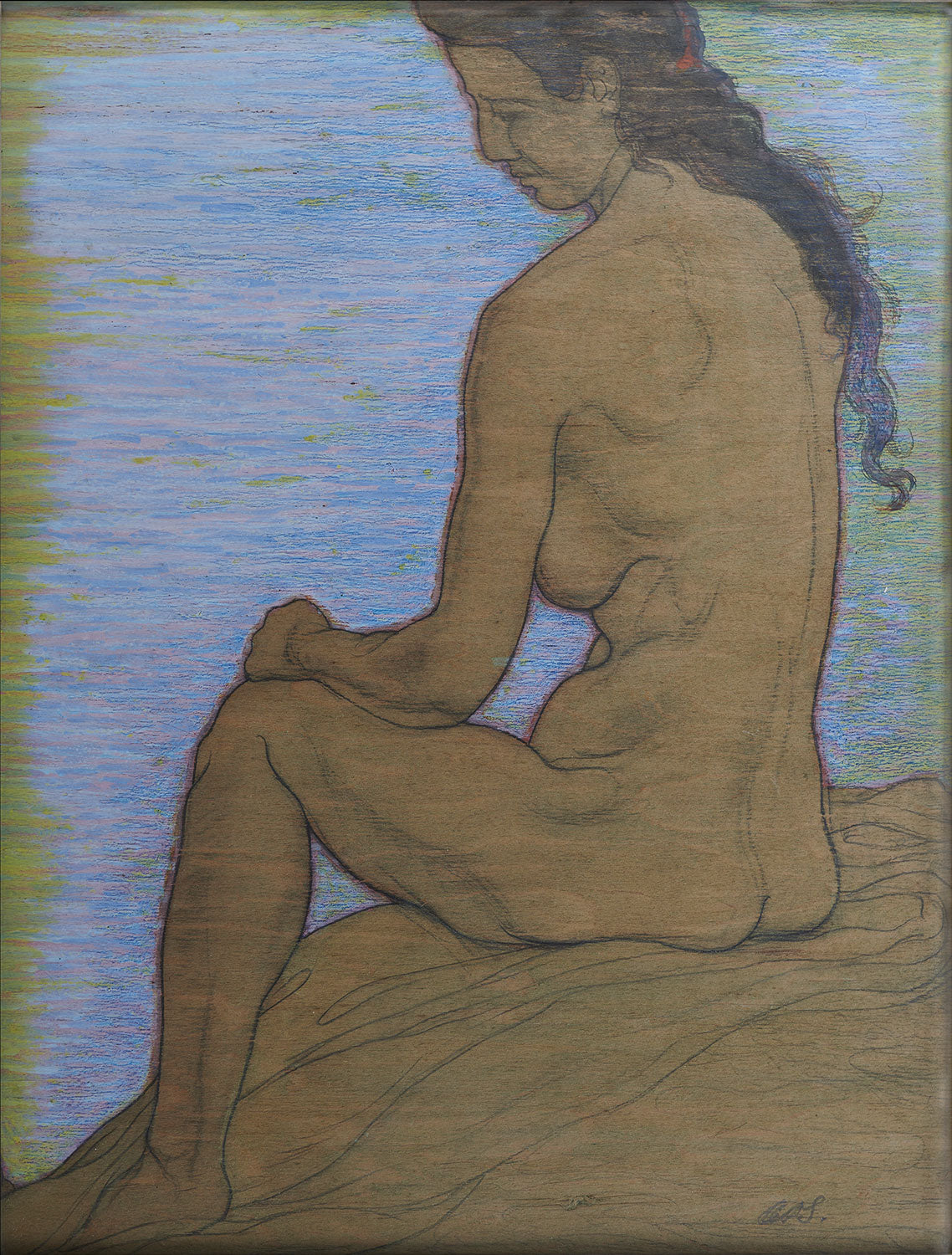
Castle Arianrhod is a re-imagining of an ancient Celtic myth, a retelling of one of the stories from the Mabinogion. It tells the story of the harm that comes into the world when sister and brother fight. It is a story full of magic and enchantment. Cath Little brings the strange mythic images to life with her words and her music.

Where is Castle Arianrhod? It is under the waters of Caernarfon Bay. It is in the spinning circle of the stars above. And it is in this gift of a story.

“Magical indeed. I loved every minute of it. A beautiful and measured performance with so many textured layers. Cath is a joy to listen to.”

“Enchanting. I didn’t want it to end.” Festival at the Edge

Bio:

Cardiff Storyteller and Singer Cath Little has “rough magic” in her voice, and in her words “the gift of the story comes through.” She has a strong belief in the power of traditional stories to connect us to one another, to the land, and to the people who once lived here. Cath is passionate about sharing the ancient British wonder tales of The Mabinogion.

Cath helps run the Cardiff Storytelling Circle and curate their seasonal concerts, Tales for the Turning Year. She tells and listens to stories at Oasis, a Cardiff Charity which offers a warm Welsh welcome to refugees and asylum seekers.

Cath keeps busy sharing stories in schools, libraries, museums, castles, cafes and fields. She has performed at clubs and festivals across Britain and Ireland.

www.cathlittle.co.uk

Curated & Hosted by:

Lena Schattenherz Heide-Brennand is a Norwegian lecturer with a master degree in language, culture and literature from the University of Oslo and Linnaeus University. She has been lecturing and teaching various subjects since 1998. Her field of interest and main focus has always been topics that others have considered strange, eccentric and eerie, and she has specialised in a variety of dark subjects linked to folklore, mythology and Victorian traditions and medicine. Her students often point out her thorough knowledge about the subjects she is teaching, in addition to her charismatic appearance. She refers to herself as a performance lecturer and always gives her audience an outstanding experience

don’t worry if you miss it – we will send you a recording valid for two weeks the next day

Mythical Creatures in Slavic Folklore part 2 – Lena Heide-Brennand

Mythical Creatures in Slavic Folklore part 2

Exploring once again the Enchanted World of Slavic Mythical Creatures. Prepare to be enthralled once again as we delve deeper into the enchanted world of Slavic mythology in this highly anticipated follow-up lecture. Discover the enigmatic creatures that roam the folklore of Eastern Europe, from the elusive Domovoi to the mesmerizing Rusalka and the mighty Zmey. Building on our previous exploration, we’ll unveil new layers of symbolism, cultural significance, and the timeless allure of these mystical beings. Join us for an evening of captivating stories, stunning visuals, and profound insights that will transport you to the heart of Slavic legend. Don’t miss this opportunity to continue your journey into the realm of the spine chilling slavic myths.

Bio:

Lena Schattenherz Heide-Brennand is a Norwegian lecturer with a master degree in language, culture and literature from the University of Oslo and Linnaeus University. She has been lecturing and teaching various subjects since 1998. Her field of interest and main focus has always been topics that others have considered strange, eccentric and eerie, and she has specialised in a variety of dark subjects linked to folklore, mythology and Victorian traditions and medicine. Her students often point out her thorough knowledge about the subjects she is teaching, in addition to her charismatic appearance. She refers to herself as a performance lecturer and always gives her audience an outstanding experience

don’t worry if you miss it – we will send you a recording valid for two weeks the next day

Scandinavian Witchcraft and Sàmi Druidry – Lena Heide-Brennand

Scandinavian Witchcraft and Sàmi Druidry

Are you ready for a spellbinding exploration into the mystical world of Sàmi shamanic druidry and the ancient spiritual practices of the noaidis, the revered shamans of the far arctic north? Discover the deep-rooted shamanism that shaped the indigenous Sàmi people’s connection to nature, their powerful rituals, and the sacred magic they used to heal, protect, and communicate with the spirit world. This captivating talk will also delve into the dark history of persecution, when these mystics were brutally tortured and executed for their beliefs during Europe’s infamous witch hunts, and how their traditions were nearly erased by colonial and religious oppression.

Prepare to be enchanted by tales of spiritual resilience, ancient rituals, and the mystical legacy that still lingers today in the Arctic.

Bio:

Lena Schattenherz Heide-Brennand is a Norwegian lecturer with a master degree in language, culture and literature from the University of Oslo and Linnaeus University. She has been lecturing and teaching various subjects since 1998. Her field of interest and main focus has always been topics that others have considered strange, eccentric and eerie, and she has specialised in a variety of dark subjects linked to folklore, mythology and Victorian traditions and medicine. Her students often point out her thorough knowledge about the subjects she is teaching, in addition to her charismatic appearance. She refers to herself as a performance lecturer and always gives her audience an outstanding experience

don’t worry if you miss it – we will send you a recording valid for two weeks the next day